Models, datasets
& papers.
Explore 162 models, 300 datasets and 580 papers. Start with a model family, narrow by signal, and follow the evidence.
Four ways to learn from signals
Explore model families.
Flow previews are paused. Each diagram shows the complete process.
0143 modelsSignal encodersEncode a waveform into features for downstream tasks.Explore models0222 modelsMultimodalLearn relationships across pulse, heart and motion signals.Explore models0316 modelsSensor–languageAlign recordings with text for retrieval or interpretation.Explore models042 modelsForecastingUse past measurements to estimate what may come next.Explore models
Conceptual diagrams, not model architectures. One primary role per record; families can overlap.
Other / unclassified 79162 models shown of 162 · loading the rest
Export
egoPPG
egoPPG estimates heart rate from eye-tracking cameras in egocentric systems (ICCV 2025 paper lineage). Official code is at github.com/eth-siplab/egoPPG; no pretrained weights were published in the recorded release.
Summary & evidence
Weights unconfirmedUnconfirmed · Not reported—
FairTune
Bias-aware fine-tuning of PPG-GPT for heart-rate prediction across ICU, wrist, and smartphone PPG
Summary & evidence
FemWear
FemWear repurposes a general wearable foundation model for women's health. It freezes the pretrained encoder and trains only 239,236 parameters (1.11% of a 21.54M-parameter encoder) through low-rank adapters and task heads covering menstrual, symptom, mood, sleep, autonomic, activity and pregnancy outcomes. It improved cycle-phase macro-F1 by 8.15% and cut errors for cramps and sleep problems by about 9%.
Summary & evidence
Geenjaar multimodal-supervision PPG FM
This PPG foundation model is pretrained on ICU data and uses the accompanying ECG and respiratory signals to choose contrastive pairs, so it does not need curated or field-like PPG. Pretrained on three times fewer subjects than leading models, it improved results on 14 of 15 downstream tasks, including daily activity and heart rate prediction.
Summary & evidence
GlucoFM
GlucoFM is a lightweight foundation model for continuous glucose monitoring data. It aligns readings to a 24-hour grid and splits glucose into a slow trend and short-term deviations, and it was pretrained on 109,066 hours of CGM data from 477 subjects. Across four cohorts and seven phenotype tasks it gave the best linear-probe results, raising average PR-AUC by 4.1 points over the best CGM-specific model.
Summary & evidence
GlucoPRISM (protocol-supervised CGM encoder; Trait/State/Sensor bands)
GlucoPRISM is a CGM encoder that splits each day's representation into person, day and sensor parts, so sensor differences do not carry over when the model moves to a new cohort. It learns this from synthetic sensor views calibrated on paired Dexcom and Libre data, without clinical labels. Dropping the sensor part raised mean cross-cohort AUROC from 68.75 to 73.57, against 69.3 for GlucoFM.
Summary & evidence
Google LSM
Google Large Sensor Model — MAE on ~40M hours / 165k users of minutely aggregated wearable features (not raw waveforms). Closed corpus.
Summary & evidence
Google LSM-2 / AIM
LSM-2 adds Adaptive and Inherited Masking (AIM) for incomplete day-long minutely wearable grids; 25M ViT-1D; closed Google corpus.
Summary & evidence
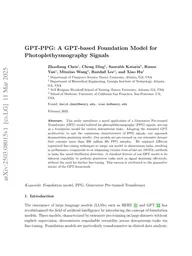
GPT-PPG SOTA
GPT-PPG adapts the GPT architecture to continuous PPG signals. It was pretrained on more than 200 million 30-second PPG samples and then fine-tuned for specific tasks. It matched or beat earlier methods on several tasks, notably atrial fibrillation detection, and can denoise signals without extra fine-tuning.
Summary & evidence
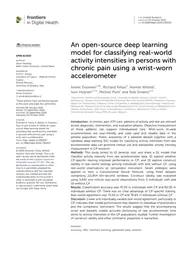
GRIP activity-intensity models (wrist ACC, chronic pain)
Keras deep-learning models for 3-class activity intensity from wrist accelerometry at 12.5 Hz, developed on 30 healthy and 30 chronic-pain participants plus CAPTURE-24 (Doomen, Felius et al., Frontiers in Digital Health 2026). Of four DL candidates (CNN, LSTM, CNN-LSTM, larger CNN) the authors chose a CNN. The repo ships weights for all candidates plus an HMM.
Summary & evidence
Open weightsUnconfirmed · Not reported—
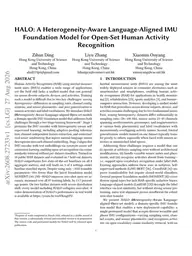
HALO
Domain-specific IMU foundation model for open-vocabulary HAR across heterogeneous rates/channels/placements. Two-stage: heterogeneity-aware SSL encoder → synonym-aware soft contrastive alignment to frozen Sentence-BERT. ~35M trainable params; zero-shot = cosine retrieval over arbitrary label text (no per-dataset classifier).
Summary & evidence
HARNet / OxWearables SSL
HARNet is the set of self-supervised activity recognition models from Oxford's study of 700,000 person-days of UK Biobank wrist accelerometer data. They beat strong baselines on eight benchmarks with a median relative F1 gain of 24.4%. Pretrained models for 5, 10 and 30-second windows at 30 Hz can be loaded through torch.hub from the OxWearables ssl-wearables repository.
Summary & evidence

HiMAE
HiMAE is a hierarchical masked autoencoder for wearable time series from Samsung researchers and collaborators, published at ICLR 2026. It uses a 1D convolutional encoder-decoder and is designed to find structure at different time resolutions. The repository includes a pretrained checkpoint and a linear-probe pipeline for detecting premature ventricular contractions in 10-second PPG segments, under a BSD license.
Summary & evidence
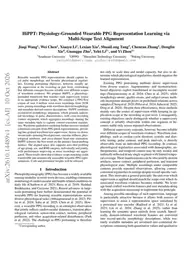
HiPPT
wrist-PPG encoder aligned to text at record, cross-recording and generative scopes
Summary & evidence
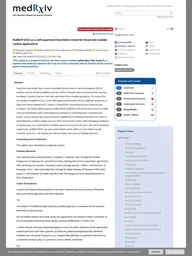
HuBERT-ECG
Brescia HuBERT-style masked discrete-token ECG FM on 9.1M multi-country ECGs; open HF weights under CC BY-NC.
Summary & evidence
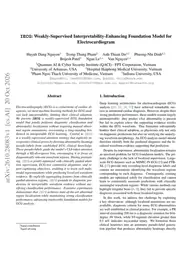
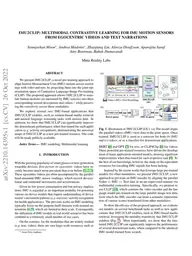
IMU2CLIP
IMU2CLIP aligns IMU motion recordings with video and text by projecting them into CLIP's joint embedding space. This lets it translate motion into text descriptions and matching video. Fine-tuned for tasks such as activity recognition, it improved downstream performance.
Summary & evidence
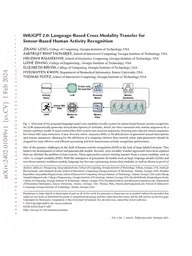
IMUGPT
IMUGPT generates virtual IMU data from text, using large language models and text-to-motion synthesis, to train activity recognition models. This paper runs a large evaluation of the approach and adds a motion filter that drops irrelevant generated sequences and diversity metrics that show when to stop generating. The metrics cut generation effort by at least 50%.
Summary & evidence
Inertia-1
Inertia-1 is a fully open study of foundation models for wearable motion data. Using more than 18.2M hours of accelerometer data from sources around the world, the authors built a controlled framework to test how sensor type, device placement, sampling rate, window length, architecture, model size, pretraining objective and data scale affect the resulting models.
Summary & evidence
JETS (Empirical Health; joint-embedding FM for irregular behavioural wearable time series)
Hypertension 87%, atrial flutter 70%, ME/CFS 81%, sick sinus syndrome 87%. Beats MAE and PrimeNet baselines. Proprietary data.
Summary & evidence
Lapras (latent-reasoning post-training for time-series language models)
Lapras is a post-training method that teaches time-series language models to reason in latent space instead of writing out a chain of thought. The model works through continuous thoughts in a joint time-series and language space and only produces text for the final answer, learning this by self-distillation from a teacher trained on written reasoning traces. It improved average F1 by up to 10.79% over explicit chain-of-thought while generating 23.9 times fewer tokens.
Summary & evidence
Lead-adaptive SSL ECG model (VQ-VAE tokenizer + lead-adaptive MAE; BSPC 2026)
Average macro-F1 over a plain MAE baseline: +2.56 (broad multi-label), +4.85 (morphology), +12.80 (rhythm) across nine downstream tasks. No comparison with published ECG FMs in the abstract, so no board row.
Summary & evidence
LIMU-BERT
LIMU-BERT is a self-supervised model for IMU data that adapts BERT-style masked training to the properties of inertial sensors. The models are lightweight enough for mobile devices, and features learned from unlabelled data let task models trained on few labels beat earlier approaches. It was evaluated on four open datasets across two typical IMU sensing applications.
Summary & evidence
LPSGM (Large PSG Model; flexible-channel EEG/EOG/EMG sleep staging + clinical screening; ZJU / Hangzhou Seventh People's Hospital)
Prospective sleep staging κ 0.845 ± 0.066 against expert consensus (inter-expert κ 0.850 ± 0.102). Three-class narcolepsy 84.2% accuracy (κ 0.761); cross-institution hypersomnia normal-vs-abnormal AUC 0.879; severe OSA AUC 0.874 without respiratory channels; depression symptoms AUC 0.801 on surrogate-labelled APPLES and 0.965 on an external clinically diagnosed cohort.
Summary & evidence

LuminaECG
LuminaECG treats ECG interpretation as a measurement-based visual reading task. A general 2B-parameter vision-language model is trained with low-rank supervised fine-tuning to link ECG measurement primitives to diagnostic reasoning, without changing its architecture.
Summary & evidence
M2AE (Biosignal Fingerprinting)
M2AE is a multimodal masked autoencoder trained on more than 3.4 million paired ECG and PPG signals, whose compact embeddings the authors call biosignal fingerprints. Used frozen across 7 tasks, from cross-modal reconstruction to disease classification, hypertension detection, mortality and demographics, it matched or beat specialist foundation models. It reached an AUROC of 0.974 for five-class cardiovascular disease classification and 0.877 for hypertension detection.
Summary & evidence
Multimodal EEG World Model (wearable EEG, ECG/EMG/movement-conditioned latent transition SSL)
Held-out SeizeIT2 test (23 patients), frozen encoder + linear probe: AUPRC 0.3748 ± 0.0127, ROC-AUC 0.8025 ± 0.0071, balanced accuracy 0.7308 ± 0.0075. Random-init encoder AUPRC 0.3275; NeuroLM probe 0.2059 (medRxiv v2 Tables 3–4). Segment-level only.
Summary & evidence
NeuroRVQ (PPG tokenizer)
Multi-scale residual-vector-quantization (RVQ) biosignal tokenizer from Imperial College / Cogitat. The PPG tokenizer checkpoint is now packaged in braindecode (HF repo created 2026-10-08), which makes it a loadable, open-weight (non-commercial) PPG codec.
Summary & evidence
NormWear-2
NormWear-2 is a world model for physiological signals that puts multivariate signals and clinical interventions into one latent space and models how they evolve together over time. It combines pretrained knowledge with fast non-parametric adaptation of latent state transitions, so it can forecast signals over several time scales under different interventions.
Summary & evidence
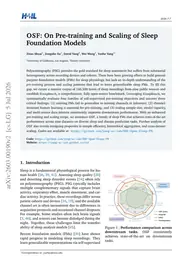
OSF (Open Sleep Foundation Models)
OSF is a family of open sleep foundation models built to study how pretraining choices and scale affect generalization across polysomnography devices and cohorts. The authors assembled 166,500 hours of sleep recordings from nine public sources and released SleepBench, a fully open benchmark.
Summary & evidence
Showing 51–100 of 162 models
Families describe the main role reported in each record. Signals may describe training data, rather than required inference inputs. Dates use the first arXiv posting when known, otherwise the catalog paper date. Missing information stays unconfirmed. Saves stay in this browser.
Compare benchmark evidence
All benchmarks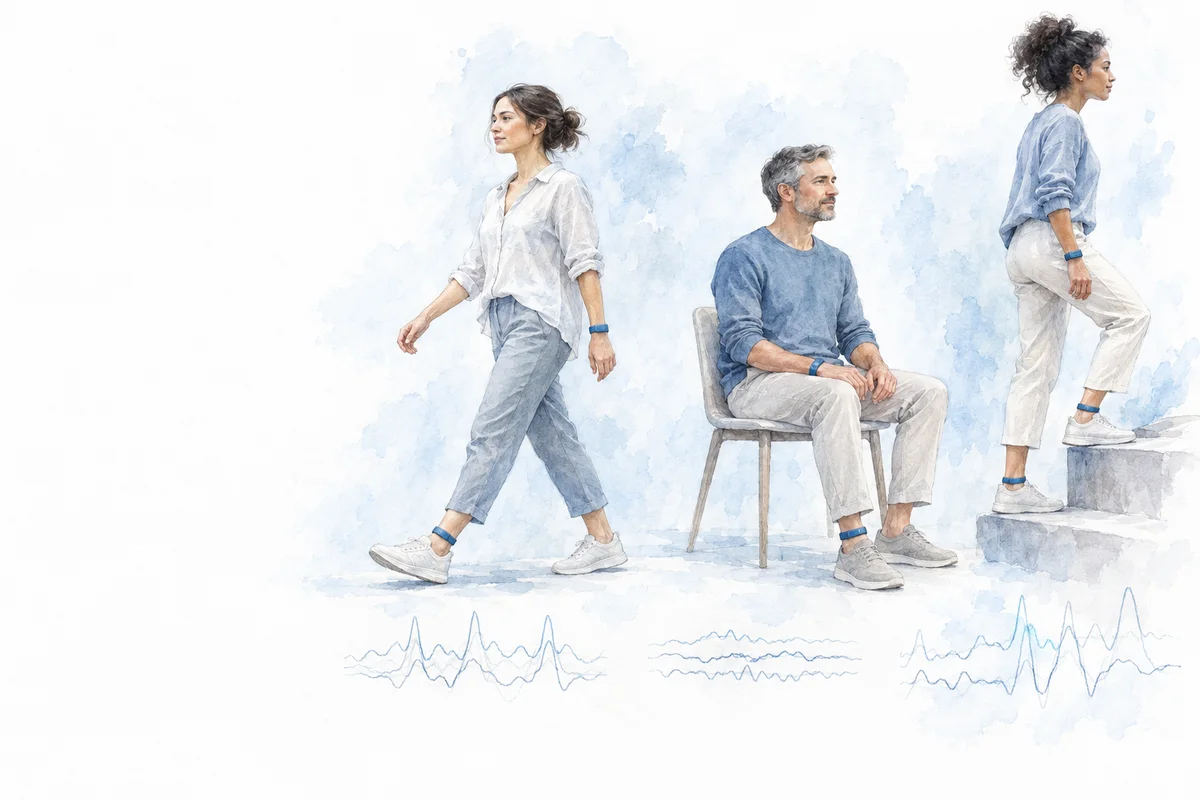
Leaderboard
Human activity recognition
28 benchmarks · 58 reported results
Leaderboard
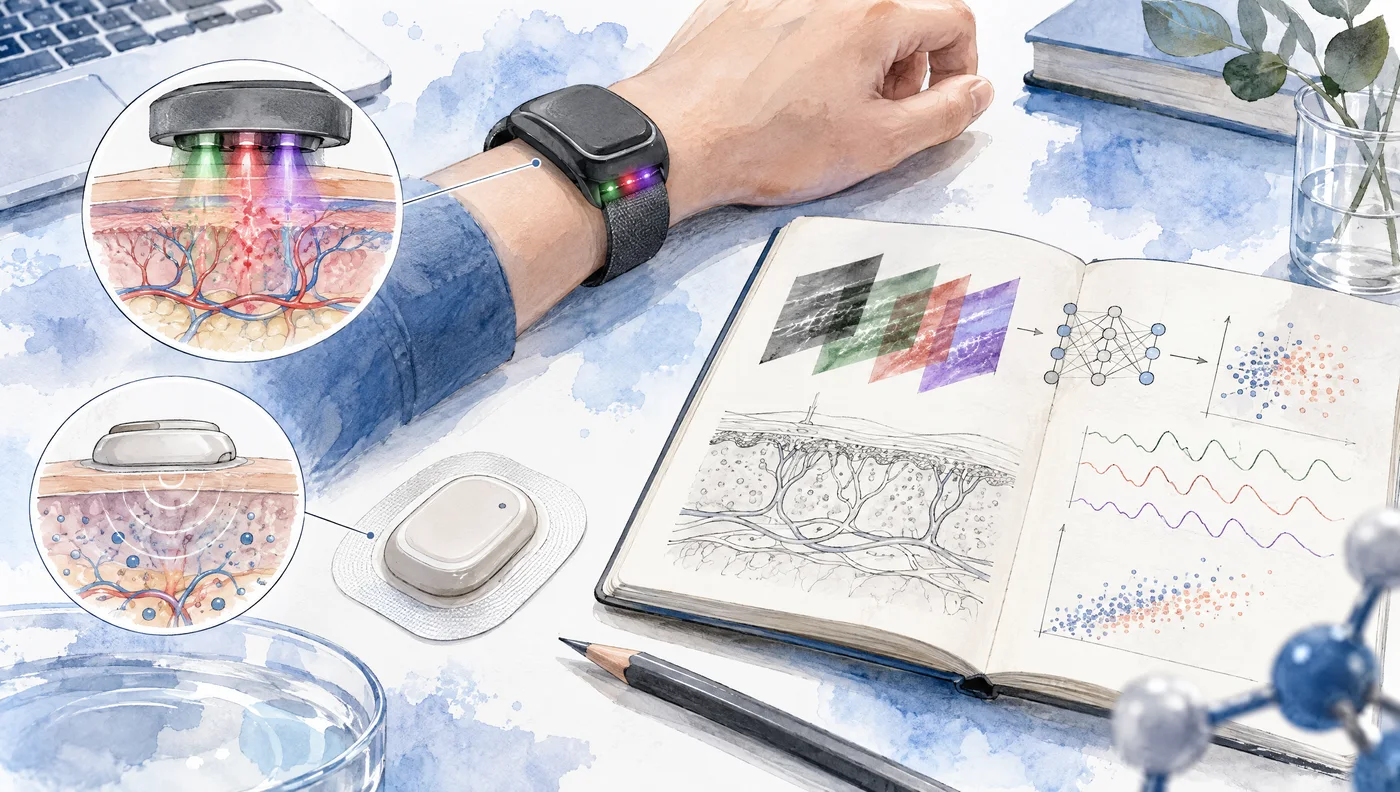
Glucose estimation
10 benchmarks · 58 reported results
Leaderboard
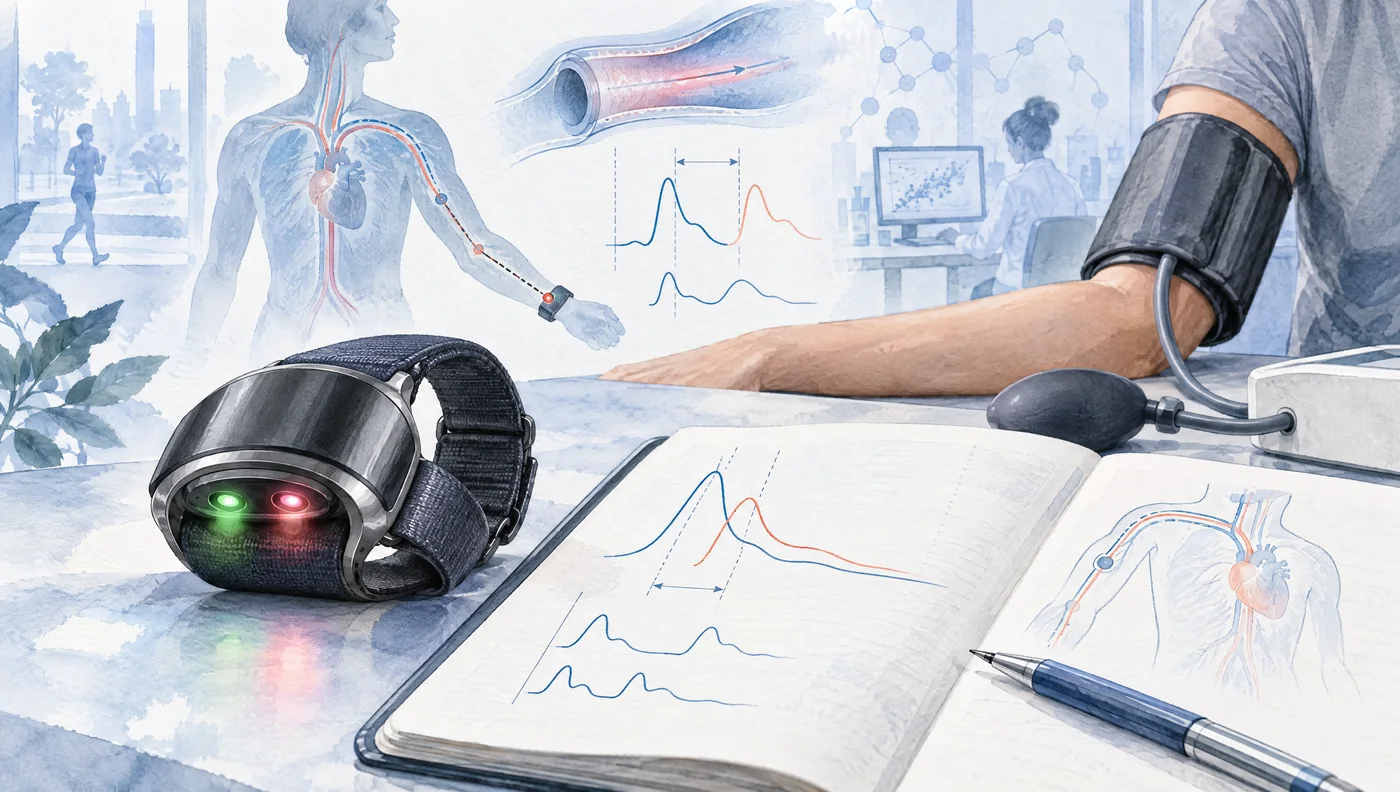
Cuffless BP
21 benchmarks · 30 reported results
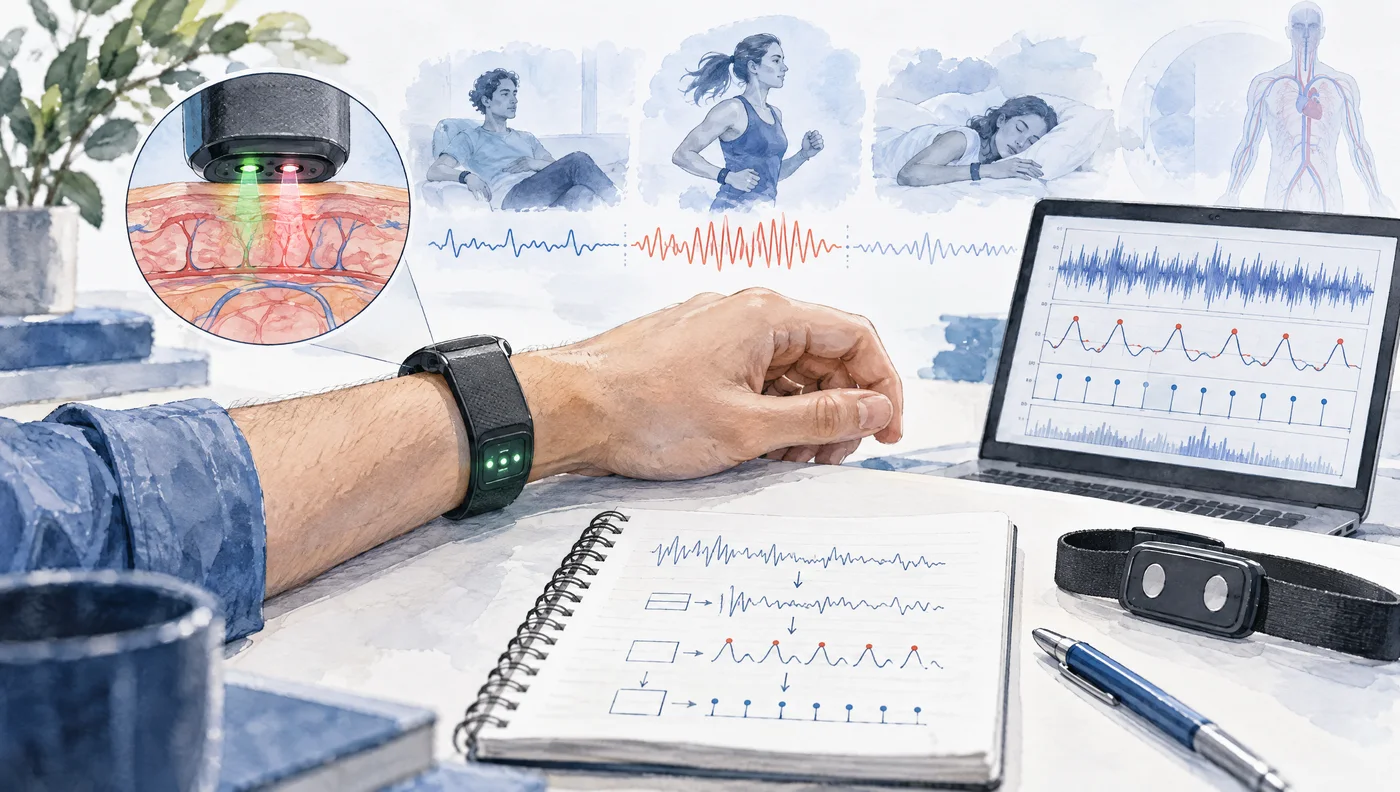
Leaderboard
Heart rate estimation
11 benchmarks · 26 reported results
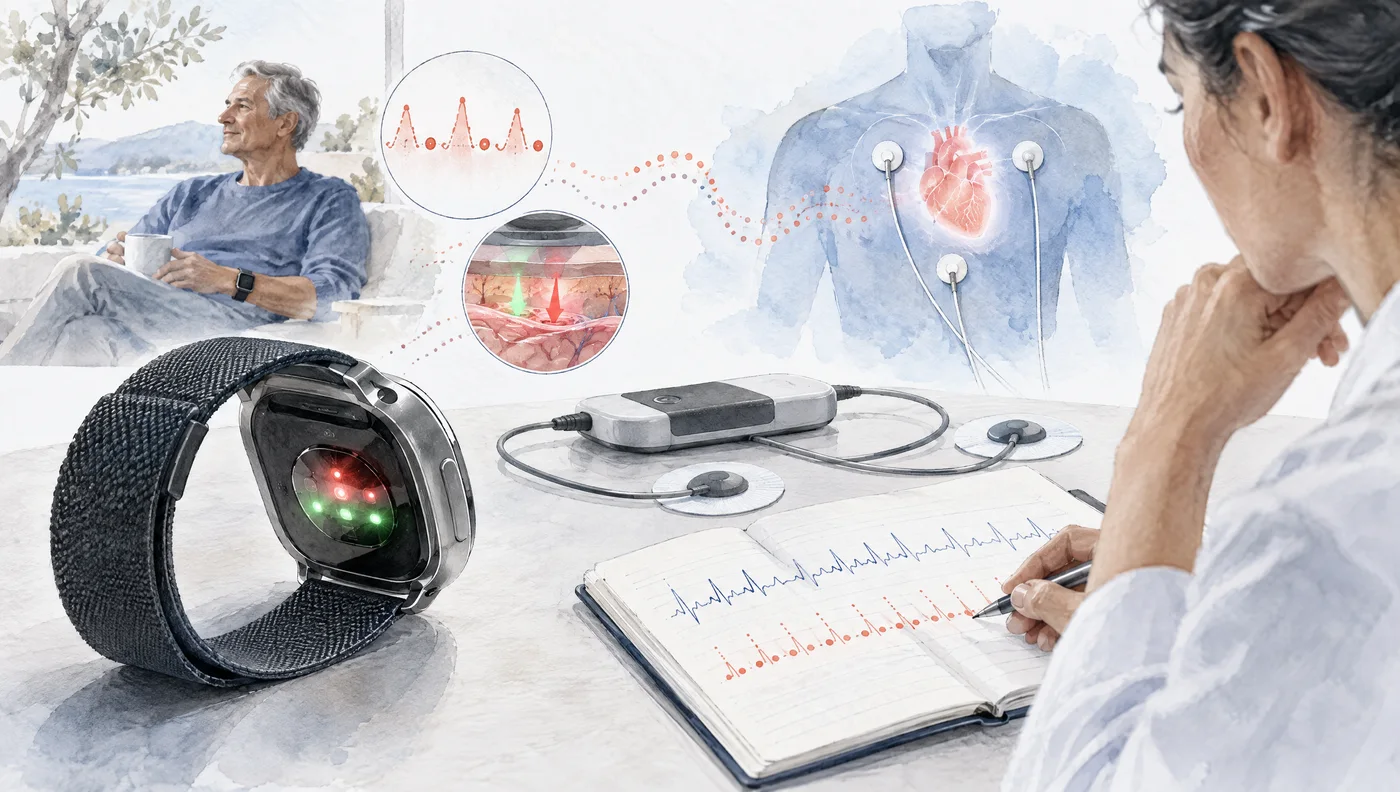
Leaderboard
Atrial fibrillation detection
13 benchmarks · 14 reported results
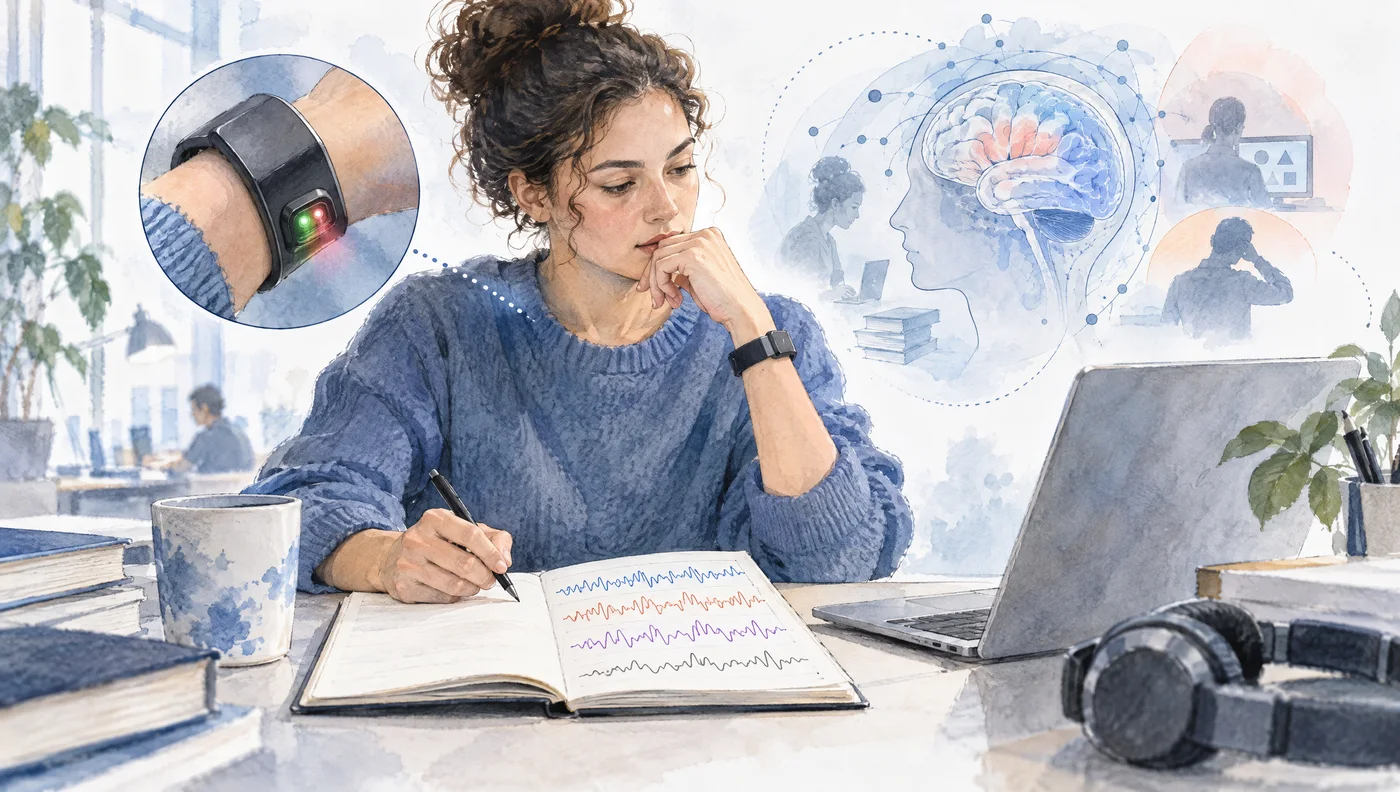
Leaderboard
Mental workload
3 benchmarks · 10 reported results
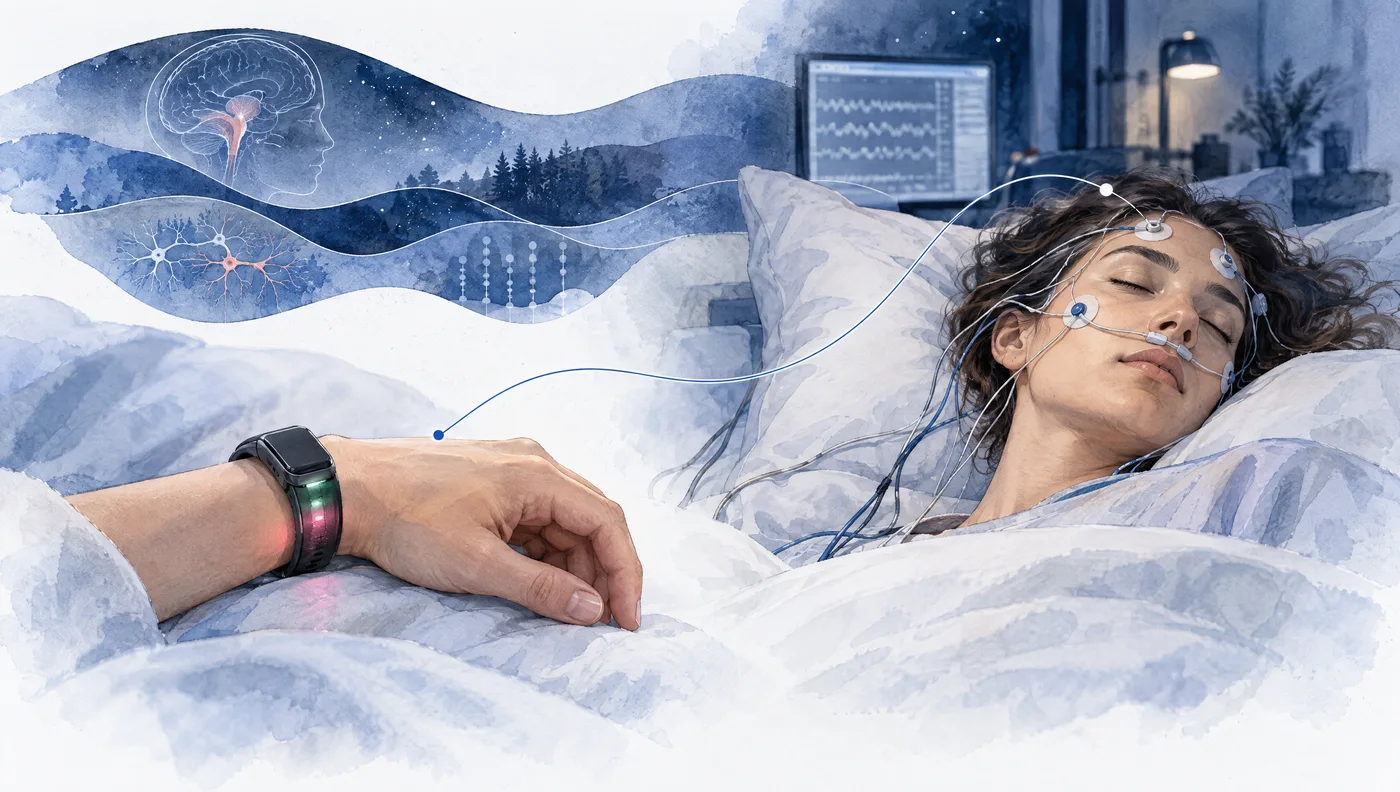
Leaderboard
Sleep staging
9 benchmarks · 9 reported results
Leaderboard
Stress detection (acute / prolonged / affect)
2 benchmarks · 3 reported results
Leaderboard
Potassium estimation
1 benchmark · 1 reported result
Leaderboard
Sleep apnea ahi
1 benchmark · 1 reported result
Leaderboard
Sleep apnea severity
1 benchmark · 1 reported result
Curated collections
Download the full atlas
Complete source records (JSON and CSV) are free for members. Sign in to download. Every record is readable on this site, and llms.txt describes the hub for AI tools.
For a citable version that never changes, use the 2026-10 snapshot.
Cite or reuse this
CC BY 4.0ChatPPG compiled this data. You can copy, adapt and republish it, including in articles, slides, papers and AI tools, as long as you credit ChatPPG and link to this page. Please also cite the original studies for any number you use.
Attribution
Source: ChatPPG, ChatPPG Research Hub: wearable and PPG benchmark leaderboards, datasets and models, https://chatppg.com/research (CC BY 4.0)
HTML link
Source: <a href="https://chatppg.com/research">ChatPPG, ChatPPG Research Hub: wearable and PPG benchmark leaderboards, datasets and models</a> (<a href="https://creativecommons.org/licenses/by/4.0/" rel="license">CC BY 4.0</a>)Cite the dated snapshot 2026-10 for a fixed, reproducible version. Please also cite the original publications listed above.
APA
ChatPPG. (2026). ChatPPG Research Hub: wearable and PPG benchmark leaderboards, datasets and models (Version 2026-10) [Data set]. ChatPPG Research Hub. https://chatppg.com/research
BibTeX
@misc{chatppg_research_hub,
  author       = {{ChatPPG}},
  title        = {{ChatPPG Research Hub: wearable and PPG benchmark leaderboards, datasets and models}},
  year         = {2026},
  month        = oct,
  version      = {2026-10},
  howpublished = {\url{https://chatppg.com/research}},
  note         = {ChatPPG Research Hub, Snapshot 2026-10, https://chatppg.com/research/snapshots/2026-10}
}
CITATION.cff
cff-version: 1.2.0
message: "If you use this resource, please cite it as below."
type: dataset
title: "ChatPPG Research Hub: wearable and PPG benchmark leaderboards, datasets and models"
authors:
  - name: "ChatPPG"
url: "https://chatppg.com/research"
repository-artifact: "https://chatppg.com/research/snapshots/2026-10"
version: "2026-10"
date-released: "2026-10-17"
Stay in the loop
Get new PPG datasets, papers and models
The ChatPPG newsletter covers what's new in the research atlas, plus practical guides. Unsubscribe anytime.