Wearable guides
Samsung Galaxy Watch BioActive Sensor
Samsung's BioActive Sensor combines optical PPG, electrical heart (ECG) electrodes and bioelectrical impedance in one module. On Galaxy Watch7, Samsung says the sensor adds blue, yellow, violet and ultraviolet LEDs to a larger number of green, red and infrared LEDs. Blood pressure estimates require calibration against an upper-arm cuff every 28 days.
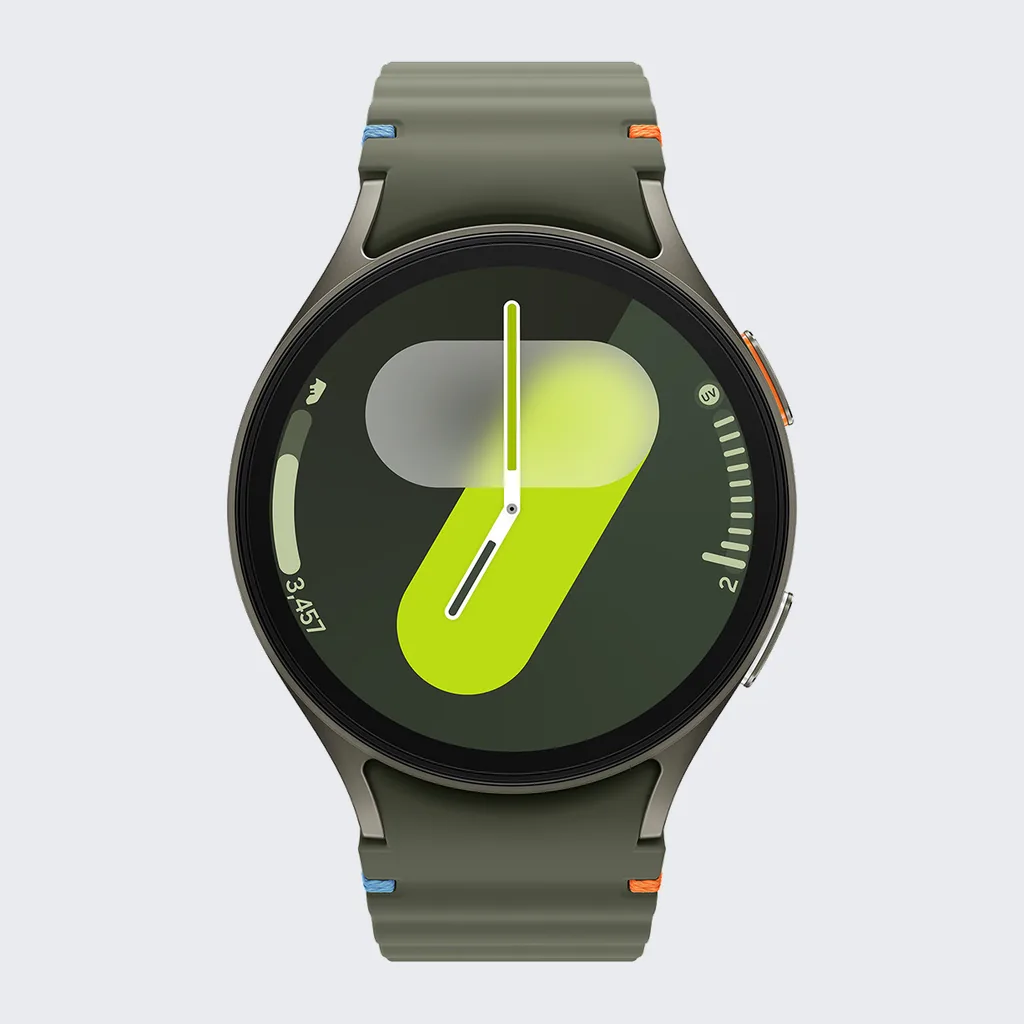
The BioActive Sensor integrates optical PPG for heart rate and SpO2, ECG electrodes for single-lead rhythm recording, and bioelectrical impedance analysis (BIA) electrodes for body composition. For Galaxy Watch7, Samsung says the sensor includes blue, yellow, violet and ultraviolet LEDs in addition to an increased number of green, red and infrared LEDs (Samsung: Galaxy Watch7 BioActive Sensor). Samsung does not publish per-colour LED counts, wavelengths or sampling rates.
Blood pressure is estimated from the PPG pulse waveform relative to a calibration. Users first take three readings with an upper-arm cuff within 30 minutes and must recalibrate every 28 days, and Samsung says the function is not intended for diagnosing disease (Samsung Support: blood pressure). In a real-world study of 760 users of the first smartwatch-based cuffless BP monitor approved in Korea, who uploaded 35,797 readings over the 4 weeks after calibration, BP varied considerably with day and time of measurement (Han et al., 2023).
Samsung's ECG Monitor app received FDA 510(k) clearance (K201168) in 2020 as over-the-counter software that records a single-lead ECG and classifies sinus rhythm or AF. In an earlier exercise study, the Samsung Gear S2 had the highest overall heart-rate error of seven wrist devices tested (Shcherbina et al., 2017). Samsung has not published independent validation figures for body composition that we could verify.
Sourced figures
Every number in this guide comes from the source linked beside it. Each study result applies to that study's devices, participants and protocol only.
Real-world cuffless BP study: 760 Galaxy Watch users, 35,797 readings over 4 weeks after calibration; BP varied considerably with day and time.
Samsung Gear S2 had the highest overall heart-rate error of seven wrist devices tested against ECG telemetry.
What published studies show
Results quoted from 17 published validation studies, each against a clinical reference. A result applies to the model and protocol tested, not to every model the brand sells. From the wearable accuracy database (v1.0.0).
Heart rate at rest1 study
| Device tested | Result | Reference | Sample | Study |
|---|---|---|---|---|
| Samsung Galaxy Watch Active2 | 9.4 bpm (seated rest)Mean absolute error | Holter ECG | n = 23, Rest, sedentary, low- and high-intensity phases | Nissen et al. (2022)Independent |
- Samsung Galaxy Watch Active29.4 bpm (seated rest)
Mean absolute error · vs Holter ECG · n = 23, Rest, sedentary, low- and high-intensity phases
Nissen et al. (2022) Independent
Heart rate during exercise4 studies
| Device tested | Result | Reference | Sample | Study |
|---|---|---|---|---|
| Samsung Galaxy Watch Active2squats | 6.1 bpm (squats)Mean absolute error | Holter ECG | n = 23, Rest, sedentary, low- and high-intensity phases | Nissen et al. (2022)Independent |
| Samsung Galaxy Watch 6 | Significantly higher MAE than Apple Watch SE and Verity SenseStudy finding (no single number) | ECG chest strap (Polar H7/ | n = 37, Low/ | Jeong et al. (2026)Independent |
| Samsung Gear S2 | Highest overall error of 7 devicesStudy finding (no single number) | ECG | n = 60, Sitting, walking, running, cycling | Shcherbina et al. (2017)Independent |
| Samsung Galaxy Watch6 | −2.67 bpm (LoA −16.90 to 11.57)Mean bias (signed) | ECG chest strap (Polar H7/ | n = 55, Maximal incremental treadmill test | Inoue et al. (2026)Funding not reported |
- Samsung Galaxy Watch Active26.1 bpm (squats)
Mean absolute error, squats · vs Holter ECG · n = 23, Rest, sedentary, low- and high-intensity phases
Nissen et al. (2022) Independent
- Samsung Galaxy Watch 6Significantly higher MAE than Apple Watch SE and Verity Sense
Study finding (no single number) · vs ECG chest strap (Polar H7/H10) · n = 37, Low/moderate/high-intensity treadmill
Jeong et al. (2026) Independent
- Samsung Gear S2Highest overall error of 7 devices
Study finding (no single number) · vs ECG · n = 60, Sitting, walking, running, cycling
Shcherbina et al. (2017) Independent
- Samsung Galaxy Watch6−2.67 bpm (LoA −16.90 to 11.57)
Mean bias (signed) · vs ECG chest strap (Polar H7/H10) · n = 55, Maximal incremental treadmill test
Inoue et al. (2026) Funding not reported
Sleep stages (4-stage)1 study
| Device tested | Result | Reference | Sample | Study |
|---|---|---|---|---|
| Samsung Galaxy Watch5 | κ = 0.42Cohen's kappa | Polysomnography (PSG) | n = 22, Two Korean sleep centres, in-lab PSG | Lee et al. (2023)Independent |
| Samsung Galaxy Watch5 | 64.9%Epoch-by-epoch agreement | Polysomnography (PSG) | n = 22, Two Korean sleep centres, in-lab PSG | Lee et al. (2023)Independent |
- Samsung Galaxy Watch5κ = 0.42
Cohen's kappa · vs Polysomnography (PSG) · n = 22, Two Korean sleep centres, in-lab PSG
Lee et al. (2023) Independent
Epoch-by-epoch agreement · vs Polysomnography (PSG) · n = 22, Two Korean sleep centres, in-lab PSG
Lee et al. (2023) Independent
Total sleep time1 study
| Device tested | Result | Reference | Sample | Study |
|---|---|---|---|---|
| Samsung Gear Sport | r = 0.59Pearson correlation | Research actigraphy | n = 45, Home, 7 days | Asgari Mehrabadi et al. (2020)Independent |
- Samsung Gear Sportr = 0.59
Pearson correlation · vs Research actigraphy · n = 45, Home, 7 days
Asgari Mehrabadi et al. (2020) Independent
Blood oxygen (SpO2)3 studies
| Device tested | Result | Reference | Sample | Study |
|---|---|---|---|---|
| Samsung Galaxy Watch5 | Met ISO RMS ≤ 4% at normoxia and SpO2 < 90%Study finding (no single number) | Medical-grade pulse oximeter | n = 18, Induced hypoxemia (FiO2 14%, 12%, 10%), ISO 80601-2-61 | Walzel et al. (2023)Independent |
| Samsung Galaxy Watch4 | RMSD 1.8%Root-mean-square error | Arterial blood gas (SaO2) | n = 24, Hypoxia lab, SaO2 plateaus 70–100%, FDA/ | Browne et al. (2025)Independent |
| Samsung Galaxy Watch4 | RMSE 2.54 points (overnight, vs PSG oximetry)Root-mean-square error | PSG pulse oximetry | n = 51, In-lab overnight PSG, continuous SpO2 | Browne et al. (2024)Maker funded |
- Samsung Galaxy Watch5Met ISO RMS ≤ 4% at normoxia and SpO2 < 90%
Study finding (no single number) · vs Medical-grade pulse oximeter · n = 18, Induced hypoxemia (FiO2 14%, 12%, 10%), ISO 80601-2-61
Walzel et al. (2023) Independent
- Samsung Galaxy Watch4RMSD 1.8%
Root-mean-square error · vs Arterial blood gas (SaO2) · n = 24, Hypoxia lab, SaO2 plateaus 70–100%, FDA/ISO procedure
Browne et al. (2025) Independent
- Samsung Galaxy Watch4RMSE 2.54 points (overnight, vs PSG oximetry)
Root-mean-square error · vs PSG pulse oximetry · n = 51, In-lab overnight PSG, continuous SpO2
Browne et al. (2024) Maker funded
Atrial fibrillation detection1 study
| Device tested | Result | Reference | Sample | Study |
|---|---|---|---|---|
| Samsung Galaxy Watch3smartwatch ECG app, inconclusive tracings counted | 85% (spec 75%)Sensitivity | 12-lead ECG | n = 201, Tertiary cardiology service, single-lead ECG algorithms | Mannhart et al. (2023)Funding not reported |
| Samsung Galaxy Watch3smartwatch ECG app, inconclusive tracings counted | 75%Specificity | 12-lead ECG | n = 201, Tertiary cardiology service, single-lead ECG algorithms | Mannhart et al. (2023)Funding not reported |
- Samsung Galaxy Watch385% (spec 75%)
Sensitivity, smartwatch ECG app, inconclusive tracings counted · vs 12-lead ECG · n = 201, Tertiary cardiology service, single-lead ECG algorithms
Mannhart et al. (2023) Funding not reported
Specificity, smartwatch ECG app, inconclusive tracings counted · vs 12-lead ECG · n = 201, Tertiary cardiology service, single-lead ECG algorithms
Mannhart et al. (2023) Funding not reported
Energy expenditure (calories)2 studies
| Device tested | Result | Reference | Sample | Study |
|---|---|---|---|---|
| Samsung Galaxy Watch5physical activity energy expenditure, 10 min | +56.76 kcalMean bias (signed) | Indirect calorimetry | n = 50, 10-min recumbent cycling intervals | Kostrna et al. (2026)Independent |
| Samsung Galaxy Watch6 / Watch7 | 10.10–12.55%Mean absolute percentage error | Indirect calorimetry | n = 148, 27-min intermittent treadmill running | Ferreira et al. (2026)Funding not reported |
- Samsung Galaxy Watch5+56.76 kcal
Mean bias (signed), physical activity energy expenditure, 10 min · vs Indirect calorimetry · n = 50, 10-min recumbent cycling intervals
Kostrna et al. (2026) Independent
- Samsung Galaxy Watch6 / Watch710.10–12.55%
Mean absolute percentage error · vs Indirect calorimetry · n = 148, 27-min intermittent treadmill running
Ferreira et al. (2026) Funding not reported
Respiratory rate1 study
Only maker-funded evidence for Samsung on this metric.
| Device tested | Result | Reference | Sample | Study |
|---|---|---|---|---|
| Samsung Galaxy Watch | RMSE 1.13 breaths/min (overnight average)Root-mean-square error | Polysomnography (PSG) | n = 195, Overnight PSG, nasal thermocouple reference | Jung et al. (2023)Maker funded |
- Samsung Galaxy WatchRMSE 1.13 breaths/min (overnight average)
Root-mean-square error · vs Polysomnography (PSG) · n = 195, Overnight PSG, nasal thermocouple reference
Jung et al. (2023) Maker funded
Blood pressure3 studies
| Device tested | Result | Reference | Sample | Study |
|---|---|---|---|---|
| Samsung Galaxy Watch5 | SBP −0.34 / DBP +0.62 mmHgMean bias (signed) | Validated cuff (Omron M4) | n = 37, 28 days after one calibration | Walzel et al. (2026)Funding not reported |
| Samsung Galaxy Watch Active2 | 83% (spec 41%) for hypertensionSensitivity | 24-h ambulatory BP monitor | n = 40, 24-h ambulatory BP monitoring | Falter et al. (2022)Independent |
| Samsung Galaxy Watch (BP) | Pre/post calibration SBP error 6.8 ± 5.6 mmHgStudy finding (no single number) | Cuff used for calibration | n = 760, Real-world, 4 weeks post calibration | Han et al. (2023)Funding not reported |
- Samsung Galaxy Watch5SBP −0.34 / DBP +0.62 mmHg
Mean bias (signed) · vs Validated cuff (Omron M4) · n = 37, 28 days after one calibration
Walzel et al. (2026) Funding not reported
- Samsung Galaxy Watch Active283% (spec 41%) for hypertension
Sensitivity · vs 24-h ambulatory BP monitor · n = 40, 24-h ambulatory BP monitoring
Falter et al. (2022) Independent
- Samsung Galaxy Watch (BP)Pre/post calibration SBP error 6.8 ± 5.6 mmHg
Study finding (no single number) · vs Cuff used for calibration · n = 760, Real-world, 4 weeks post calibration
Han et al. (2023) Funding not reported
Skin temperature1 study
Only maker-funded evidence for Samsung on this metric.
| Device tested | Result | Reference | Sample | Study |
|---|---|---|---|---|
| Samsung Galaxy Watch5 | r = 0.42 vs oral temperaturePearson correlation | Oral thermometer | n = 85, Nightly wrist skin temperature vs oral temperature on waking | Kim et al. (2026)Maker funded |
- Samsung Galaxy Watch5r = 0.42 vs oral temperature
Pearson correlation · vs Oral thermometer · n = 85, Nightly wrist skin temperature vs oral temperature on waking
Kim et al. (2026) Maker funded
Samsung Galaxy Watch BioActive Sensor Comparisons
Samsung Galaxy Watch vs Apple Watch: PPG Sensor and Health Features
Samsung Galaxy Watch7 and Watch Ultra pair only with Android phones; Apple Watch pairs only with iPhone, so the phone usually decides. Both have an FDA-cleared or authorized ECG feature. Samsung adds cuffless blood pressure estimates that need cuff calibration every 28 days. In independent testing, Apple Watch had the lowest heart-rate error and Samsung's older Gear S2 the highest of seven devices (Shcherbina 2017); no study has compared current models.
View Comparison →Samsung Galaxy Watch vs Garmin: Sensors Compared
Samsung's Galaxy Watch7 and Watch Ultra offer an FDA-cleared ECG app and cuffless blood pressure estimates that need cuff calibration every 28 days; they pair only with Android. Garmin's Venu 3 and Fenix 8 offer an ECG App in eligible regions and battery measured in weeks. No study compares current Samsung and Garmin heart-rate accuracy.
View Comparison →Research records
Device records collect datasets, papers, and the sourced figures on this page. For accuracy across the brand, read Samsung Galaxy Watch heart rate accuracy.
- Samsung Galaxy Watch / Gear Sport
- Samsung Galaxy Watch 4
- Samsung Galaxy Watch 5
- Samsung Galaxy Watch Active 2
- Samsung Galaxy Watch7
- Samsung Gear S2
Also named in this guide: Apple Watch
Frequently Asked Questions
Is Samsung Galaxy Watch blood pressure a medical measurement?
Samsung says the blood pressure function is not intended for diagnosing disease or other conditions. It needs an initial calibration with an upper-arm cuff (three readings within 30 minutes) and recalibration every 28 days.
How does Samsung's ECG compare to Apple Watch ECG?
Both record a single-lead ECG while a fingertip touches an electrode on the watch. Samsung's ECG Monitor app is FDA 510(k) cleared (K201168, 2020) to classify sinus rhythm or AF. Apple's ECG app has its own FDA authorization; neither replaces a 12-lead ECG.
What is the BioActive Sensor sampling rate?
Samsung does not publish PPG or ECG sampling rates for the BioActive Sensor. Sampling-rate figures quoted by third parties are not confirmed by Samsung documentation.
Sources
- Samsung. Unlocking New Possibilities for Preventative Wellness with New Galaxy Watch and BioActive Sensor
- Samsung. Check your blood pressure using a Galaxy smartwatch
- Han et al. (2023). Feasibility and measurement stability of smartwatch-based cuffless blood pressure monitoring: A real-world prospective observational study. Hypertension Research. doi:10.1038/s41440-023-01215-z
- U.S. Food and Drug Administration. FDA record
- Shcherbina et al. (2017). Accuracy in Wrist-Worn, Sensor-Based Measurements of Heart Rate and Energy Expenditure in a Diverse Cohort. Journal of Personalized Medicine. doi:10.3390/jpm7020003