Models, datasets
& papers.
Explore 162 models, 300 datasets and 580 papers. Start with a model family, narrow by signal, and follow the evidence.
Four ways to learn from signals
Explore model families.
Flow previews are paused. Each diagram shows the complete process.
0143 modelsSignal encodersEncode a waveform into features for downstream tasks.Explore models0222 modelsMultimodalLearn relationships across pulse, heart and motion signals.Explore models0316 modelsSensor–languageAlign recordings with text for retrieval or interpretation.Explore models042 modelsForecastingUse past measurements to estimate what may come next.Explore models
Conceptual diagrams, not model architectures. One primary role per record; families can overlap.
Other / unclassified 79162 models shown of 162 · loading the rest
Export
Vision4PPG
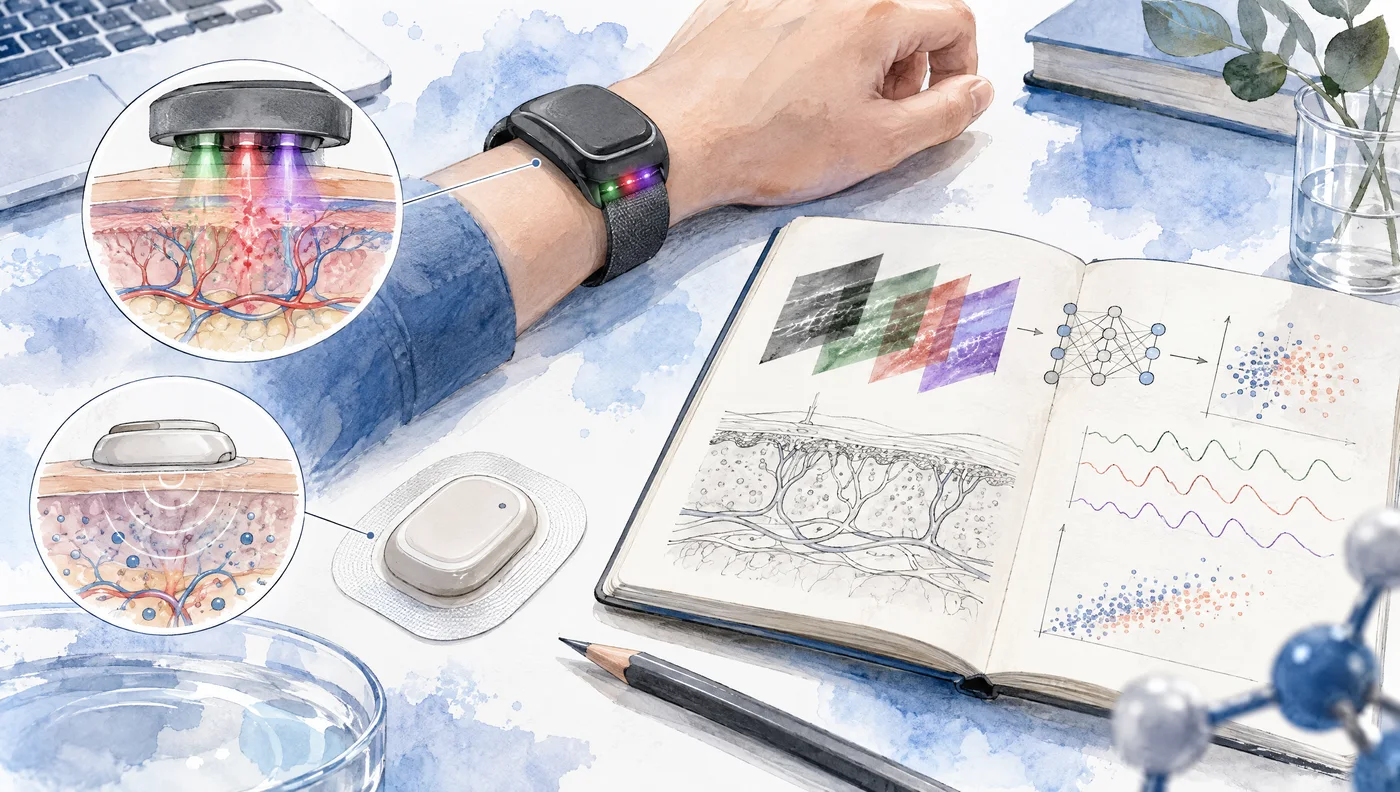
Vision4PPG turns 1D PPG into 2D images (STFT magnitude, STFT phase, and recurrence plots) and fine-tunes public vision foundation models, DINOv3 and SigLIP-2 ViT-B (86M parameters), with LoRA. It is an adaptation of vision models, not a PPG-pretrained foundation model. In the authors' Table 1, those vision models win 9 of 14 diastolic/systolic MAE comparisons against fully tuned MOMENT-385M and PPG-GPT-345M; SigLIP-2's Aurora-Oscillometric DBP/SBP MAE is 5.32/18.57 mmHg. The bed BCG set is an exception, where MOMENT and PPG-GPT report lower error than either vision model.
Summary & evidence
VitalAgent
tool-augmented ECG/PPG monitoring agent (Univ. of Melbourne, Ting Dang group)
Summary & evidence
WavesFM
hierarchical longitudinal FM for raw wearable PPG + accelerometer waveforms
Summary & evidence
Wonderwall
Wonderwall is an activity recognition foundation model trained first on physics-based simulated motion and then on curated real datasets. Tested on ten activity recognition benchmarks, it gave state-of-the-art generalization in zero-shot, few-shot and full-shot settings.
Summary & evidence
xMAE
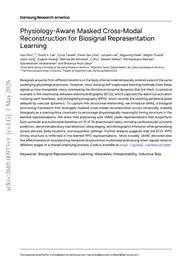
xMAE is a biosignal pretraining method that reconstructs one signal from another, for example ECG and the delayed PPG pulse it produces, so the model learns physiological timing. Its representations beat unimodal and multimodal baselines on 15 of 19 tasks, including cardiovascular outcomes, abnormal lab tests, sleep staging and demographics, across different devices and body locations.
Summary & evidence
Showing 151–162 of 162 models
Families describe the main role reported in each record. Signals may describe training data, rather than required inference inputs. Dates use the first arXiv posting when known, otherwise the catalog paper date. Missing information stays unconfirmed. Saves stay in this browser.
Compare benchmark evidence
All benchmarks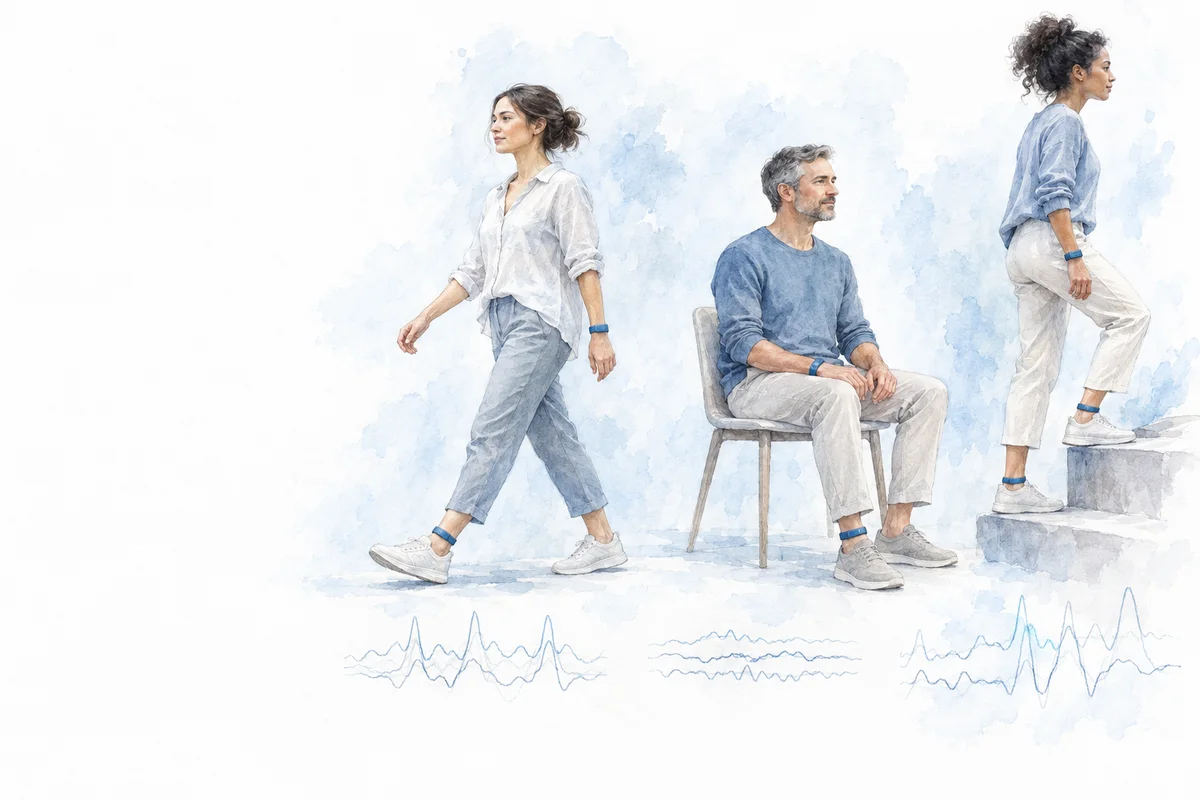
Leaderboard
Human activity recognition
28 benchmarks · 58 reported results
Leaderboard
Glucose estimation
10 benchmarks · 58 reported results
Leaderboard
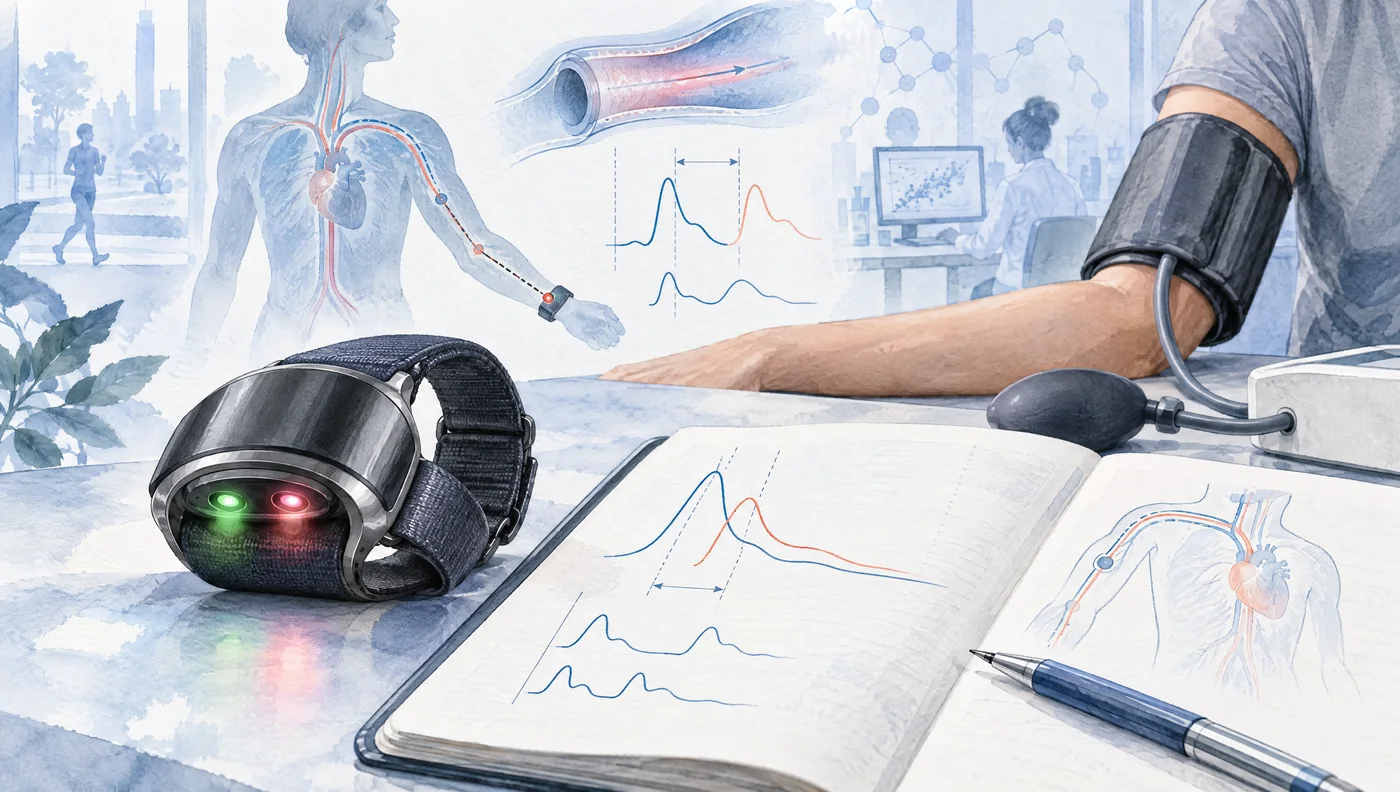
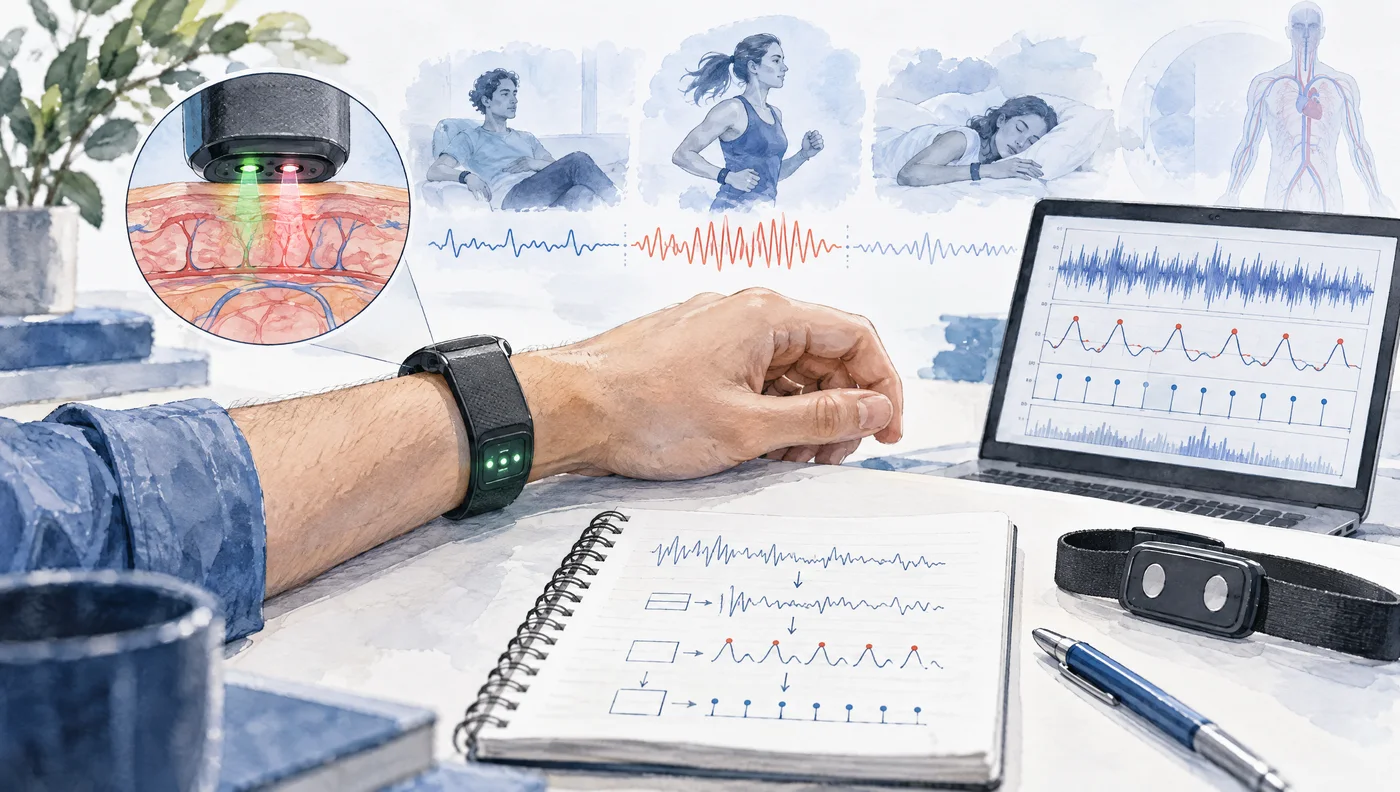
Cuffless BP
21 benchmarks · 30 reported results
Leaderboard
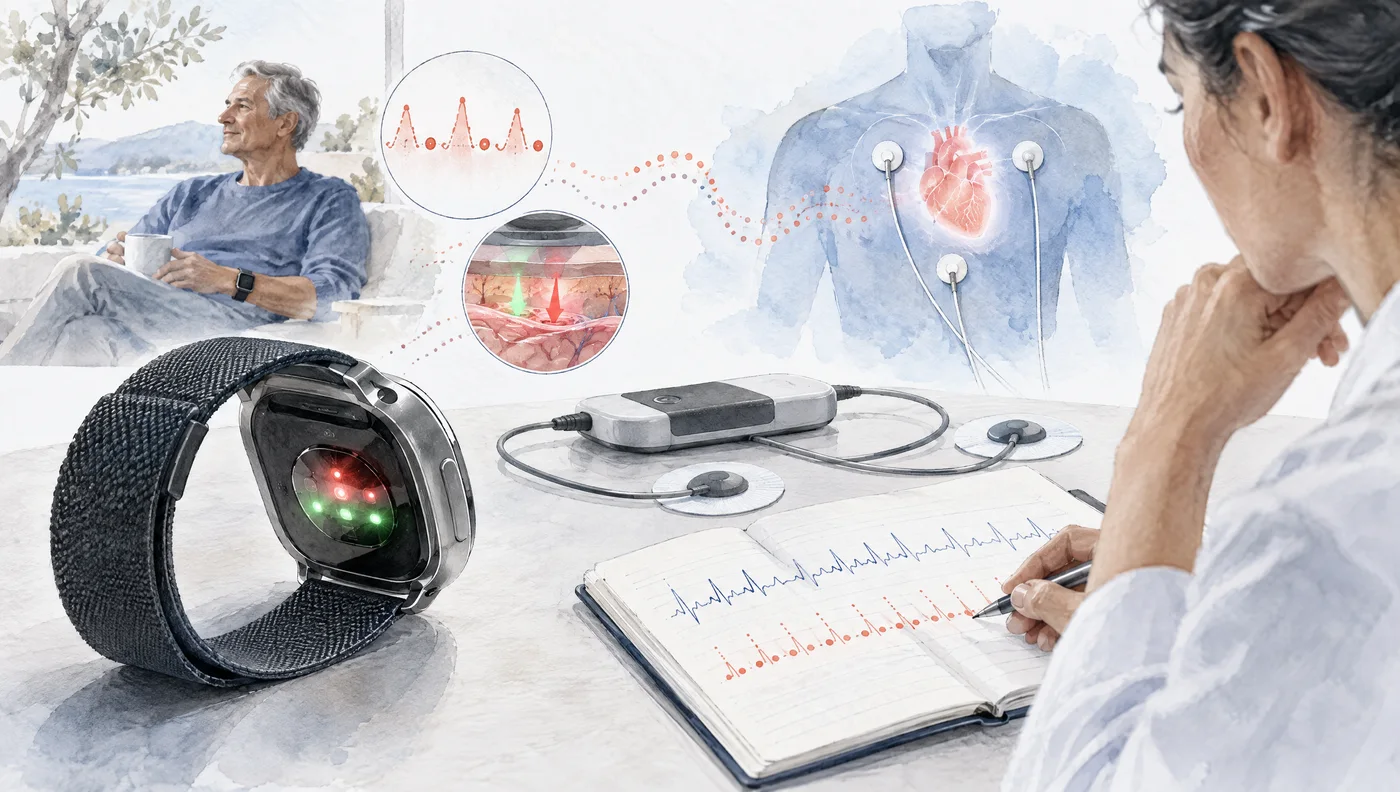
Heart rate estimation
11 benchmarks · 26 reported results
Leaderboard
Atrial fibrillation detection
13 benchmarks · 14 reported results
Leaderboard
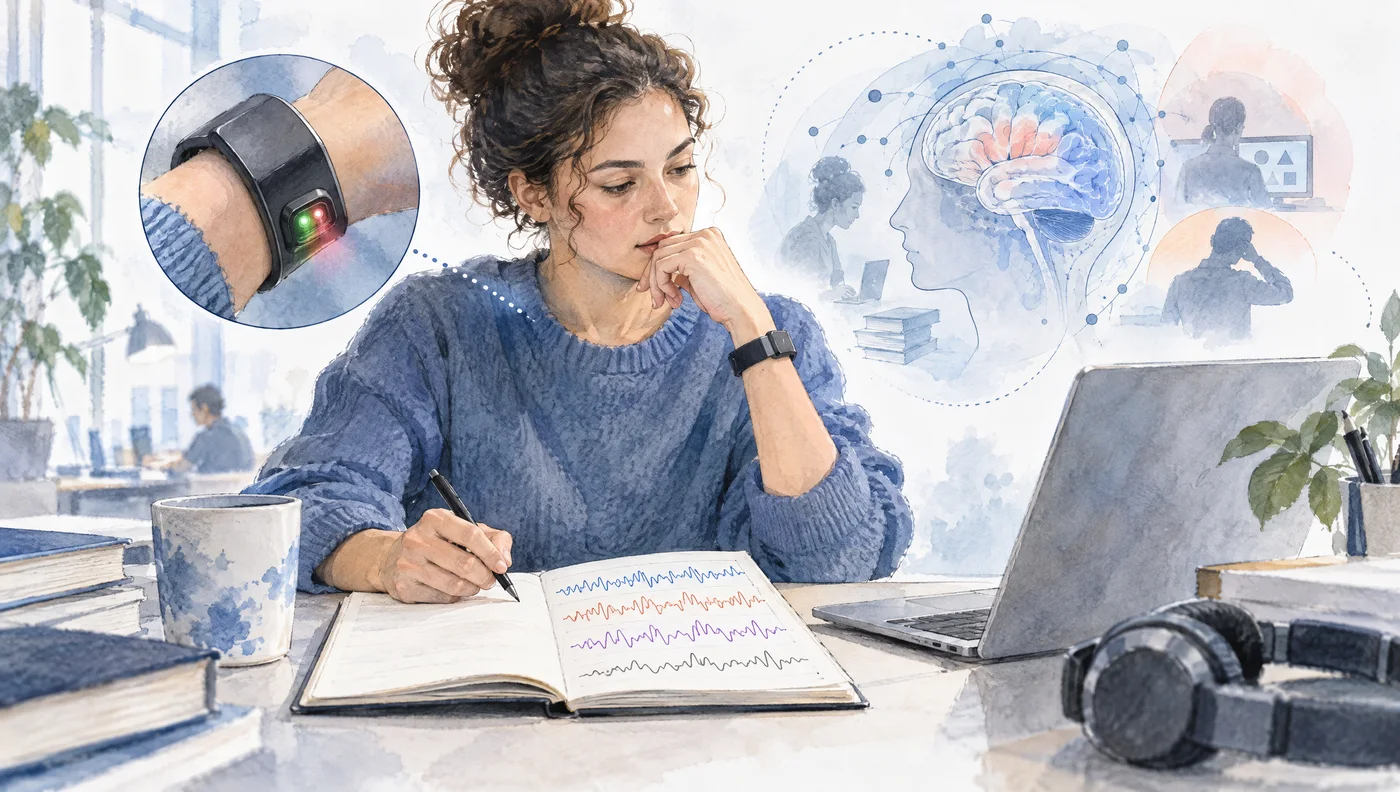
Mental workload
3 benchmarks · 10 reported results
Leaderboard
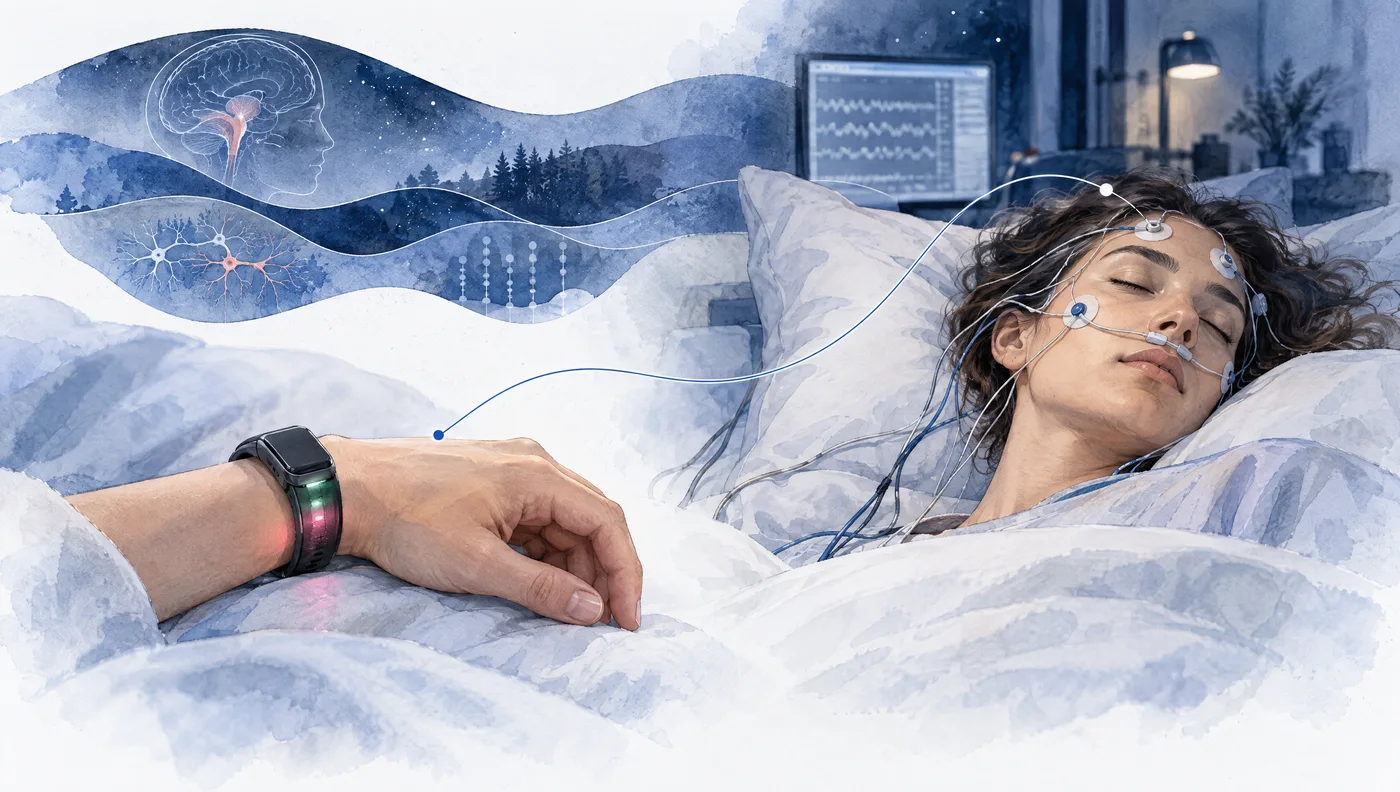
Sleep staging
9 benchmarks · 9 reported results
Leaderboard
Stress detection (acute / prolonged / affect)
2 benchmarks · 3 reported results
Leaderboard
Potassium estimation
1 benchmark · 1 reported result
Leaderboard
Sleep apnea ahi
1 benchmark · 1 reported result
Leaderboard
Sleep apnea severity
1 benchmark · 1 reported result
Curated collections
Download the full atlas
Complete source records (JSON and CSV) are free for members. Sign in to download. Every record is readable on this site, and llms.txt describes the hub for AI tools.
For a citable version that never changes, use the 2026-10 snapshot.
Cite or reuse this
CC BY 4.0ChatPPG compiled this data. You can copy, adapt and republish it, including in articles, slides, papers and AI tools, as long as you credit ChatPPG and link to this page. Please also cite the original studies for any number you use.
Attribution
Source: ChatPPG, ChatPPG Research Hub: wearable and PPG benchmark leaderboards, datasets and models, https://chatppg.com/research (CC BY 4.0)
HTML link
Source: <a href="https://chatppg.com/research">ChatPPG, ChatPPG Research Hub: wearable and PPG benchmark leaderboards, datasets and models</a> (<a href="https://creativecommons.org/licenses/by/4.0/" rel="license">CC BY 4.0</a>)Cite the dated snapshot 2026-10 for a fixed, reproducible version. Please also cite the original publications listed above.
APA
ChatPPG. (2026). ChatPPG Research Hub: wearable and PPG benchmark leaderboards, datasets and models (Version 2026-10) [Data set]. ChatPPG Research Hub. https://chatppg.com/research
BibTeX
@misc{chatppg_research_hub,
  author       = {{ChatPPG}},
  title        = {{ChatPPG Research Hub: wearable and PPG benchmark leaderboards, datasets and models}},
  year         = {2026},
  month        = oct,
  version      = {2026-10},
  howpublished = {\url{https://chatppg.com/research}},
  note         = {ChatPPG Research Hub, Snapshot 2026-10, https://chatppg.com/research/snapshots/2026-10}
}
CITATION.cff
cff-version: 1.2.0
message: "If you use this resource, please cite it as below."
type: dataset
title: "ChatPPG Research Hub: wearable and PPG benchmark leaderboards, datasets and models"
authors:
  - name: "ChatPPG"
url: "https://chatppg.com/research"
repository-artifact: "https://chatppg.com/research/snapshots/2026-10"
version: "2026-10"
date-released: "2026-10-17"
Stay in the loop
Get new PPG datasets, papers and models
The ChatPPG newsletter covers what's new in the research atlas, plus practical guides. Unsubscribe anytime.