How accurate are Apple Watch calories? What 6 studies show
Apple Watch calorie counts usually miss lab measurements by about 15–25%. What six validation studies found, and why body fat changed the error.
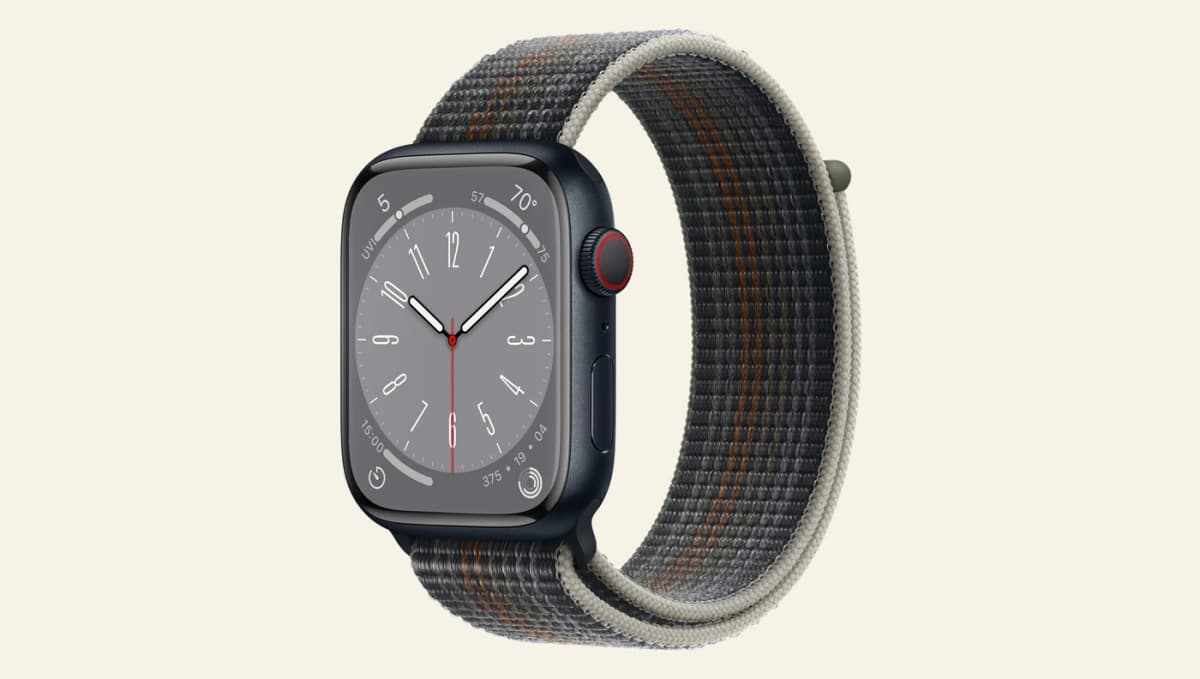
Short answer: If you are asking how accurate Apple Watch calories are, lab studies usually put the error at about 15–25%, and sometimes more. Apple Watch tends to do better than other wrist wearables on calories, but every study that tested it against indirect calorimetry (the lab method that measures the oxygen you use and the carbon dioxide you breathe out) found errors much larger than its heart-rate errors. A 2026 PLOS One study added a new detail: error grew with body fat, while skin tone in the range tested made no measurable difference.
So the calorie number is a reasonable way to compare your days and weeks. It is a poor way to count exactly how much you can eat.
This article is educational and is not dietary or medical advice. For weight-management decisions, talk with a clinician or registered dietitian.
How Apple Watch estimates calories
An Apple Watch does not measure calories. It estimates them. Apple says the watch uses your height, weight, sex and age to calculate calories burned, and that calibrating with about 20 minutes of outdoor walking or running can improve the accuracy of calorie estimates (Apple Support: Get the most accurate measurements; Apple Support: Calibrate your Apple Watch). Apple also says heart rate is one of many inputs, and that the watch picks the inputs that fit the workout, adding the accelerometer for indoor runs, for example.
Heart rate comes from the optical sensor on the back of the watch, which uses photoplethysmography (PPG): green light shines into the skin and the sensor tracks how much is absorbed as blood pulses through the capillaries. Movement comes from the accelerometer, the same kind of sensor behind actigraphy. An algorithm Apple has not published turns those signals and your profile into kilocalories.
This creates two layers of error. The first is in the sensor: the PPG signal can be thrown off by motion, fit or poor blood flow in the skin, which is why algorithms try to detect motion artifacts before they trust a reading. The second layer is in the model. Even with perfect heart rate, the link between heart rate and energy use varies between people. In two of the studies below, Apple Watch heart rate stayed within a few percent of a chest strap while calorie error was several times larger, which points at the model more than the sensor (more on the sensor side in how accurate Apple Watch heart rate is).
Active calories vs total calories on Apple Watch
Apple shows two kinds of calories, and mixing them up causes a lot of confusion.
- Active calories fill the red Move ring. Apple describes active energy as the energy burned through physical activity and exercise, separate from resting energy (Apple HealthKit: activeEnergyBurned).
- Resting energy is what your body burns to stay at rest: breathing, circulating blood, and maintaining cells (Apple HealthKit: basalEnergyBurned).
- Total calories, shown in a workout summary, are the active and resting portions added together.
Neither number is measured. Validation studies usually compare the watch's workout figure with the lab reading for the same period, and some papers do not say which figure they used, so be careful when comparing a published error with your own Move ring.
What lab studies found, model by model
Six studies have tested Apple Watch calories against a lab criterion. They used different models, activities and statistics, so the numbers below are not one shared scale.
Original Apple Watch (2017)
Shcherbina and colleagues at Stanford tested seven wrist devices on 60 volunteers who sat, walked, ran and cycled while connected to indirect calorimetry. No device got its energy-expenditure error below 20%. The Apple Watch had the lowest overall error for both heart rate and energy, and device error was higher for walking, for men, for people with a higher BMI and for darker skin (Shcherbina et al., 2017, doi:10.3390/jpm7020003).
Series 4 (2020)
Düking and colleagues tested 25 people sitting, walking, running and sprinting. Depending on intensity, the Apple Watch Series 4 had a coefficient of variation for energy expenditure of 13.5% to 27.1%, against 0.9% to 4.3% for heart rate. The authors concluded that none of the four watches tested should be used to monitor energy expenditure at those intensities (Düking et al., 2020, doi:10.2196/16716).
Series 6 outdoors (2022)
Le and colleagues had 20 young, normal-weight adults walk at 6 km/h and run at 10 km/h for 2 km on a track while wearing a COSMED K5 portable gas analyzer. The Series 6 overestimated in both: mean absolute percentage error (MAPE) was 19.8% walking and 24.4% running. A Huawei watch did better, at 9.9% and 11.9% (Le et al., 2022, doi:10.3389/fphys.2022.995575).
Series 6 across five activities (2022)
Hajj-Boutros and colleagues tested 60 young adults across sitting, walking, running, resistance exercise and cycling. The Apple Watch 6 was the best of three devices for heart rate, with a coefficient of variation under 5% in every activity, but its energy-expenditure CV was 14.68% to 24.85%, which the authors rated poor for all five activities (Hajj-Boutros et al., 2022, doi:10.1080/17461391.2021.2023656; only the abstract was available to us).
Series 9 (2024)
Chase and colleagues ran 30 people through a 10-minute treadmill protocol, grouped by Fitzpatrick skin type, against a Parvo Medics metabolic cart. Energy expenditure was inconsistent in all three groups. This watch mostly read low: average bias was negative in every group, and the underestimate was statistically significant in two of the three (Chase et al., 2024, doi:10.3390/jfmk9040275).
Series 8 (2026)
Kostrna and colleagues compared four watches worn at the same time, covered in the next section (Kostrna et al., 2026, doi:10.1371/journal.pone.0353261).
How far off are Apple Watch calories?
Lab studies compare the watch with indirect calorimetry, which measures oxygen use and carbon dioxide output. Guess first, then see what each study reported.
Drag the slider to guess how far off an Apple Watch calorie estimate is from a lab measurement, then reveal the published numbers.
What it shows: every study that reports a percentage puts Apple Watch calorie error in the double digits, usually around 15–25%, and higher in the short 2026 cycling test. The statistics differ (coefficient of variation, mean absolute percentage error), so the rows are not a ranking.
Data table
| Study | Apple Watch | Statistic | Value | n |
|---|---|---|---|---|
| Düking 2020 | Series 4 | CV across intensities (abstract) | 13.5–27.1% | 25 |
| Hajj-Boutros 2022 | Series 6 | CV across 5 activities (abstract) | 14.68–24.85% | 60 |
| Le 2022 | Series 6 | MAPE, outdoor walk and run (abstract) | walk 19.8%, run 24.4% | 20 |
| Kostrna 2026 | Series 8 | Mean APE, cycling session (Table 1) | 35.74% | 52 |
| Device | n | Bias, kcal (95% CI) | Abs. error, kcal | Abs. % error |
|---|---|---|---|---|
| Apple Watch Series 8 | 52 | 21.6 (11.59 to 31.6) | 33.63 | 35.74% |
| Fitbit Sense 2 | 44 | 3.14 (-8.96 to 15.24) | 31 | 31.67% |
| Galaxy Watch 5 | 50 | 56.76 (45.11 to 68.41) | 58.28 | 66.49% |
| Forerunner 955 | 51 | 68.61 (53.28 to 83.94) | 71.47 | 77.56% |
Body fat, not skin tone, moved the error in a 2026 study
The Florida International University team recruited 58 Hispanic adults aged 18 to 50 with Fitzpatrick skin types III to V. Recruitment was split by BMI so that people with obesity were well represented (mean BMI 29.73). Each person wore an Apple Watch Series 8, Fitbit Sense 2, Samsung Galaxy Watch 5 and Garmin Forerunner 955 during a single session on a recumbent bike: 5 minutes of rest, 10 minutes alternating moderate and vigorous 2-minute intervals, then 5 minutes of recovery. A COSMED K5 measured energy use, and body fat was measured with handheld bioelectrical impedance.
Every watch was off. Mean bias, the watch figure minus the lab figure, was 21.60 kcal for Apple (95% CI 11.59 to 31.60), 56.76 kcal for Samsung and 68.61 kcal for Garmin. Fitbit's mean bias was only 3.14 kcal, but only after seven implausible readings, more than 4.5 times the lab value, were removed. With them included, Fitbit's mean bias was 128.6 kcal.
Apple was the least biased of the four, but its average absolute percentage error was still 35.74%. The paper notes that median percentage errors across devices were about 15–25%, so a few large misses pull the averages up.
Body fat mattered. Mixed-effects models found a significant effect of body fat percentage and a device-by-body-fat interaction. Percentage error rose with body fat on all four watches, more steeply for Fitbit and Garmin than for Apple. Fitzpatrick skin type showed no robust effect (p = .89).
The skin-tone result needs care. Only four participants had type V skin, the study did not include types I, II or VI, and the authors themselves say the null finding should be read cautiously. Skin tone does affect optical heart-rate signals (see PPG skin-tone bias and wearable heart-rate accuracy across skin tones). This study suggests that for calories, in this group, body composition had a bigger effect. The authors point out that most energy-expenditure models are calibrated on leaner people, and that more soft-tissue motion at the wrist may add to the error.
Other limits: one 10-minute cycling bout, no chance for the watches to learn from repeated use, the watches' workout mode also ran during the rest and recovery periods, and several devices were worn at once. The paper's entry on our research hub is here.
Does Apple Watch overestimate calories?
Sometimes. The Series 6 overestimated during outdoor walking and running (Le 2022), and the Series 8 read about 22 kcal high on average in a short cycling session (Kostrna 2026). The Series 9 mostly read low on a treadmill (Chase 2024). Direction depends on the model, the activity and the person, so there is no single correction factor you can apply.
What the studies agree on is the size of the error. For one person on one day, the gap between the watch and the lab can be large in either direction. Across many workouts, if the error for you stays roughly consistent, the watch can still show whether you are moving more or less than usual. Kostrna and colleagues say the same: limited absolute accuracy does not rule out tracking within-person change, though that has not been well tested in free-living conditions.
How to use the number anyway
- Watch trends rather than single workouts. A week of higher active calories than your usual week is more informative than any one total.
- Keep your profile current. Apple uses height, weight, sex and age in its calculation, so an outdated weight shifts every estimate.
- Calibrate outdoors with about 20 minutes of walking or running at your normal pace, as Apple recommends.
- Pick the right workout type and wear the watch snugly on top of the wrist during exercise, which helps the heart-rate sensor.
- Use a chest strap if you want better heart rate (see Apple Watch vs chest strap accuracy). Better heart rate does not fix the calorie model, though.
- Do not eat back calories one for one. If the count drives food decisions, err on the side of caution, and get help from a dietitian if weight or a health condition is involved.
For a wider view of calorie accuracy across brands, see our wearable calorie accuracy overview, WHOOP calorie accuracy and the Garmin vs Apple Watch and Fitbit vs Apple Watch comparisons. Our Apple Watch device page lists more validation studies.
References
- Kostrna J, Oparina E, Palacios C, Rodriguez AJ, Pei J, Ajmal A, Ramella-Roman JC. Body fat, skin tone, and the accuracy of smartwatch caloric expenditure estimates. PLOS One. 2026;21(7):e0353261. doi:10.1371/journal.pone.0353261
- Shcherbina A, Mattsson CM, Waggott D, et al. Accuracy in wrist-worn, sensor-based measurements of heart rate and energy expenditure in a diverse cohort. Journal of Personalized Medicine. 2017;7(2):3. doi:10.3390/jpm7020003
- Düking P, Giessing L, Frenkel MO, et al. Wrist-worn wearables for monitoring heart rate and energy expenditure while sitting or performing light-to-vigorous physical activity: validation study. JMIR mHealth and uHealth. 2020;8(5):e16716. doi:10.2196/16716
- Le S, Wang X, Zhang T, et al. Validity of three smartwatches in estimating energy expenditure during outdoor walking and running. Frontiers in Physiology. 2022;13:995575. doi:10.3389/fphys.2022.995575
- Hajj-Boutros G, Landry-Duval MA, Comtois AS, et al. Wrist-worn devices for the measurement of heart rate and energy expenditure: a validation study for the Apple Watch 6, Polar Vantage V and Fitbit Sense. European Journal of Sport Science. 2022 (print 2023;23(2):165–177). doi:10.1080/17461391.2021.2023656
- Chase S, Liddell R, McGonagle C, Ives S. Accuracy of the Apple Watch Series 9 for measures of energy expenditure and heart rate at rest and during exercise: impact of skin pigmentation. Journal of Functional Morphology and Kinesiology. 2024;9(4):275. doi:10.3390/jfmk9040275
- Apple Support. Get the most accurate measurements using your Apple Watch. support.apple.com/en-us/105002
- Apple Support. Calibrate your Apple Watch for improved Workout and Activity accuracy. support.apple.com/en-us/105048
- Apple Developer Documentation. HealthKit: activeEnergyBurned and basalEnergyBurned. developer.apple.com
Frequently Asked Questions
- How accurate is Apple Watch calories burned?
- Roughly within 15–25% of a lab measurement in most studies, and worse in some. Two studies reported coefficients of variation of 13.5–27.1% (Series 4) and 14.68–24.85% (Series 6). Another found a mean absolute percentage error of 19.8% for walking and 24.4% for running (Series 6). In a 2026 cycling study the Series 8 had a mean absolute percentage error of 35.74%. Apple Watch usually did better than the other watches tested, but no study found calorie estimates as accurate as its heart rate.
- Does Apple Watch overestimate calories?
- Often, but not always. A Series 6 overestimated energy expenditure during outdoor walking and running, and a Series 8 read high by an average of 21.60 kcal in a 10-minute cycling session. A 2024 treadmill study of the Series 9 found the opposite: it tended to read low, significantly so in two of three skin-tone groups. The direction depends on the model, the activity and the person.
- What is the difference between active and total calories on Apple Watch?
- Active calories are the energy Apple estimates you burned through movement and exercise, and they fill the red Move ring. Resting energy is what your body burns to stay alive at rest, for breathing, circulation and cell upkeep. Total calories in a workout summary are the two added together. Both are estimates; the watch does not measure either one directly.
- Which smartwatch is most accurate for calories?
- No smartwatch has been shown to be accurate for calories in the way a lab is. In head-to-head tests Apple Watch often had among the lowest errors (Shcherbina 2017; Kostrna 2026), but rankings change with the activity and the models tested. In one outdoor study a Huawei watch beat the Apple Watch Series 6 for both walking and running.
- Does skin tone affect Apple Watch calorie accuracy?
- The evidence is mixed. A 2017 study found larger device errors with darker skin. A 2026 study of Hispanic adults with Fitzpatrick skin types III to V found no robust effect of skin type on calorie error, but only four people had type V skin, and body fat had a clear effect. A 2024 Series 9 study found heart rate was less accurate in its darkest-skin group, while calorie error was inconsistent in every group.
- Should I eat back the calories my Apple Watch says I burned?
- Treat the number as a rough guide, not a food budget. Lab studies put the error at tens of kilocalories even in a 10-minute session, and the error grew with body fat in the 2026 study. If you are managing weight or a medical condition, a registered dietitian or clinician can help you set intake targets. This article is educational and not dietary or medical advice.
Related articles
Wearable SpO2 Accuracy: What Studies Show
How accurate are smartwatch and ring SpO2 readings? Apple Watch, Fitbit, Garmin, Samsung and Oura compared with clinical pulse oximeters in studies.
How Accurate Are WHOOP Calories? What Studies Show
WHOOP estimates calories from heart rate, and independent tests are scarce. In a Stanford test of seven wrist devices, none got calorie error under 20%.
Apple Watch hypertension notifications: how PPG spots possible high blood pressure
Apple Watch hypertension notifications read 30 days of PPG data. FDA filings show 41.2% sensitivity and 92.3% specificity. Here's what an alert means.
How Accurate Is the Owlet Sock? What Studies Show
Owlet Dream Sock accuracy from FDA records and published studies: about 2–3% SpO2 error, but alerts missed most brief drops in a 2025 hospital study.
Garmin and Apple Watch Validation Studies
What independent studies show for Garmin and Apple Watch heart rate, SpO2 and AFib detection, how validation studies work, and where each falls short.
Related Comparisons
Whoop vs Apple Watch: What the Sleep-Lab Studies Found
Two sleep-lab studies tested WHOOP and Apple Watch on the same people on the same night, against polysomnography (PSG) for sleep and ECG for heart rate. Miller and colleagues (2022) tested WHOOP 3.0 and Apple Watch Series 6 in 53 adults; Schyvens and colleagues (2025) tested WHOOP 4.0 and Apple Watch Series 8 in 62 adults. Overnight heart rate was close to ECG for both. WHOOP 3.0 tracked overnight HRV more closely than Apple Watch S6. For sleep stages the two studies point in different directions, so neither device clearly wins there.
Compare devices →Garmin vs Apple Watch: Heart Rate Accuracy from Published Studies
In the studies that tested both brands, Apple Watch agreed more closely with ECG for exercise heart rate and overnight heart rate. Series 10 and Fenix 8 were not the models tested.
Compare devices →Apple Watch Ultra 2 vs Garmin Fenix 8: Specs Guide
Choose the Garmin Fenix 8 if battery life, built-in mapping, and training tools come first. Choose the Apple Watch Ultra 2 if you use an iPhone and value tighter Apple integration, cellular connectivity, and a brighter specified display. Both offer optical heart-rate sensing, multi-band positioning, ECG support in eligible regions, and a 40 m recreational dive rating. This comparison uses the 49 mm Ultra 2 and 47 mm Fenix 8 AMOLED as the clearest like-for-like models.
Compare devices →Devices in this article
Research records with the datasets, papers and published validation results for each device.