Foundation model

HARNet / OxWearables SSL

From “Self-supervised learning for human activity recognition using 700,000 person-days of wearable data”
Year
2024
Form factor
Wrist accelerometer UKB
Venue listedCatalog paper date: Jun 2024Added to atlas: Sep 26, 2026Source

Activity counts measure attention, not model quality. Missing counts are unknown. Publication status follows the linked source; a listed venue alone does not confirm peer review.

HARNet is the set of self-supervised activity recognition models from Oxford's study of 700,000 person-days of UK Biobank wrist accelerometer data. They beat strong baselines on eight benchmarks with a median relative F1 gain of 24.4%. Pretrained models for 5, 10 and 30-second windows at 30 Hz can be loaded through torch.hub from the OxWearables ssl-wearables repository.

Pretraining data
UK Biobank, 700,000 person-days
Signals
IMU
Method
multi-task self-supervised learning
Weights
harnet5 / harnet10 / harnet30 via torch.hub
Result
median F1 +24.4% across 8 benchmarks
Year
2024
At a glance
Type
Foundation model
Modalities
IMU
Parameters
Not reported
Architecture
ResNet backbone, multitask SSL
Venue
npj Digital Medicine 2024-06
Year
2024
arXiv
Not reported
DOI
Not reported
Weights
Open
Licence
Oxford Academic Use Licence (non-commercial; code + checkpoints; commercial licence required)
Caveats
Not reported
Added
Sep 26, 2026
Updated
Oct 17, 2026

Abstract

Accurate physical activity monitoring is essential to understand the impact of physical activity on one’s physical health and overall well-being. However, advances in human activity recognition algorithms have been constrained by the limited availability of large labelled datasets. This study aims to leverage recent advances in self-supervised learning to exploit the large-scale UK Biobank accelerometer dataset—a 700,000 person-days unlabelled dataset—in order to build models with vastly improved generalisability and accuracy. Our resulting models consistently outperform strong baselines across eight benchmark datasets, with an F1 relative improvement of 2.5–130.9% (median 24.4%). More importantly, in contrast to previous reports, our results generalise across external datasets, cohorts, living environments, and sensor devices. Our open-sourced pre-trained models will be valuable in domains with limited labelled data or where good sampling coverage (across devices, populations, and activities) is hard to achieve.

Verbatim fromSemantic Scholar· Abstract via Semantic Scholar; © the authors/publisher

Key results

How it works

How HARNet / OxWearables SSL works: Input signals → Foundation model → Downstream tasksInput signals: IMU (Accelerometer, 3-axis). Datasets: CAPTURE-24, WISDM AR v1.1. Foundation model: HARNet / OxWearables SSL (Convolutional network). Downstream tasks: Activity recognition.Input signalsIMU: Accelerometer, 3-axisxyzIMUAccelerometer, 3-axisDatasets: CAPTURE-24, WISDM AR v1.1DatasetsCAPTURE-24, WISDM AR v1.1Foundation modelHARNet / OxWearables SSLConvolutional networkDownstream tasksActivity recognitionActivity recognition

Datasets linked in the hub; pretraining vs evaluation roles follow the paper.

Architecture
ResNet backbone, multitask SSL
Inputs
IMU
Approach
HAR · OxWearables · UKB · academic license

Devices· 2

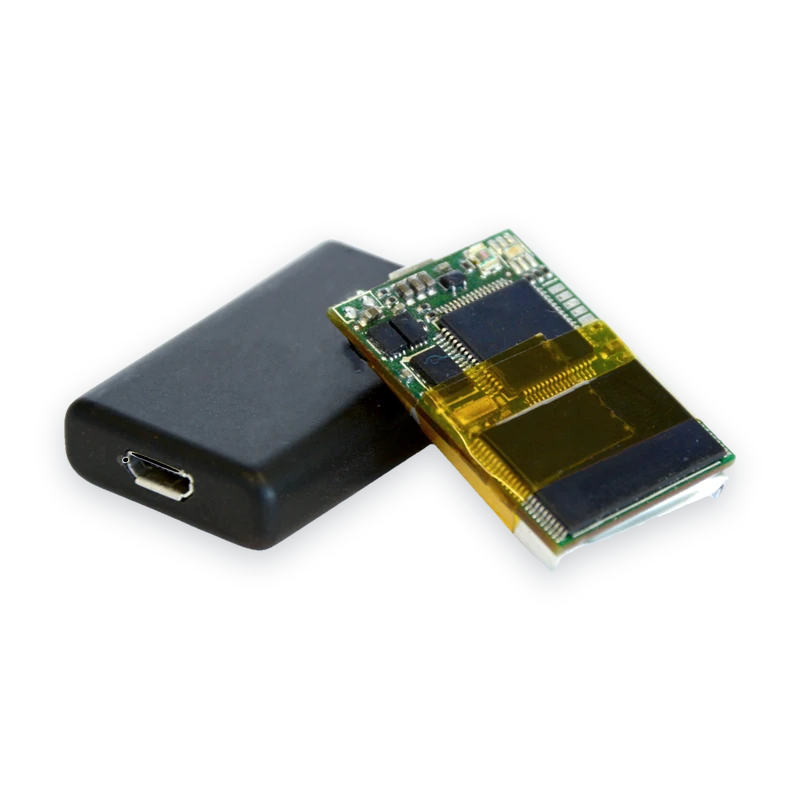
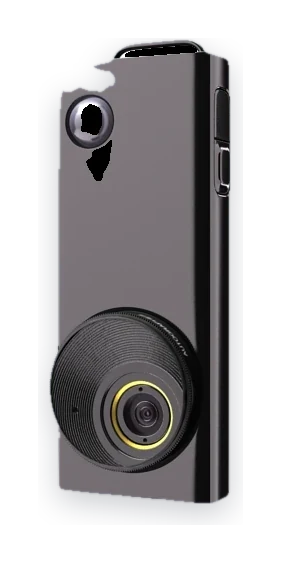
Full photo credits, sources and licences are on each device page.

Leaderboard rows· 8

All leaderboards
TaskDatasetMetricValueRank
Human activity recognition (IMU)CAPTURE-24Cohen's κ ↑0.737 ± 0.087#1 / 3
Human activity recognition (IMU)CAPTURE-24Cohen's κ ↑0.703 ± 0.092#2 / 3
Human activity recognition (IMU)CAPTURE-24Cohen's κ ↑0.683 ± 0.101#3 / 3
Human activity recognition (IMU)CAPTURE-24Cohen's κ ↑0.86#1 / 1
Human activity recognition (IMU)CAPTURE-24Macro-F1 ↑0.726 ± 0.093#1 / 3
Human activity recognition (IMU)CAPTURE-24Macro-F1 ↑0.708 ± 0.094#2 / 3
Human activity recognition (IMU)CAPTURE-24Macro-F1 ↑0.694 ± 0.099#3 / 3
Human activity recognition (IMU)CAPTURE-24Macro-F1 ↑0.818#1 / 1

Datasets used· 2

Papers· 2

Authors· 7

Cite this model

Cite the publication recorded for this model. Check it against the publisher before submitting.

Self-supervised learning for human activity recognition using 700,000 person-days of wearable data. (2024). npj Digital Medicine 2024-06. https://www.nature.com/articles/s41746-024-01062-3
@article{harnetukb2024selfsupervised,
  title         = {{Self-supervised learning for human activity recognition using 700,000 person-days of wearable data}},
  year          = {2024},
  journal       = {npj Digital Medicine 2024-06},
  url           = {https://www.nature.com/articles/s41746-024-01062-3}
}

Source metadata: 2024

Record updated Oct 17, 2026

History

  1. Record updated

  2. Added to the ChatPPG research hub