How Accurate Is Oura Ring? Sensor Data vs Clinical Studies
A detailed analysis of Oura Ring accuracy across heart rate, HRV, sleep staging, SpO2, and temperature metrics, with clinical study data from de Zambotti et al. (2019), Kinnunen et al. (2020), and peer-reviewed validation research comparing finger-based PPG to gold-standard measurements.
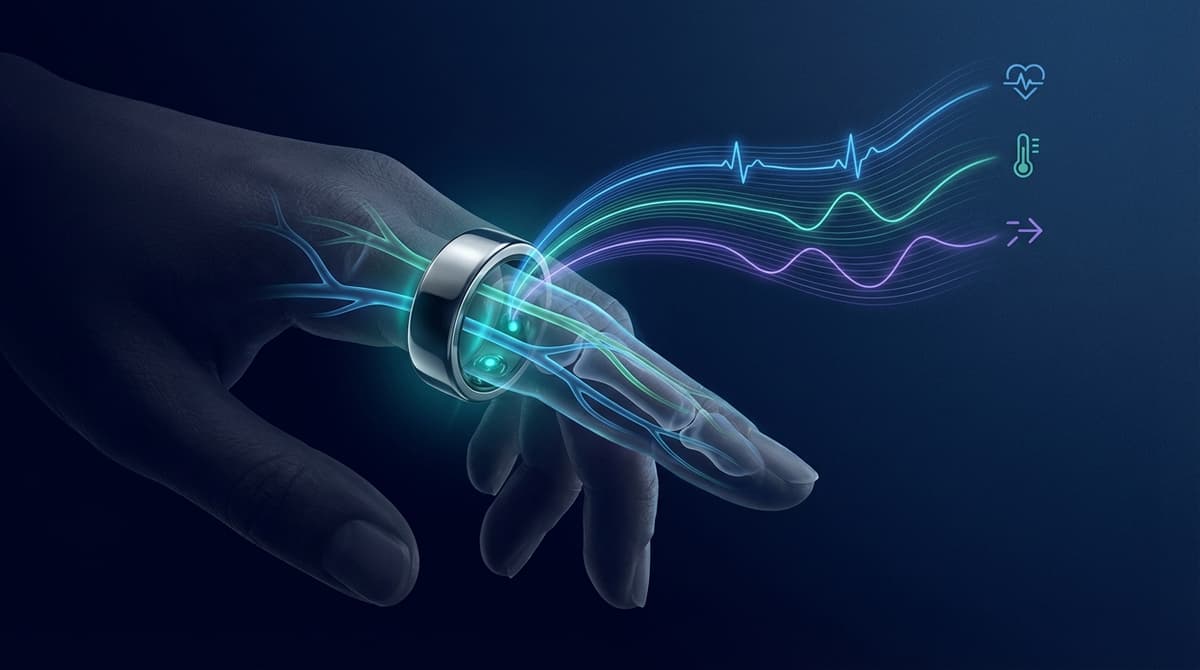
The Oura Ring is one of the most accurate consumer wearables for resting heart rate, HRV, and sleep tracking, with clinical studies showing heart rate accuracy within plus or minus 1-2 BPM at rest and sleep staging agreement of 79-86% compared to polysomnography. Its finger-based PPG sensor placement provides inherent advantages over wrist-worn devices for signal quality during sleep and rest, though it lacks real-time exercise heart rate monitoring.
The Oura Ring has become one of the most popular health wearables on the market, and for good reason. Rather than competing with smartwatches on fitness tracking features, it focuses on recovery, sleep, and readiness metrics where its ring form factor provides genuine measurement advantages. But how accurate are these measurements compared to clinical gold standards? This article examines the peer-reviewed evidence, explains why finger-based PPG matters, and identifies where the Oura Ring excels and where it falls short.
For background on how the optical sensors in the Oura Ring work, see our guide to PPG technology.
Why Finger-Based PPG Has Inherent Advantages
The location of a PPG sensor matters enormously for signal quality. The Oura Ring places its sensors on the palmar side of the finger, and this location provides several physiological advantages over the wrist that directly impact measurement accuracy.
The finger has a much higher density of capillary beds and stronger arterial pulsation compared to the dorsal wrist where most smartwatches sit. The perfusion index, which measures the ratio of pulsatile to non-pulsatile blood flow, is typically 5-10 times higher at the fingertip than at the wrist. This means the PPG signal-to-noise ratio is fundamentally better at the finger, requiring less aggressive signal processing and algorithmic interpolation to extract heart rate and pulse interval data.
Additionally, the finger has thinner skin with less subcutaneous fat and fewer tendons, bones, and hair follicles that can interfere with light transmission and reflection. The ring form factor also ensures relatively consistent sensor-to-skin contact pressure, whereas watches can shift position on the wrist throughout the day and especially during sleep.
Motion artifact, the primary source of error in PPG measurements, is also reduced at the finger during sleep. While the wrist may flex, extend, and rotate substantially during sleep movements, the finger experiences less independent motion. This is particularly important because the Oura Ring takes its most critical measurements during the night. For more on how motion artifacts affect PPG readings, see our article on PPG motion artifact removal.
These advantages do not mean finger PPG is universally superior. During exercise, the finger can experience vasoconstriction that reduces blood flow, and gripping objects (handlebars, weights) can compress the sensor. This is one reason Oura has historically focused on resting and sleep metrics rather than exercise tracking.
Heart Rate Accuracy: What the Studies Show
Resting heart rate is the most fundamental measurement the Oura Ring provides, and the evidence supports its accuracy for this metric.
Kinnunen et al. (2020) conducted a validation study of the Oura Ring Generation 2, comparing its nocturnal heart rate measurements against ECG in a controlled sleep laboratory setting. The study found that the Oura Ring measured average nocturnal heart rate with a mean absolute error of approximately 1.2 BPM, with 95% limits of agreement within plus or minus 3.7 BPM. For a consumer device, this is excellent performance and comparable to medical-grade pulse oximeters.
The Oura Ring Gen 3 and the current generation have improved sensor hardware with additional LED wavelengths (green, red, and infrared) and updated algorithms. While independent peer-reviewed validation of the latest hardware is still accumulating, Oura's internal validation data and community-driven comparisons suggest incremental improvements over the Gen 2 results.
Daytime heart rate measurement is more challenging because of increased motion and variable sensor contact. The Oura Ring samples heart rate intermittently throughout the day during periods of detected inactivity rather than providing continuous real-time readings. This approach prioritizes accuracy over temporal resolution: by only reporting heart rate when signal quality is high, the ring avoids the noisy, unreliable readings that continuous wrist-based monitoring can produce during hand movements.
For users accustomed to smartwatches that display real-time heart rate, this can feel like a limitation. However, the daytime resting heart rate values the Oura Ring does report tend to be more reliable than continuous wrist-based readings filtered through aggressive smoothing algorithms. To understand how different PPG signal processing algorithms handle these challenges, see our technical guide.
HRV Accuracy: RMSSD and Nighttime Measurements
Heart rate variability is one of the Oura Ring's flagship metrics, used as a primary input for its Readiness Score. The ring measures HRV as the root mean square of successive differences (RMSSD) of pulse-to-pulse intervals during the night, reporting the average of the five-minute windows with the lowest resting heart rate.
Kinnunen et al. (2020) also evaluated HRV accuracy, finding that the Oura Ring's RMSSD measurements showed strong correlation (r = 0.98) with ECG-derived RMSSD during sleep. The mean bias was small, though the ring tended to slightly underestimate HRV at very high values and slightly overestimate at very low values, a compression effect common in PPG-derived HRV.
It is important to note that all PPG-based devices measure pulse rate variability (PRV) rather than true heart rate variability (HRV). PRV is derived from the timing of pulse waves arriving at the peripheral sensor, while true HRV is derived from R-R intervals in the ECG. The difference arises because pulse transit time (the delay between the heartbeat and the pulse arriving at the finger) varies slightly with blood pressure, vascular tone, and other factors. During rest and sleep, PRV closely approximates HRV, with correlation coefficients typically above 0.95. During exercise or acute stress, the discrepancy can increase.
The Oura Ring's approach of measuring HRV exclusively during sleep and rest, when the PRV-HRV agreement is highest, is a deliberate design decision that maximizes accuracy. Wrist-based devices that report HRV during exercise or immediately after should be interpreted with more caution. For more context on HRV norms and interpretation, see our HRV chart by age reference guide.
Sleep Staging Accuracy: de Zambotti et al. (2019) and Beyond
Sleep tracking is perhaps the Oura Ring's most important feature, and the research here is substantial.
de Zambotti et al. (2019) published one of the most rigorous independent evaluations of the Oura Ring's sleep staging capabilities. This study compared the Oura Ring (Generation 2) against polysomnography, the clinical gold standard for sleep assessment that uses EEG, EOG, EMG, and other physiological signals to classify sleep stages.
Key Findings from de Zambotti et al.
The study reported the following epoch-by-epoch agreement rates with PSG for sleep stage classification:
| Sleep Stage | Agreement with PSG |
|---|---|
| Wake detection | 73-78% |
| Light sleep (N1+N2) | 78-82% |
| Deep sleep (N3) | 82-86% |
| REM sleep | 79-84% |
| Sleep-wake detection | 93-96% |
| Total sleep time error | Approximately 15-20 minutes overestimation |
These results place the Oura Ring among the most accurate consumer sleep trackers, outperforming most wrist-based accelerometer-only devices (which typically achieve 60-70% sleep staging agreement) and competing favorably with more expensive wrist-based devices that incorporate PPG data into sleep staging.
The ring performed best at detecting deep sleep and worst at detecting wake periods after sleep onset. This pattern is common among consumer sleep trackers: brief awakenings are difficult to detect without EEG data, and devices tend to classify short wake periods as light sleep. The clinical significance of this limitation depends on the use case. For general sleep quality assessment and trend tracking, missing brief awakenings has minimal impact. For clinical evaluation of insomnia or sleep fragmentation, this limitation would be more consequential.
How the Oura Ring Stages Sleep
The Oura Ring uses a combination of signals for sleep staging: heart rate patterns, HRV dynamics, body temperature trends, and motion (accelerometer) data. During deep sleep, heart rate drops and HRV increases in a characteristic pattern. During REM sleep, heart rate becomes more variable and body temperature regulation shifts. These cardiovascular and thermoregulatory signatures, combined with motion data, allow the ring to infer sleep stages without the EEG data that polysomnography uses.
The latest Oura firmware has introduced improved sleep staging algorithms that incorporate additional signal features and machine learning models trained on larger polysomnography datasets. Independent validation of these newer algorithms is ongoing, but preliminary reports suggest improvement in wake detection and REM classification. For information on how these algorithms relate to broader peak detection methods in PPG analysis, see our technical overview.
SpO2 and Blood Oxygen Monitoring
The Oura Ring measures blood oxygen saturation using red and infrared LED wavelengths during sleep. This is the same dual-wavelength approach used by medical pulse oximeters, though in a smaller form factor with consumer-grade components.
Accuracy for SpO2 measurement on the Oura Ring falls in the range of plus or minus 2-3% compared to medical fingertip pulse oximeters in normal saturation ranges (95-100%). At lower saturation levels (below 90%), accuracy can degrade further, which is a limitation shared by most consumer wearables. Medical pulse oximeters typically achieve plus or minus 1-2% accuracy and are calibrated across a wider range of saturation values.
The Oura Ring reports overnight SpO2 as an average with a breathing regularity metric that can flag potential sleep-disordered breathing patterns. This is a screening tool, not a diagnostic one. Users with consistently low overnight SpO2 values or high breathing disturbance indices should consult a sleep medicine specialist for formal evaluation, which would include a home sleep test or in-laboratory polysomnography. For more on blood oxygen measurement, see our pulse oximeter readings chart and our blood oxygen level chart.
Temperature Sensing: A Unique Capability
One feature that distinguishes the Oura Ring from most smartwatches is its skin temperature sensor. The ring measures temperature from the palmar finger surface, which is sensitive to core body temperature changes. Rather than reporting absolute temperature, the Oura Ring tracks deviations from your personal baseline.
Temperature trending has proven useful for several applications. Menstrual cycle tracking uses the characteristic 0.2-0.5 degree Celsius rise in basal body temperature after ovulation. Illness detection relies on temperature elevations that precede symptom onset by 1-2 days in some cases, as demonstrated during the TemPredict COVID-19 detection study. General recovery monitoring uses temperature deviations as an indicator of physiological stress.
The accuracy of the temperature deviation measurement is within approximately 0.1 degrees Celsius for trend detection, which is sufficient for these applications. However, the Oura Ring does not provide absolute body temperature readings and should not be used as a thermometer. The relationship between skin temperature at the finger and core body temperature is influenced by ambient temperature, vasomotor tone, and other factors that make absolute measurement unreliable from a peripheral site.
Known Limitations of the Oura Ring
Despite its strengths, the Oura Ring has several important limitations that potential buyers should understand.
No real-time exercise heart rate. The Oura Ring does not function as a workout heart rate monitor. It does not provide continuous heart rate data during exercise, which means it cannot replace a chest strap or wrist-based monitor for training zone tracking, calorie estimation during workouts, or real-time intensity feedback. Users who need exercise heart rate data will need a separate device.
PPG limitations apply. Despite the advantages of finger placement, the Oura Ring is still subject to the fundamental limitations of PPG technology. Very cold fingers, dark nail polish on adjacent fingers affecting light scatter, certain skin conditions, and very low perfusion states can all degrade signal quality. For a discussion of how green vs red vs infrared PPG wavelengths affect measurements in different conditions, see our comparison guide.
Ring sizing and fit matter. An improperly sized ring that is too loose will produce unreliable data due to inconsistent sensor contact. The ring must sit snugly on the finger with sensors on the palmar side to function correctly. Weight fluctuations, temperature-related finger swelling, and wearing the ring on different fingers can all affect data quality.
Sleep staging is not polysomnography. While the Oura Ring is one of the best consumer sleep trackers, it should not be used for clinical sleep disorder diagnosis. Conditions like sleep apnea, periodic limb movements, narcolepsy, and REM behavior disorder require polysomnography with EEG for proper evaluation.
Algorithm updates can change historical comparisons. When Oura updates its sleep staging or readiness algorithms, historical data may be retroactively recalculated, which can make long-term trend comparisons more complex. This is a common issue across all health wearables but is worth noting for users who closely track metrics over months and years.
How the Oura Ring Compares to Competitors
In the broader landscape of health wearables, the Oura Ring occupies a specific niche. It excels at passive health monitoring, sleep analysis, and recovery tracking while deliberately avoiding the fitness tracking features that smartwatches prioritize.
Compared to the Apple Watch, the Oura Ring provides more accurate sleep data and nighttime HRV but lacks real-time heart rate, GPS, exercise tracking, ECG, and the Apple Watch's AFib detection capability. Compared to WHOOP, the Oura Ring offers similar recovery and strain concepts with the added benefit of temperature sensing and SpO2, but WHOOP provides continuous heart rate including during exercise. Compared to Garmin watches, the Oura Ring offers superior sleep tracking but cannot match Garmin's depth of exercise metrics and VO2 max estimation.
The ideal use case for the Oura Ring is someone who prioritizes sleep quality, recovery monitoring, and general wellness tracking over active exercise metrics. Many serious athletes wear both an Oura Ring for recovery and a sports watch for training, treating them as complementary rather than competing devices. For a comprehensive overview of the best options, see our best heart rate monitor 2026 guide.
Frequently Asked Questions
How accurate is the Oura Ring for heart rate measurement?
The Oura Ring measures resting heart rate with an accuracy of approximately plus or minus 1-2 BPM compared to clinical ECG, based on validation studies including Kinnunen et al. (2020). The finger-based PPG sensor benefits from strong arterial pulsation and minimal motion artifact during rest and sleep. However, the Oura Ring does not provide continuous real-time heart rate during exercise, which means it is optimized for resting and nighttime measurements rather than workout tracking. For daytime resting heart rate measured during periods of inactivity, accuracy remains high, typically within 1-3 BPM of reference devices.
Is the Oura Ring accurate for sleep tracking?
The Oura Ring demonstrates approximately 79-86% agreement with polysomnography for sleep staging classification, based on research by de Zambotti et al. (2019). It reliably detects total sleep time within about 15-20 minutes of PSG-measured values. The ring tends to slightly overestimate total sleep time and can occasionally misclassify brief awakenings as light sleep. Its sleep-wake detection (distinguishing asleep from awake) performs better than its ability to differentiate between specific sleep stages such as light, deep, and REM sleep. Overall, it is among the most accurate consumer sleep trackers available, outperforming most wrist-based devices.
How does the Oura Ring compare to wrist-based wearables for HRV accuracy?
The Oura Ring generally provides more accurate HRV measurements than wrist-based wearables because the finger has stronger arterial pulsation, thinner skin, and less motion artifact during sleep. Studies show finger-based PPG achieves RMSSD values within 5-10% of ECG-derived HRV during rest, while wrist-based devices can deviate by 10-20% or more. The finger location also benefits from less venous pooling and fewer tendons and bones interfering with the optical signal. However, all PPG-based HRV measurements are derived from pulse rate variability rather than true heart rate variability, which introduces a small systematic difference from ECG-based measurements.
Does the Oura Ring accurately measure blood oxygen (SpO2)?
The Oura Ring measures SpO2 using red and infrared LEDs during sleep, with accuracy of approximately plus or minus 2-3% compared to medical pulse oximeters in normal oxygen saturation ranges (95-100%). This is comparable to other consumer wearables but less precise than FDA-cleared medical pulse oximeters, which achieve plus or minus 1-2% accuracy. The Oura Ring SpO2 feature is designed for overnight trend monitoring rather than spot-check clinical measurements. It can identify significant desaturation patterns that may suggest sleep-disordered breathing, but it should not be used as a substitute for medical pulse oximetry in clinical decision-making.
Frequently Asked Questions
- How accurate is the Oura Ring for heart rate measurement?
- The Oura Ring measures resting heart rate with an accuracy of approximately plus or minus 1-2 BPM compared to clinical ECG, based on validation studies including Kinnunen et al. (2020). The finger-based PPG sensor benefits from strong arterial pulsation and minimal motion artifact during rest and sleep. However, the Oura Ring does not provide continuous real-time heart rate during exercise, which means it is optimized for resting and nighttime measurements rather than workout tracking. For daytime resting heart rate measured during periods of inactivity, accuracy remains high, typically within 1-3 BPM of reference devices.
- Is the Oura Ring accurate for sleep tracking?
- The Oura Ring demonstrates approximately 79-86% agreement with polysomnography for sleep staging classification, based on research by de Zambotti et al. (2019). It reliably detects total sleep time within about 15-20 minutes of PSG-measured values. The ring tends to slightly overestimate total sleep time and can occasionally misclassify brief awakenings as light sleep. Its sleep-wake detection (distinguishing asleep from awake) performs better than its ability to differentiate between specific sleep stages such as light, deep, and REM sleep. Overall, it is among the most accurate consumer sleep trackers available, outperforming most wrist-based devices.
- How does the Oura Ring compare to wrist-based wearables for HRV accuracy?
- The Oura Ring generally provides more accurate HRV measurements than wrist-based wearables because the finger has stronger arterial pulsation, thinner skin, and less motion artifact during sleep. Studies show finger-based PPG achieves RMSSD values within 5-10% of ECG-derived HRV during rest, while wrist-based devices can deviate by 10-20% or more. The finger location also benefits from less venous pooling and fewer tendons and bones interfering with the optical signal. However, all PPG-based HRV measurements are derived from pulse rate variability rather than true heart rate variability, which introduces a small systematic difference from ECG-based measurements.
- Does the Oura Ring accurately measure blood oxygen (SpO2)?
- The Oura Ring measures SpO2 using red and infrared LEDs during sleep, with accuracy of approximately plus or minus 2-3% compared to medical pulse oximeters in normal oxygen saturation ranges (95-100%). This is comparable to other consumer wearables but less precise than FDA-cleared medical pulse oximeters, which achieve plus or minus 1-2% accuracy. The Oura Ring SpO2 feature is designed for overnight trend monitoring rather than spot-check clinical measurements. It can identify significant desaturation patterns that may suggest sleep-disordered breathing, but it should not be used as a substitute for medical pulse oximetry in clinical decision-making.