 PPG & Signal Processing
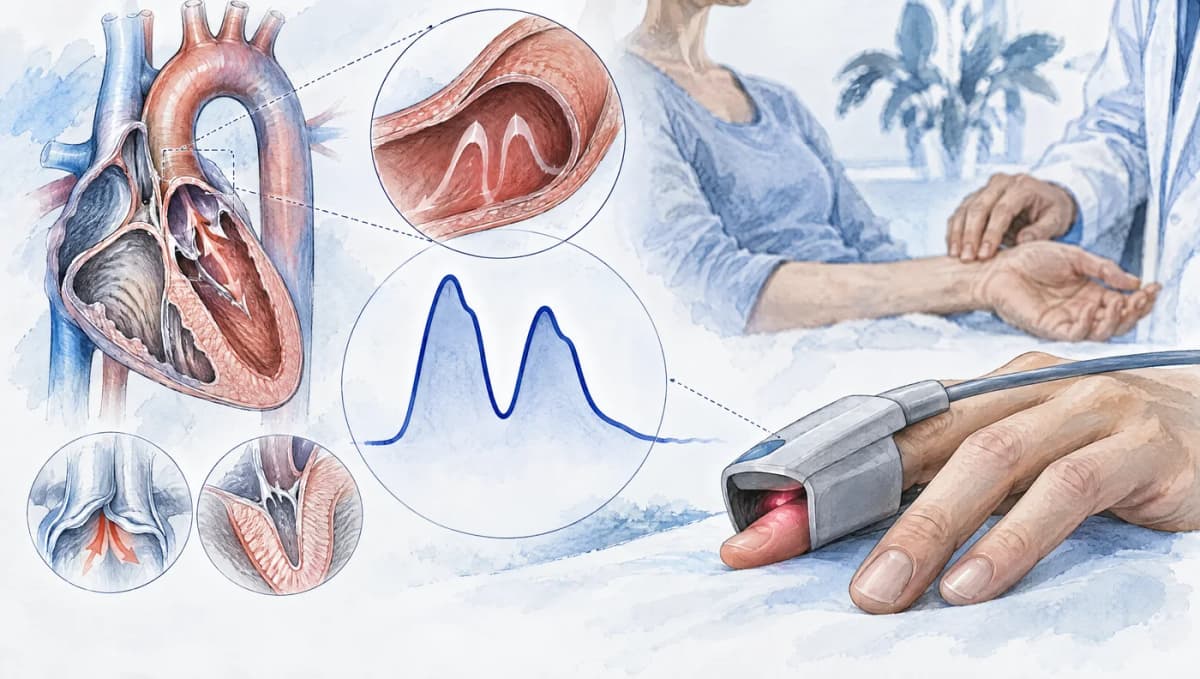
Pulsus Bisferiens: Double-Peaked Pulse Waveform
What pulsus bisferiens is, how to identify the double-peaked arterial pulse, its causes (aortic regurgitation, HOCM), and detection via PPG waveforms.
Read the articleThe ChatPPG library
Technical guides to PPG sensors, signal processing, HRV, SpO2, and wearable accuracy. Explore the methods and their published evidence.
Showing 101–150 of 308 articles · Latest first
PPG & Signal ProcessingWhat pulsus bisferiens is, how to identify the double-peaked arterial pulse, its causes (aortic regurgitation, HOCM), and detection via PPG waveforms.
Read the article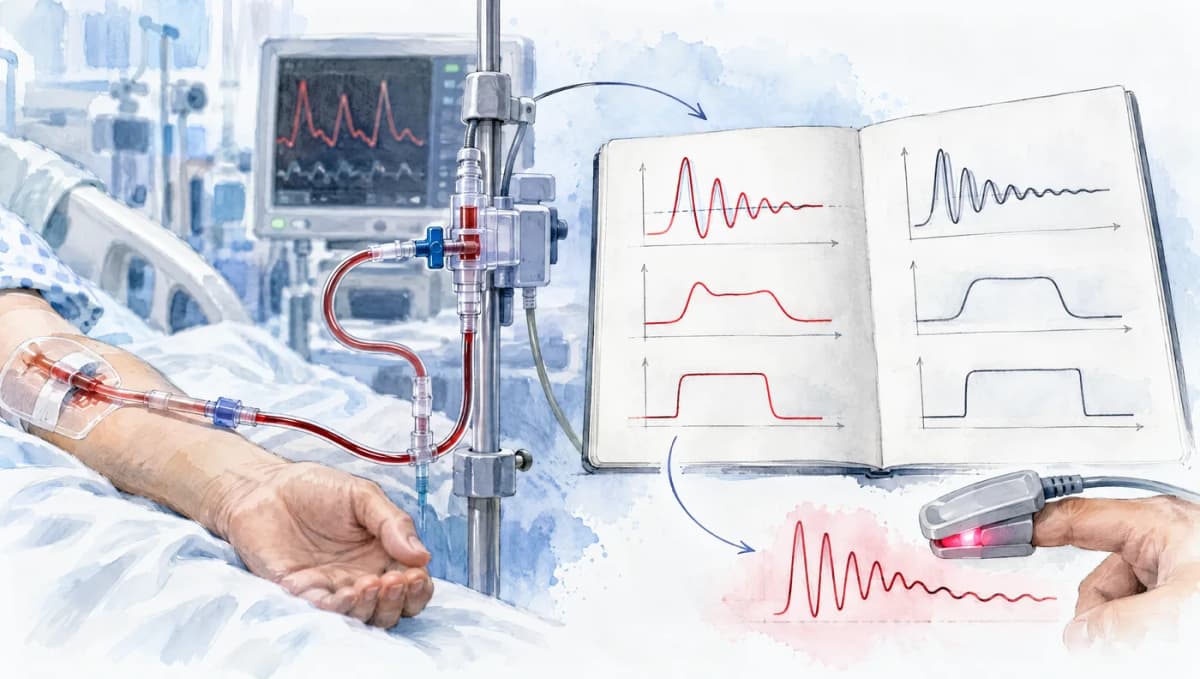 PPG & Signal Processing
How to spot and fix an underdamped arterial line: square wave test interpretation, causes of underdamping, and parallels with ringing in PPG signals.
Read the article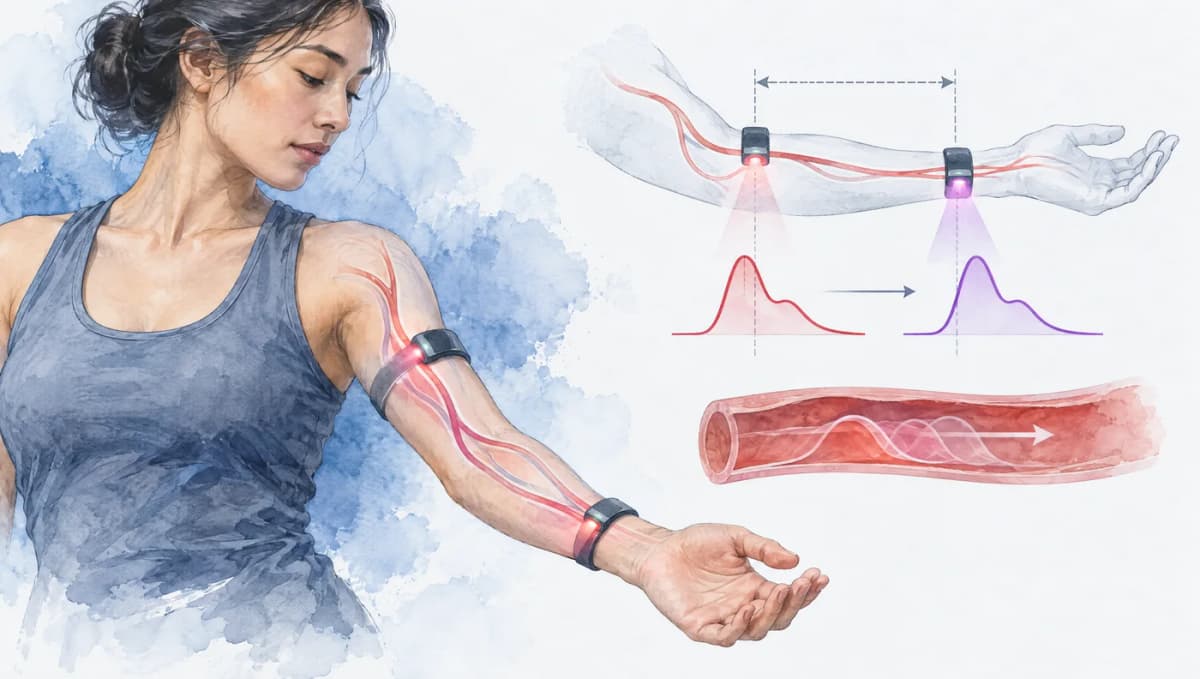 PPG & Signal Processing
Plain-language explanation of pulse wave velocity, normal ranges by age, clinical risk thresholds, and how PPG wearables estimate PWV from pulse transit time.
Read the article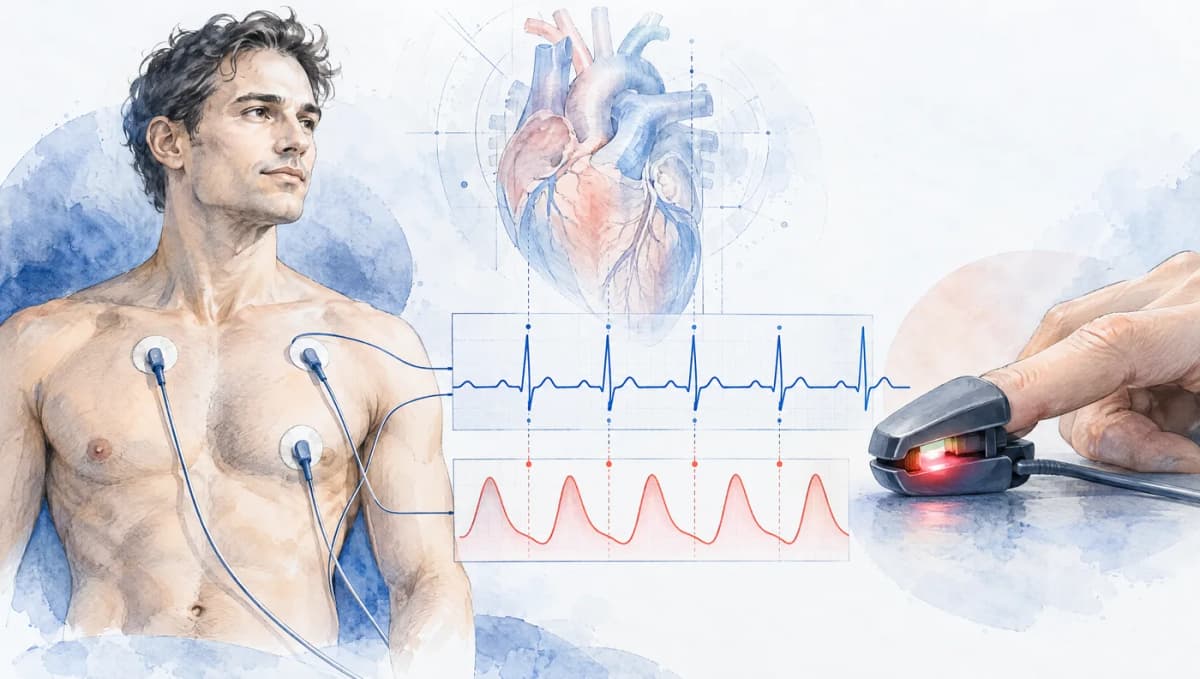 Arrhythmia & ECG
ECG vs heart rate monitoring explained. Understand when ECG electrical signals or PPG optical pulse detection is the right tool for cardiac measurement.
Read the article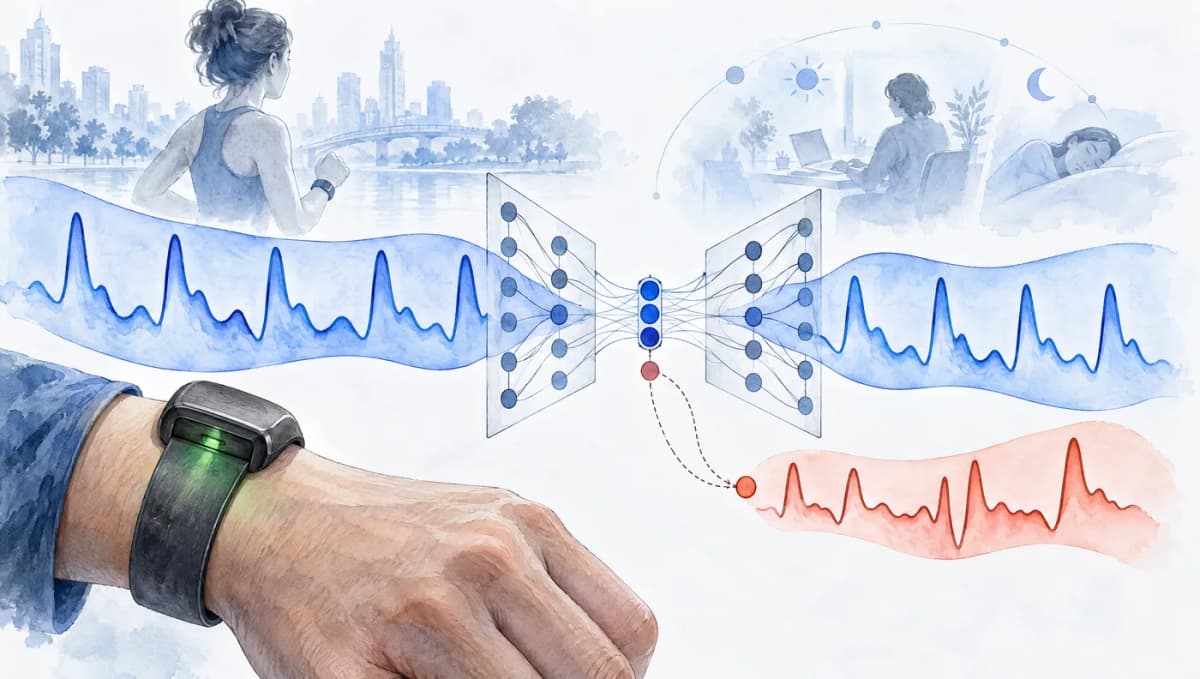 Wearable Accuracy
How autoencoders detect cardiac anomalies in PPG signals using reconstruction error, VAE latent spaces, and one-class classification for wearable monitoring.
Read the article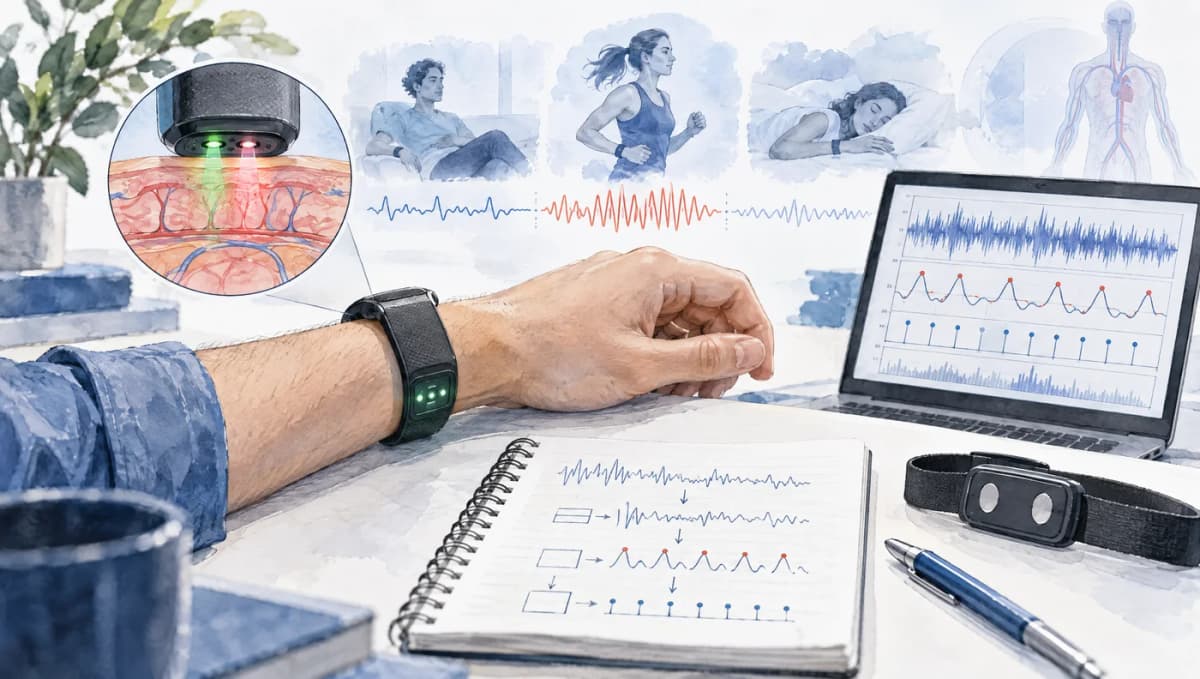 Sleep & Sleep Apnea
How PPG measures heart rate step by step. Learn peak detection algorithms, beat-to-beat vs averaged HR, and accuracy benchmarks for rest, exercise, and sleep.
Read the article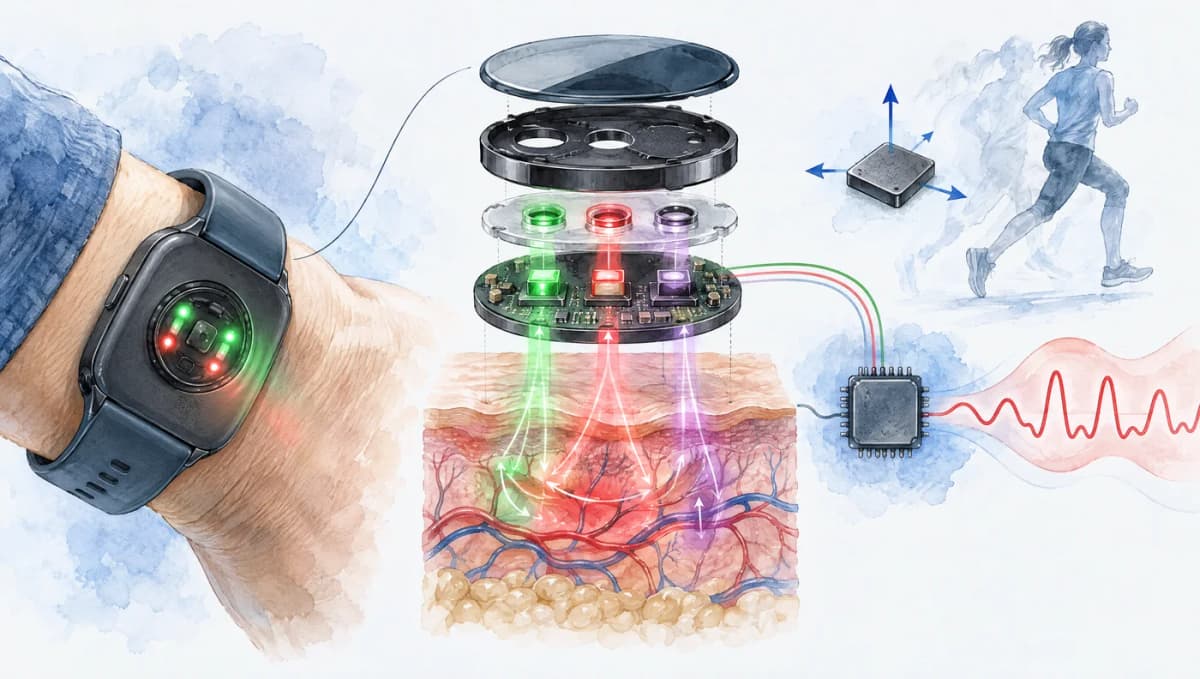 Heart Rate
How PPG heart rate sensors work inside wearables. Learn about multi-LED arrays, ambient light rejection, accelerometer fusion, and sensor module design.
Read the article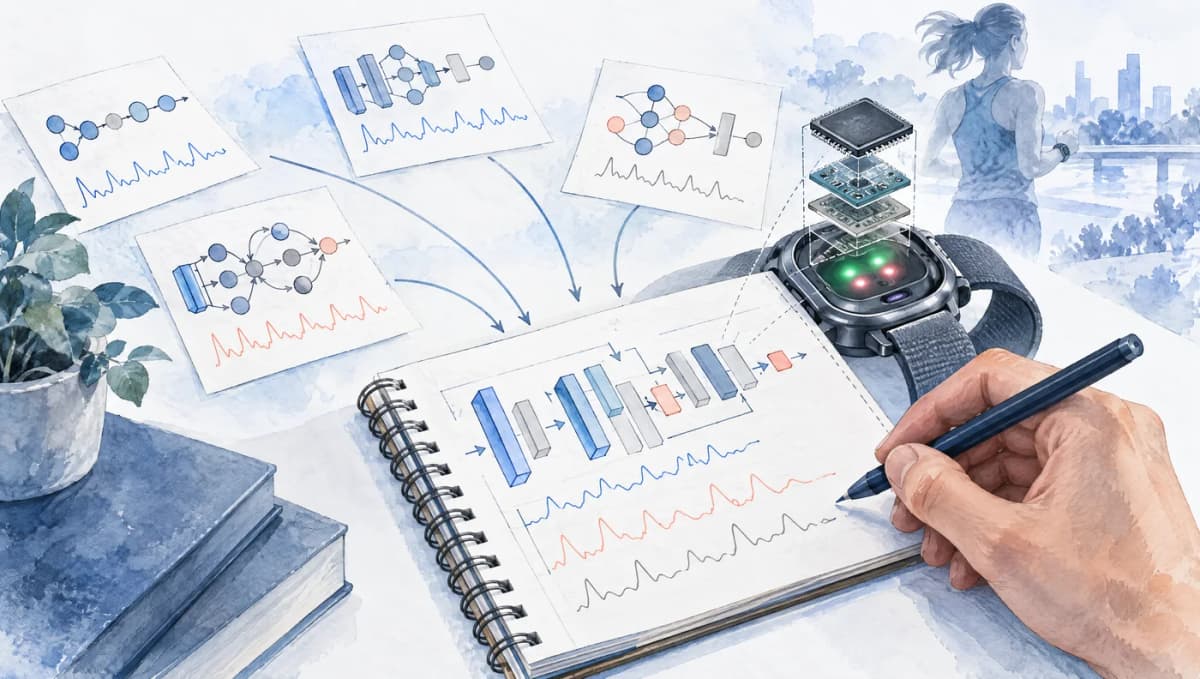 Wearable Accuracy
How Neural Architecture Search discovers optimal PPG processing networks for wearables, balancing accuracy with latency and power constraints on edge hardware.
Read the article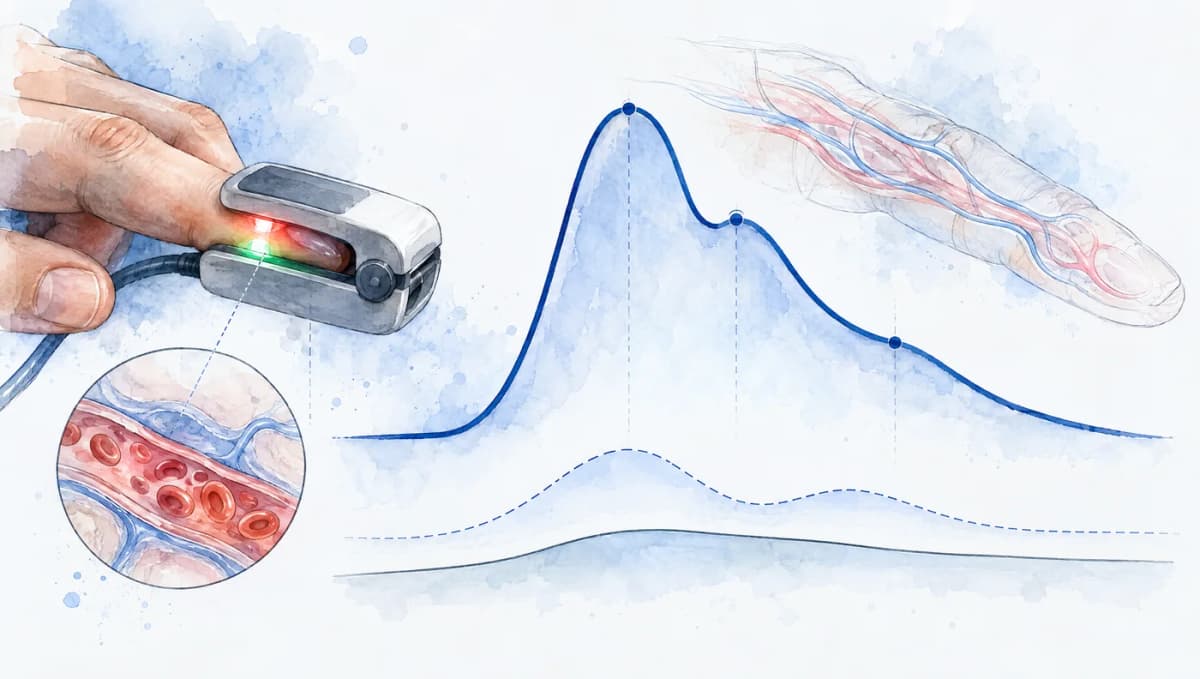 PPG & Signal Processing
Learn how to interpret a PPG reading. Covers normal waveform patterns, abnormal signals, AC/DC components, dicrotic notch, and signal quality assessment.
Read the article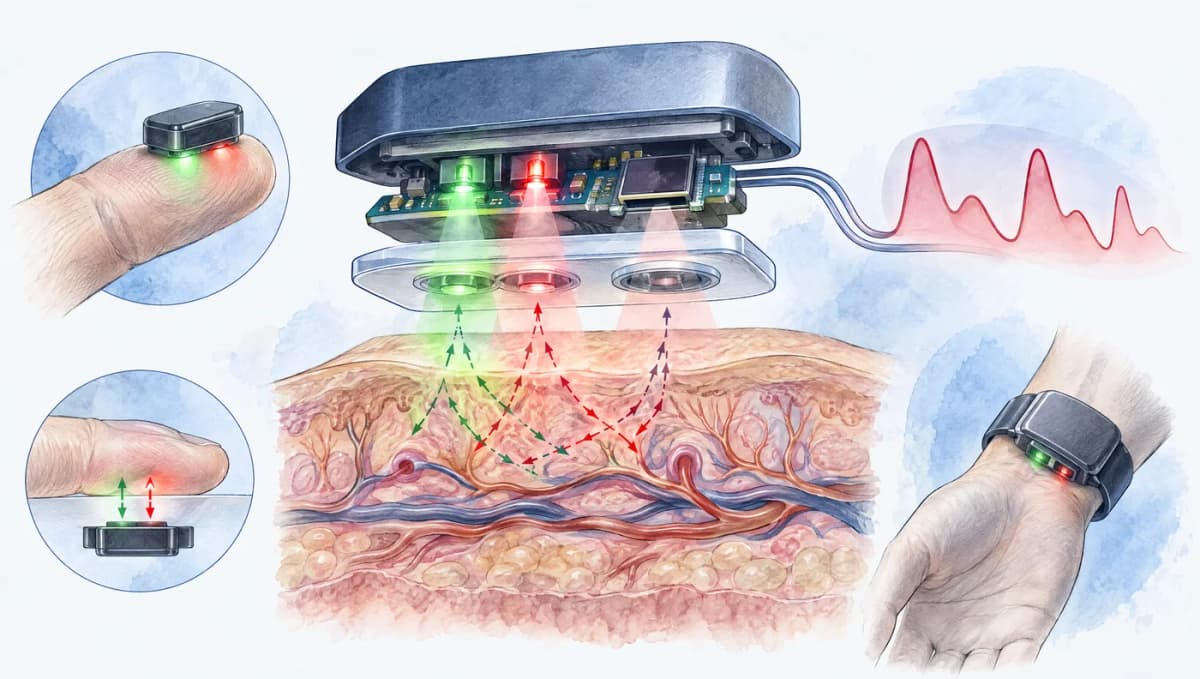 PPG & Signal Processing
How a PPG sensor works: an LED and photodetector track blood volume with each heartbeat. Green, red and infrared LEDs, and reflection vs transmission.
Read the article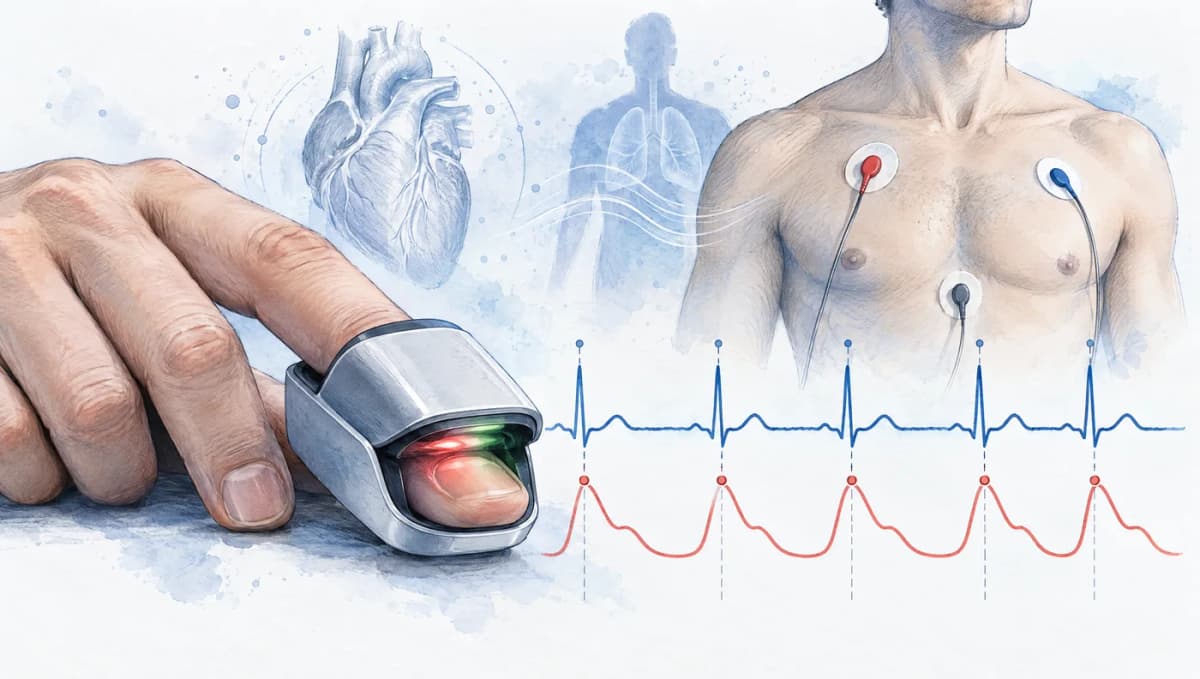 Arrhythmia & ECG
PPG vs ECG accuracy compared for heart rate, HRV metrics, arrhythmia detection, and respiratory rate with published validation data and comparison tables.
Read the article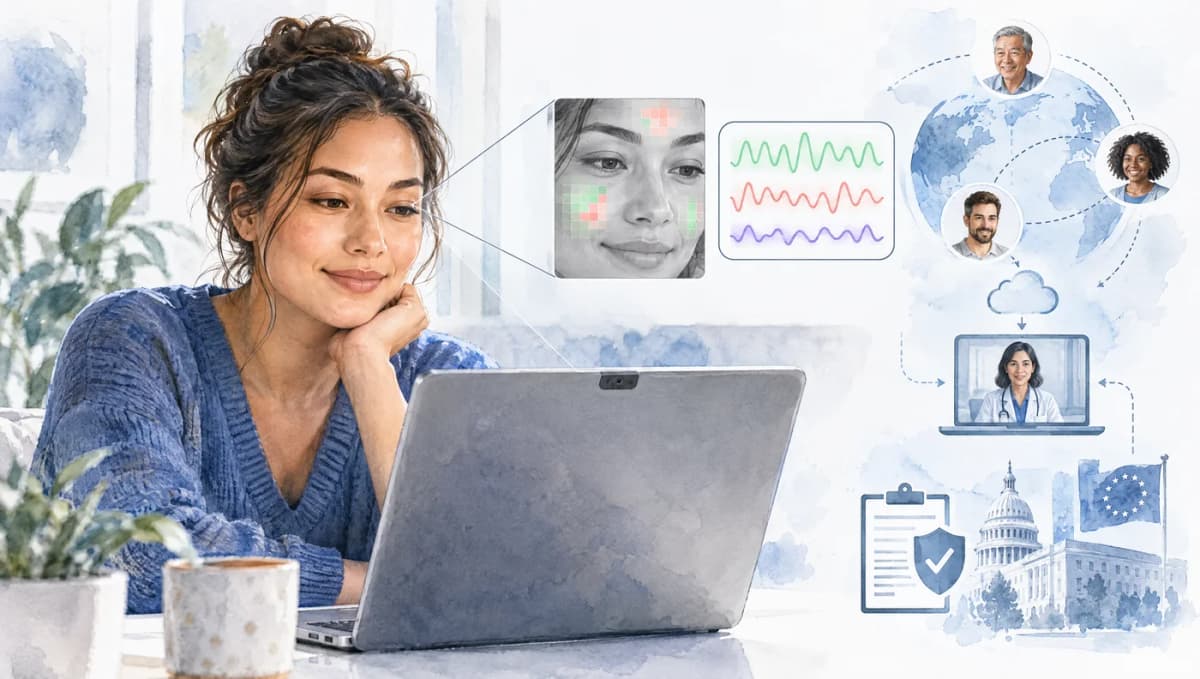 Research & Methods
Contactless vital signs monitoring is transforming telehealth. Explore current platforms, COVID-19's impact, clinical evidence, and regulatory pathways.
Read the article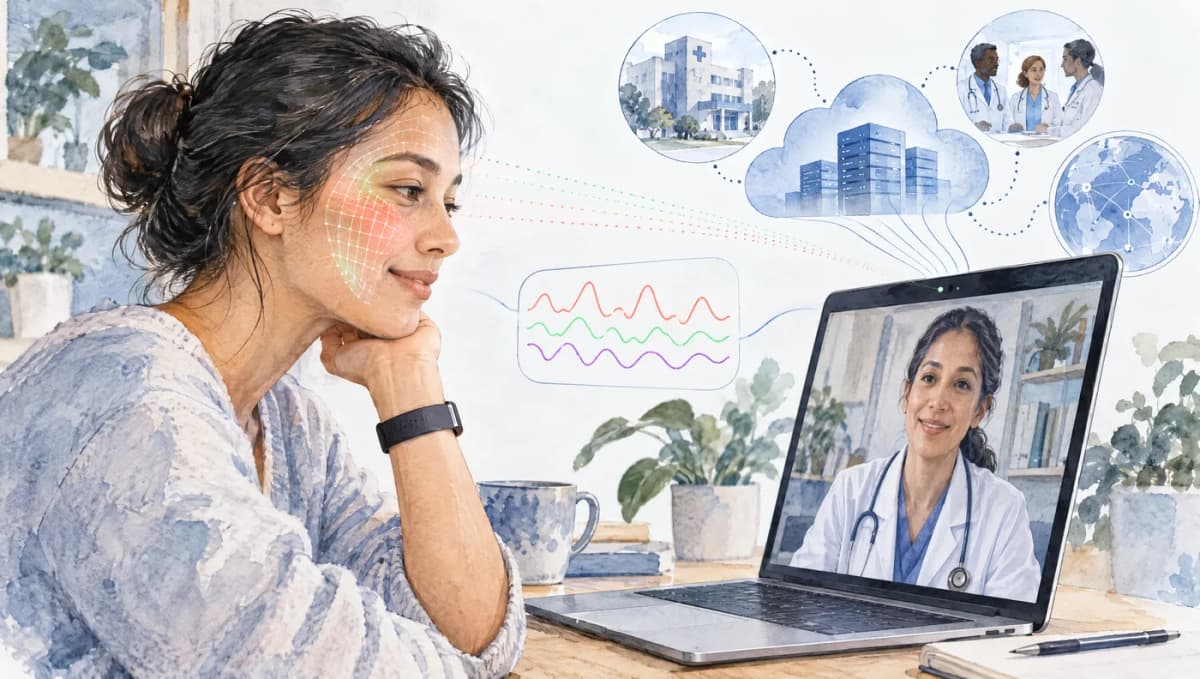 Remote PPG & Camera
Explore Google's remote patient monitoring strategy including Fitbit PPG sensors, Health AI tools, and rPPG research partnerships for clinical care.
Read the article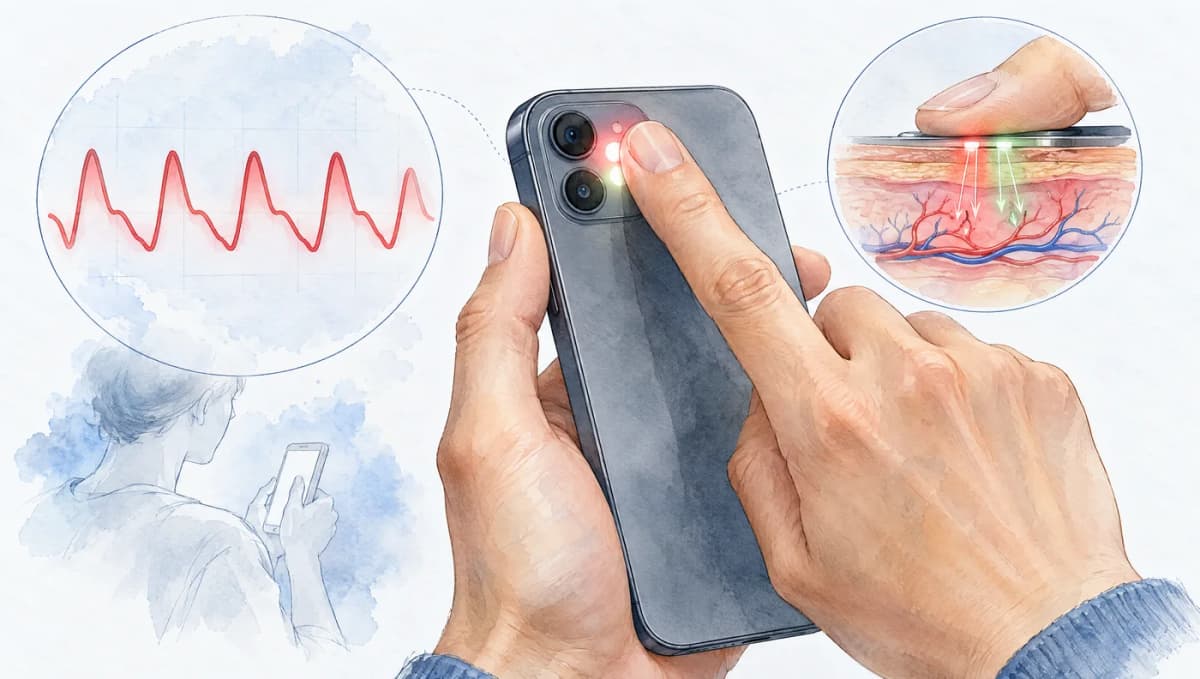 Arrhythmia & ECG
Fingertip apps: mean absolute error 2 BPM and 4.5 BPM vs ECG (Coppetti 2017, 108 patients). Face-scan apps: 7.1 BPM and 8.1 BPM. Published studies, resting adults.
Read the article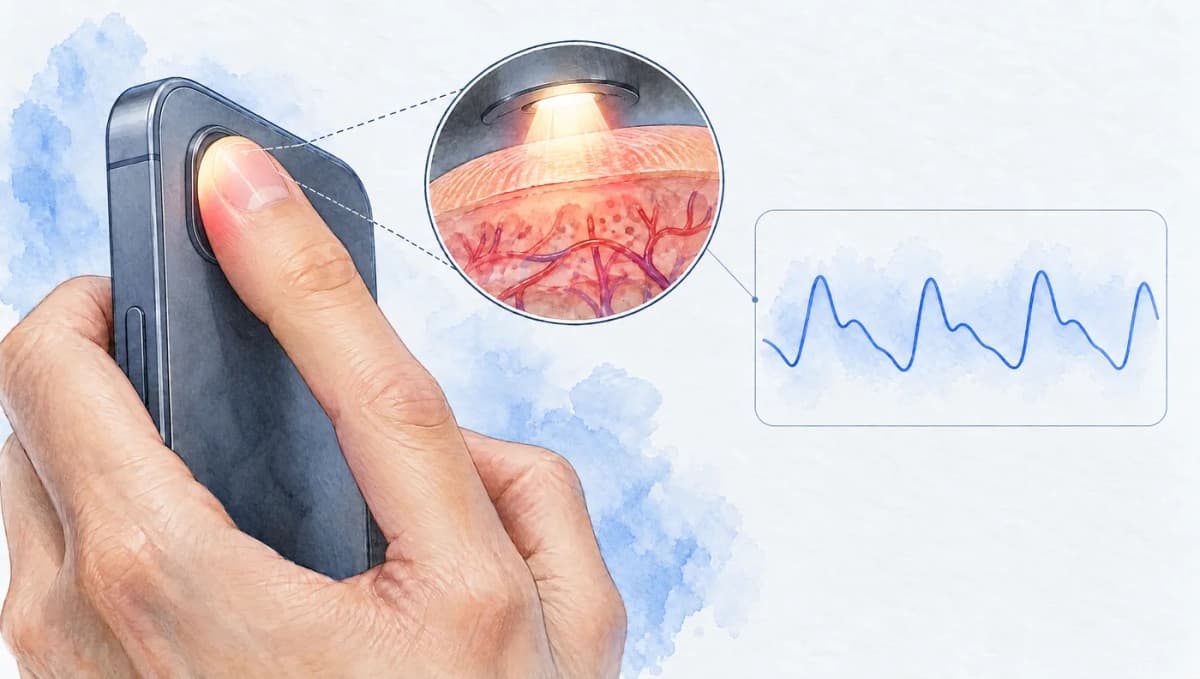 Remote PPG & Camera
Your phone camera can measure heart rate using PPG. Here's how light absorption, wavelength selection, and signal processing turn a flash LED into a pulse reader.
Read the article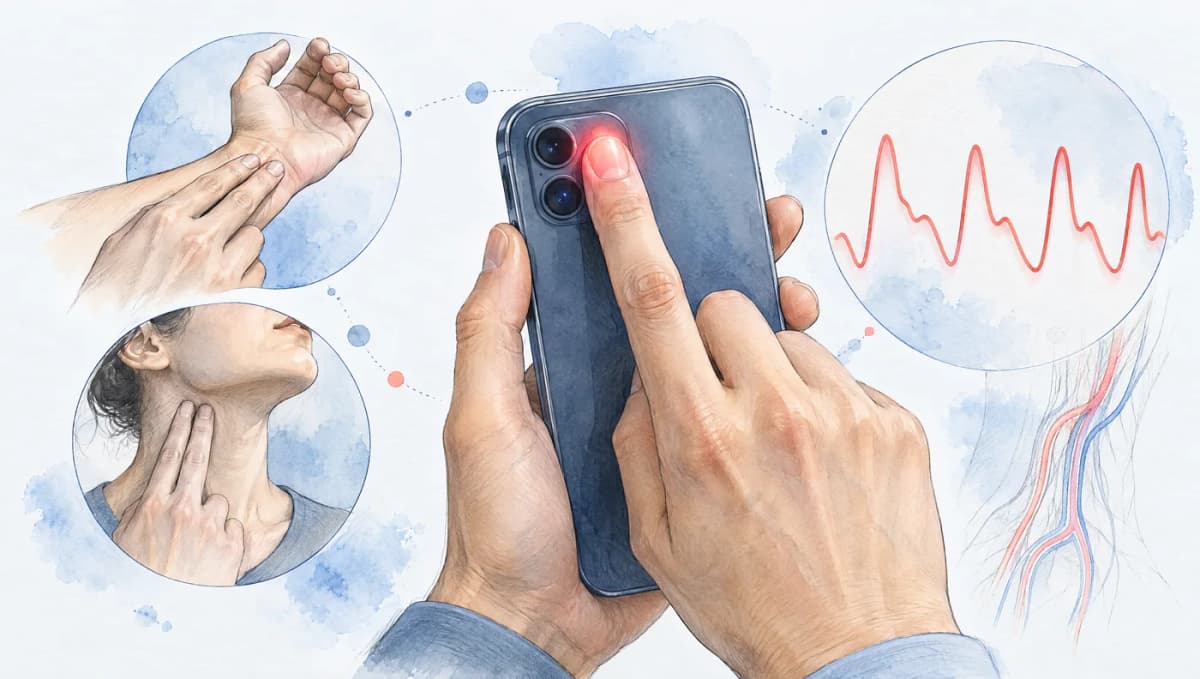 PPG & Signal Processing
Learn how to check your pulse manually at wrist or neck, plus modern PPG phone alternatives. Compare accuracy of manual vs digital pulse measurement.
Read the article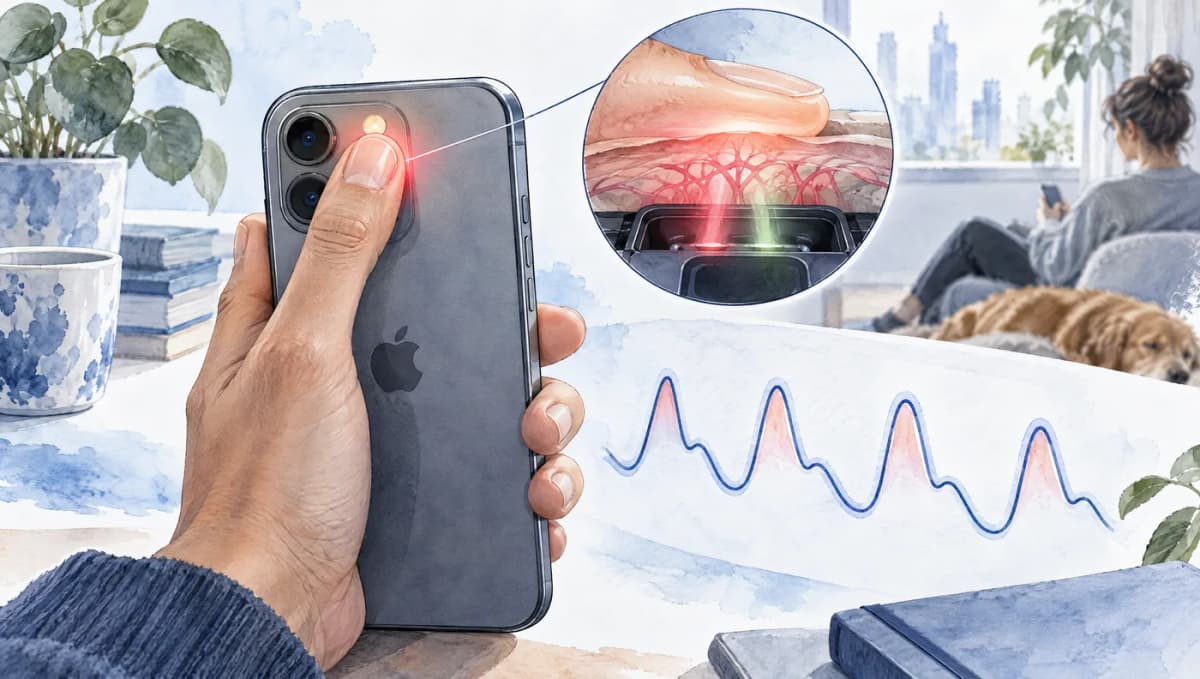 Remote PPG & Camera
Coppetti et al. 2017 (n=108): Heart Fitness, a fingertip app, had MAE 2 BPM (r=0.96) vs ECG. Face-video apps in that study had MAE 7.1 and 8.1 BPM.
Read the article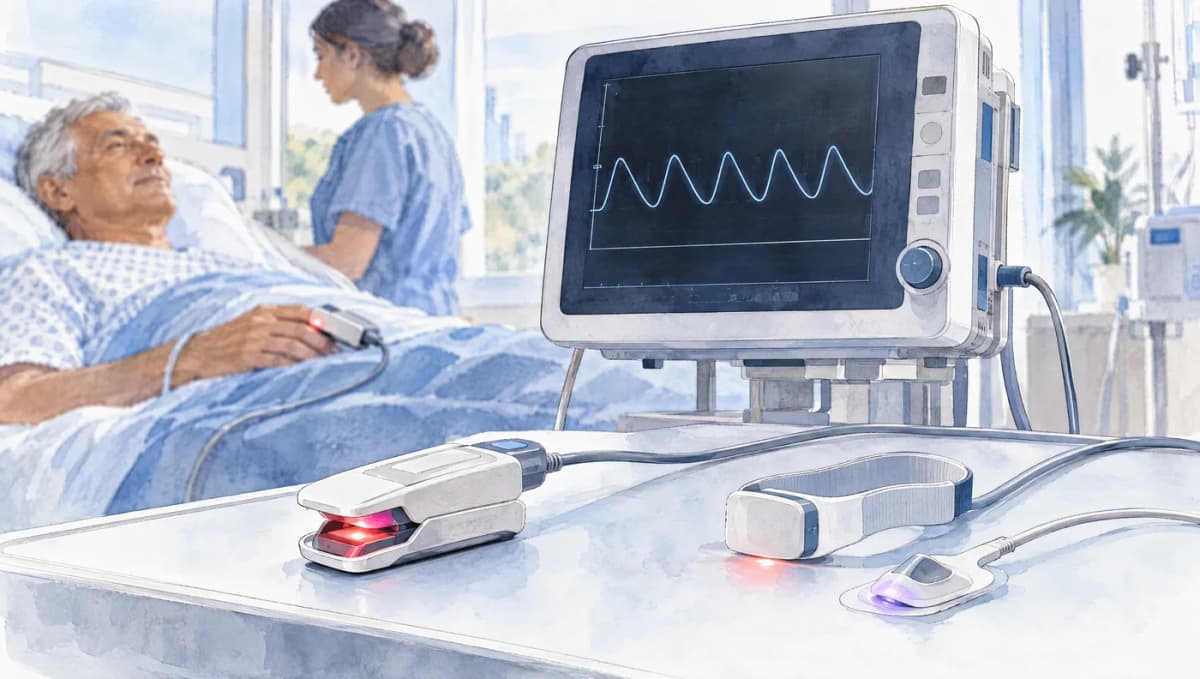 SpO2 & Oximetry
How PPG sensors in patient monitors measure SpO2, heart rate, and perfusion. Learn about pulse oximetry technology inside hospital bedside monitors.
Read the article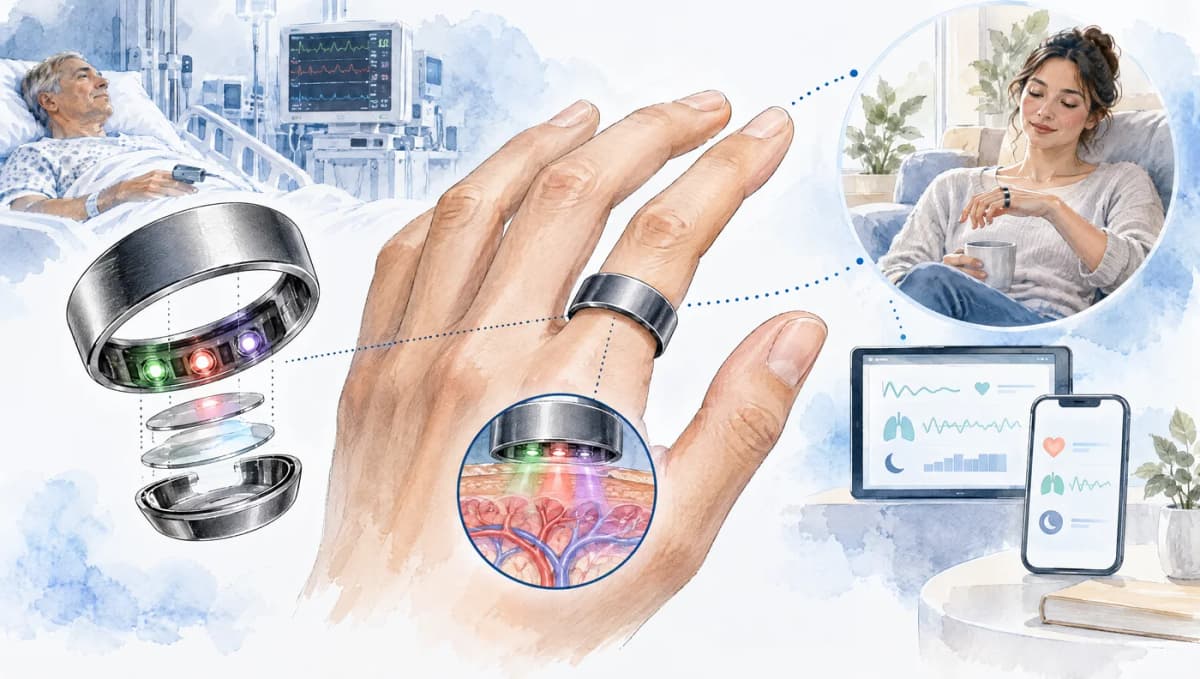 SpO2 & Oximetry
Learn how PPG technology powers modern patient monitoring systems in hospitals and homes, covering multiparameter monitors, pulse oximetry, and remote health tracking.
Read the article PPG & Signal Processing
PPG-based remote vital signs monitoring platforms reviewed. FDA-cleared devices, clinical evidence, and how remote monitoring improves patient outcomes.
Read the article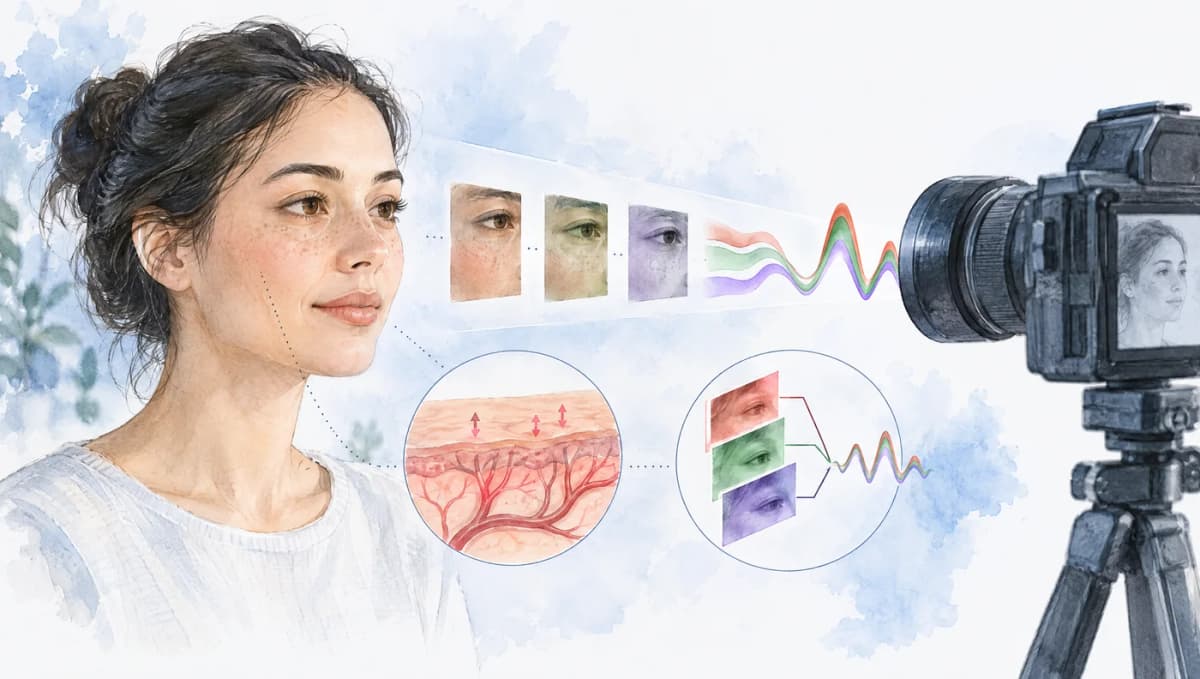 Remote PPG & Camera
What is rPPG technology and how does it work? Learn how facial video captures your pulse using algorithms like CHROM, POS, and DeepPhys.
Read the article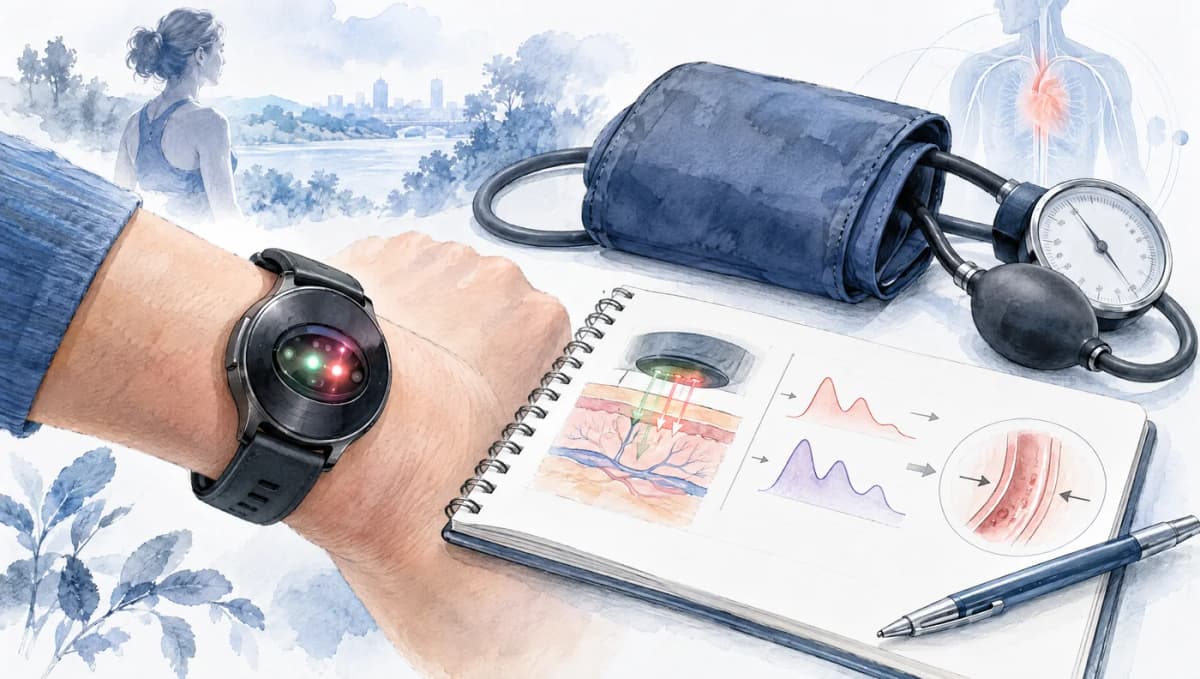 Blood Pressure
A blood pressure watch uses PPG sensors to estimate BP from your wrist. Learn how they work, which models are available, accuracy limits, and buying tips.
Read the article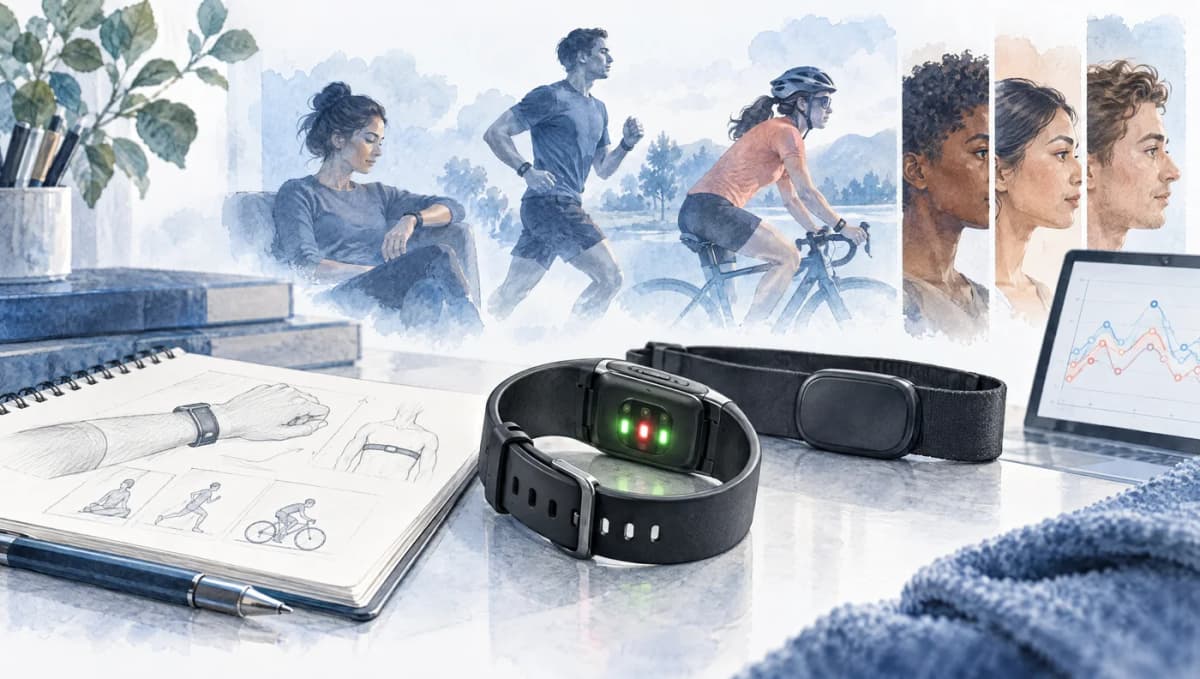 Wearable Accuracy
How accurate is Fitbit heart rate? Validation studies across Charge 6, Sense 2, Versa 4 and Inspire 3, and how skin tone, fit and exercise type change it.
Read the article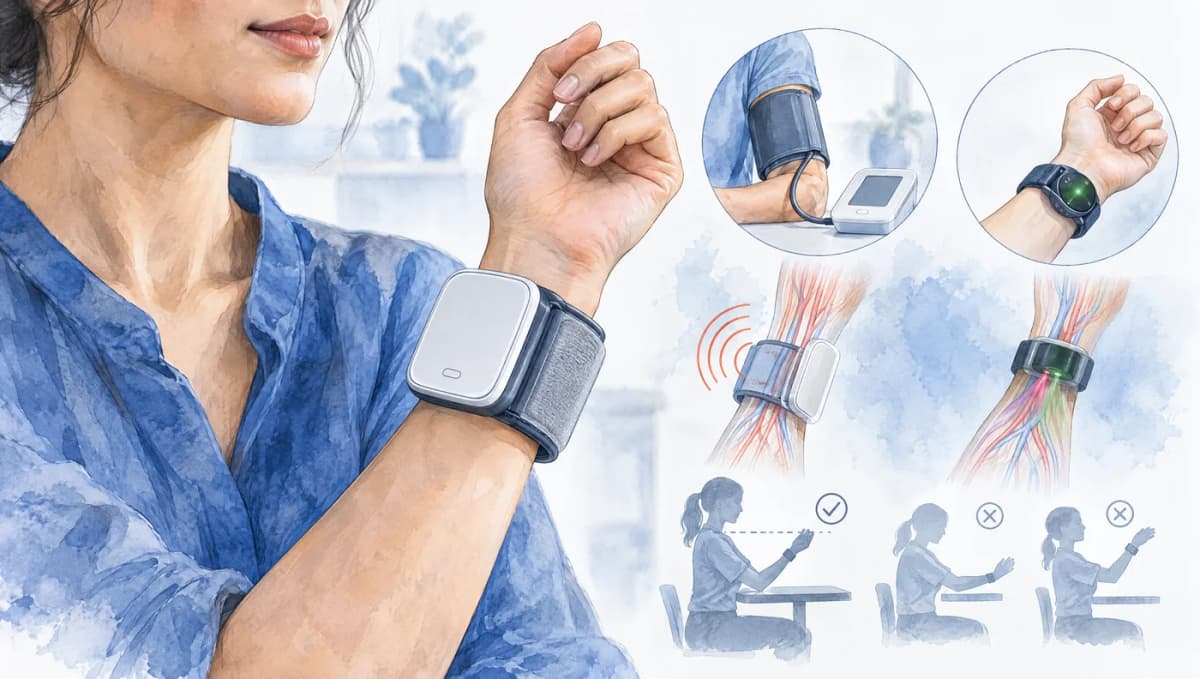 Blood Pressure
Which wrist blood pressure monitor is most accurate? We compare clinically validated oscillometric cuffs and PPG-based cuffless devices with real accuracy data.
Read the article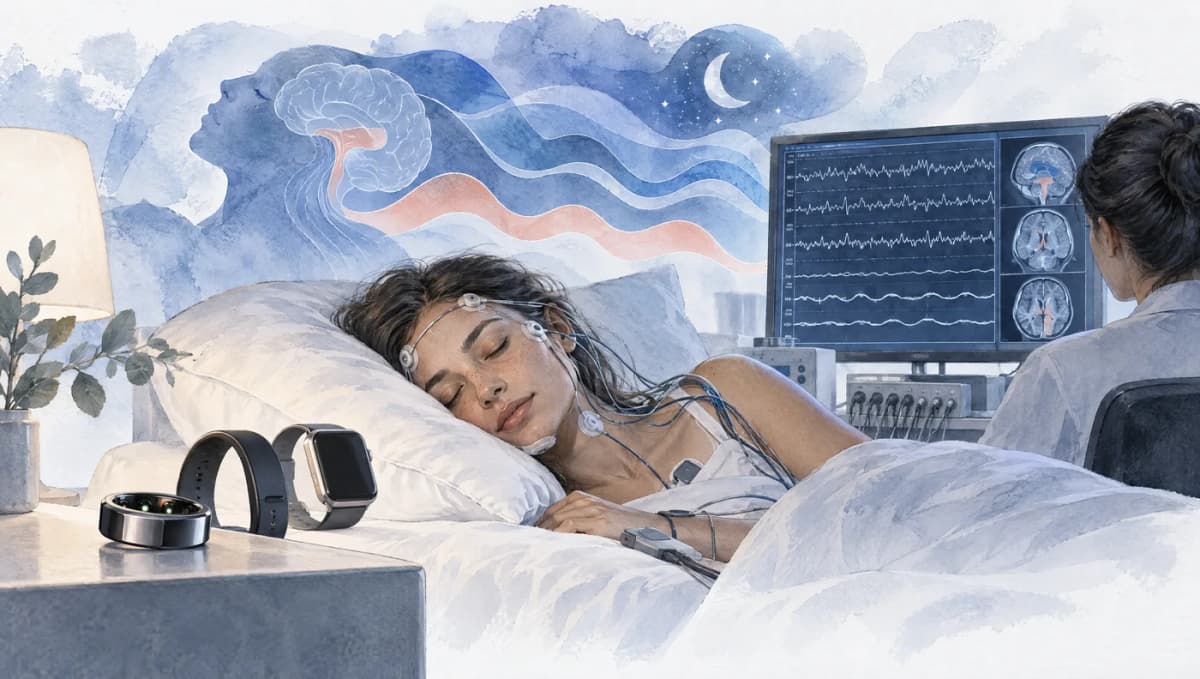 Sleep & Sleep Apnea
Oura Ring sleep tracking validation: de Zambotti polysomnography study results, sleep stage accuracy by stage, total sleep time error, and comparison vs Fitbit and Apple Watch.
Read the article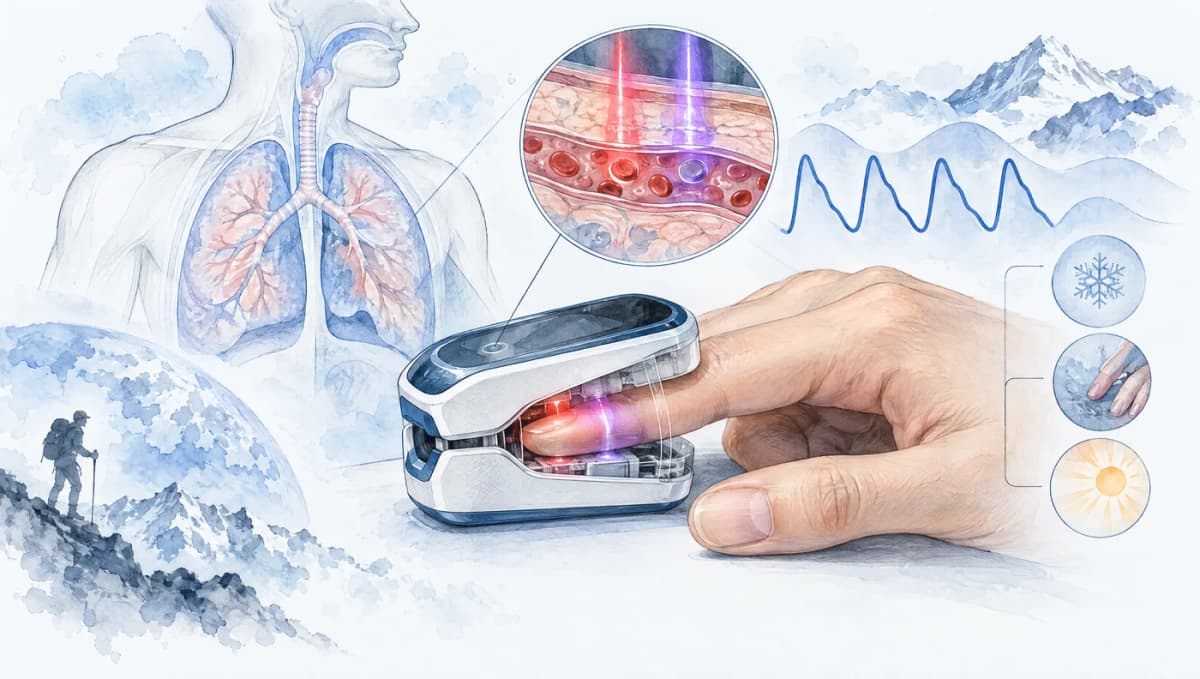 SpO2 & Oximetry
A complete pulse oximeter readings chart covering normal, borderline, and dangerous SpO2 and heart rate ranges, plus factors that affect accuracy.
Read the article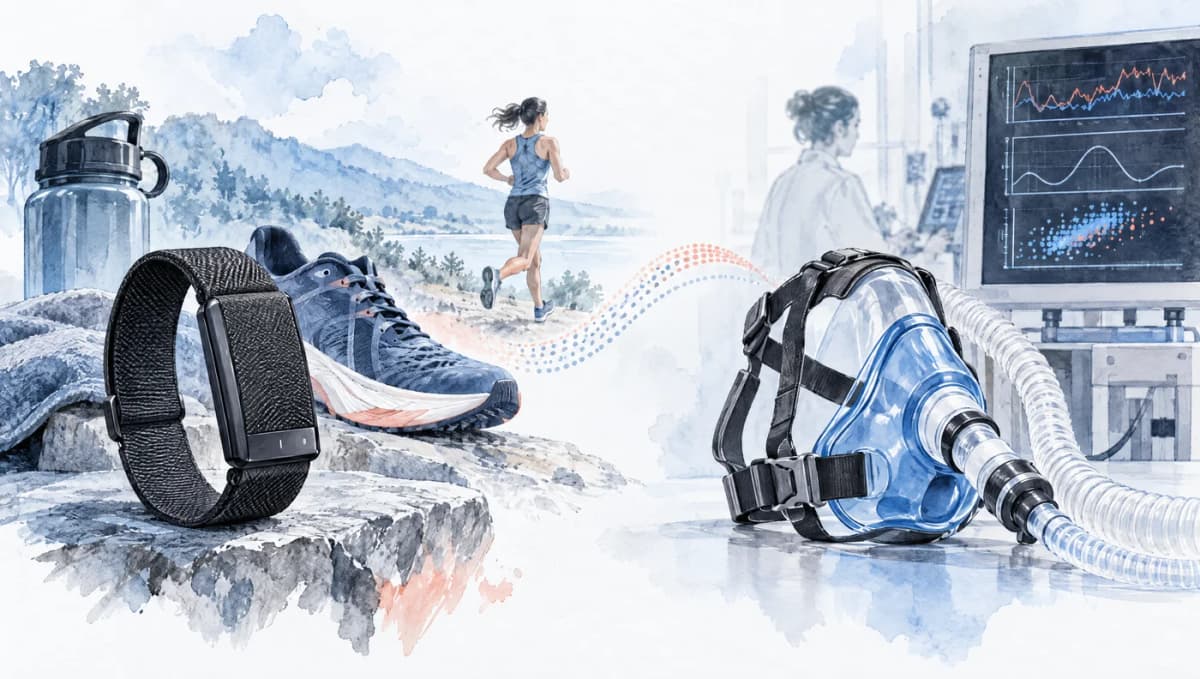 Wearable Accuracy
WHOOP estimates calories from heart rate, and independent tests are scarce. In a Stanford test of seven wrist devices, none got calorie error under 20%.
Read the article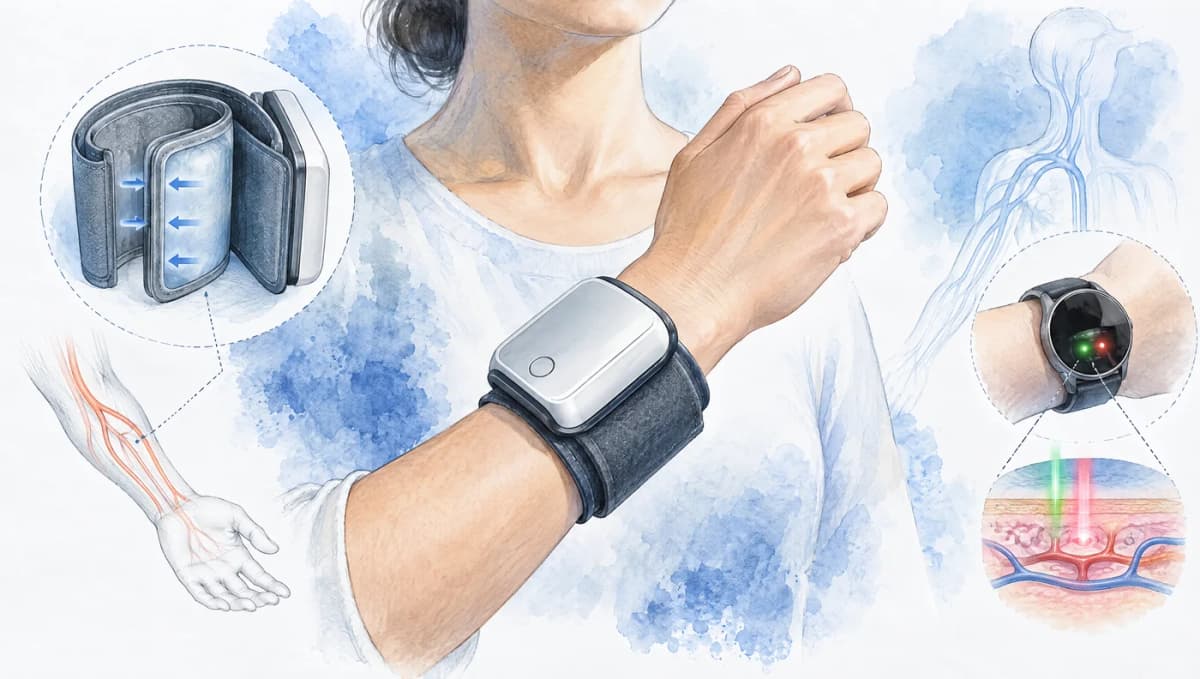 Blood Pressure
How accurate are wrist blood pressure monitors? We compare oscillometric cuffs and PPG-based cuffless devices, covering validation data, positioning tips, and clinical standards.
Read the article PPG & Signal Processing
PPG hypotension prediction for ward monitoring uses waveform trends to identify hemodynamic decline earlier, but accuracy depends on context and validation.
Read the article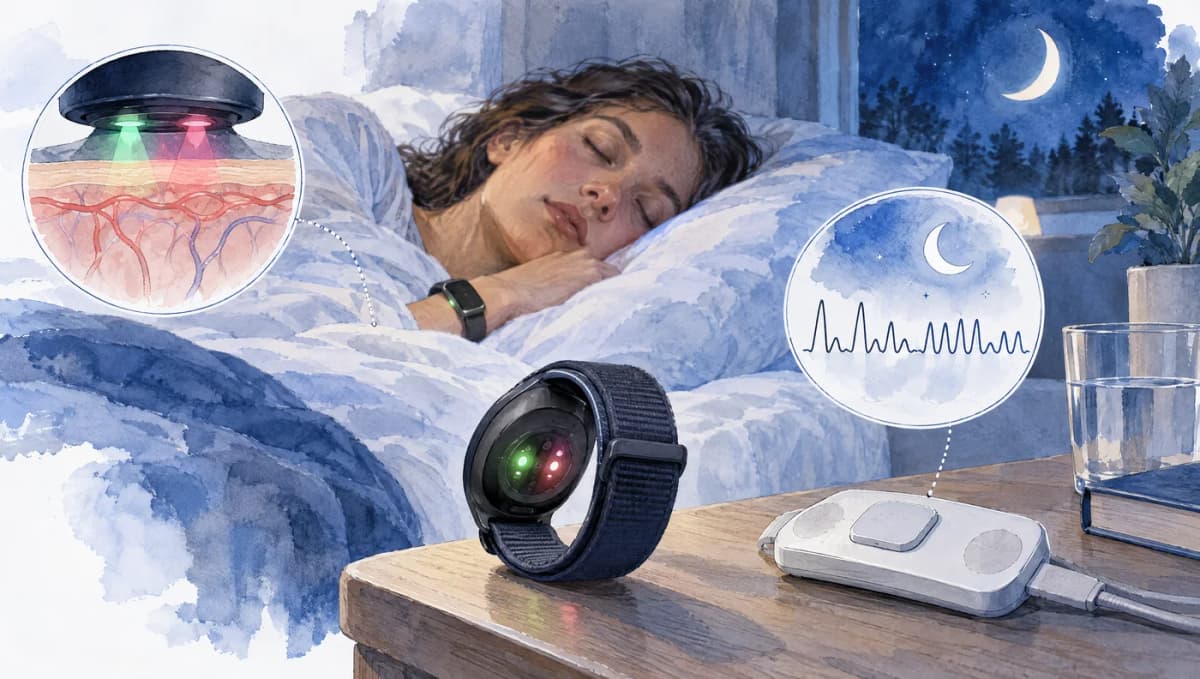 Arrhythmia & ECG
PPG nocturnal atrial fibrillation detection helps flag overnight irregular rhythm burden, screening value, algorithm limits, and when ECG confirmation is still needed.
Read the article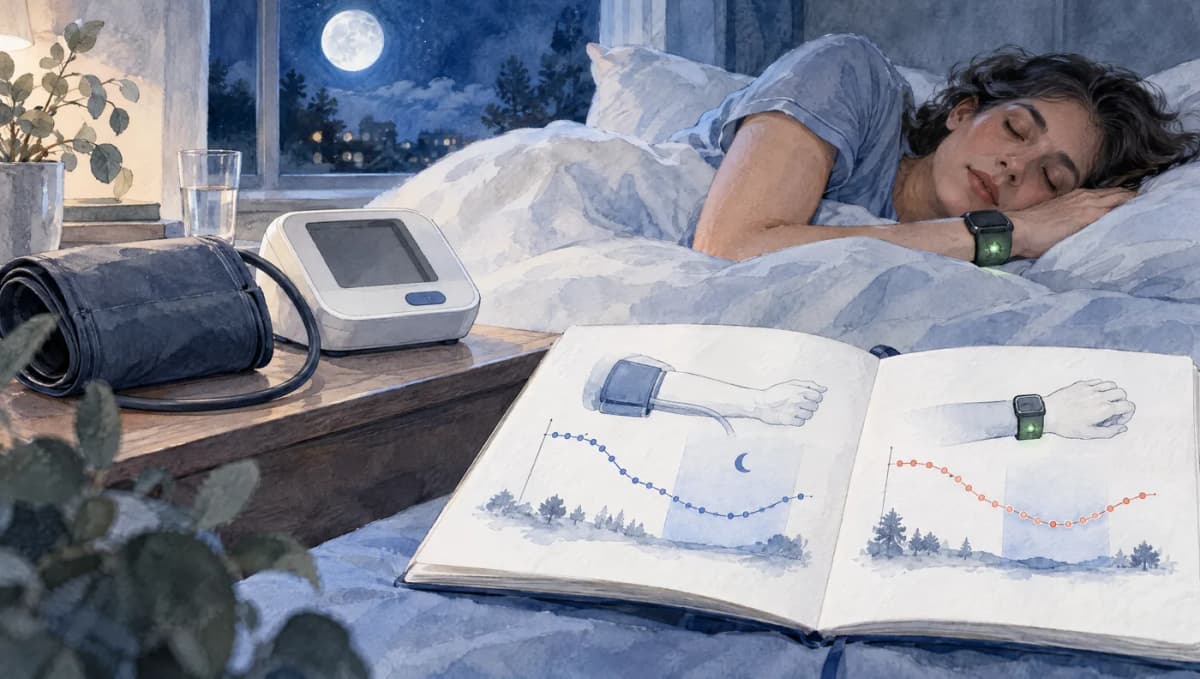 Blood Pressure
PPG nocturnal blood pressure dipping analysis uses overnight pulse features to approximate dipping patterns, a useful screening concept with clear limits.
Read the article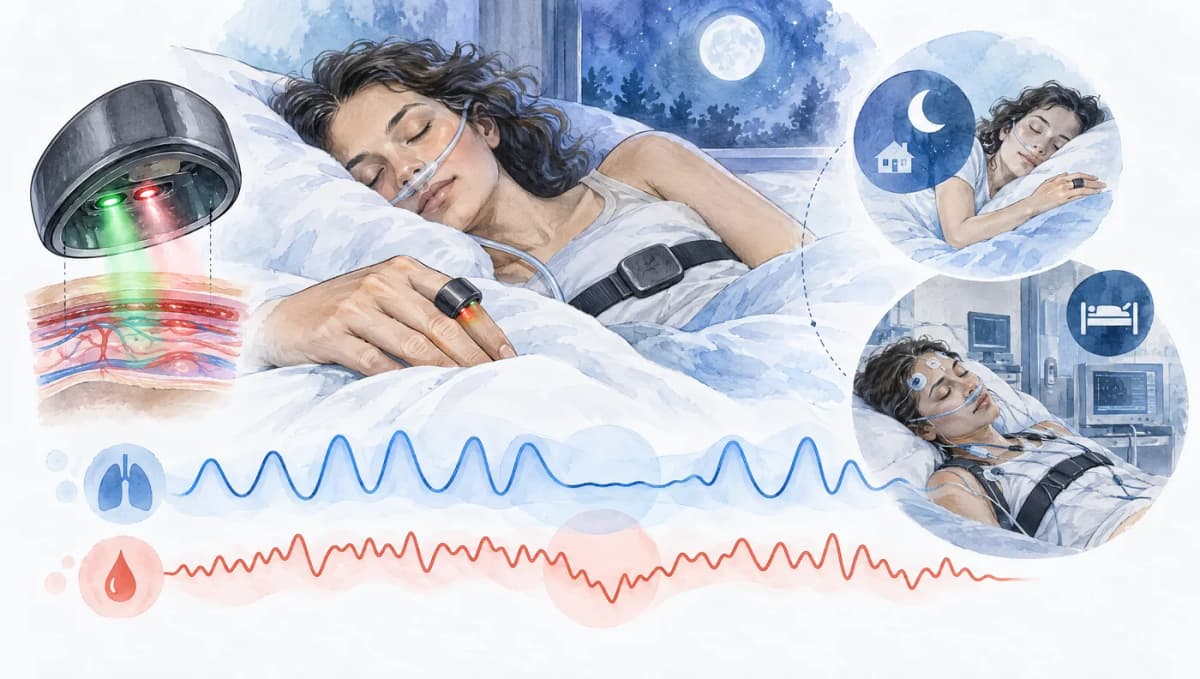 PPG & Signal Processing
PPG nocturnal hypoxemia monitoring helps track overnight oxygen drops, screening risk, data quality limits, and when wearables should lead to formal testing.
Read the article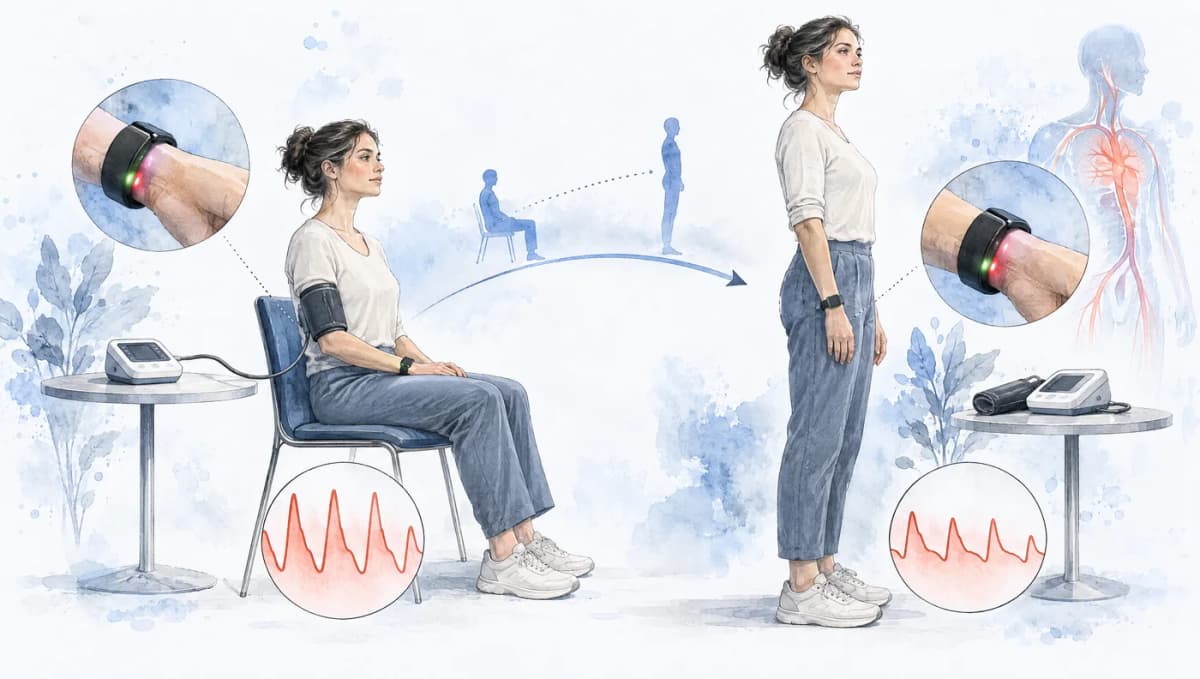 Blood Pressure
PPG orthostatic hypotension detection uses beat-to-beat pulse changes to flag standing blood pressure drops, offering screening value but not a cuffless diagnosis.
Read the article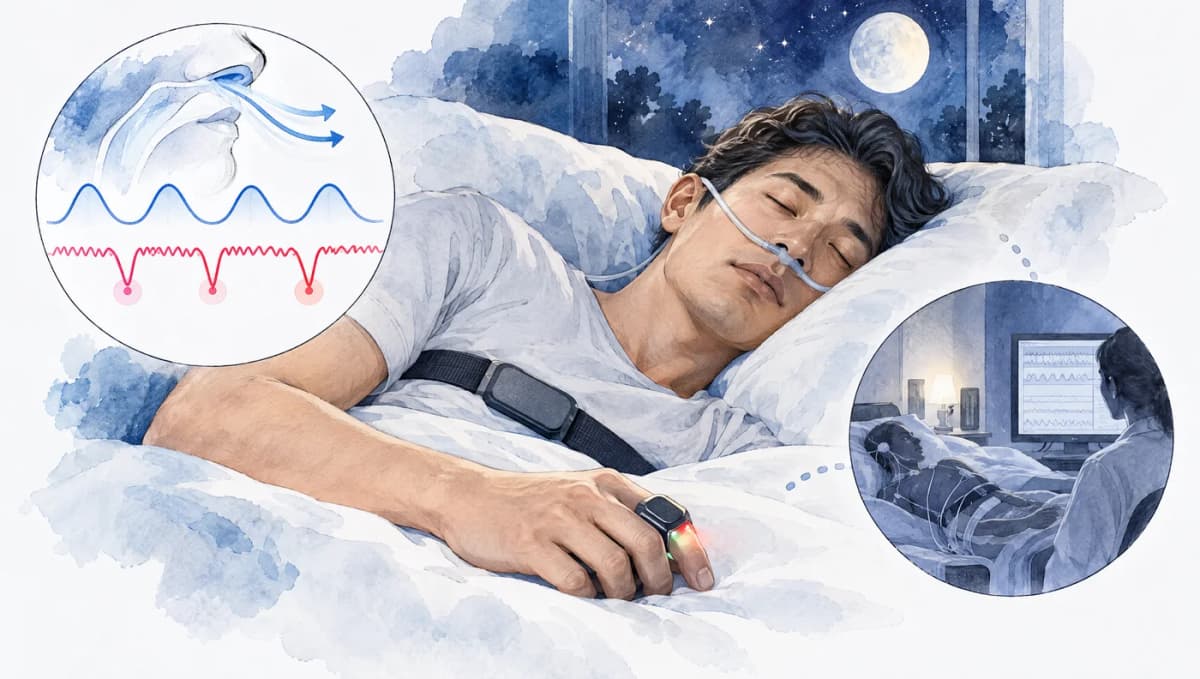 Sleep & Sleep Apnea
PPG oxygen desaturation index in wearables helps summarize repeated overnight drops in SpO2, offering useful screening for sleep-related breathing problems.
Read the article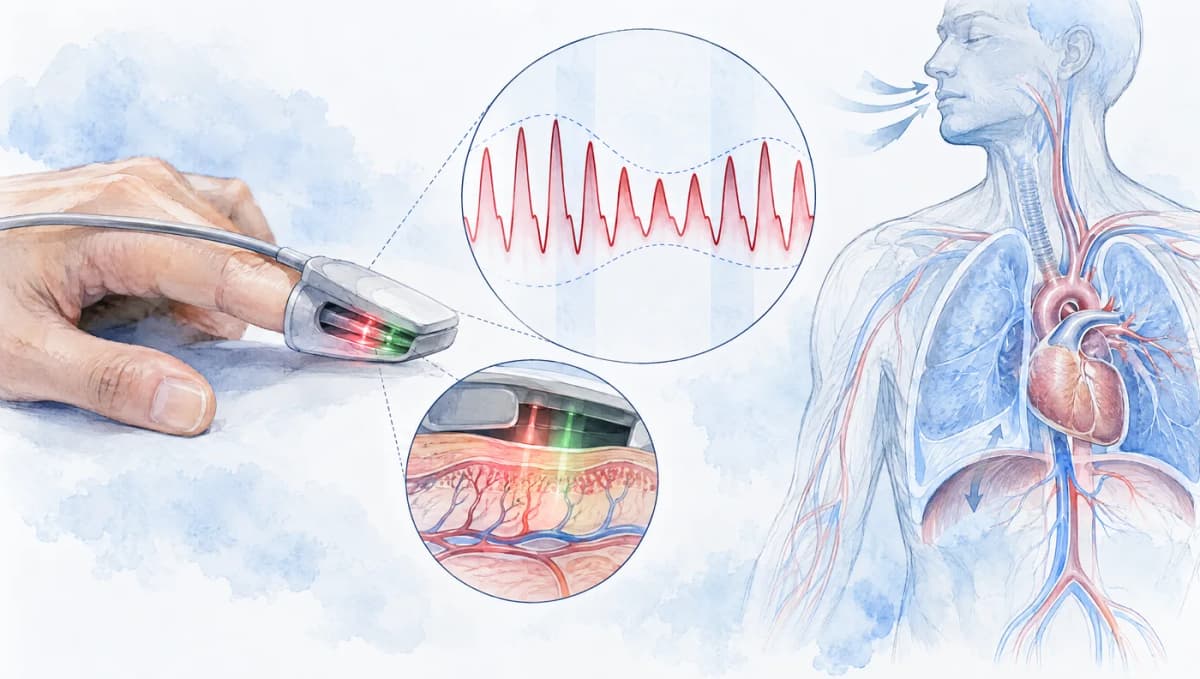 PPG & Signal Processing
PPG pulse pressure variation monitoring estimates respiratory-linked hemodynamic variability noninvasively, but its value depends on ventilation, rhythm, and signal quality.
Read the article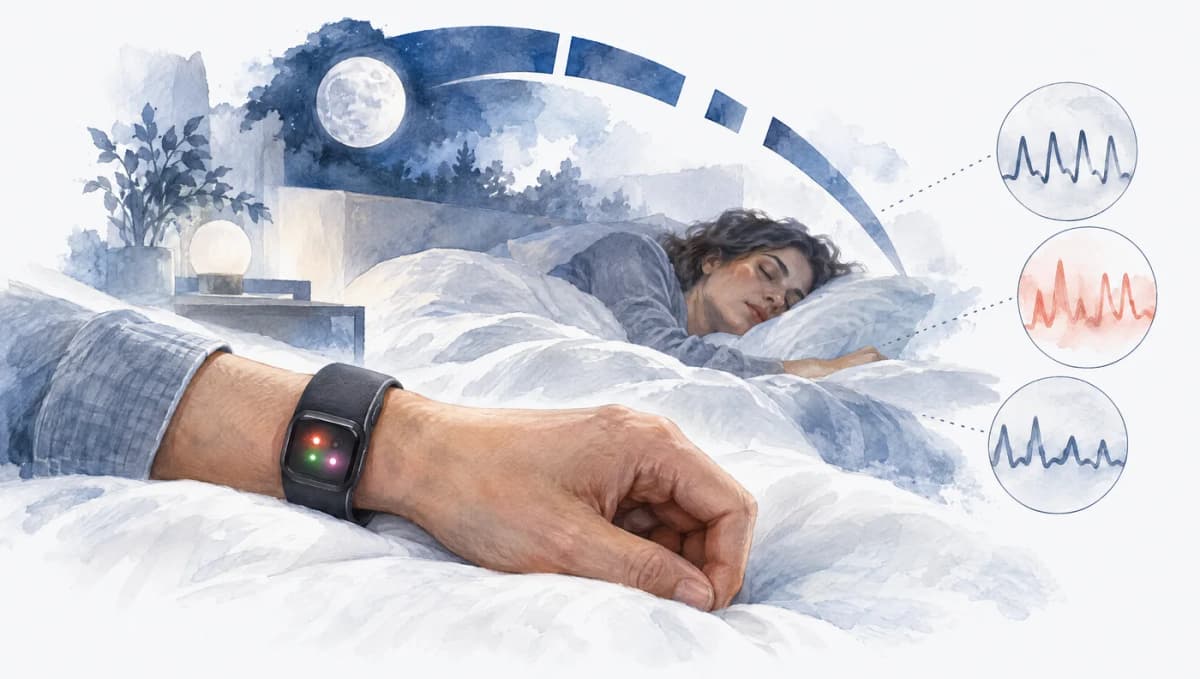 Sleep & Sleep Apnea
PPG sleep fragmentation biomarkers use pulse timing, amplitude, and autonomic surges to estimate broken sleep, arousals, and sleep continuity loss.
Read the article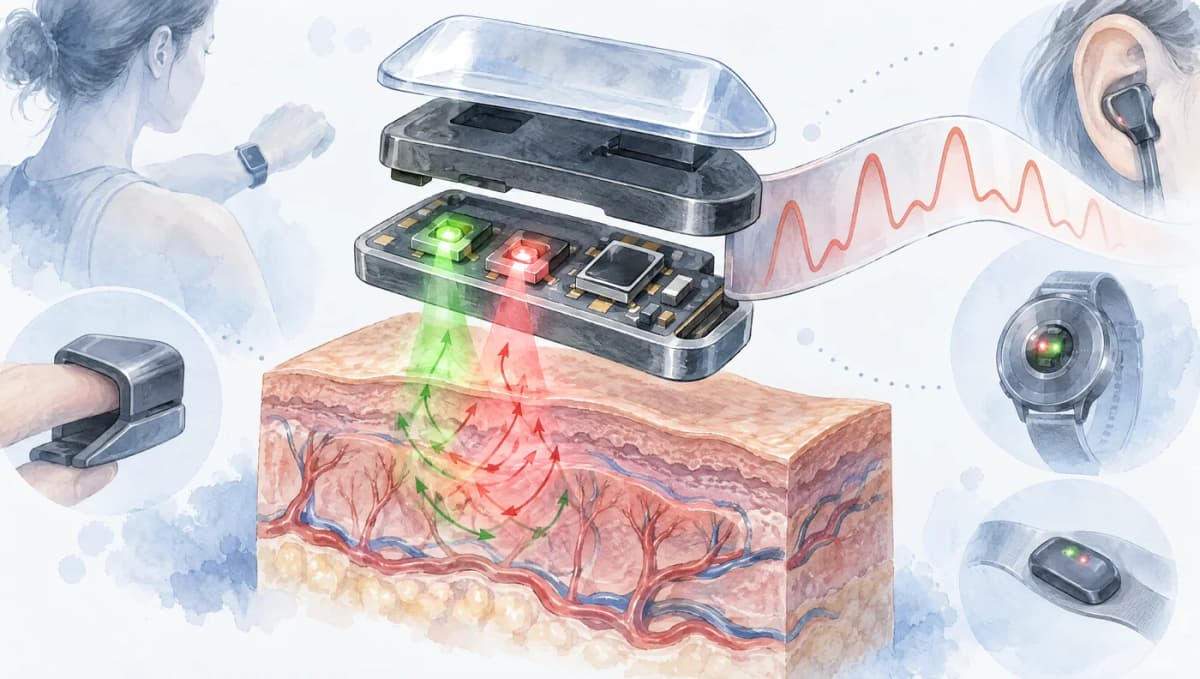 PPG & Signal Processing
Everything you need to know about photoplethysmography sensors: LED wavelengths, photodetector types, analog front-ends, form factors, and how to choose the right sensor for your application.
Read the article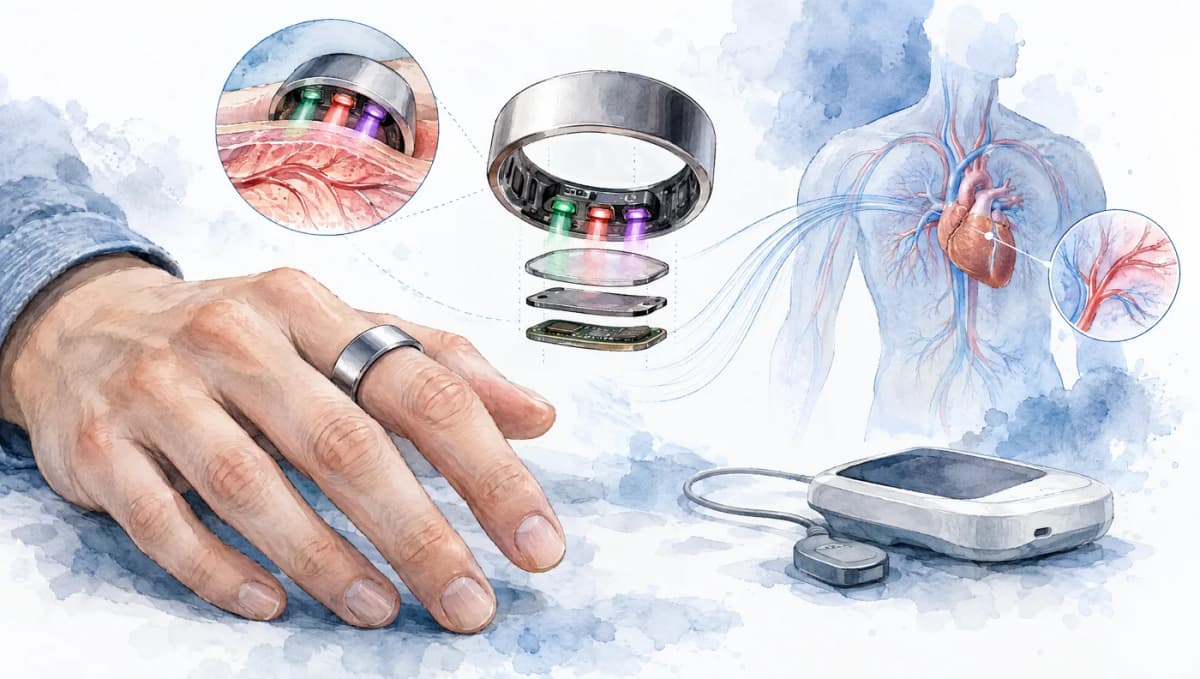 Arrhythmia & ECG
PPG is becoming a first-line cardiac monitoring tool. This guide covers validated applications: heart rate, HRV, atrial fibrillation, heart failure, and emerging ECG-free arrhythmia detection.
Read the article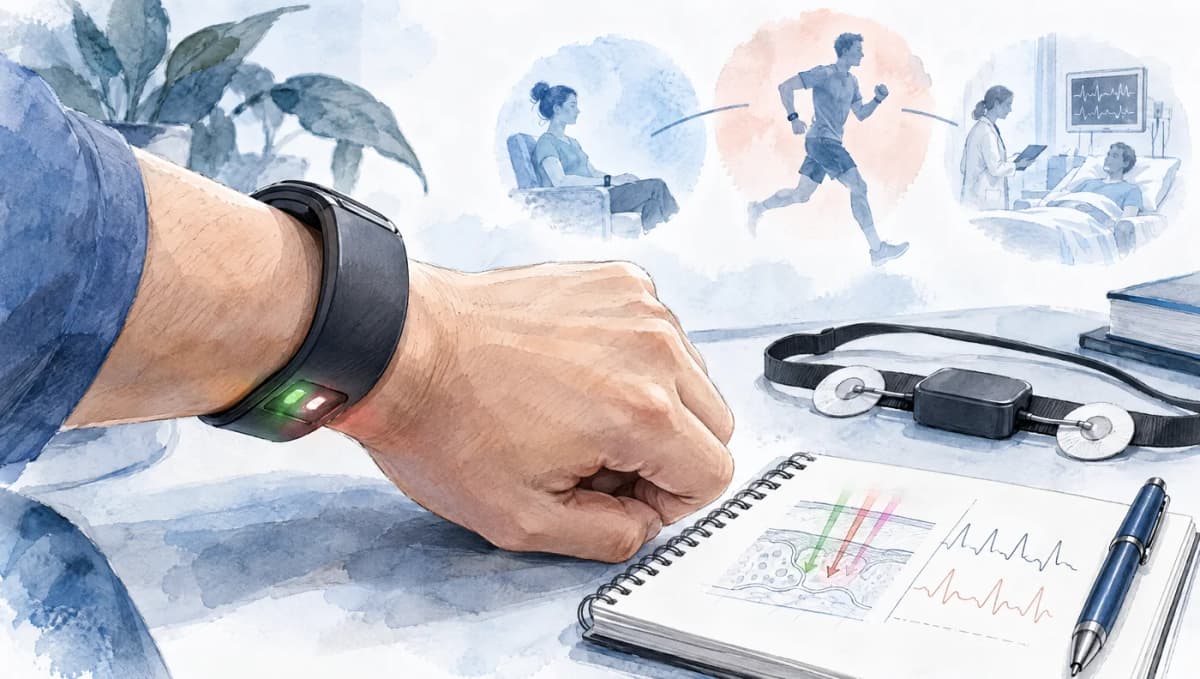 Heart Rate
How accurate is PPG heart rate from wearables and pulse oximeters? This review covers the evidence across resting, exercise, and clinical conditions — with specific numbers from validation studies.
Read the article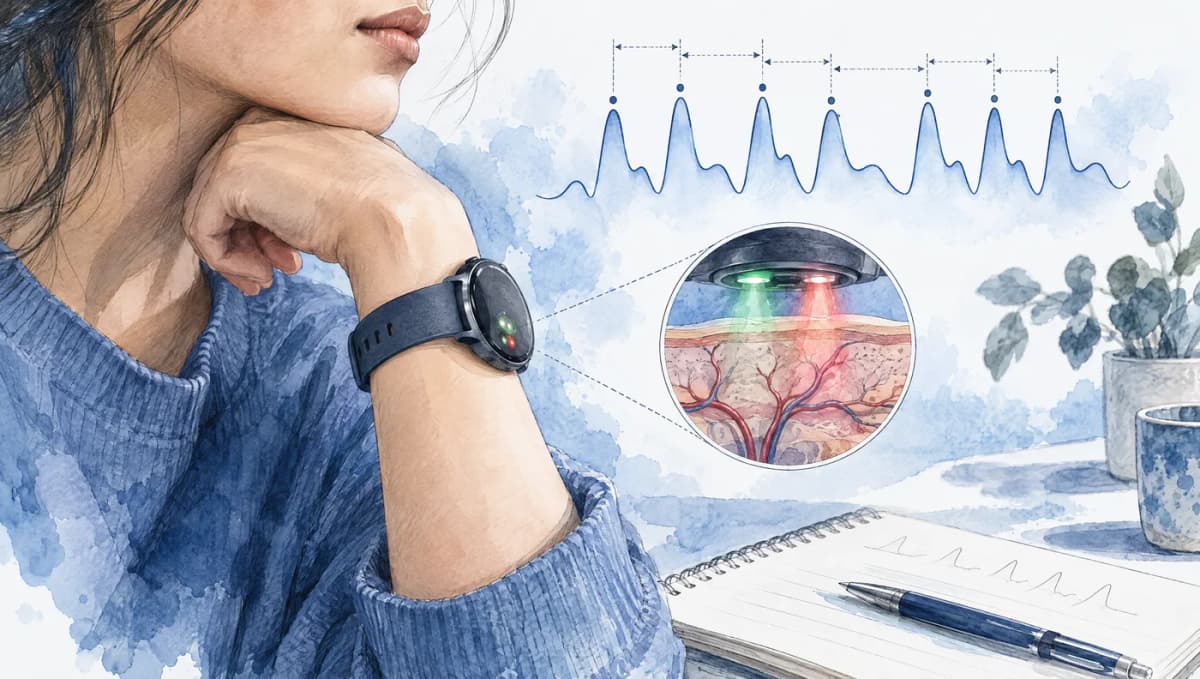 Arrhythmia & ECG
Heart rate variability from PPG wearables: accuracy, best practices, and what the research shows about HRV measured with optical sensors vs. ECG gold standard.
Read the article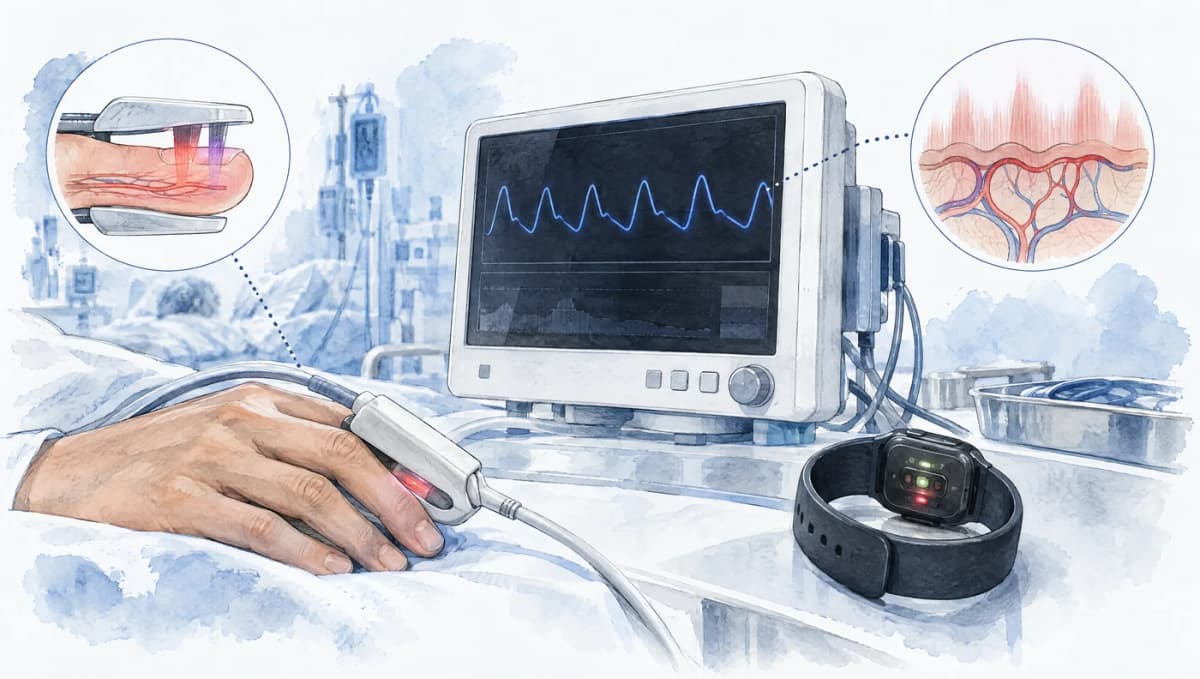 PPG & Signal Processing
PPG in medical contexts means photoplethysmography — the optical technique used in pulse oximeters, hospital monitors, and wearables. Learn what it measures, what it shows clinicians, and how it is used.
Read the article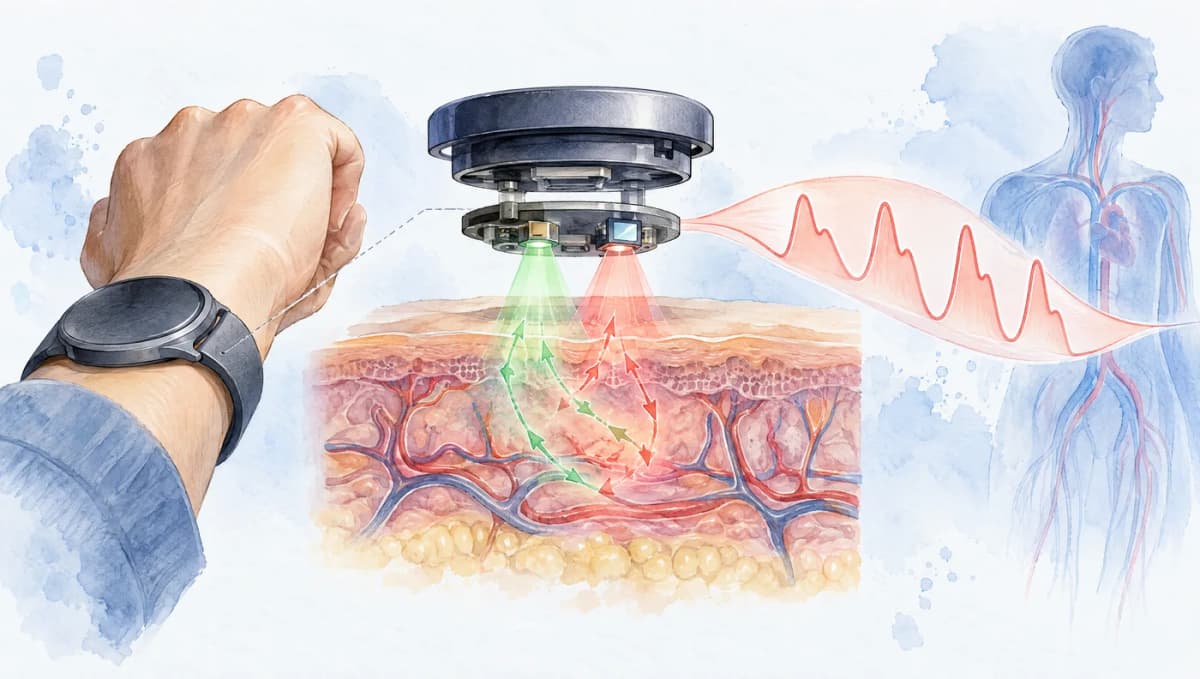 PPG & Signal Processing
A PPG signal is an optical recording of blood volume changes in tissue with every heartbeat. This guide explains PPG signal components, quality factors, and what the signal encodes.
Read the article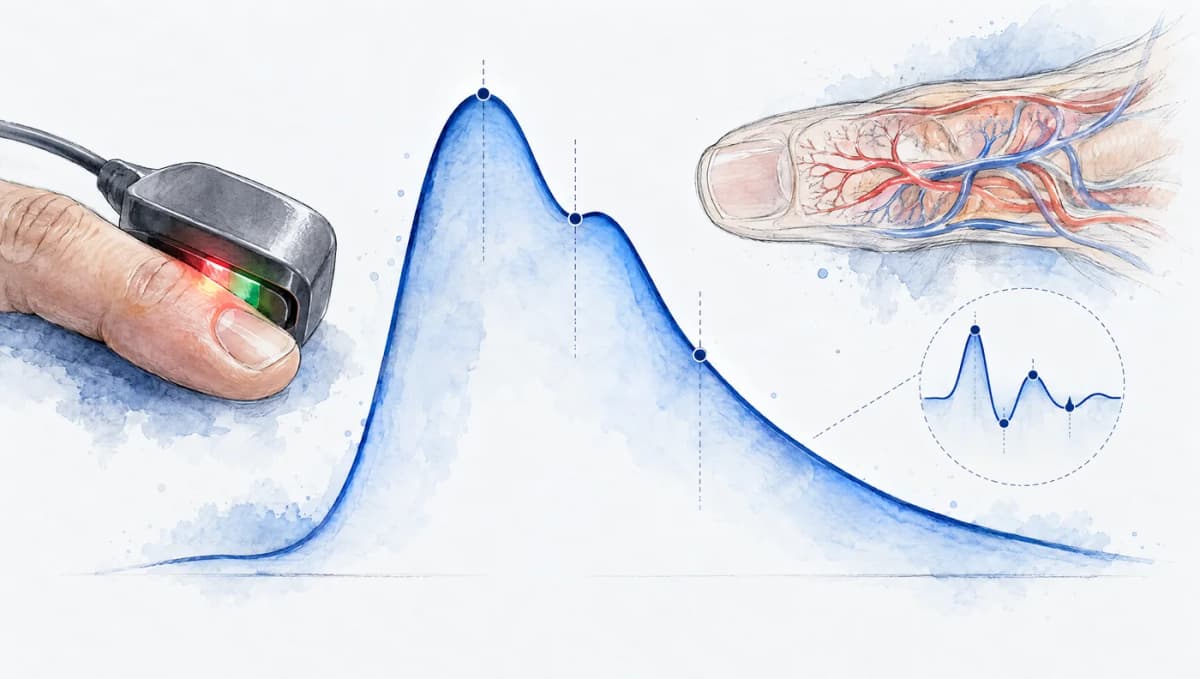 Heart Rate
The PPG waveform encodes far more than heart rate. Learn the anatomy of each pulse wave, what dicrotic notch position means, and how waveform shape reveals cardiovascular health.
Read the article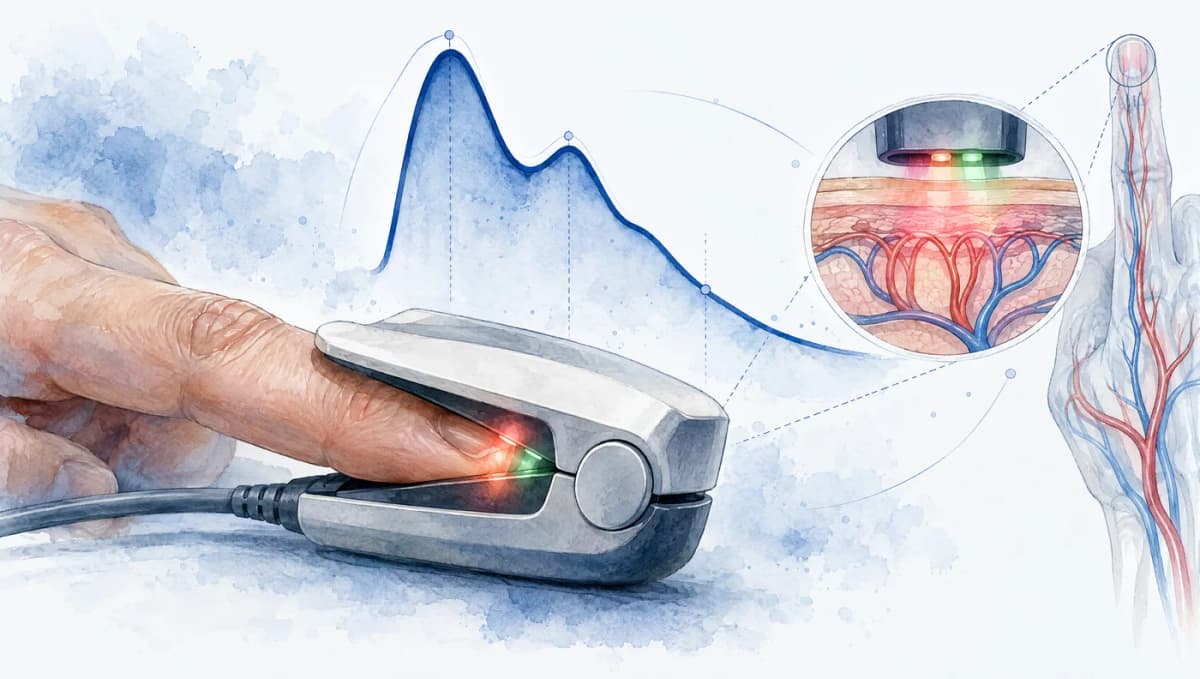 Research & Methods
Pulse plethysmography measures blood volume changes with each heartbeat using light, pressure, or impedance. This guide explains the technology, clinical uses, and key measurement methods.
Read the article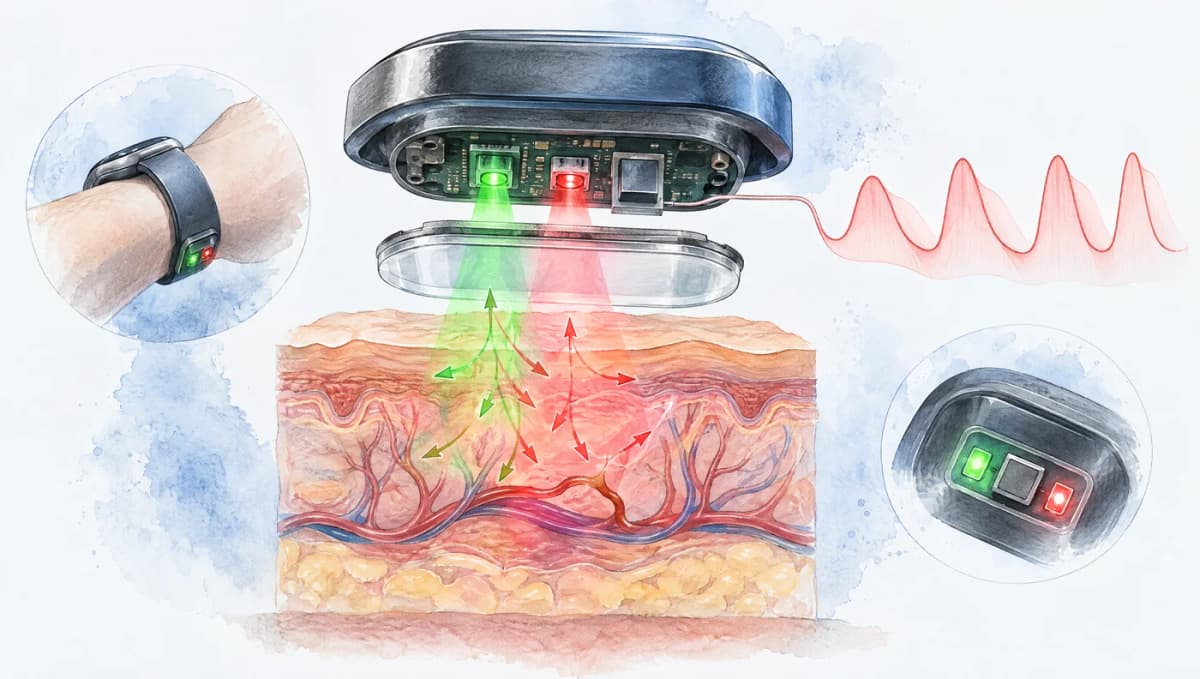 Heart Rate
PPG stands for photoplethysmography — the optical technique that powers heart rate sensors in smartwatches and clinical pulse oximeters. Learn exactly how it works.
Read the article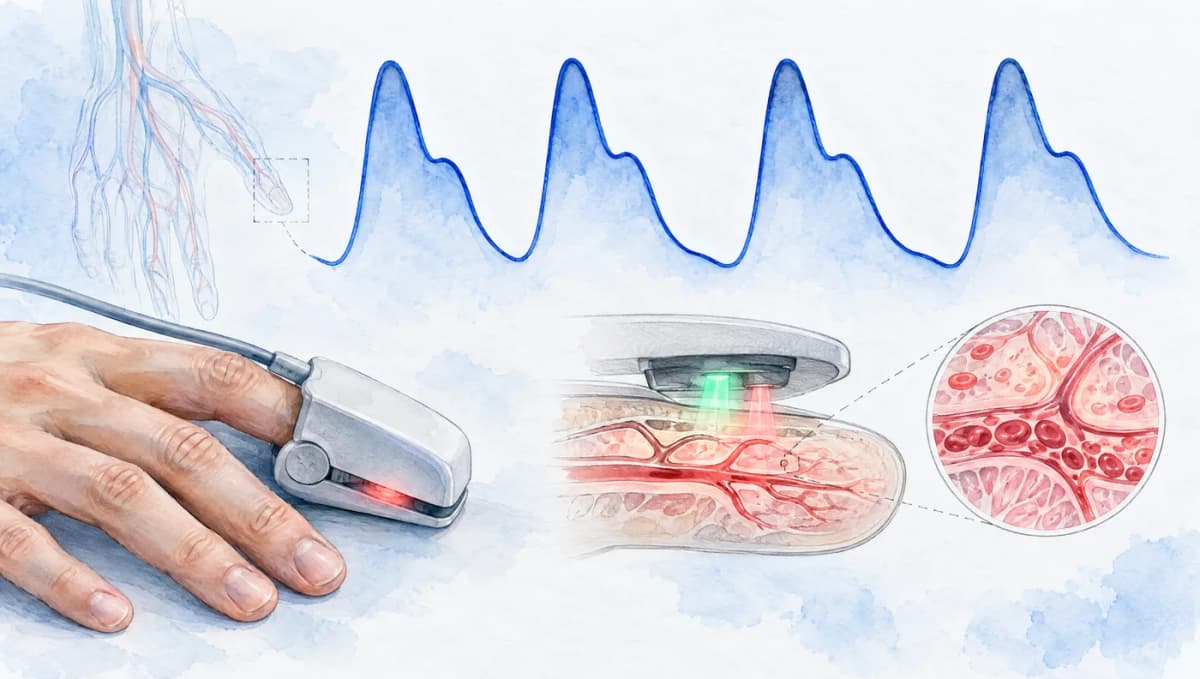 SpO2 & Oximetry
Pleth is the PPG waveform from the finger SpO2 probe, showing blood flow with each heartbeat. What a normal pleth looks like and what a poor one means.
Read the article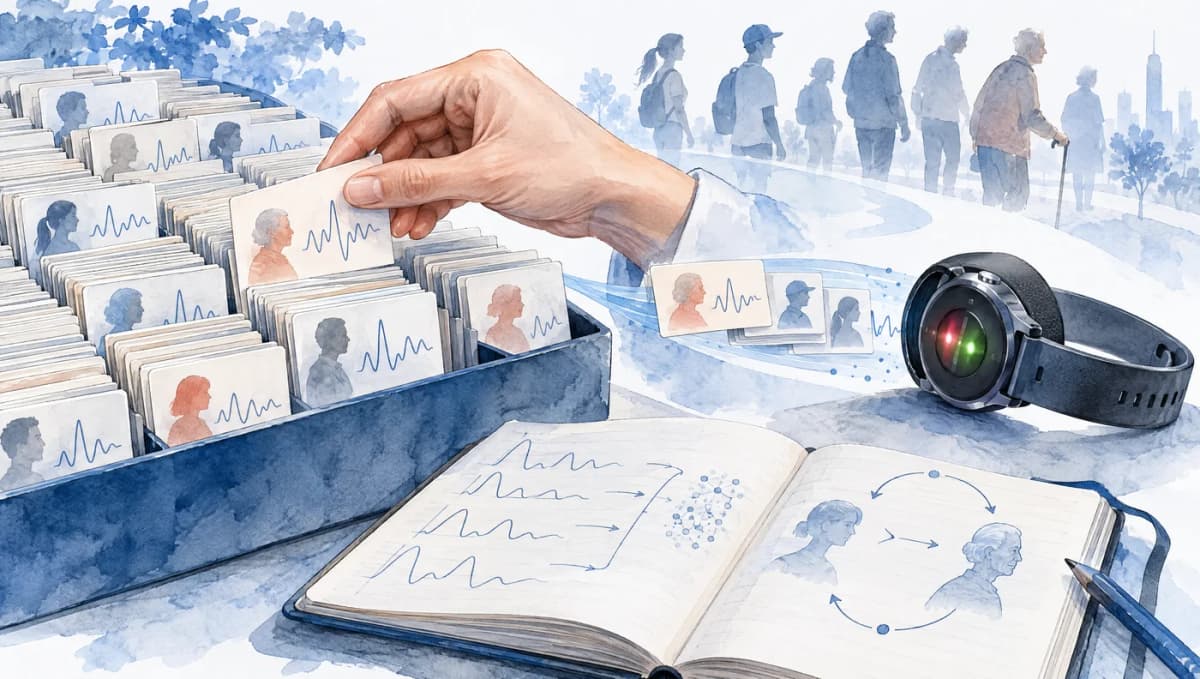 PPG & Signal Processing
A PPG model deployed to millions of wearables in 2024 faces a problem in 2026: the patient population has aged, devices have been updated with new sen...
Read the article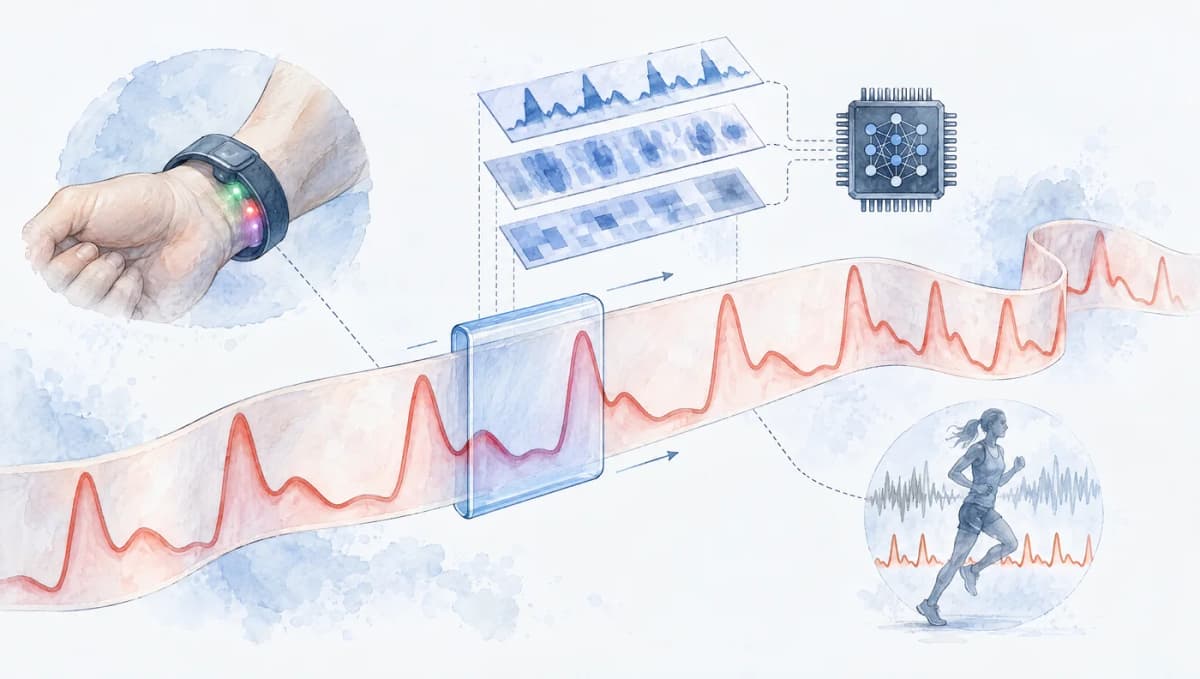 Heart Rate
Convolutional neural networks applied to PPG signals can detect arrhythmias with over 95% sensitivity, extract heart rate from noisy motion artifacts,...
Read the article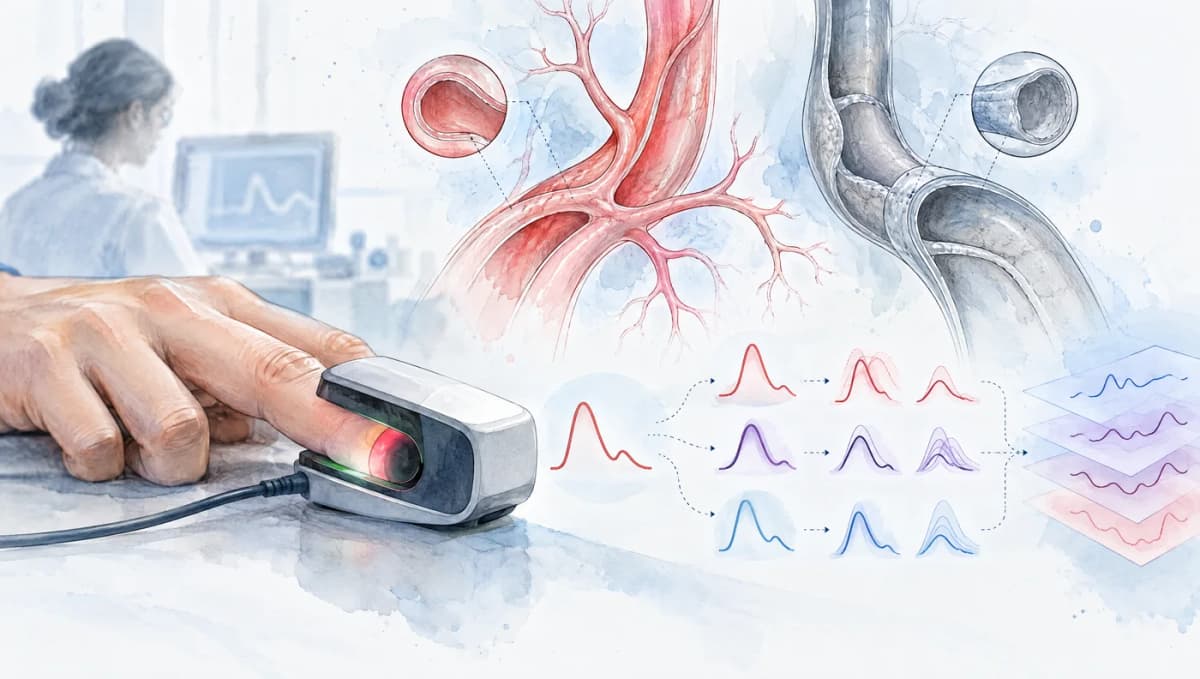 PPG & Signal Processing
Data augmentation for PPG models is not as simple as flipping images or cropping photos. The physiological constraints of cardiac signals define hard ...
Read the article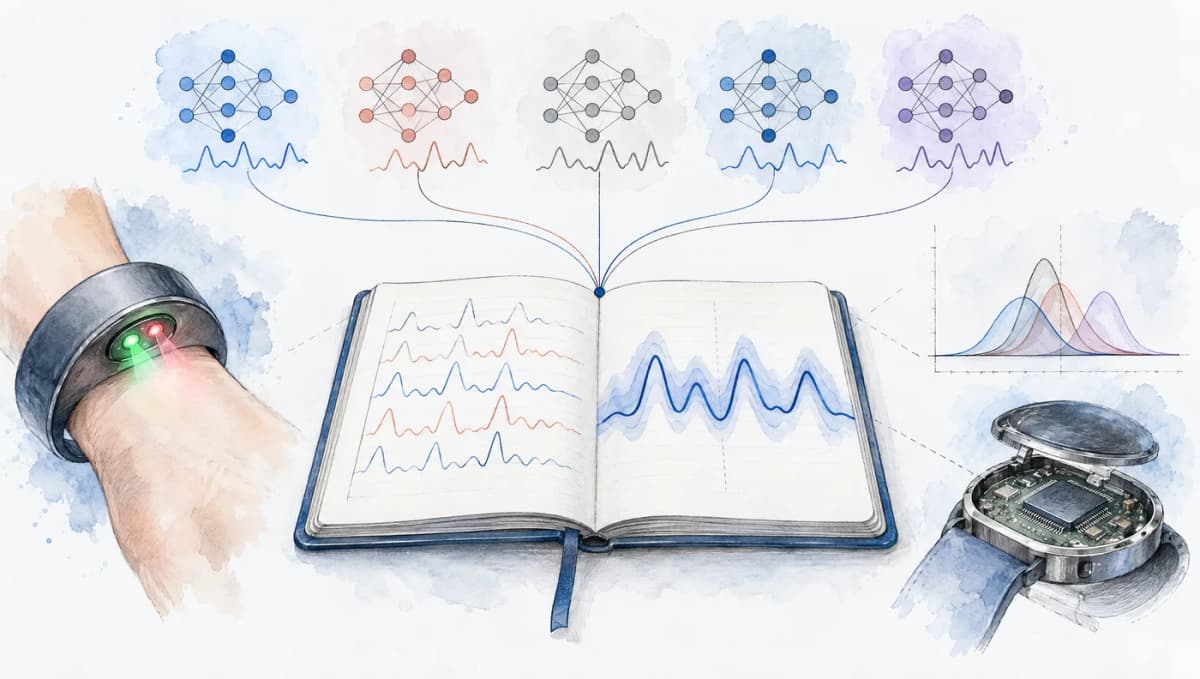 PPG & Signal Processing
Ensemble methods consistently rank among the top performers in competitive cardiac AI benchmarks. By combining predictions from multiple PPG models — ...
Read the articleUse the library to explore optical sensing, waveform morphology, motion artifacts, and wearable design. Follow article references to the original research and consider the population, device, and conditions behind each result. How to read the library ↗