PPG Data Augmentation
Data augmentation for PPG models is not as simple as flipping images or cropping photos. The physiological constraints of cardiac signals define hard ...
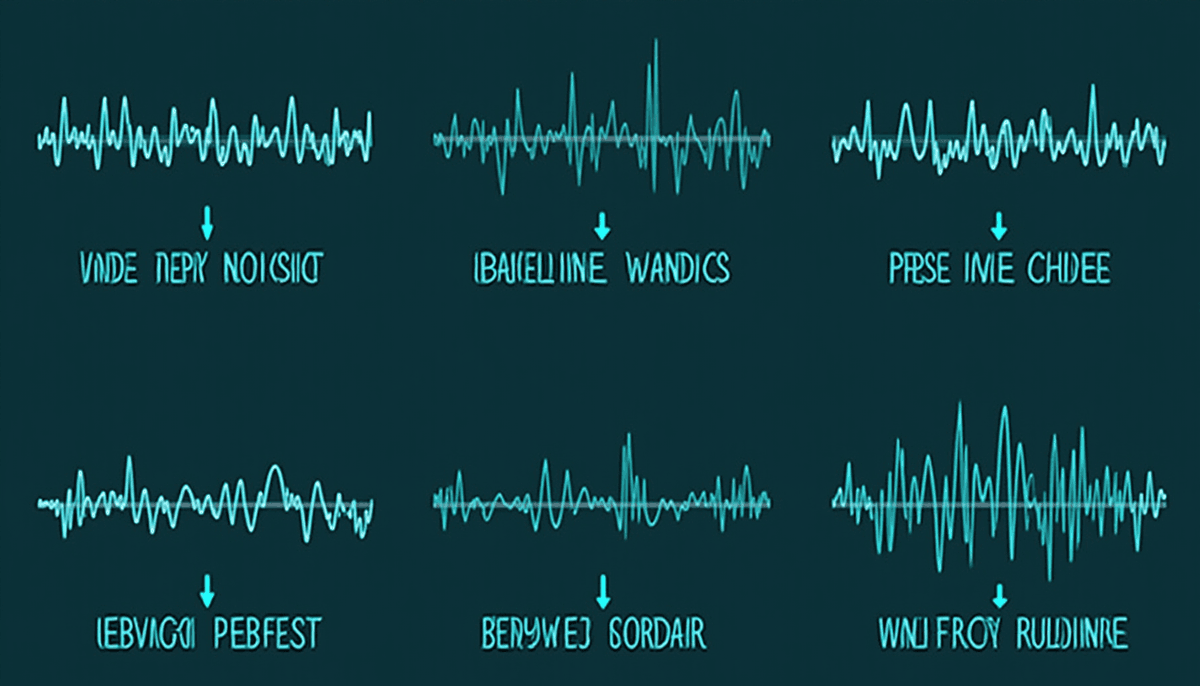
Data augmentation for PPG models is not as simple as flipping images or cropping photos. The physiological constraints of cardiac signals define hard limits on which transformations preserve label validity. Apply the wrong augmentation and you create samples that are physiologically impossible, teaching the model nonsense. Apply the right augmentations and you can double or triple effective dataset size, dramatically improving generalization to new devices, populations, and conditions. This article catalogs every major PPG augmentation technique, explains the physiological reasoning behind each, and provides experimental evidence for what actually works.
Why PPG Augmentation Is Different from Image Augmentation
For image classification, augmentations like horizontal flip, random crop, and color jitter are broadly applicable — a cat remains a cat whether flipped horizontally or color-shifted. PPG signals have physiological constraints that invalidate many naive transformations:
- Time reversal: physiologically impossible (cardiac cycles are asymmetric — fast systolic upstroke, slow diastolic downstroke). A time-reversed PPG has inverted morphology and does not represent any real cardiac state.
- Amplitude inversion: flipping the waveform vertically does not correspond to any real PPG recording.
- Large frequency shifts: increasing apparent heart rate by 50% creates physiologically unrealistic examples. A training sample labeled "normal sinus rhythm" at 140 BPM created by stretching a 70 BPM segment is misleading.
Effective PPG augmentation respects the physiology and creates realistic variations in the types of variability the model will encounter in deployment.
Signal-Level Augmentation Techniques
Amplitude Scaling
Scale the signal amplitude by a random factor in the range [0.7, 1.4]. This simulates:
- Different sensor gain settings across device models
- Variation in optical coupling (ring size, wrist circumference, hair density)
- Skin pigmentation effects on optical path length
Amplitude scaling is broadly safe because the cardiac events (peaks, valleys, timing) are preserved. The only concern is if downstream tasks depend on absolute amplitude (e.g., some SpO2 algorithms use the AC/DC ratio), in which case paired scaling of the AC and DC components is needed.
Baseline Wander Injection
Add a low-frequency sinusoidal signal (0.05–0.4 Hz) to simulate respiratory-induced baseline drift:
augmented = original + A × sin(2π × f_resp × t + φ)
where A is 10–30% of the signal amplitude, f_resp is randomly drawn from 0.1–0.4 Hz, and φ is a random phase. This augmentation teaches the model to ignore baseline wander, improving robustness to all real conditions where respiration modulates the signal.
Gaussian Noise Injection
Add white Gaussian noise at SNR levels of 10–30 dB:
augmented = original + σ × N(0,1)
where σ is calibrated to the desired SNR. This simulates sensor electronic noise, ambient light photon shot noise, and digitization quantization noise. Models trained without noise augmentation often fail on low-quality recordings from inexpensive sensors.
Motion Artifact Simulation
Motion artifacts are the most challenging real-world degradation for wrist PPG. Generating realistic motion artifact is non-trivial because it couples with the cardiac signal in complex, non-linear ways. Approaches:
Additive noise burst: Add a high-amplitude burst of bandlimited noise (0.5–5 Hz) at a random time within the segment. Simple but does not capture the true motion artifact morphology.
Accelerometer-derived templates: Extract templates from real motion artifact recordings and add them to clean PPG. This produces more realistic artifacts. The BIDMC and PPG-DaLiA datasets provide motion artifact recordings.
Empirical mode decomposition (EMD) transplant: Extract motion-dominated IMF components from corrupted recordings and transplant them into clean recordings. The resulting augmented signal has realistic artifact morphology while preserving the underlying cardiac signal.
Temporal Jitter and Resampling
Shift the signal by ±5–10 sample positions (random sub-segment offset) to teach temporal invariance. Resample from 125 Hz to 100 Hz or vice versa (with interpolation) to simulate cross-device sampling rate differences. Both augmentations are safe and improve cross-device generalization.
Random Segment Dropout (Cutout/Masking)
Zero out a random contiguous window of 10–25% of the segment length. This teaches the model to be robust to brief signal dropouts (sensor liftoff, transmission interruptions) and is related to the masked autoencoding pre-training approach. Unlike masking in self-supervised learning, here the label is preserved — the model must still classify the arrhythmia type despite partial signal absence.
Label-Preserving Advanced Techniques
Mixup
Mixup (Zhang et al., 2018, ICLR, DOI: 10.48550/arXiv.1710.09412) creates synthetic training examples by linearly interpolating between two real examples and their labels:
x̃ = λ × x₁ + (1-λ) × x₂
ỹ = λ × y₁ + (1-λ) × y₂
For PPG, Mixup is physiologically odd — a weighted average of a normal sinus rhythm and an AF waveform does not resemble any real cardiac state. However, empirically, Mixup consistently improves PPG model calibration and generalization, possibly by regularizing the decision boundary between classes rather than teaching the model about the mixed waveforms per se.
Mixup is most effective for:
- Binary classification tasks (AF vs. non-AF): 2–4% AUC improvement
- Imbalanced class problems: 3–6% improvement on minority class recall
- Models prone to overconfident predictions
CutMix
CutMix replaces a random rectangular region of one sample with the corresponding region from another sample, with labels mixed proportionally to the replaced area. For 1D PPG signals, this means replacing a temporal segment from one recording with the same temporal segment from another.
CutMix is more physiologically realistic than Mixup for PPG: the resulting signal has normal cardiac beats from one patient plus normal beats from another patient. For normal sinus rhythm classification, this creates diverse-morphology examples that improve inter-individual generalization. For arrhythmia detection, CutMix must be applied carefully — do not cut during the irregular beats that define the arrhythmia class.
Generative Augmentation: Synthetic PPG
VAE-Based Synthesis
Variational autoencoders learn a compressed latent representation of PPG morphology. Decoding random samples from the latent space generates synthetic PPG waveforms. Class-conditional VAEs generate synthetic samples for specific arrhythmia types, directly addressing class imbalance.
Quality control is essential: generated samples should pass a signal quality classifier before being added to training. Low-quality synthetic samples can hurt performance. Filtering at >85% quality confidence typically preserves high-quality synthetic samples.
GAN-Based Synthesis
Generative Adversarial Networks trained on PPG data can produce high-fidelity synthetic waveforms. Pulse2Pulse (Golany et al., 2019, AAAI) demonstrated GAN-based ECG synthesis that improved arrhythmia classifier performance when synthetic samples were added to training. Similar results have been reported for PPG.
The training dynamics of GANs on time-series data are less stable than on images. Key techniques: spectral normalization in the discriminator, Wasserstein loss with gradient penalty, and progressive growing (start with low-resolution segments, gradually increase to full length).
Physiological Model-Based Synthesis
Cardiac simulation models (PhysioNet's ECGSYN, the SIMKARD framework) generate synthetic PPG from physiological parameters. You can systematically vary heart rate, stroke volume, arterial compliance, and autonomic tone to create labeled synthetic data covering the full physiological range.
The advantage over GAN/VAE synthesis: the synthetic samples have known ground-truth physiological parameters. The disadvantage: the simulation may not capture the full complexity of real device outputs, creating a simulation-to-real gap.
What Augmentation Improves (and What Doesn't)
Evidence from published benchmarks:
| Augmentation | Heart Rate MAE | AF AUC | SpO2 RMSE | Notes |
|---|---|---|---|---|
| Baseline wander | ↓ 15% | +2% | ↓ 8% | Broadly beneficial |
| Noise injection | ↓ 20% | +3% | ↓ 12% | Essential for consumer devices |
| Amplitude scaling | ↓ 8% | +1% | ↓ 5% | Helps cross-device generalization |
| Mixup | No change | +3% | No change | Calibration benefit |
| Time reversal | ↑ 5% | −4% | ↑ 3% | HURTS performance — physiologically invalid |
| GAN synthesis | ↓ 5% | +5% | No change | Most benefit for rare classes |
Key finding: physiologically invalid augmentations (time reversal, amplitude inversion) consistently hurt model performance. Physiologically motivated augmentations that simulate real-world conditions consistently help.
Internal Links
For the self-supervised learning methods that use augmentation as their primary training signal, see Self-Supervised Learning for PPG. For the ensemble methods that benefit most from diverse augmented training sets, see PPG Ensemble Methods. For clinical AF detection where augmentation improves rare-class recall, see PPG Atrial Fibrillation Screening.
Frequently Asked Questions
What is data augmentation for PPG signals? PPG data augmentation creates modified versions of existing PPG segments to expand training data diversity. Techniques include adding noise, injecting baseline wander, scaling amplitude, simulating motion artifacts, and using generative models to synthesize entirely new waveforms. Augmentation improves model robustness and reduces overfitting, especially for small or imbalanced datasets.
Which PPG augmentations are physiologically valid? Safe augmentations include amplitude scaling, baseline wander injection, Gaussian noise, temporal jitter, resampling, random masking, and Mixup. Physiologically invalid augmentations — time reversal and amplitude inversion — should be avoided because they create training examples that do not correspond to real cardiac signals, teaching the model incorrect features.
How does Mixup augmentation work for cardiac signals? Mixup creates synthetic training examples by linearly blending two PPG segments and their labels with a random mixing coefficient λ. The mixed example is (λ × sample₁ + (1-λ) × sample₂) with label (λ × label₁ + (1-λ) × label₂). Though physiologically odd, Mixup consistently improves model calibration and generalization by regularizing decision boundaries.
Can synthetic PPG from GANs improve model performance? Yes, particularly for rare arrhythmia classes. GAN-generated synthetic PPG, when filtered for quality and added to training, has shown 3–6% AUC improvement on minority class detection. The key is quality filtering — low-quality synthetic samples hurt performance. Use a signal quality classifier to screen synthetic samples before including them in training.
How much augmentation should I use when training a PPG model? The optimal augmentation strength is dataset-dependent. Start with moderate augmentation (noise at 20 dB SNR, baseline wander at 15% amplitude, amplitude scaling ±20%) and use validation performance to tune. Overly aggressive augmentation (very high noise, extreme time stretching) can destroy too much physiological information and degrade performance.
What is motion artifact simulation for PPG augmentation? Motion artifact simulation adds realistic movement-related noise to clean PPG segments to teach models to be robust to real-world activity. Methods range from simple bandlimited noise bursts to sophisticated EMD-based artifact transplantation from real corrupted recordings. The latter produces more realistic augmented data and stronger robustness improvements.