 PPG & Signal Processing
PPG Recurrent Neural Network
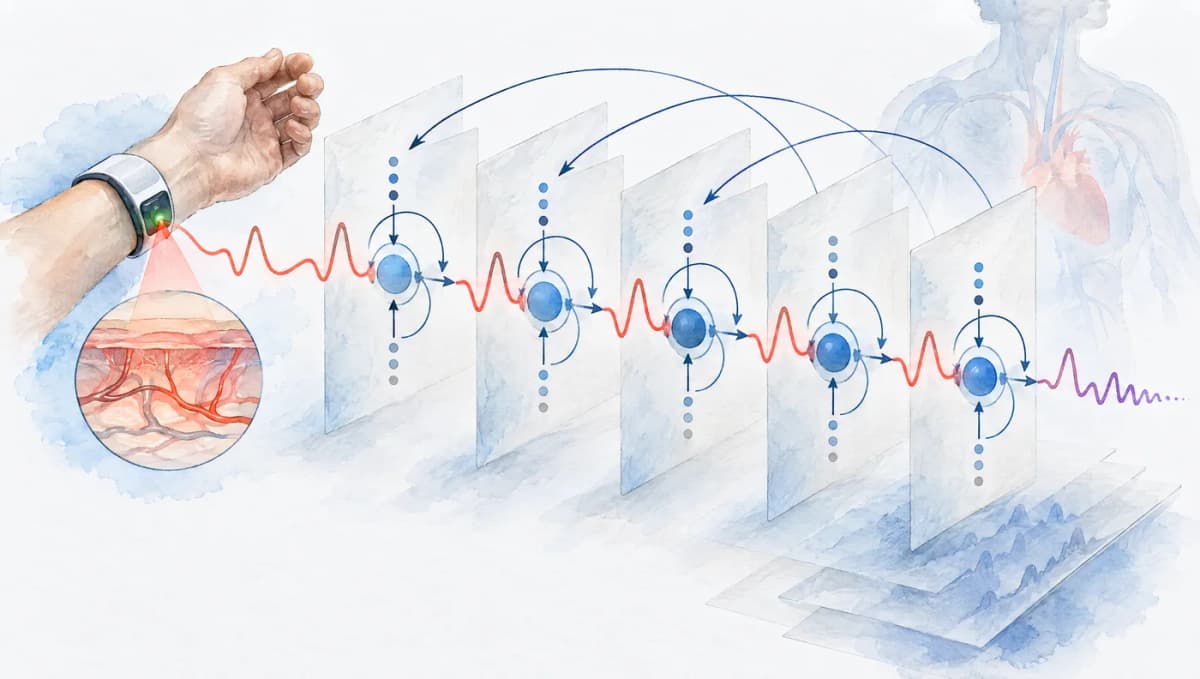
Recurrent neural networks (RNNs) process PPG signals as sequences, maintaining memory of past cardiac beats while processing each new sample. Where CN...
Read the articleThe ChatPPG library
Technical guides to PPG sensors, signal processing, HRV, SpO2, and wearable accuracy. Explore the methods and their published evidence.
Showing 151–200 of 308 articles · Latest first
PPG & Signal ProcessingRecurrent neural networks (RNNs) process PPG signals as sequences, maintaining memory of past cardiac beats while processing each new sample. Where CN...
Read the article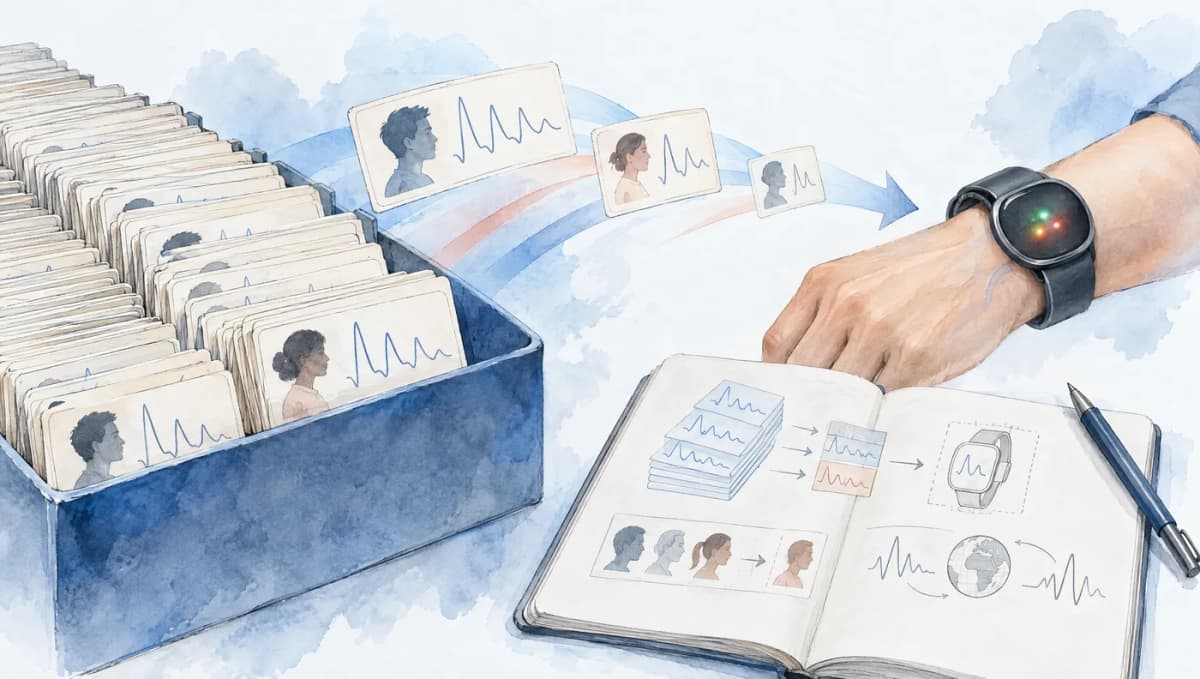 PPG & Signal Processing
Transfer learning lets you reuse a PPG model trained for one task as the starting point for a different task, drastically reducing the labeled data an...
Read the article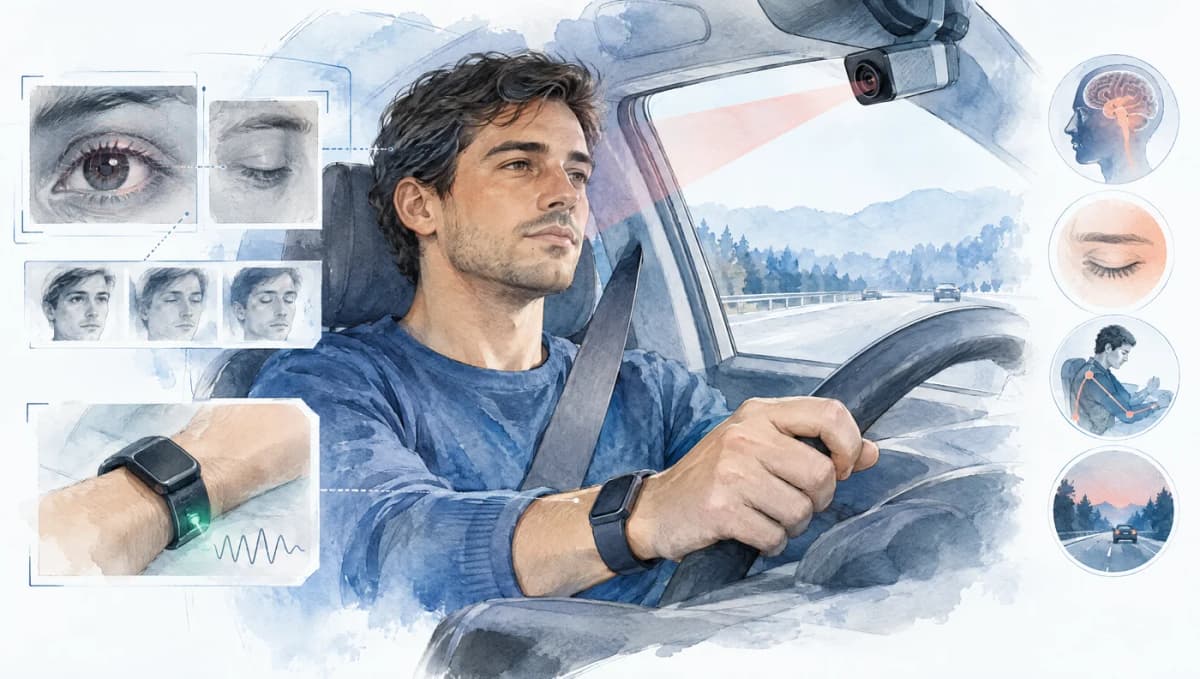 Remote PPG & Camera
The National Highway Traffic Safety Administration estimates that drowsy driving causes over 100,000 crashes annually in the United States, resulting ...
Read the article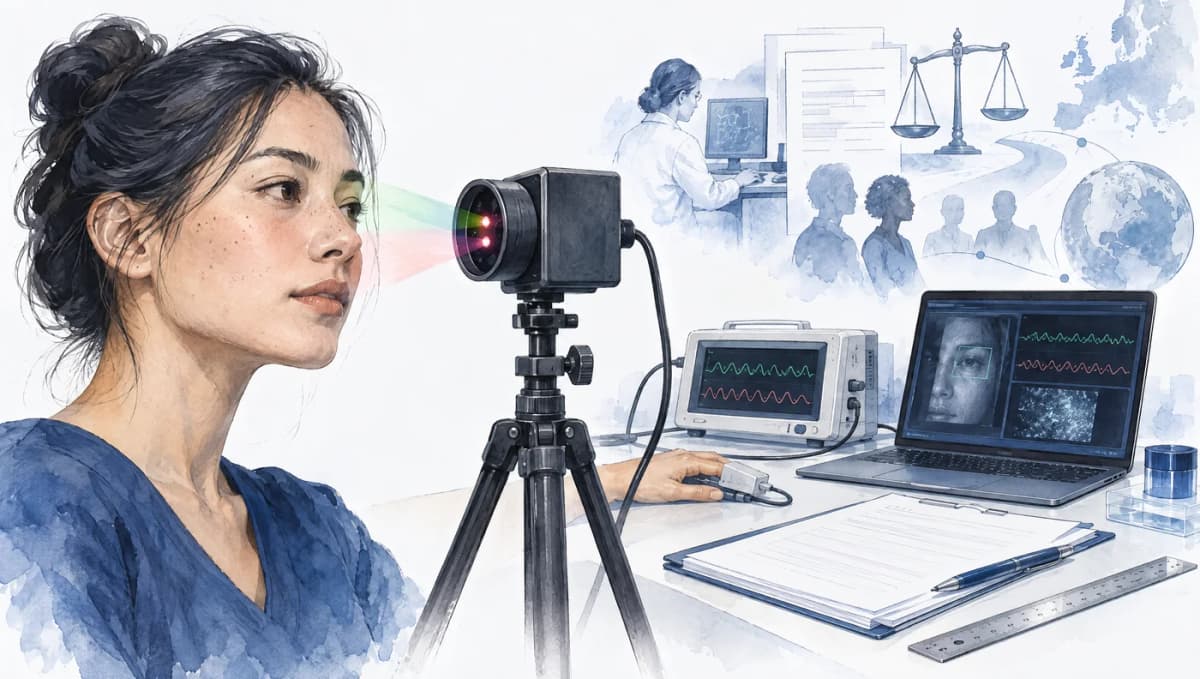 Remote PPG & Camera
Which camera-based rPPG products are FDA cleared, how 510(k) and SaMD rules apply to contactless vital signs, and how the EU MDR treats them.
Read the article Remote PPG & Camera
Remote photoplethysmography captures the subtle color fluctuations your skin makes with every heartbeat. That signal is tiny — on the order of 0.1 to ...
Read the article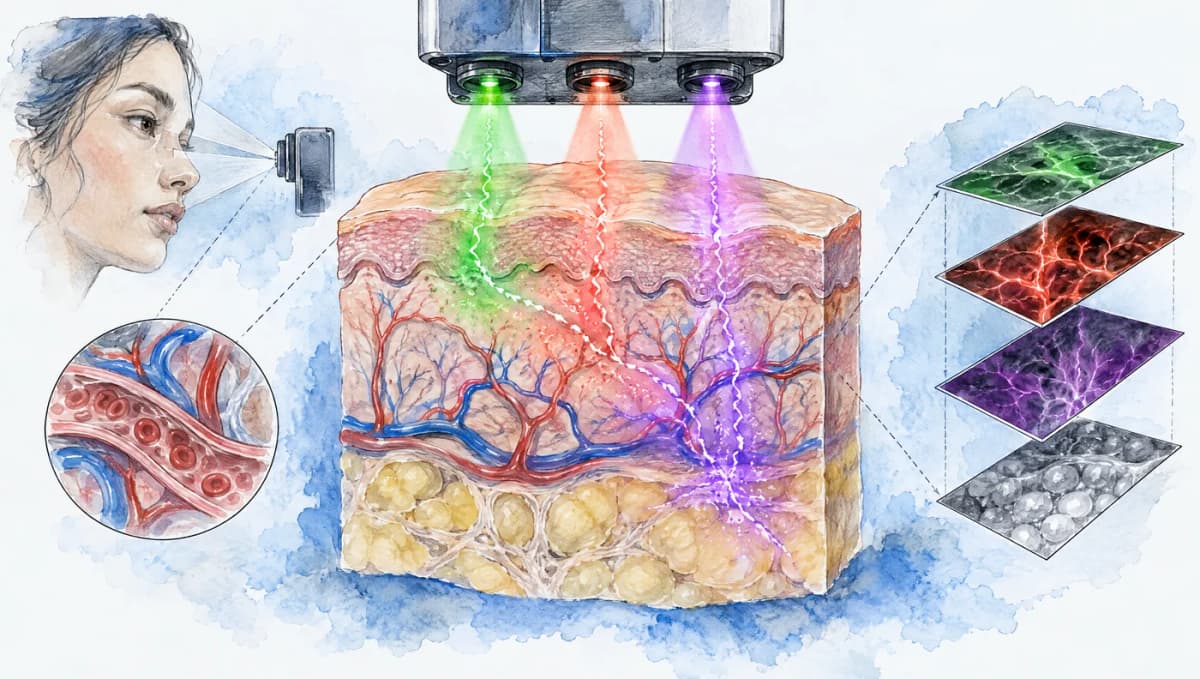 Remote PPG & Camera
Standard RGB rPPG uses what your eyes can see — red, green, and blue light reflected off skin. This works, but it's leaving significant information on...
Read the article Remote PPG & Camera
Preterm infants in the neonatal intensive care unit face a paradox: they need the most intensive monitoring of any patient population, but their skin ...
Read the article Remote PPG & Camera
Heart rate is not the kind of information most people expect their laptop camera to collect. But remote photoplethysmography makes exactly that possib...
Read the article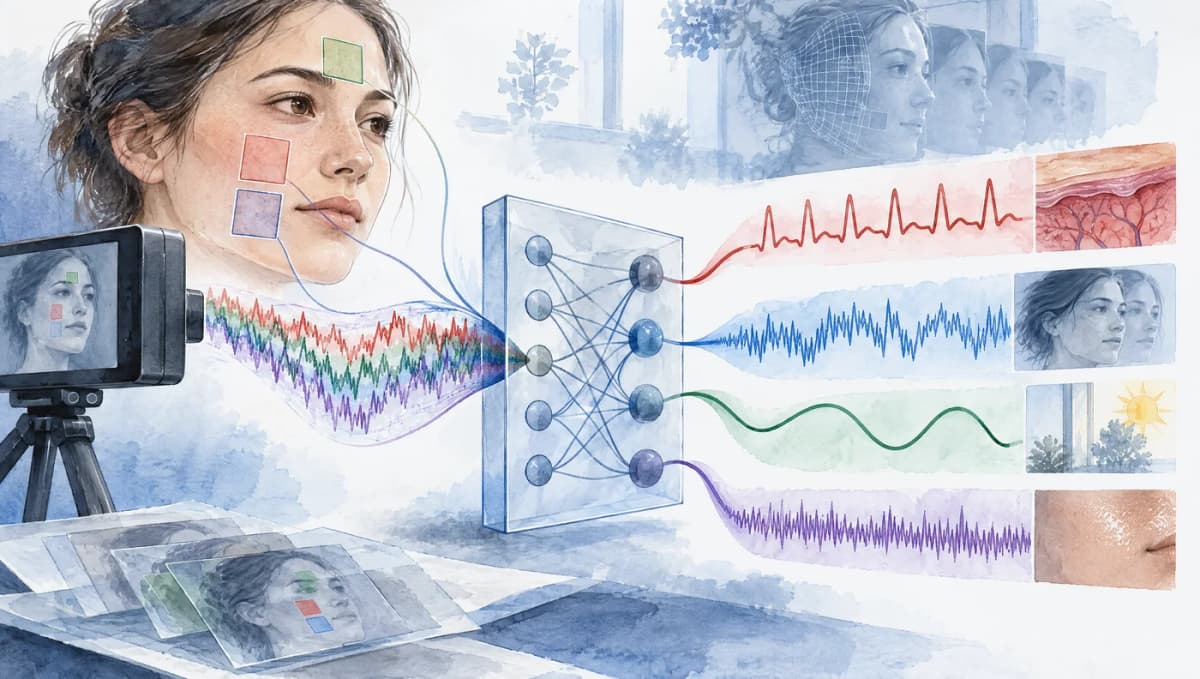 Remote PPG & Camera
The raw pixel values of a face video contain a mixture of signals: blood volume pulsation, motion artifacts, illumination changes, skin specular refle...
Read the article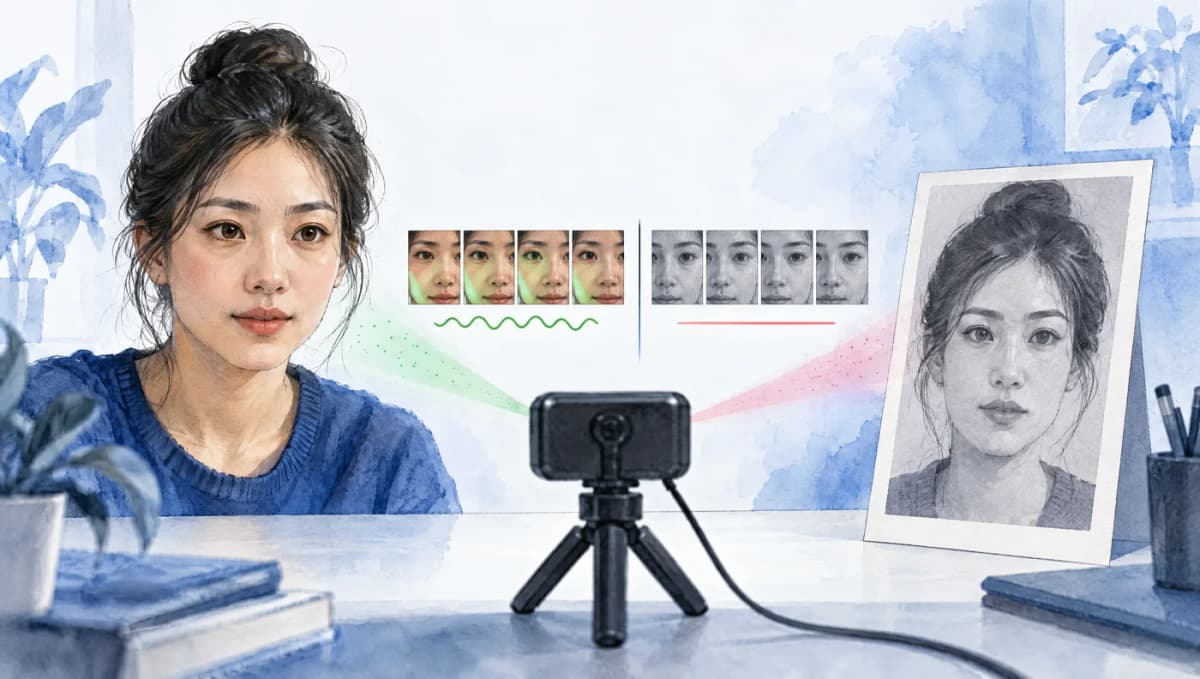 Remote PPG & Camera
Face recognition systems secure phones, border crossings, and bank logins. They're increasingly reliable at identifying who you are. But they're histo...
Read the article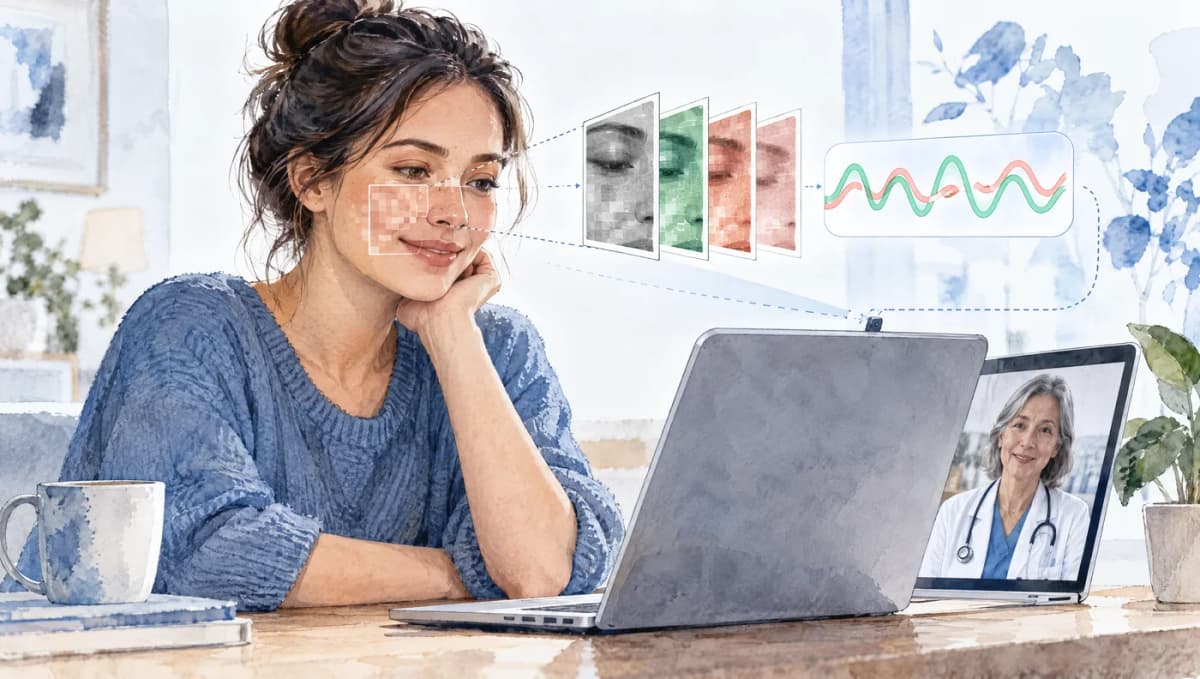 Remote PPG & Camera
Imagine joining a telehealth appointment and having your resting heart rate measured passively through your laptop camera — no finger clip, no wristba...
Read the article Remote PPG & Camera
Remote photoplethysmography and contact PPG measure the same physiological phenomenon through very different means. Both detect blood volume changes i...
Read the article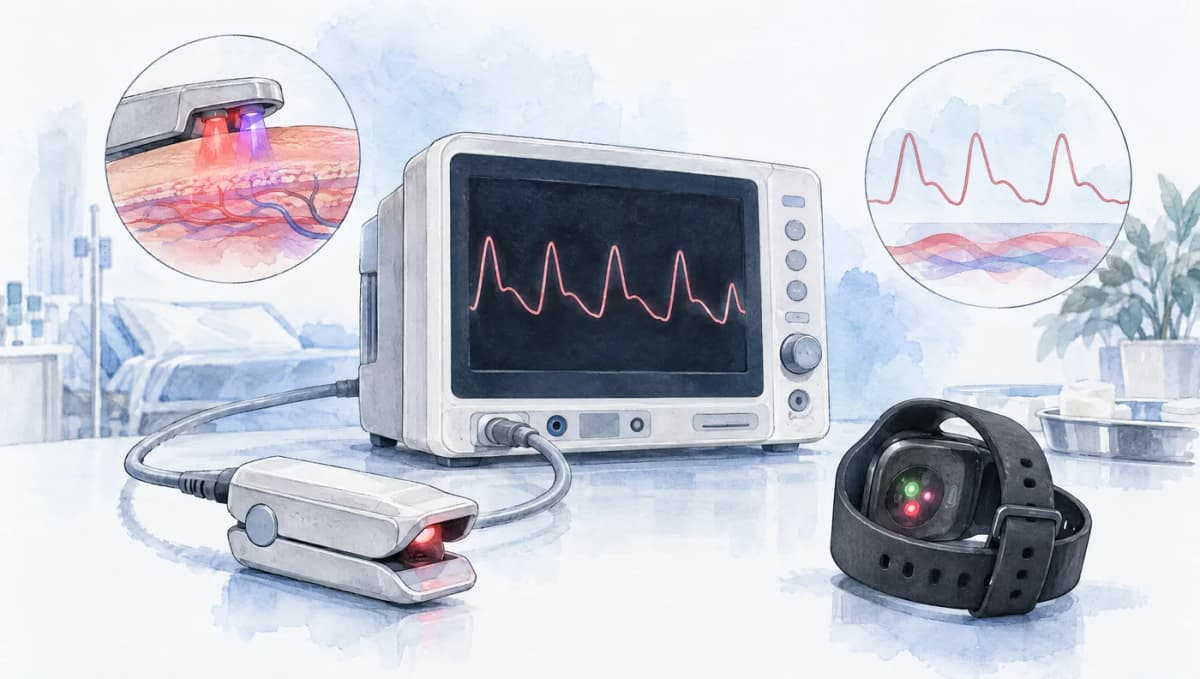 Wearable Accuracy
The term "medical grade" gets thrown around loosely in the wearable health market. But the difference between a consumer fitness tracker and a clinica...
Read the article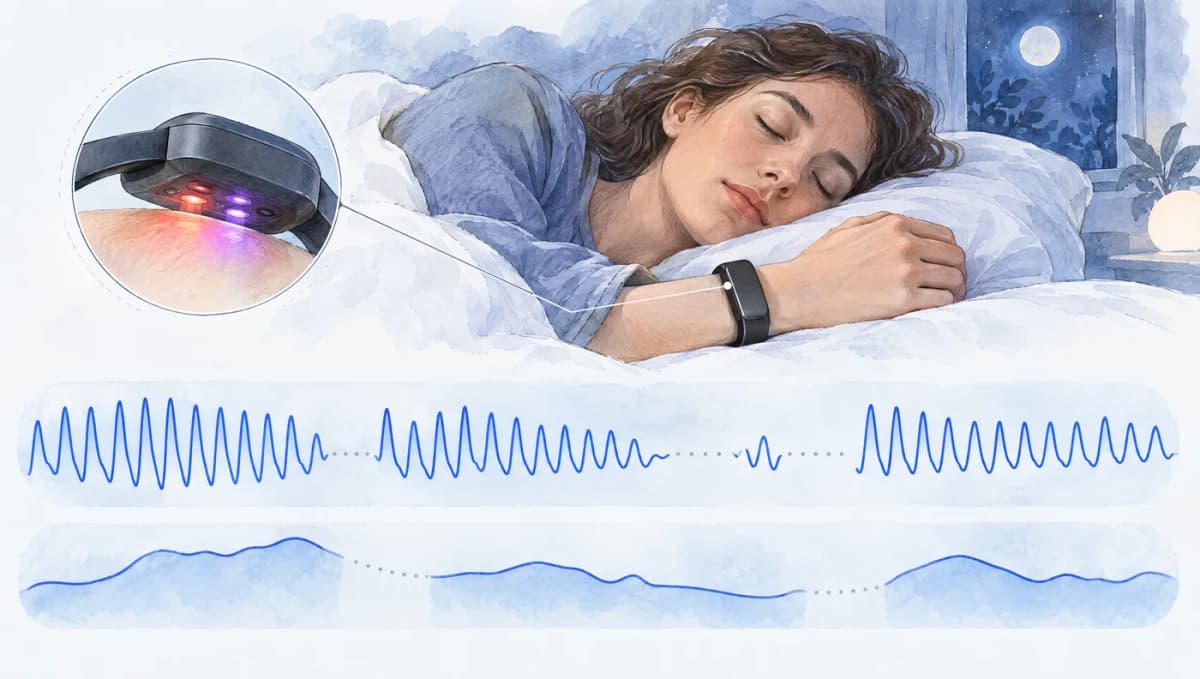 SpO2 & Oximetry
Continuous SpO2 monitoring sounds straightforward: keep the red and NIR LEDs running, and report blood oxygen every second. In practice, it's one of t...
Read the article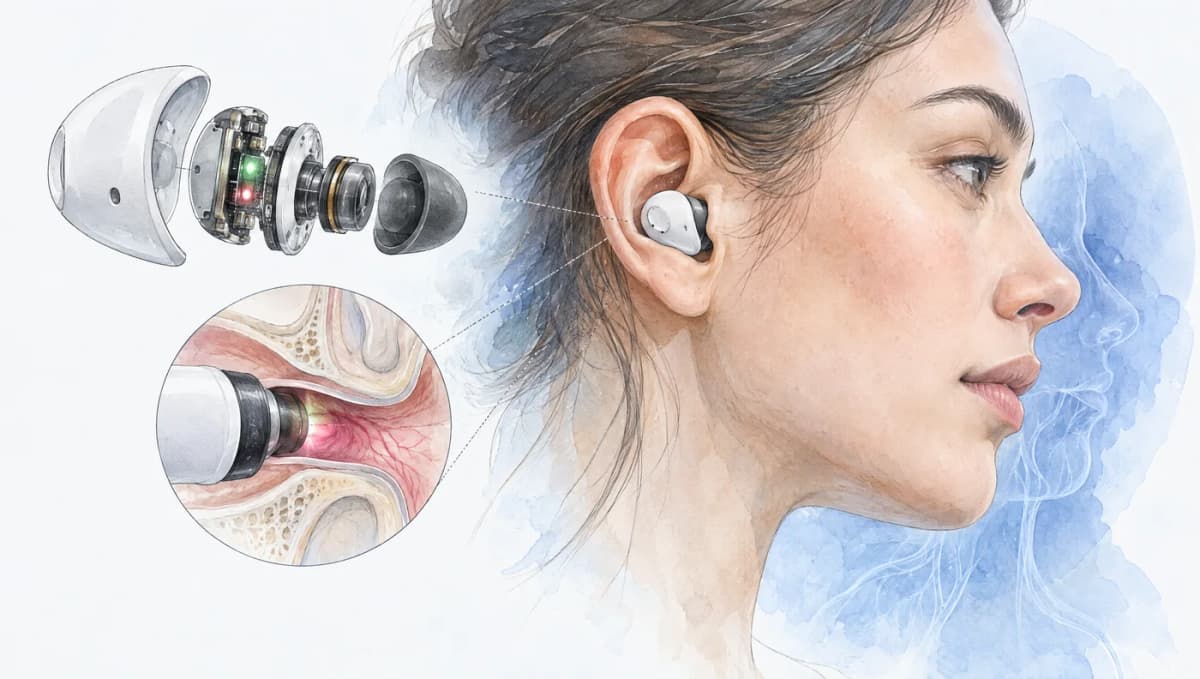 PPG & Signal Processing
The ear canal is emerging as a compelling alternative to the wrist for continuous PPG monitoring. With rich vascular supply, stable temperature, minim...
Read the article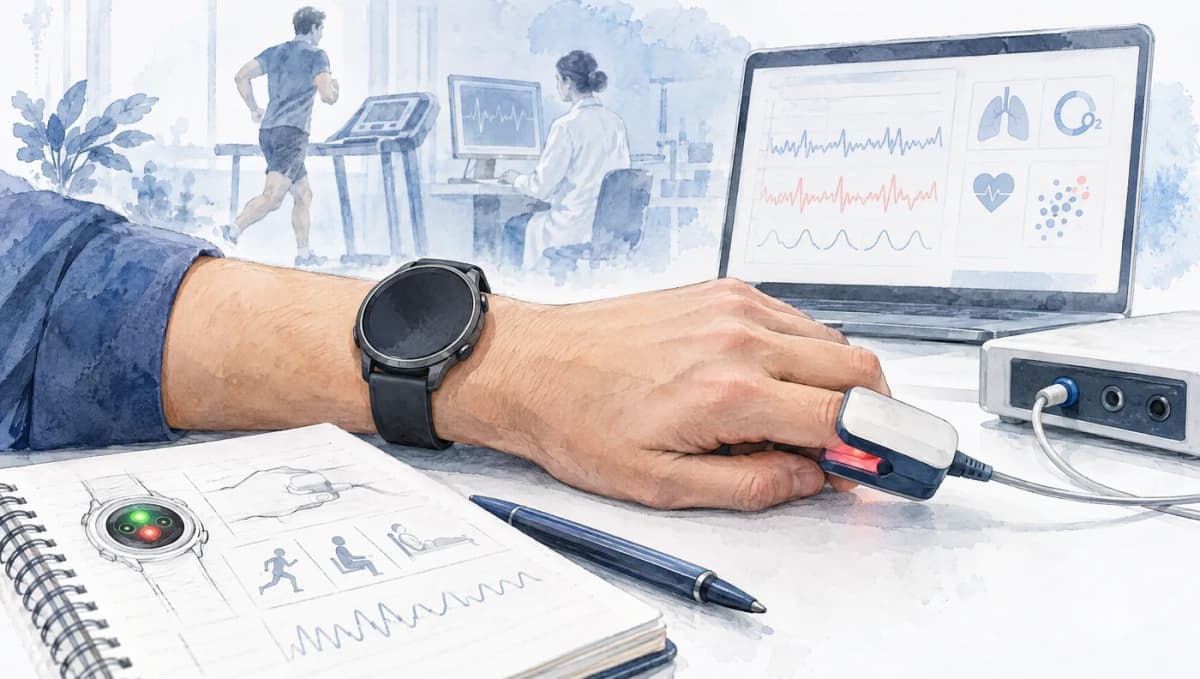 SpO2 & Oximetry
What independent studies show for Garmin and Apple Watch heart rate, SpO2 and AFib detection, how validation studies work, and where each falls short.
Read the article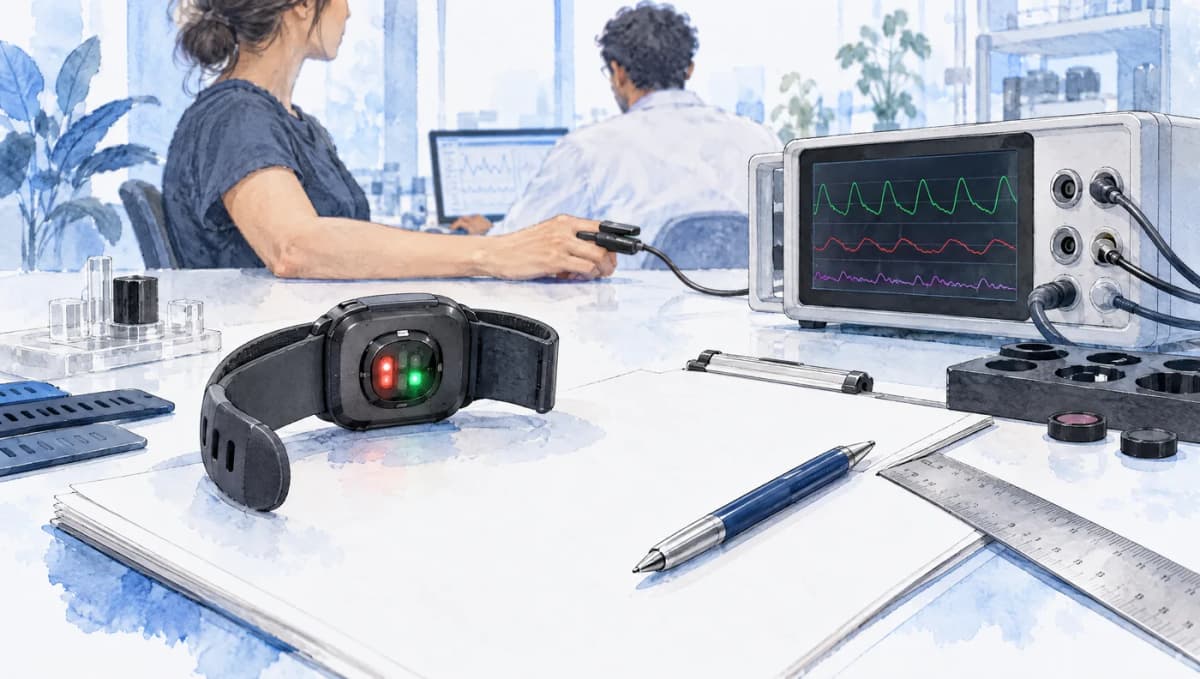 Wearable Accuracy
Validating a PPG wearable requires navigating a patchwork of international standards, FDA guidance documents, and evolving best practices. For researc...
Read the article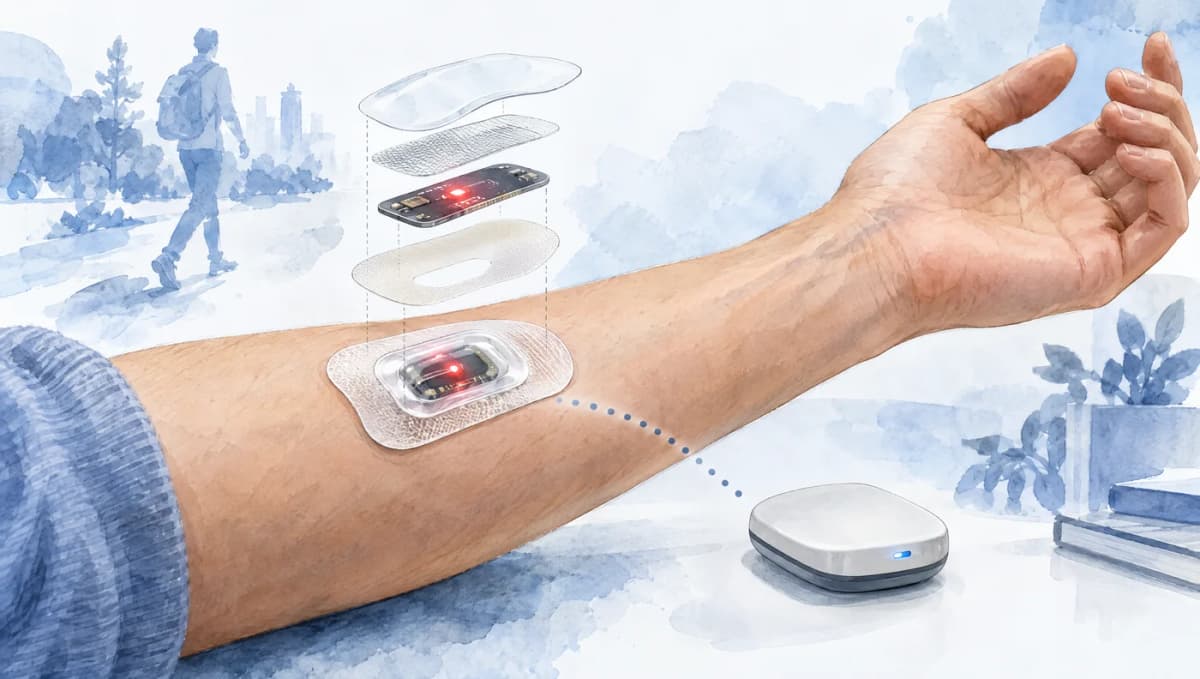 Blood Pressure
Adhesive PPG patches represent a different form factor from rings and wrist devices: they attach directly to skin at carefully chosen body sites, main...
Read the article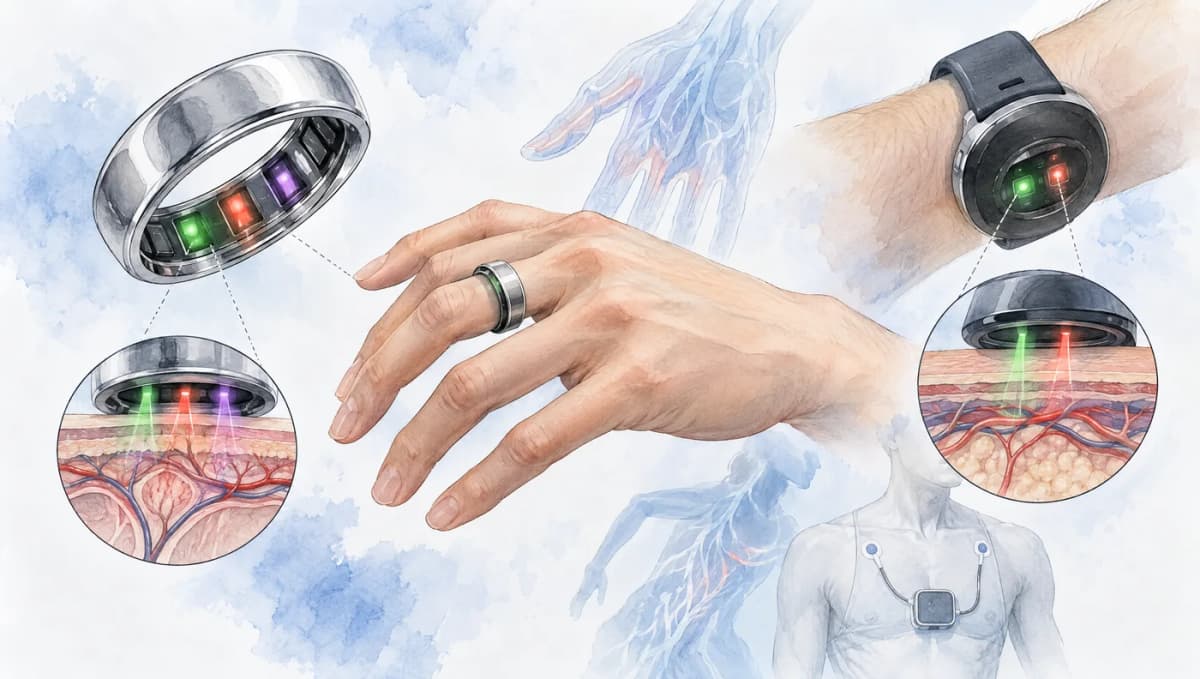 SpO2 & Oximetry
Ring-based PPG sensors and wrist smartwatches both measure heart rate, SpO2, and HRV using photoplethysmography. But they access fundamentally differe...
Read the article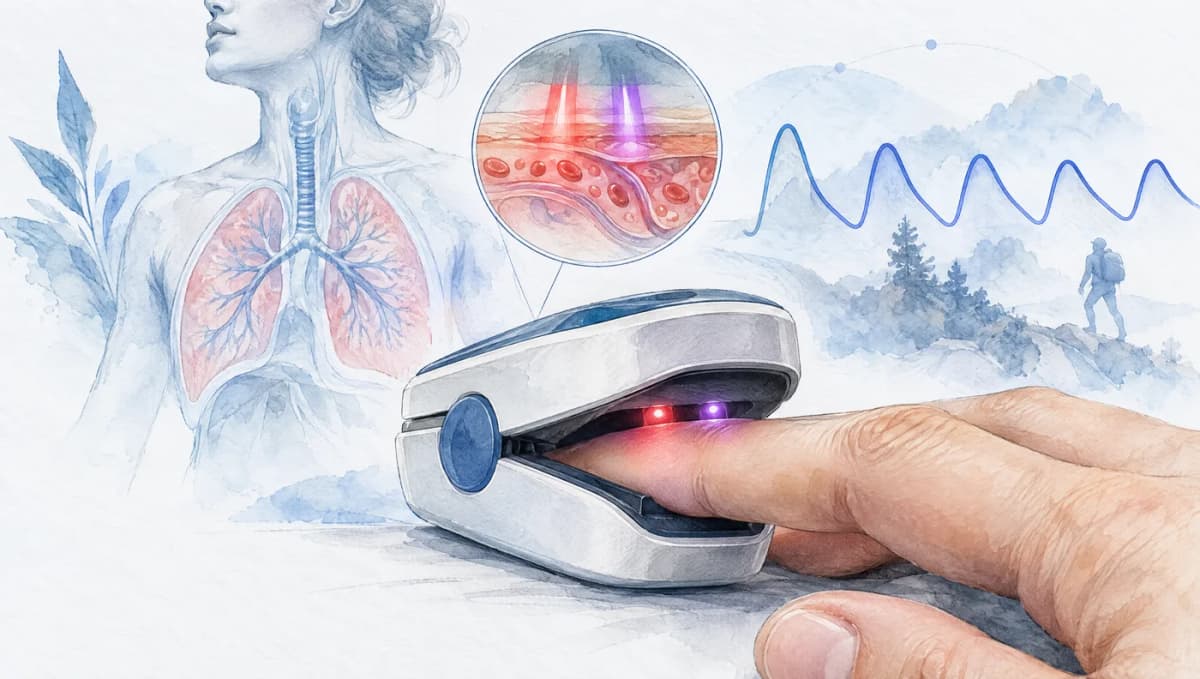 SpO2 & Oximetry
A wearable pulse oximeter uses photoplethysmography (PPG) to estimate blood oxygen saturation (SpO2) continuously, without finger clips or hospital eq...
Read the article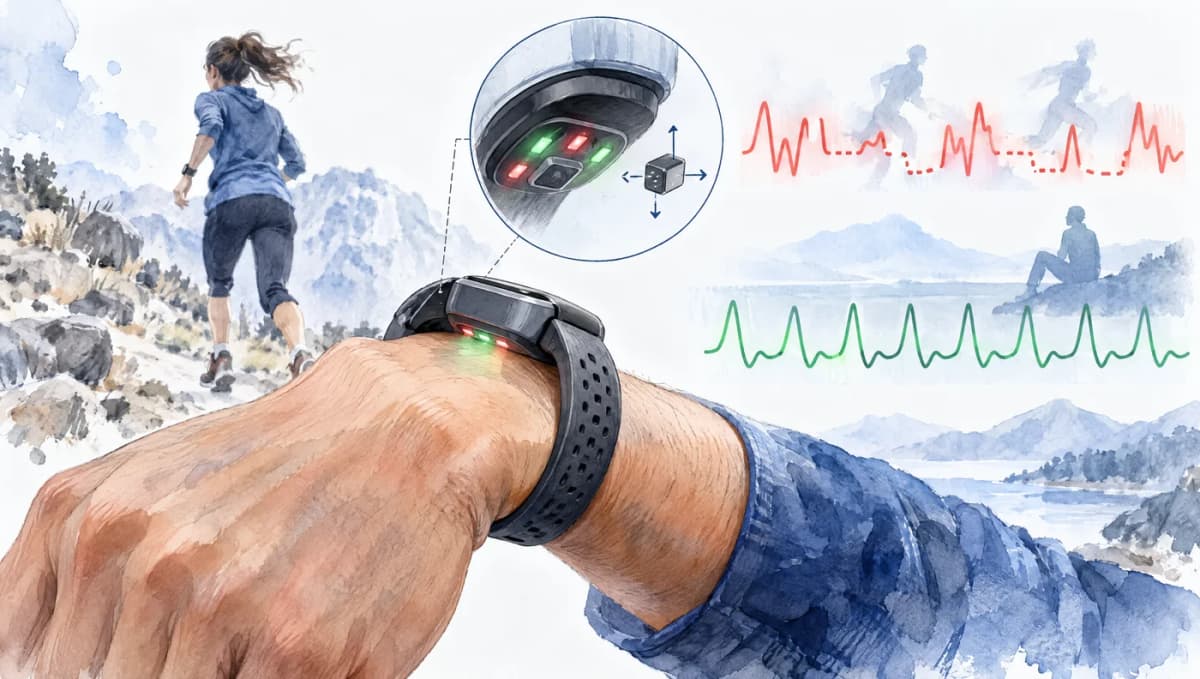 Heart Rate
Wrist heart rate monitors are convenient, but their accuracy record is uneven. During rest and light activity, modern wrist PPG sensors perform reason...
Read the article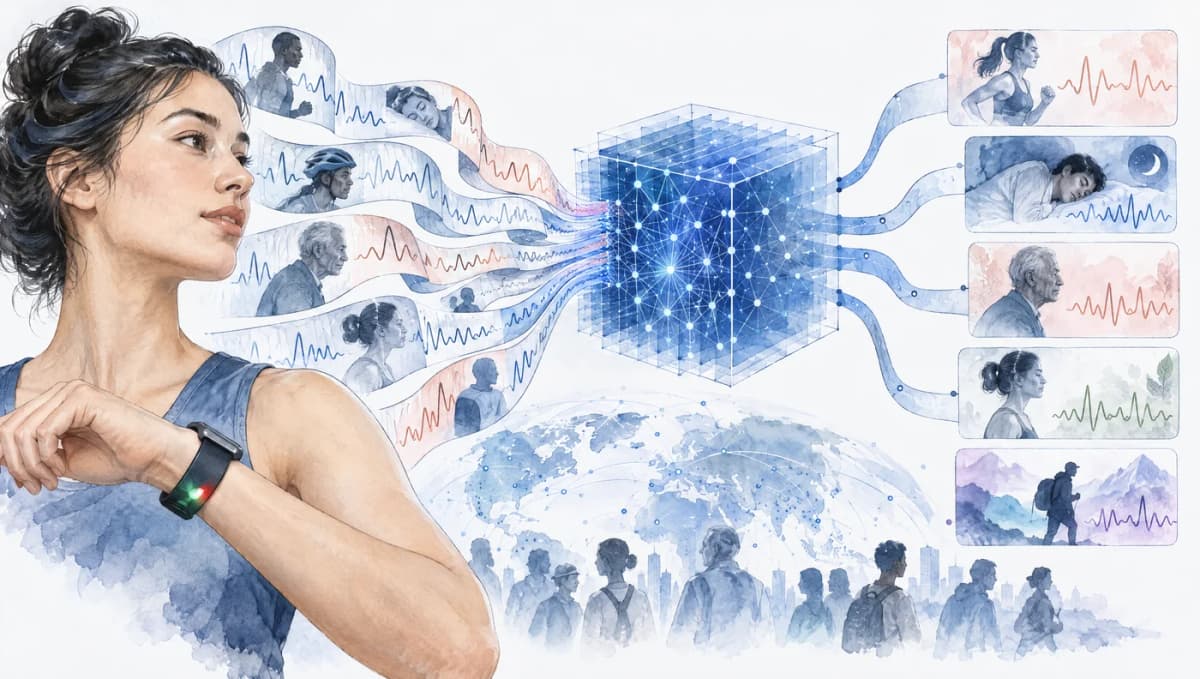 Blood Pressure
PPG foundation models are large pretrained networks that learn reusable pulse-wave representations for heart rate, AF screening, blood pressure proxies, and related tasks. Compare PaPaGei, Pulse-PPG, GPT-PPG, AnyPPG, SiamQuality, and more.
Read the article Remote PPG & Camera
Camera-based heart rate monitoring — measuring pulse from facial video without any physical contact — has been validated in dozens of clinical studies...
Read the article SpO2 & Oximetry
Contactless vital signs detection measures heart rate, respiratory rate, and oxygen saturation without any physical contact between sensor and patient...
Read the article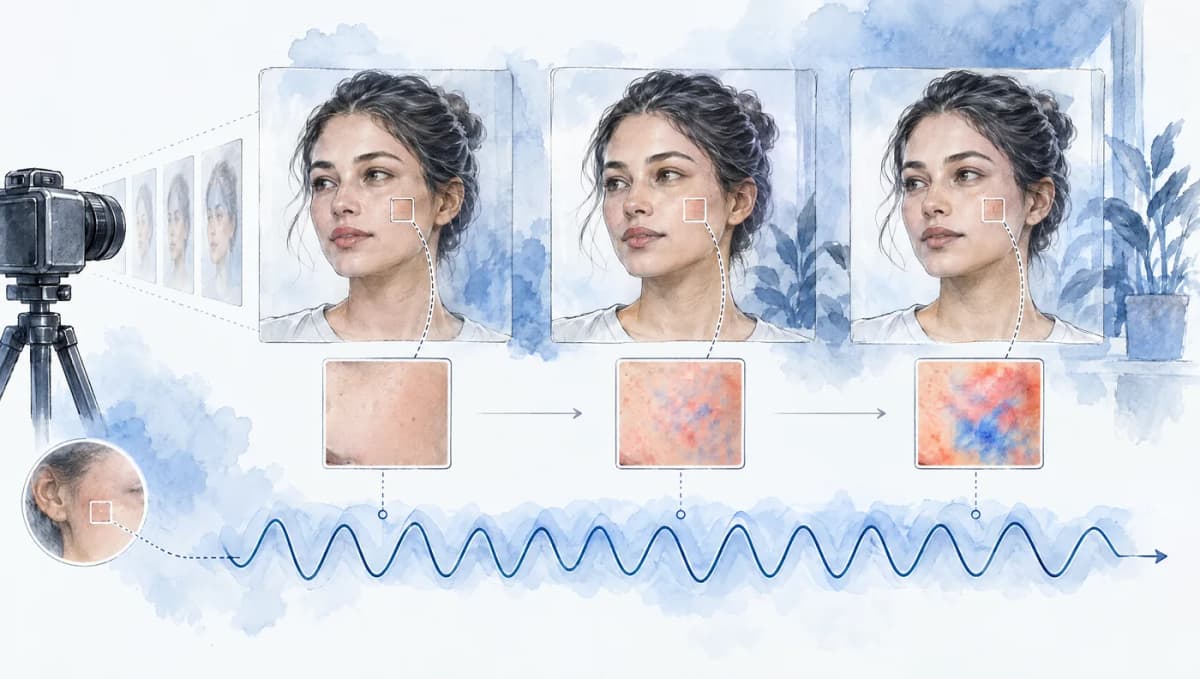 Remote PPG & Camera
Eulerian Video Magnification (EVM) is a computational technique that makes invisible physiological signals visible in ordinary video. By selectively a...
Read the article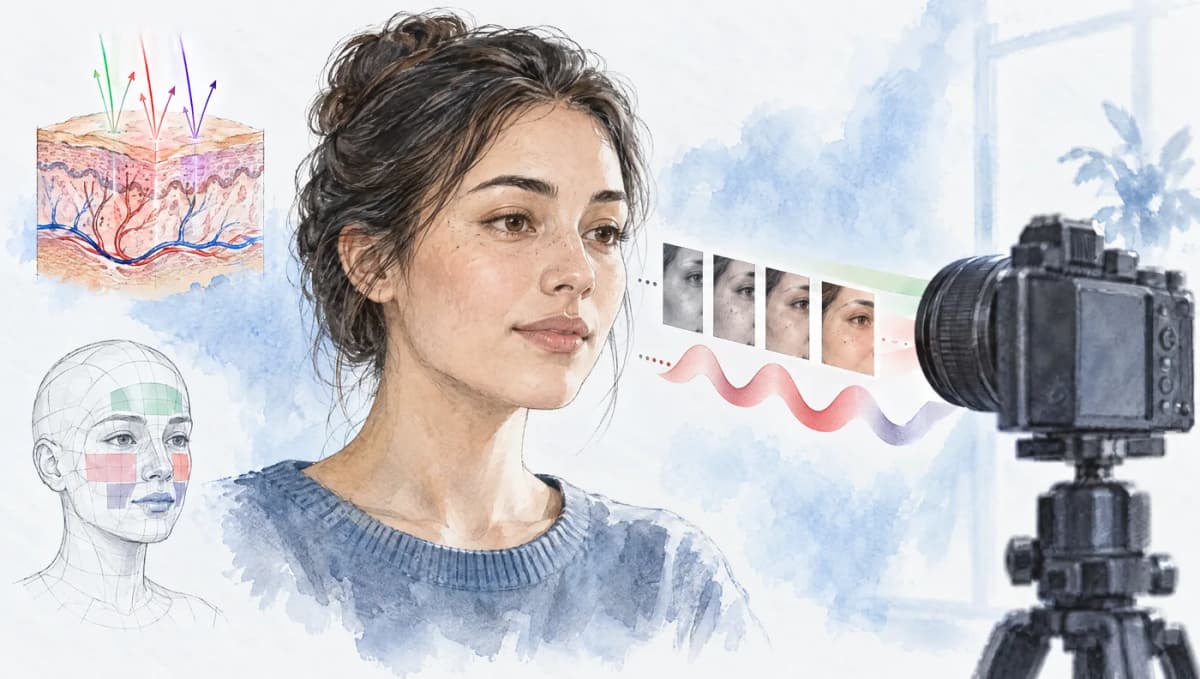 Remote PPG & Camera
Extracting a photoplethysmographic signal from the human face is a problem in optics, anatomy, and signal processing simultaneously. The face is rich ...
Read the article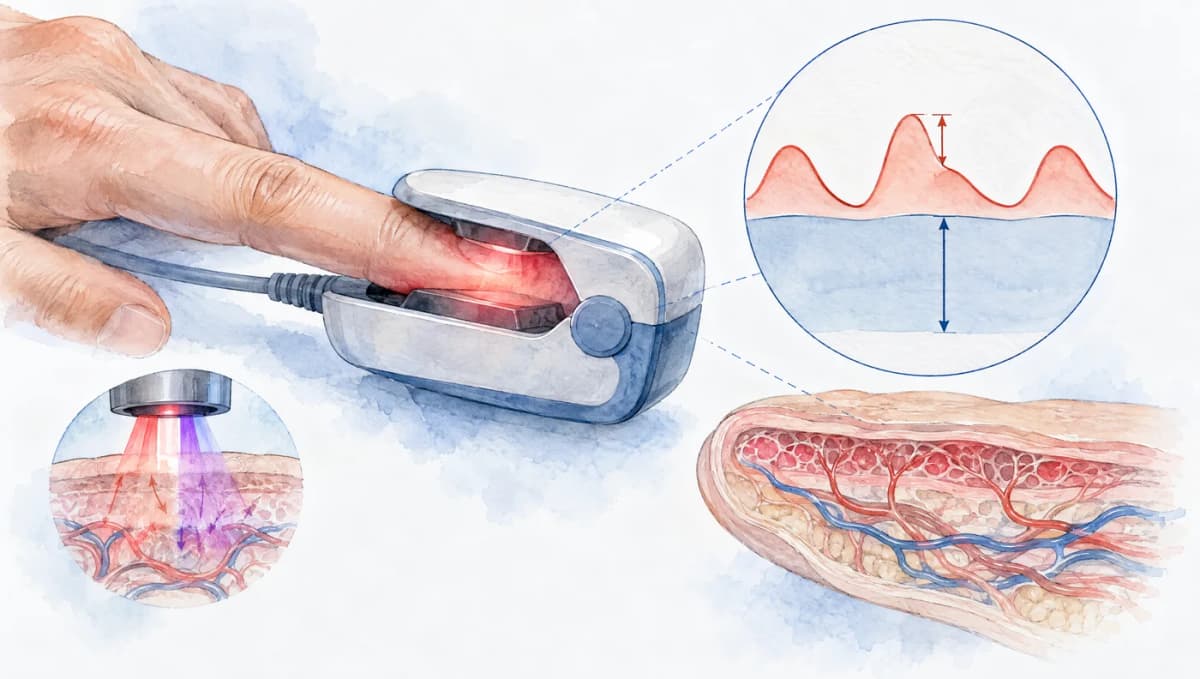 SpO2 & Oximetry
The AC/DC ratio of the PPG signal underpins pulse oximetry. How the ratio of ratios becomes SpO2, why calibration is empirical, and what distorts it.
Read the article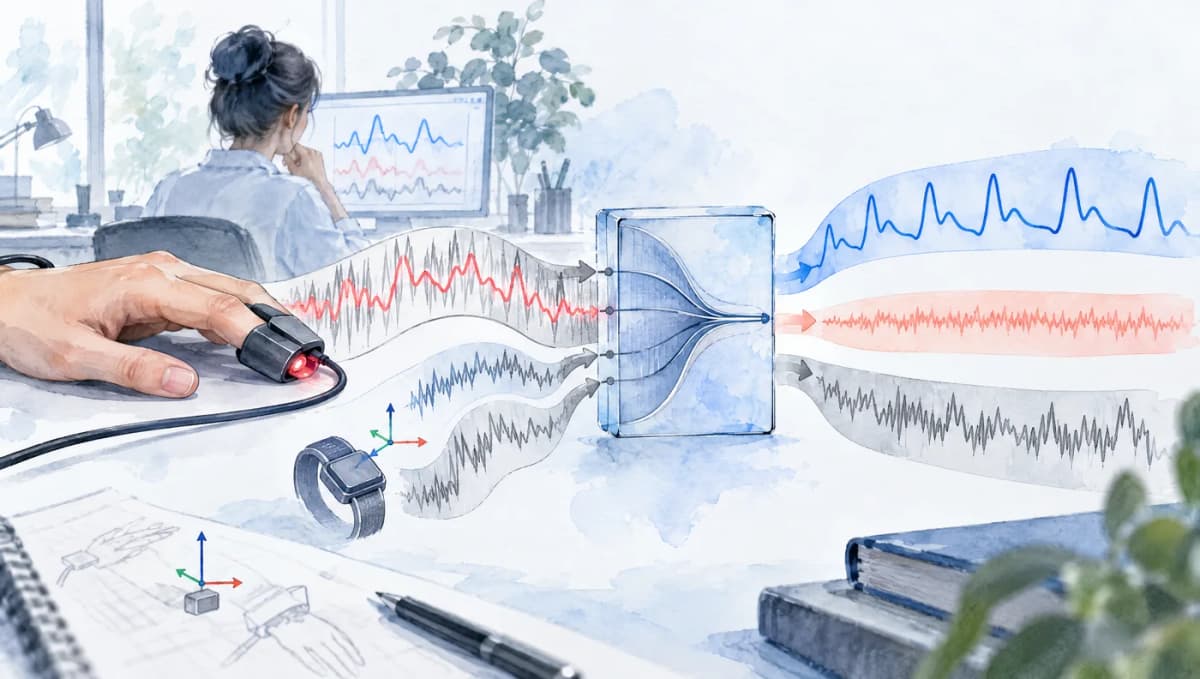 PPG & Signal Processing
How LMS and NLMS adaptive filters remove motion artifacts from PPG using an accelerometer reference: the math, step-size tuning, and when to use RLS.
Read the article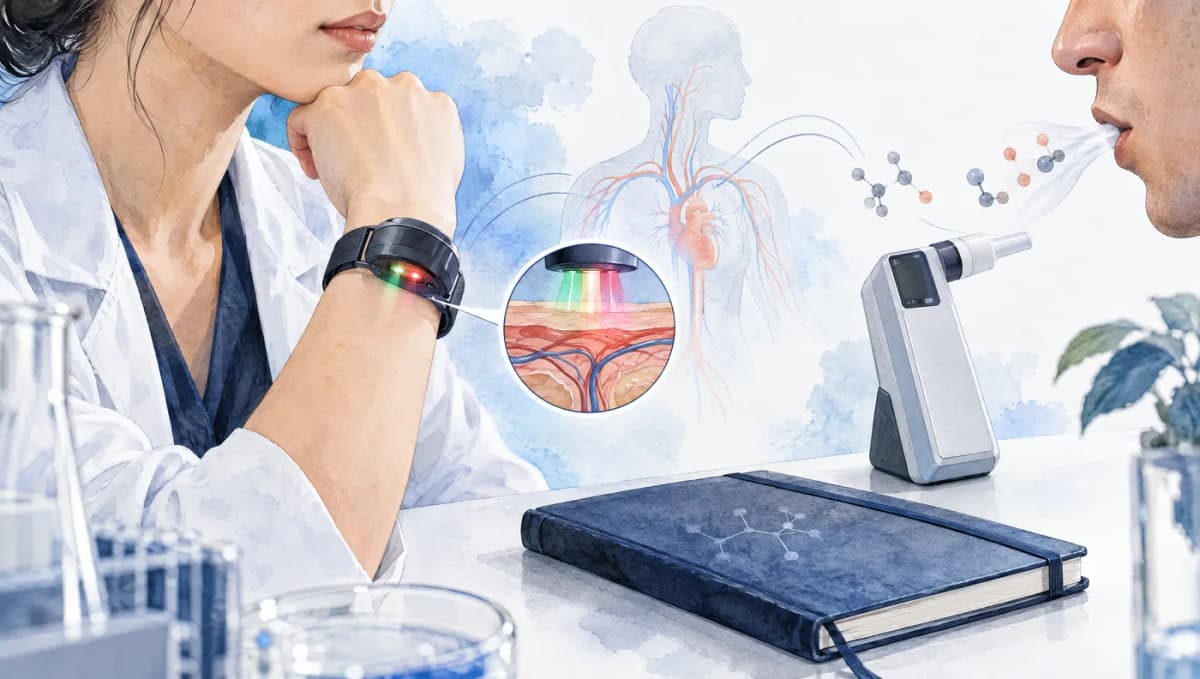 PPG & Signal Processing
PPG-based alcohol detection measures the cardiovascular and vascular effects of ethanol rather than detecting alcohol molecules directly. At blood alc...
Read the article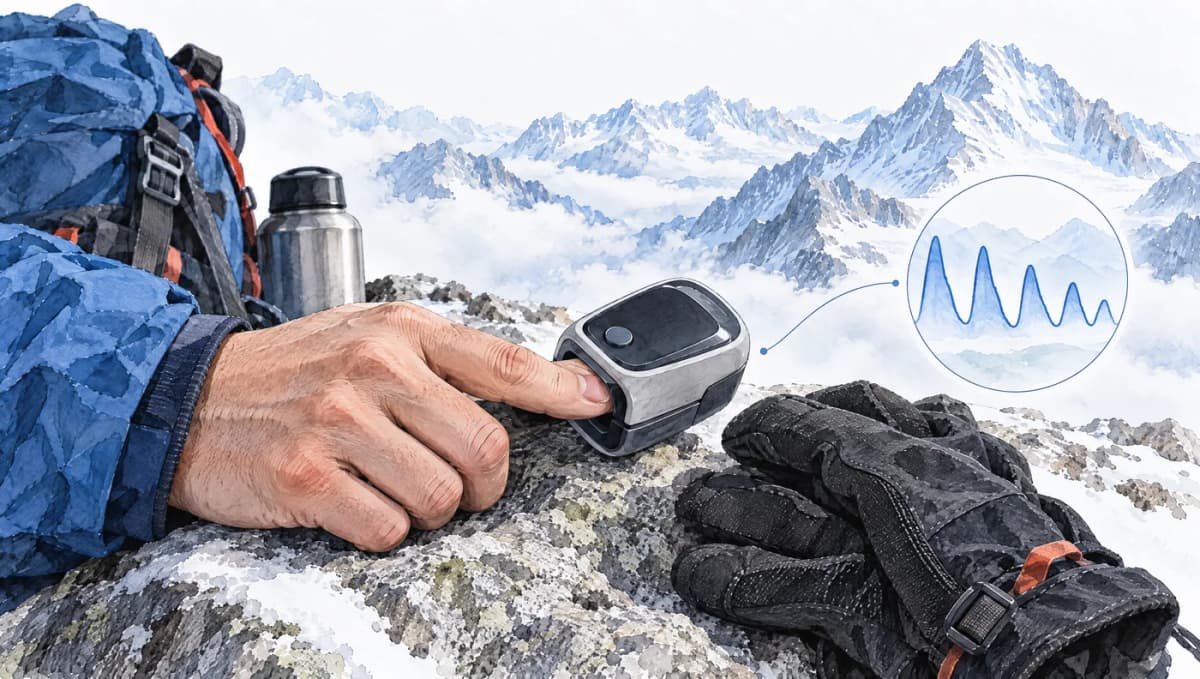 HRV, Stress & Recovery
**As altitude increases and oxygen thins, the PPG signal transforms in ways that reveal both the physiological stress of hypoxia and the body's adapti...
Read the article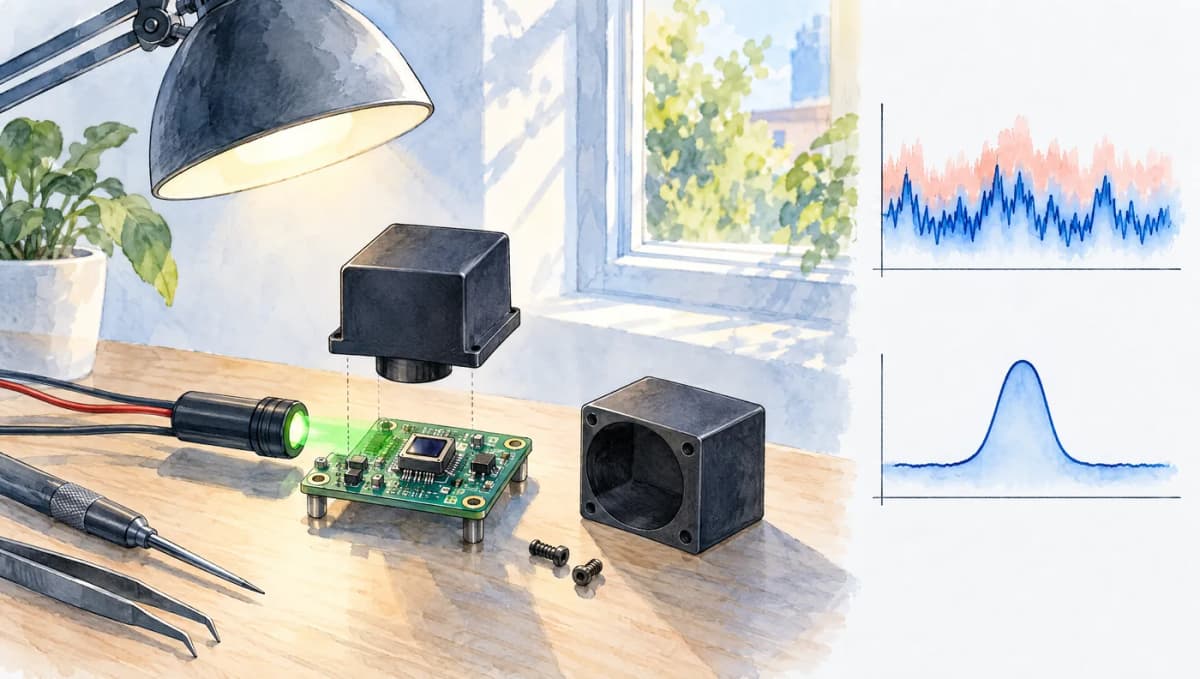 PPG & Signal Processing
**Ambient light is the second most significant noise source in photoplethysmography after motion artifacts, and effective rejection requires a coordin...
Read the article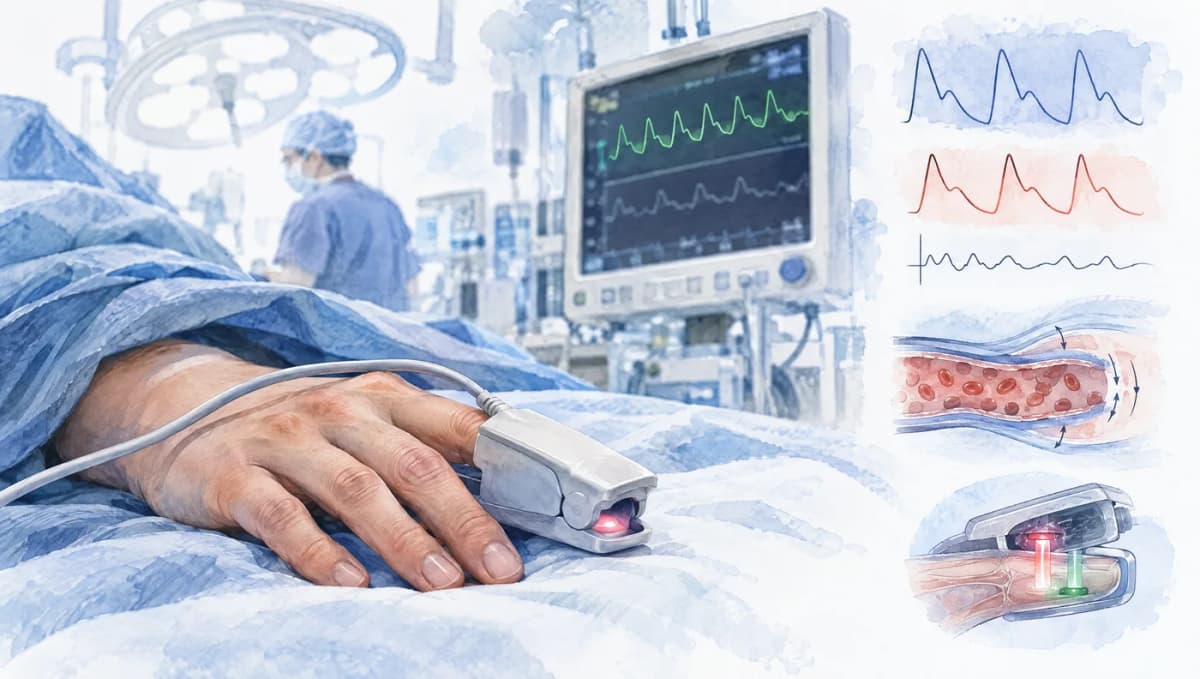 SpO2 & Oximetry
**The pulse oximeter probe already attached to every surgical patient's finger contains far more information than the SpO2 and heart rate values displ...
Read the article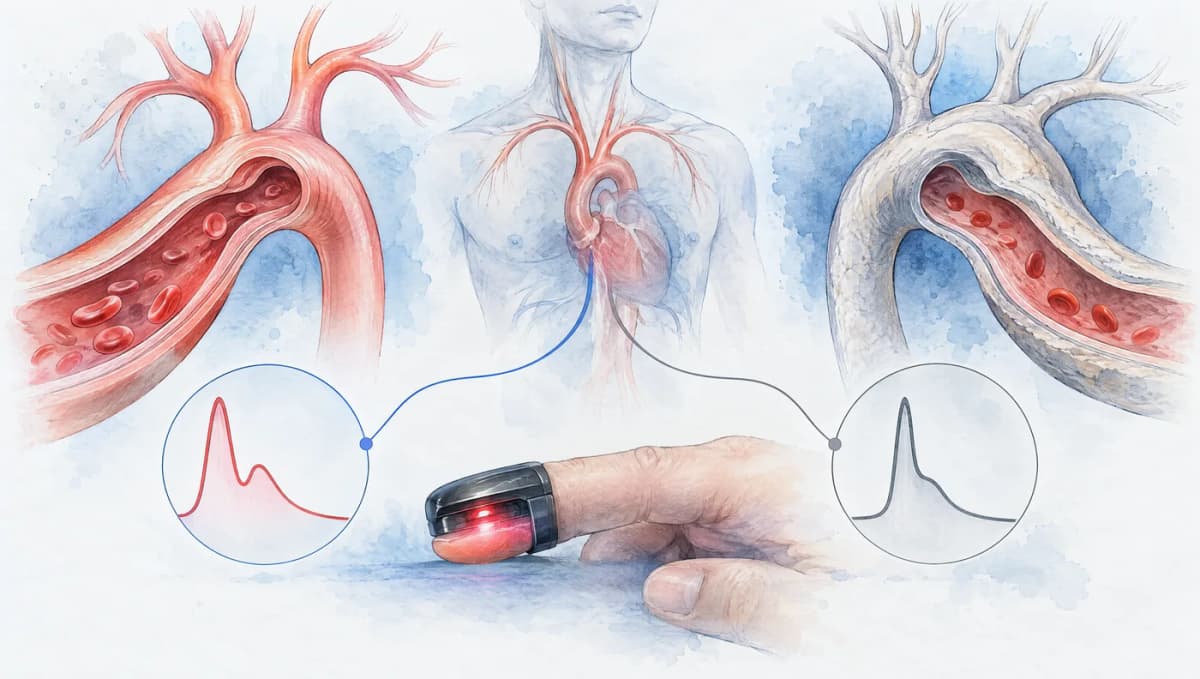 PPG & Signal Processing
Aortic stiffness is one of the most powerful predictors of cardiovascular mortality — and it's been measured invasively since the 1960s. PPG waveform ...
Read the article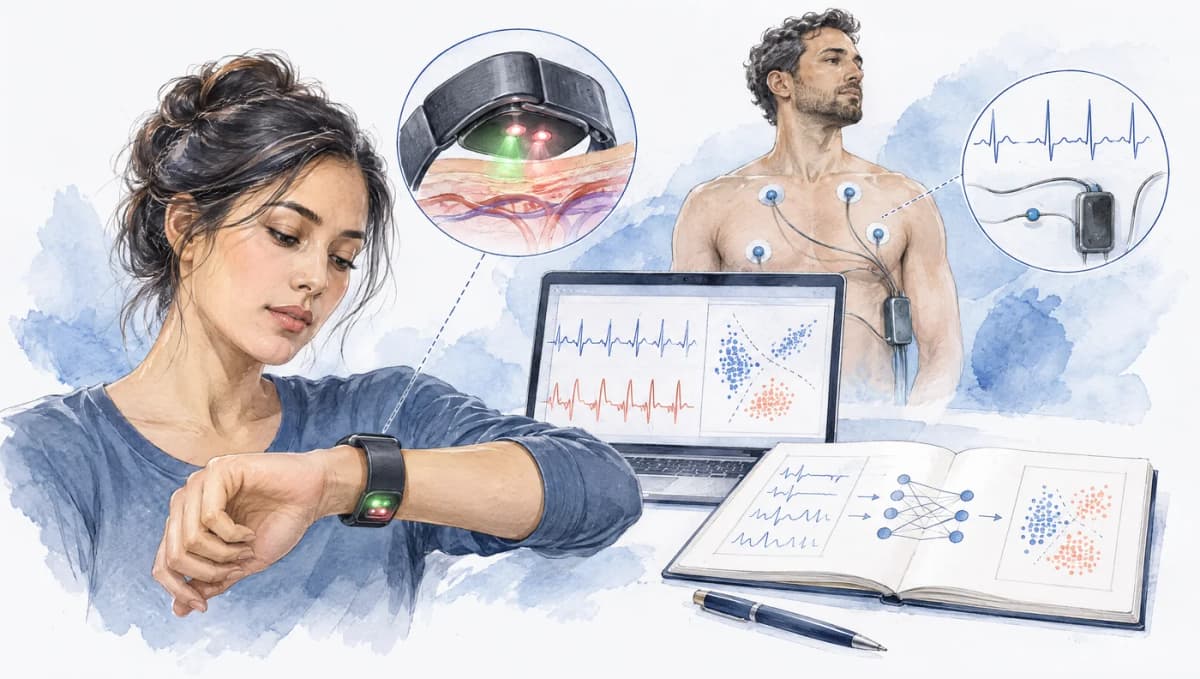 Arrhythmia & ECG
**Cardiac arrhythmia detection from photoplethysmography has progressed from a research curiosity to a clinically validated screening capability, with...
Read the article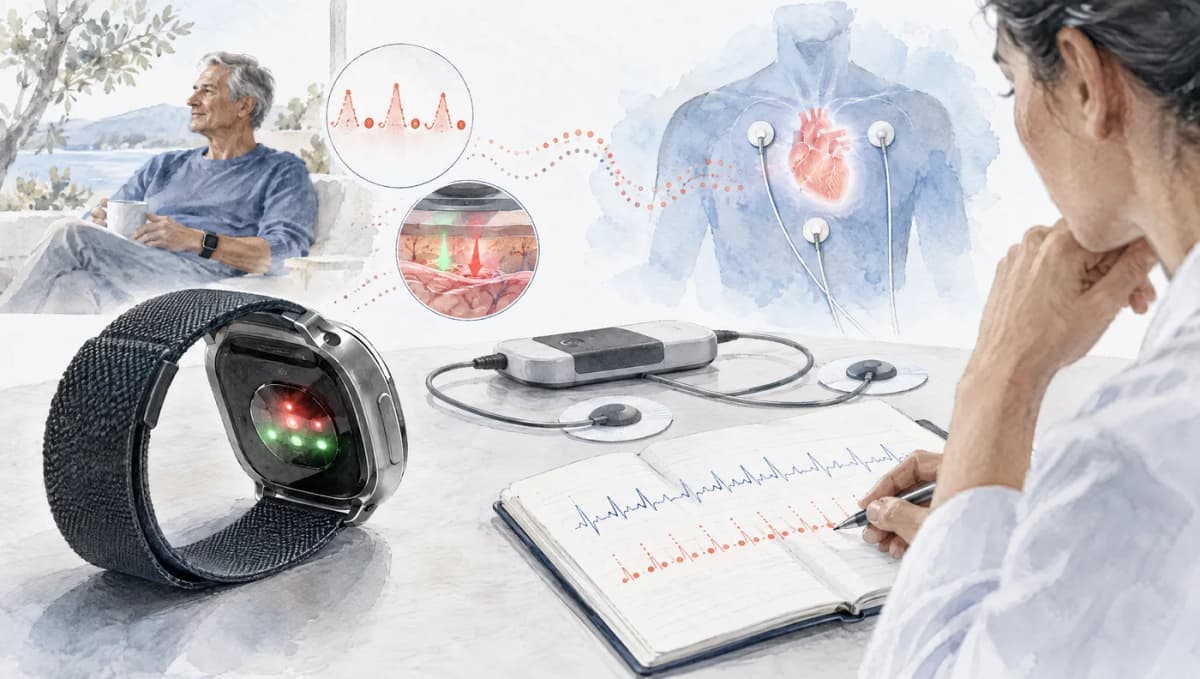 Arrhythmia & ECG
Atrial fibrillation is the most common sustained cardiac arrhythmia, affecting roughly 33 million people worldwide, and it is frequently undiagnosed b...
Read the article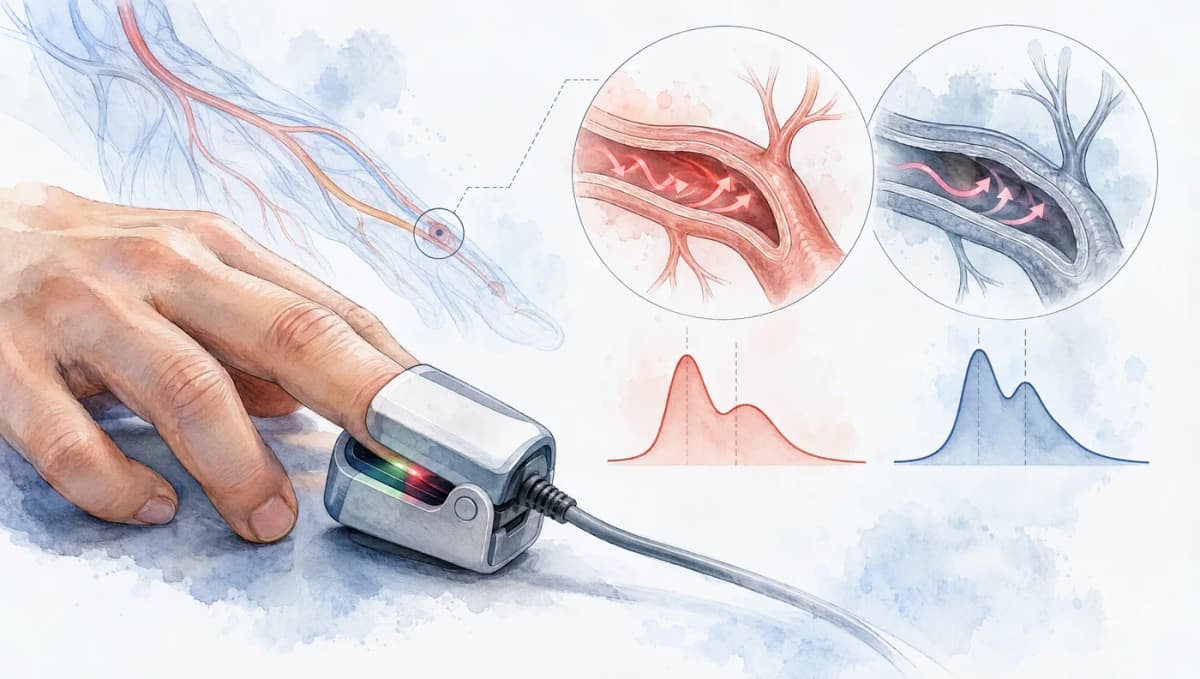 PPG & Signal Processing
**The augmentation index derived from photoplethysmography waveforms provides a non-invasive window into arterial stiffness and cardiovascular health,...
Read the article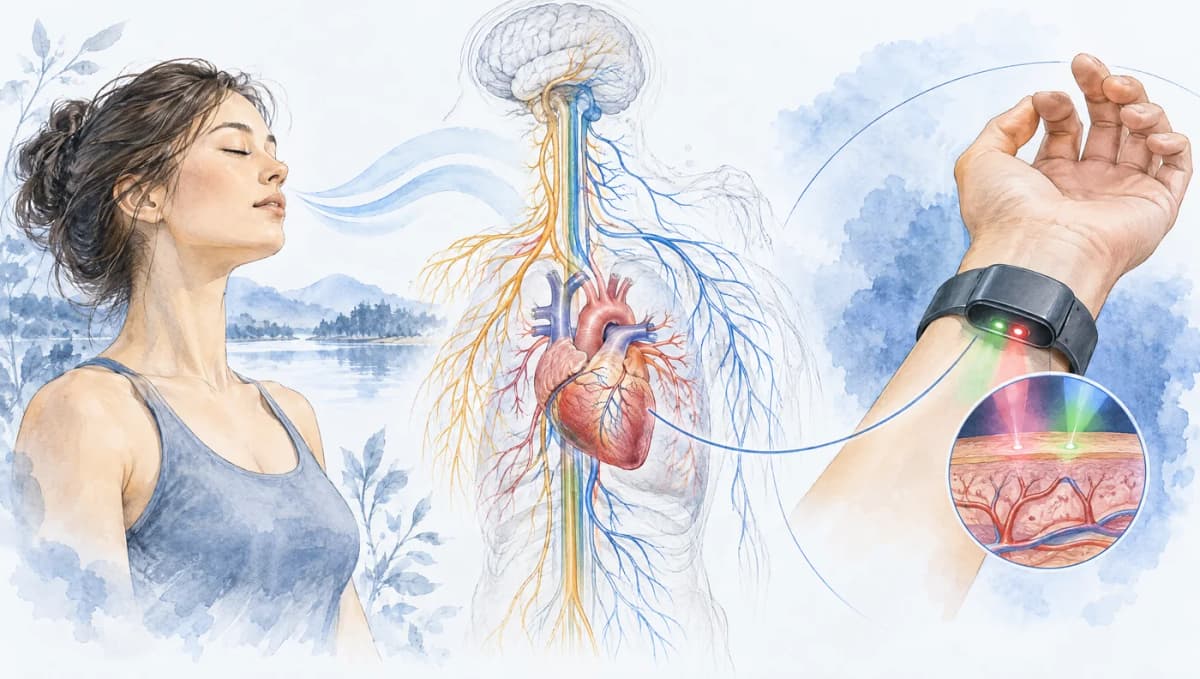 HRV, Stress & Recovery
**The autonomic nervous system (ANS) controls virtually every involuntary physiological process, and its dysfunction underlies or accompanies a wide r...
Read the article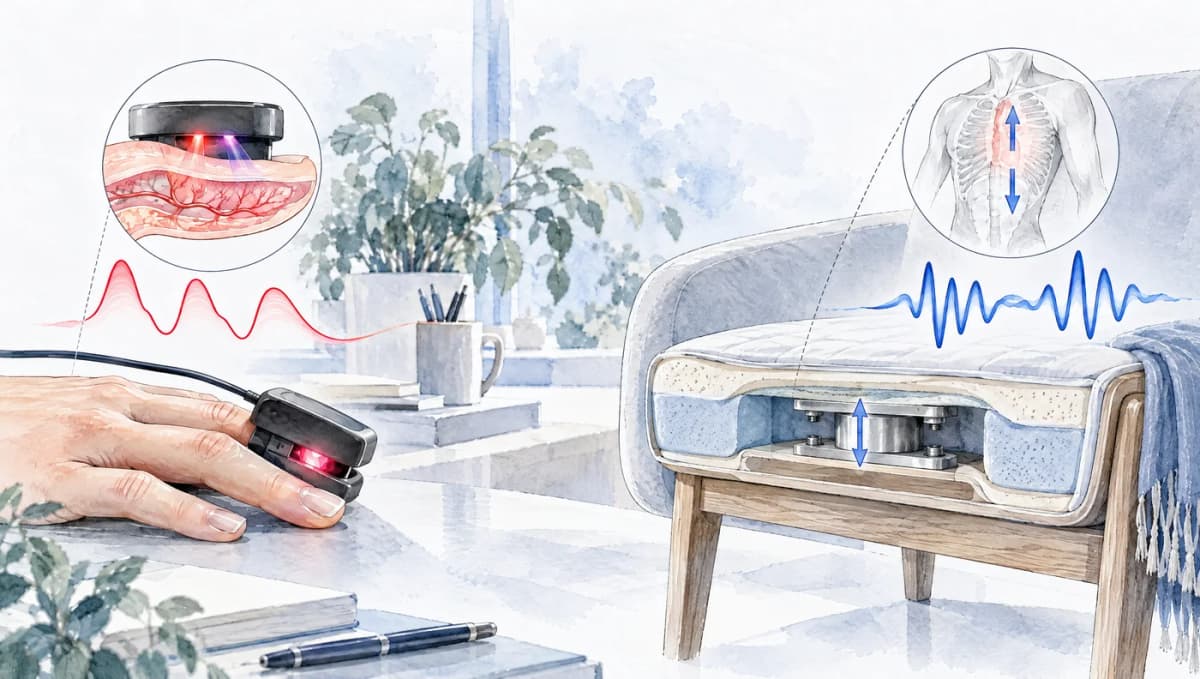 PPG & Signal Processing
Ballistocardiography (BCG) and photoplethysmography (PPG) represent two fundamentally different approaches to non-invasive cardiac monitoring. PPG det...
Read the article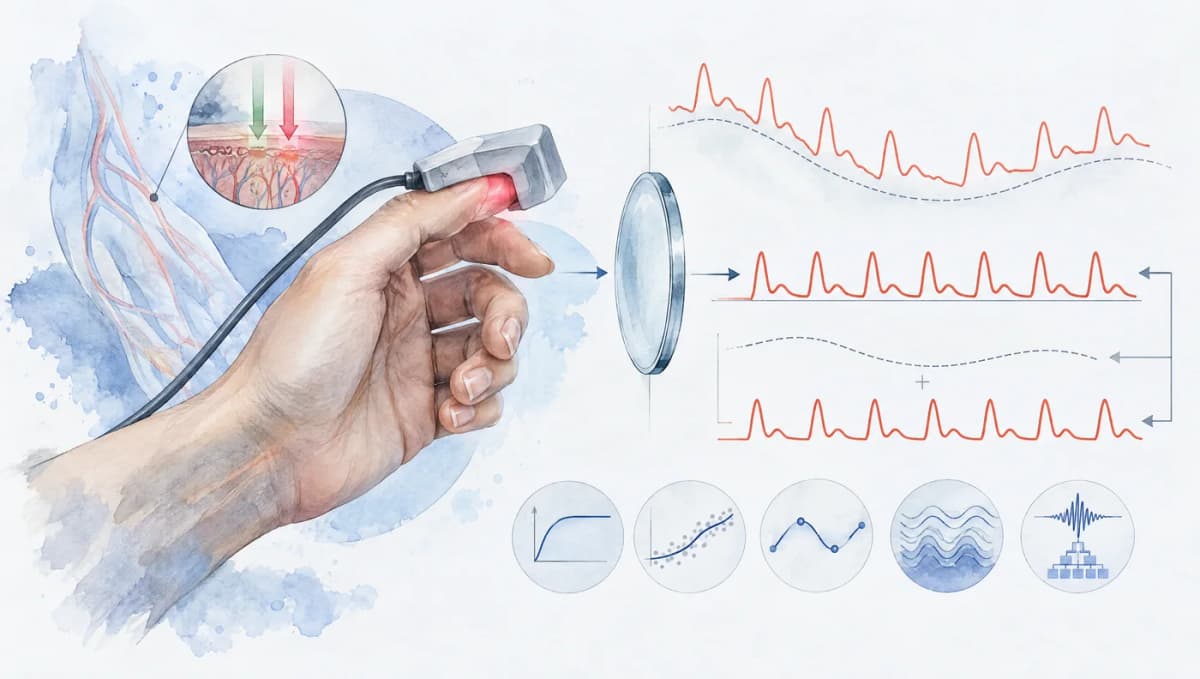 PPG & Signal Processing
**Baseline wander is the most pervasive low-frequency artifact in photoplethysmography, and removing it without distorting the cardiac waveform is a p...
Read the article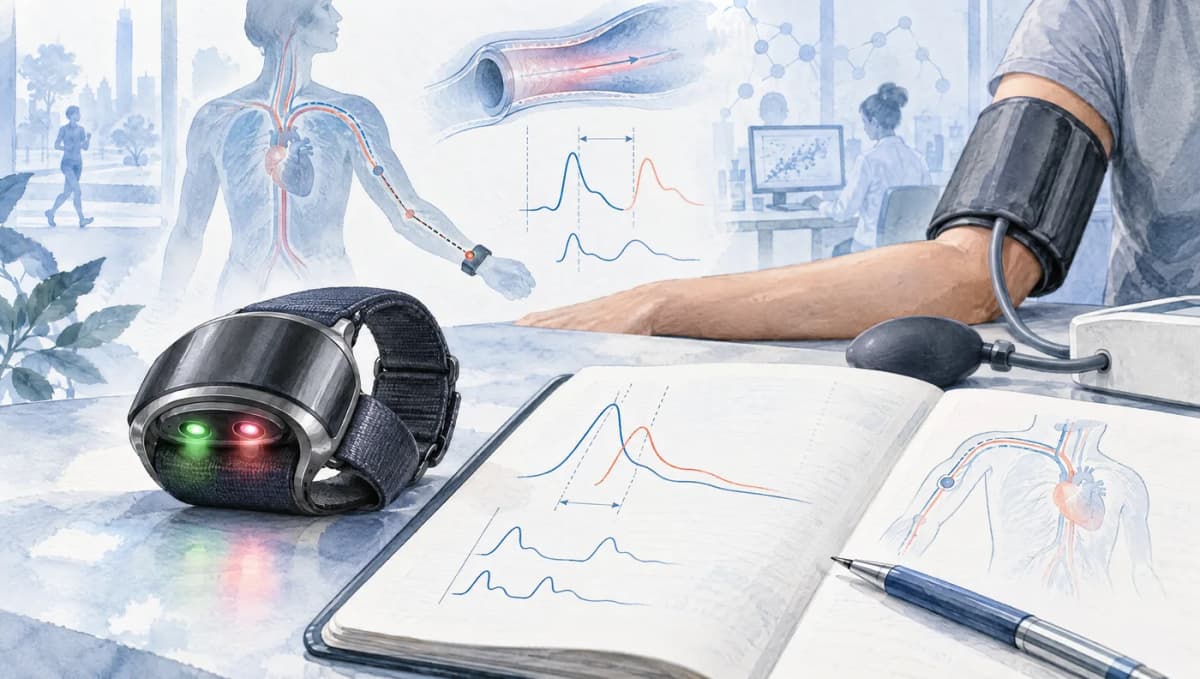 Blood Pressure
**Cuffless blood pressure estimation from photoplethysmography (PPG) signals is one of the most actively researched problems in biomedical engineering...
Read the article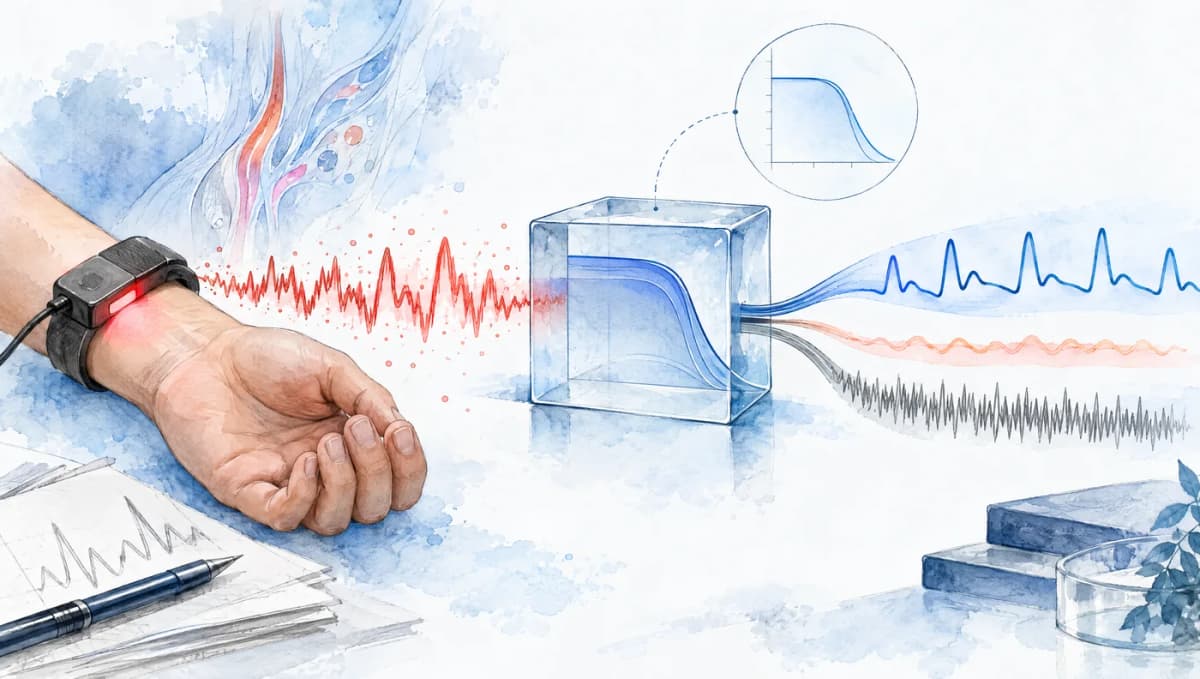 PPG & Signal Processing
Butterworth filters are the default choice for PPG signal conditioning because they offer a maximally flat passband with no ripple, which preserves th...
Read the article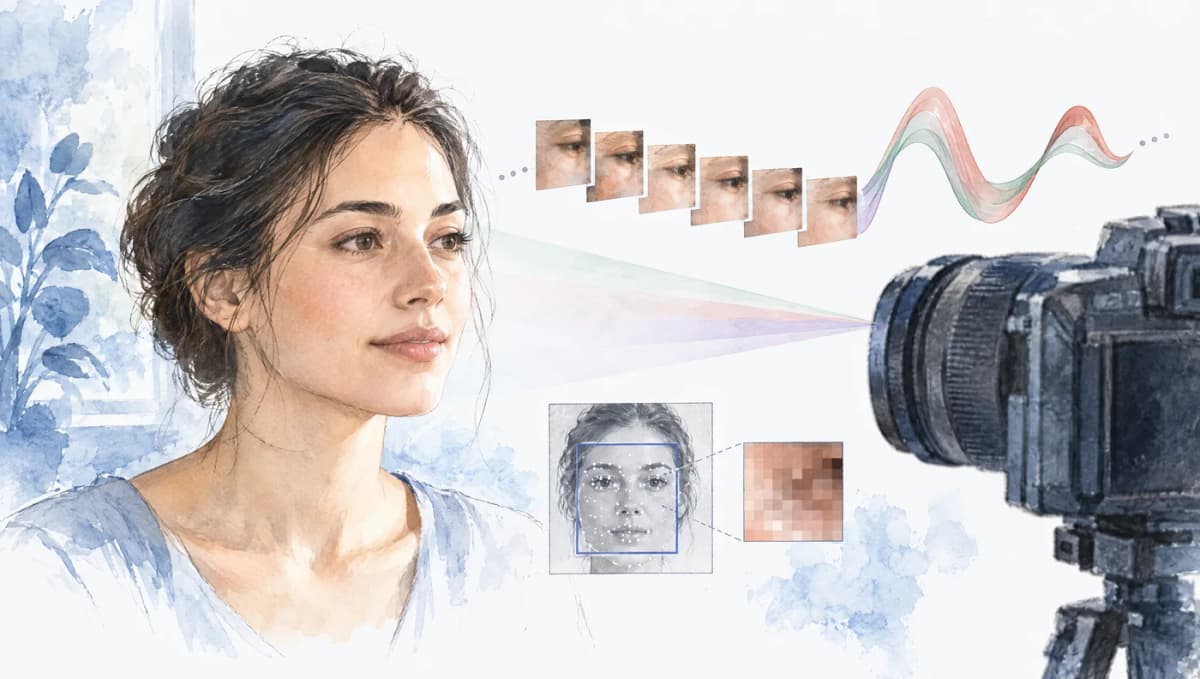 Remote PPG & Camera
Remote photoplethysmography (rPPG) extracts cardiovascular vital signs from ordinary video recordings without any physical contact with the subject. W...
Read the article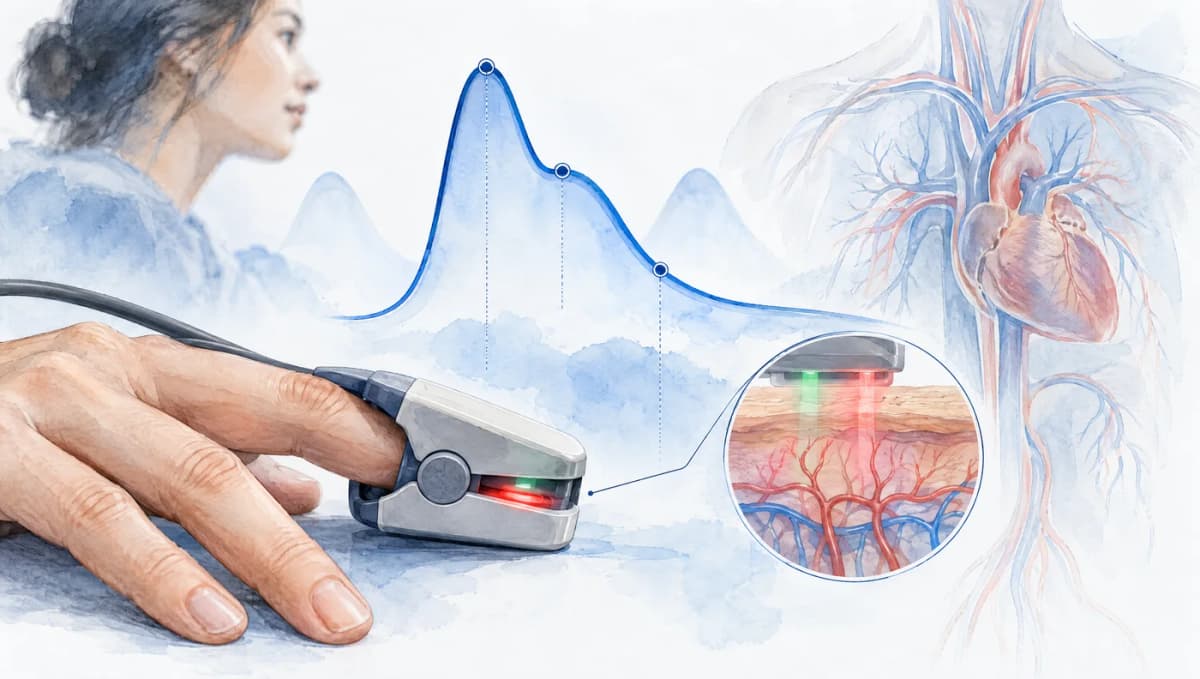 PPG & Signal Processing
Every PPG waveform is a compressed diary of one heartbeat. The rising edge, the peak, the notch, and the falling tail each correspond to distinct mech...
Read the article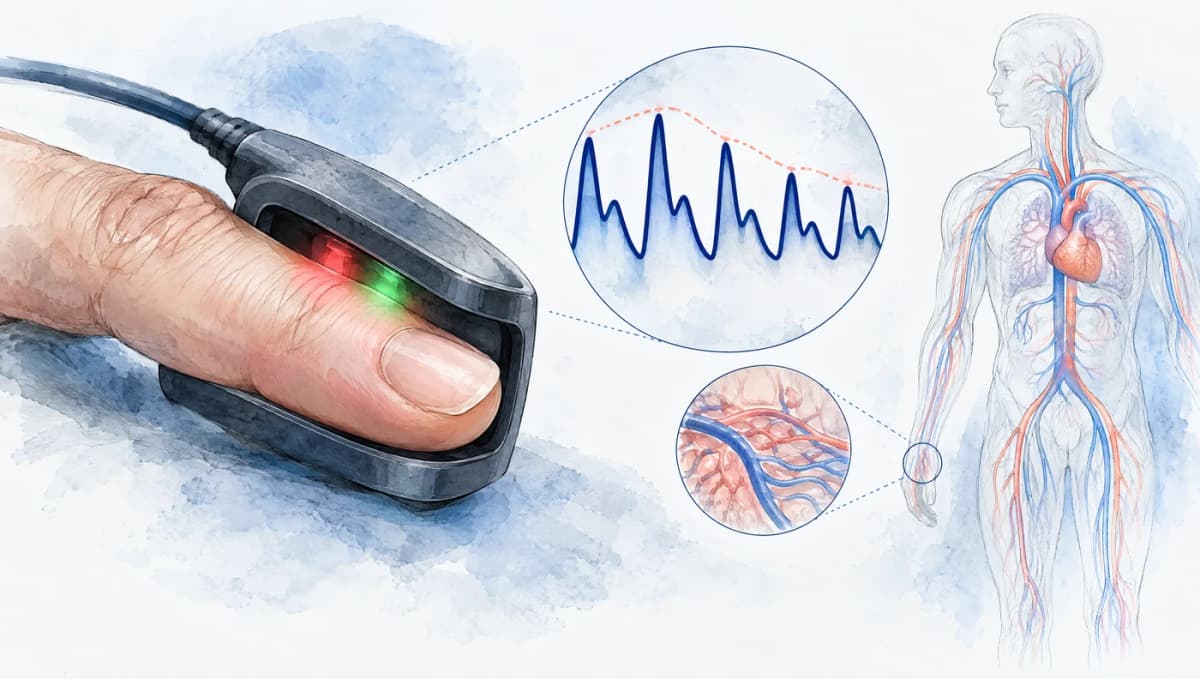 PPG & Signal Processing
**Cardiac output -- the volume of blood the heart pumps per minute -- is the fundamental measure of cardiovascular performance, yet its non-invasive m...
Read the article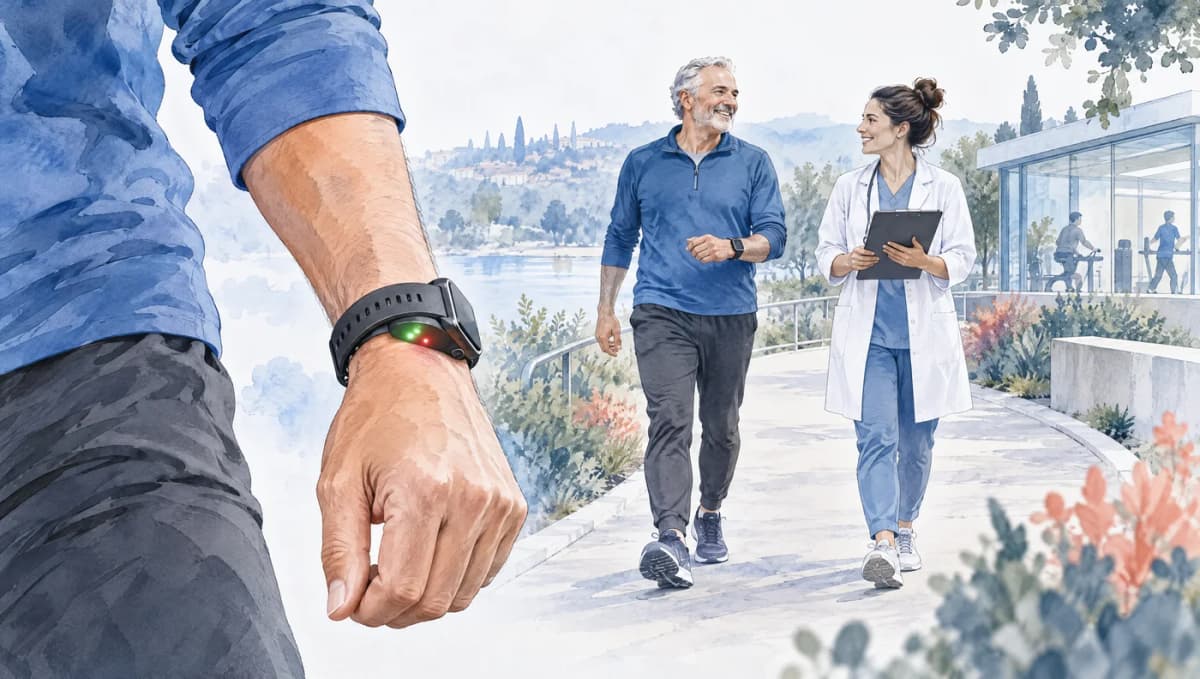 PPG & Signal Processing
Cardiac rehabilitation (CR) is one of the most evidence-based interventions in cardiovascular medicine. Systematic exercise training following myocard...
Read the article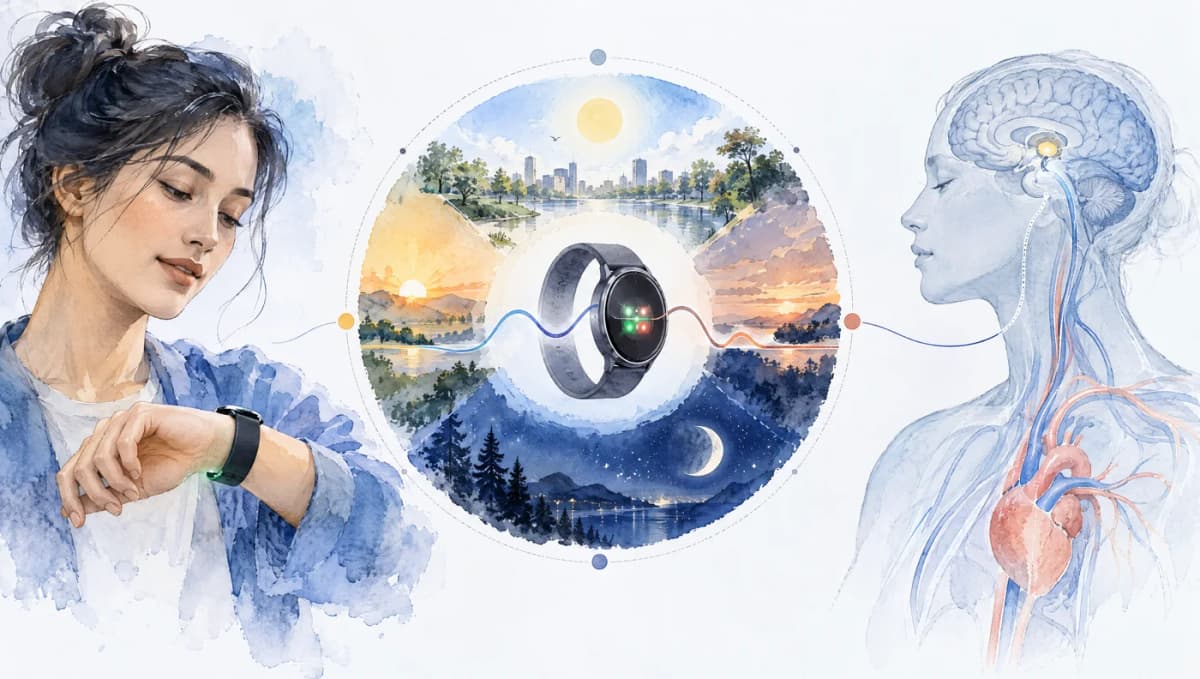 PPG & Signal Processing
**Every heartbeat carries a timestamp of your internal body clock, and PPG sensors are learning to read it.** The circadian system, the approximately ...
Read the article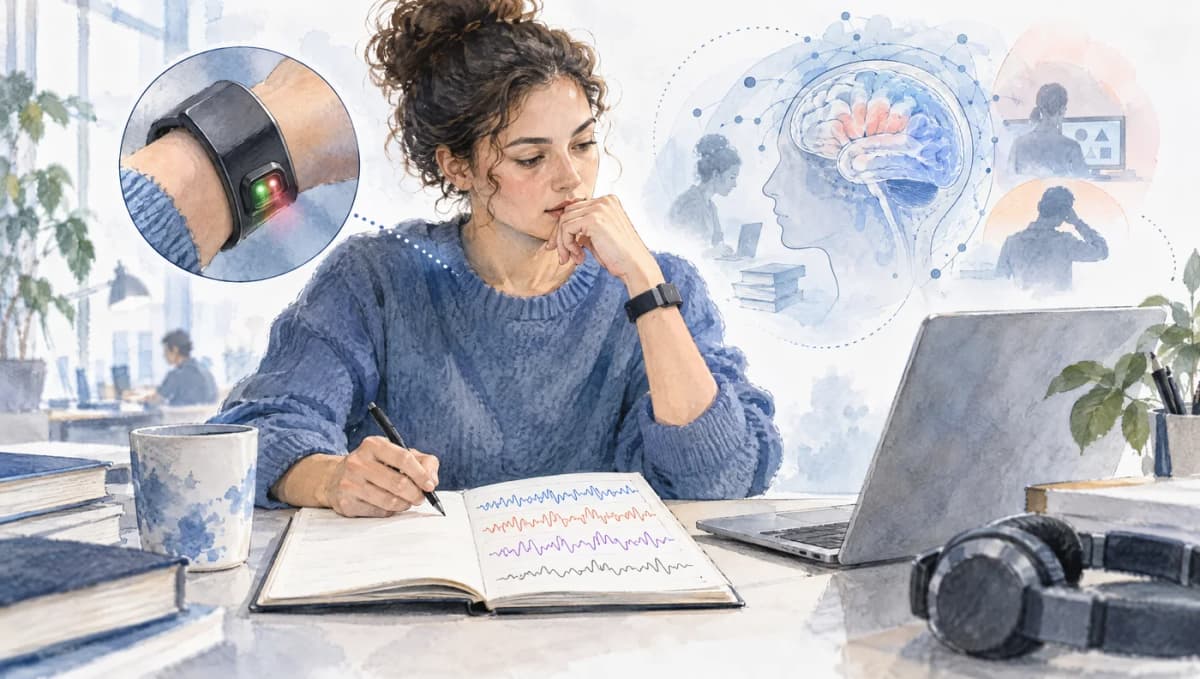 PPG & Signal Processing
**Mental workload -- the cognitive demands placed on an individual by a task -- manifests in measurable physiological changes that photoplethysmograph...
Read the article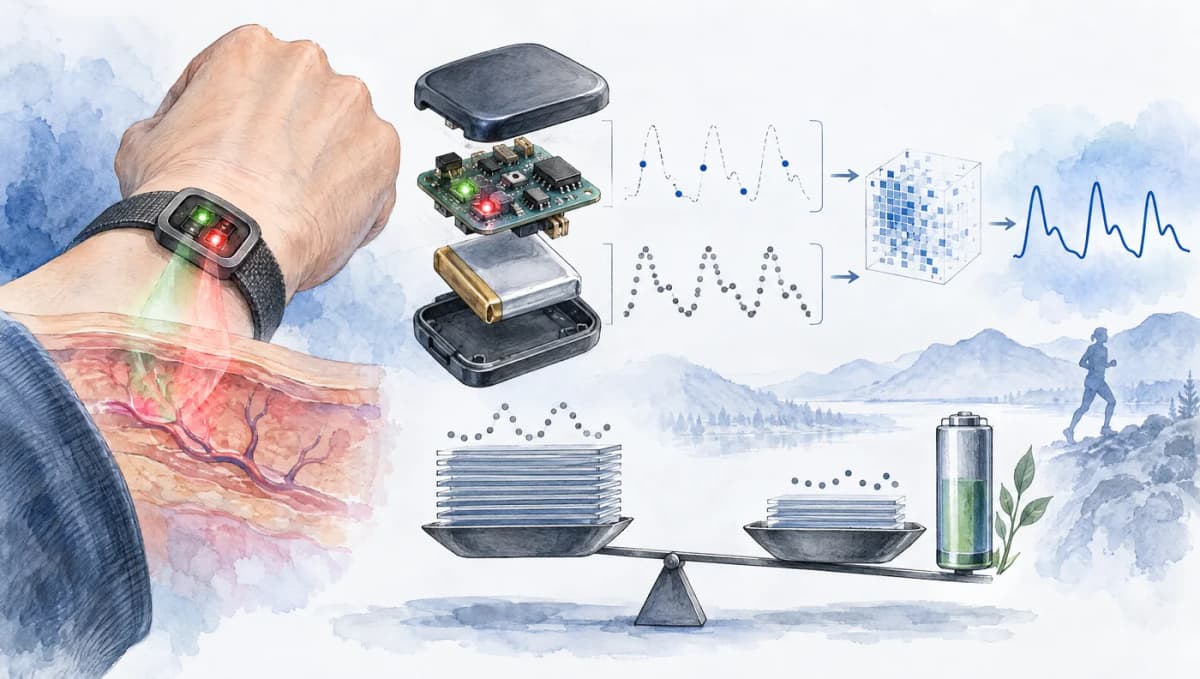 Wearable Accuracy
Compressed sensing (CS) lets wearable PPG sensors acquire far fewer samples than Nyquist sampling requires and reconstruct the signal computationally, cutting front-end power.
Read the article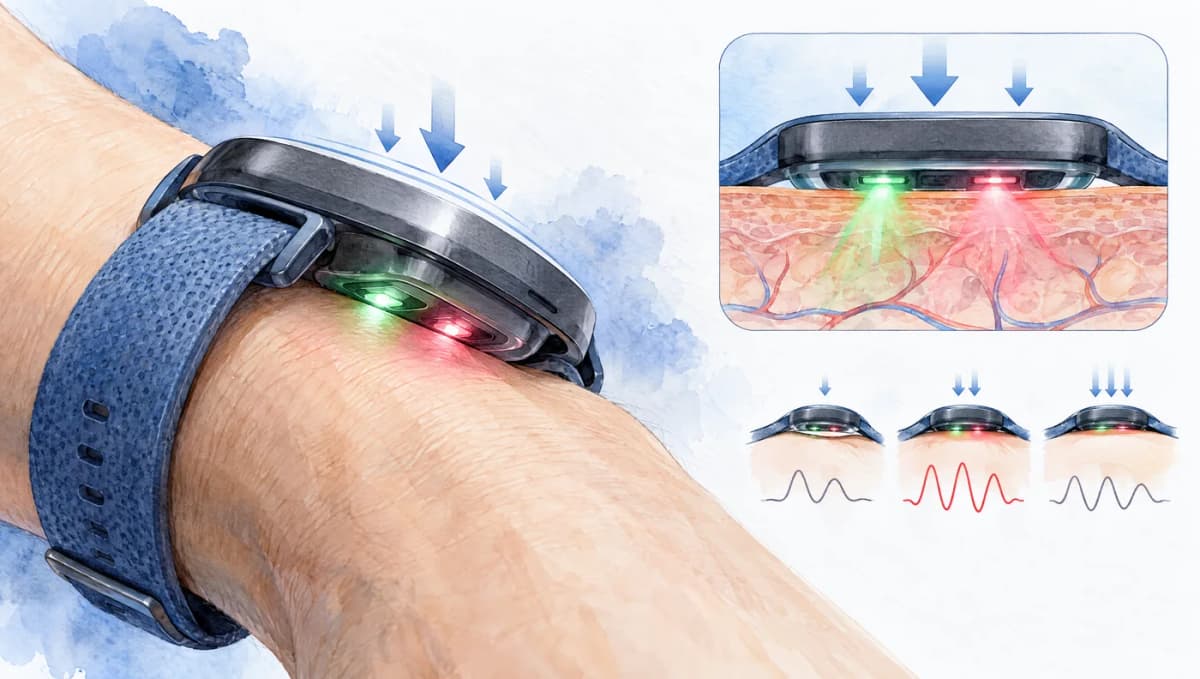 PPG & Signal Processing
**The contact pressure between a PPG sensor and the skin is a critical but frequently neglected determinant of signal quality, with the difference bet...
Read the article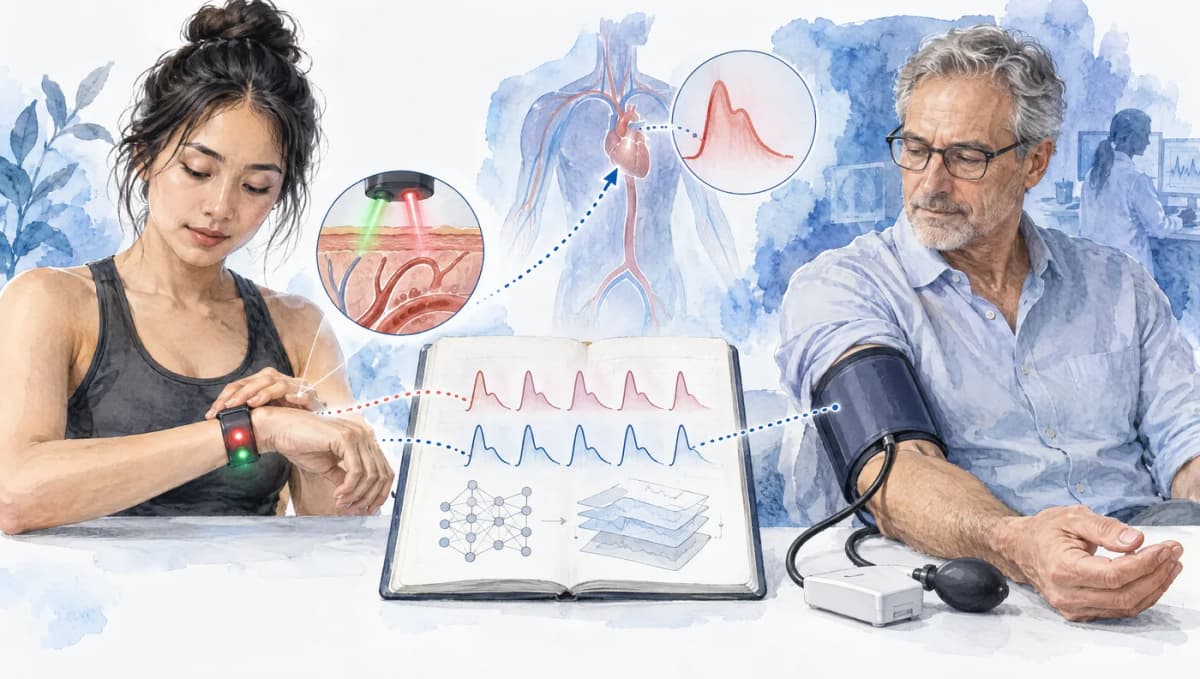 Blood Pressure
**Beat-to-beat blood pressure monitoring from PPG waveform analysis represents the frontier of non-invasive hemodynamic assessment, offering the possi...
Read the articleUse the library to explore optical sensing, waveform morphology, motion artifacts, and wearable design. Follow article references to the original research and consider the population, device, and conditions behind each result. How to read the library ↗