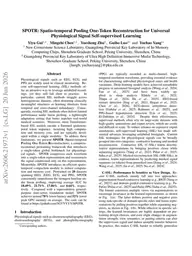
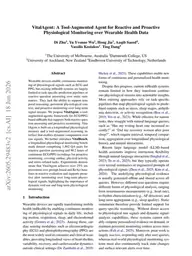
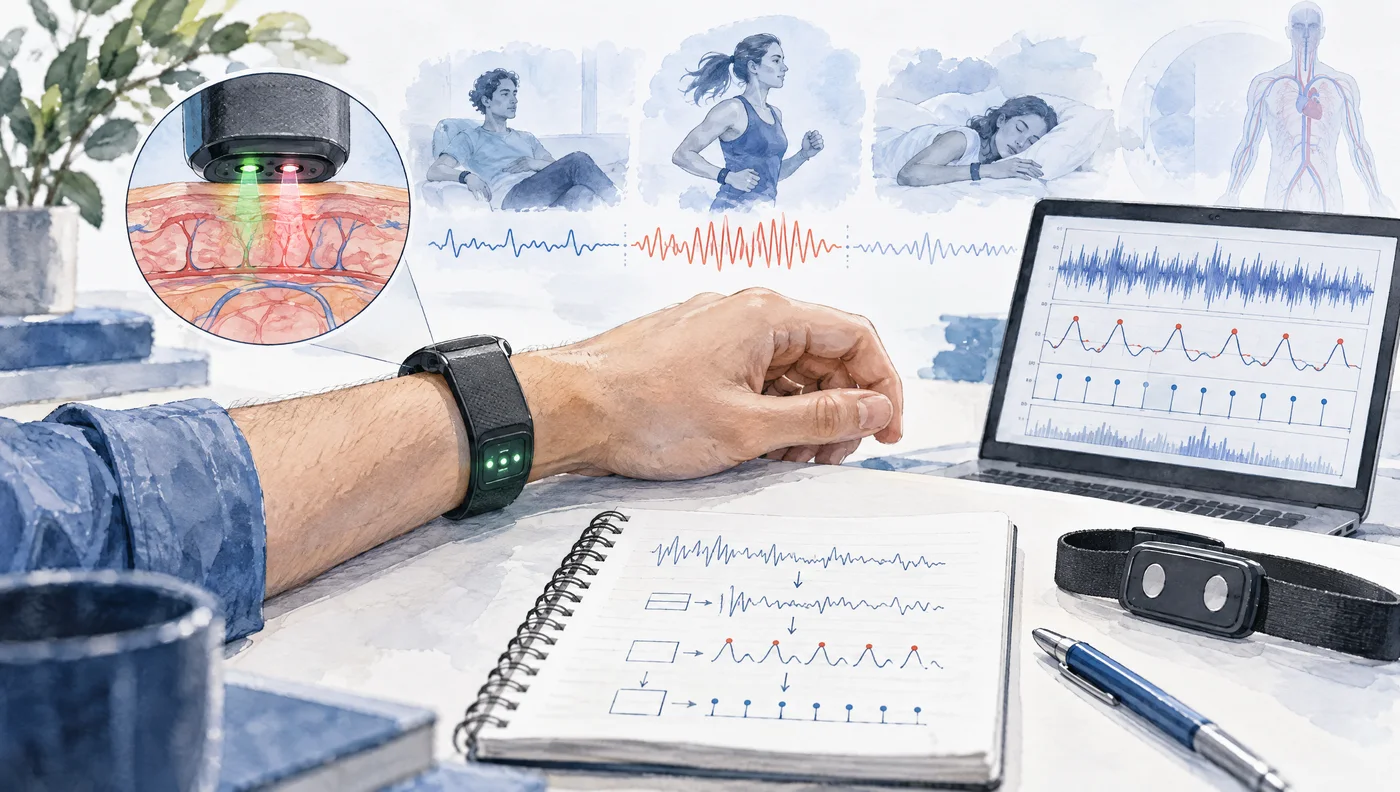
SLIP is an open-source framework for language-aligned sensor representations that work across different sensor setups. It reuses a pretrained decoder-only language model through cross-attention and uses a flexible patch embedder, so it handles new sensor configurations, sampling rates and lengths without retraining. Across 11 datasets it reached 77.14% average linear-probe accuracy, 3.56 points above SensorLM.
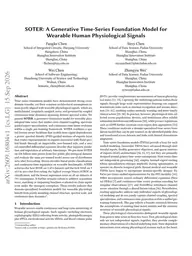
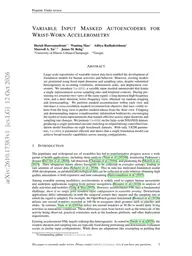
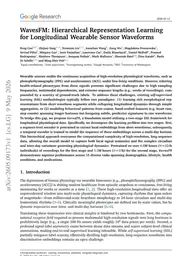
SOTER is a generative foundation model for wearable physiological time series. It combines a backbone that models links between channels, a mixture-of-experts layer that routes by fixed spectral bands, and a neural controlled differential equation decoder that predicts and imputes at any timestamp. It had the best zero-shot forecasting error on most of six datasets and the lowest imputation error on all six at 75% missing data.
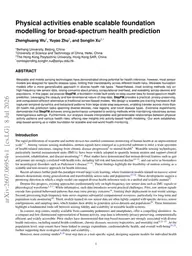
StepFM is a foundation model built only on step-counter data for broad health prediction. Its pretraining captures temporal and behavioural patterns from large-scale step sequences, and it transfers to more than 20 health risk prediction tasks across different devices, regions and diseases.
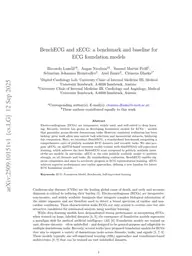
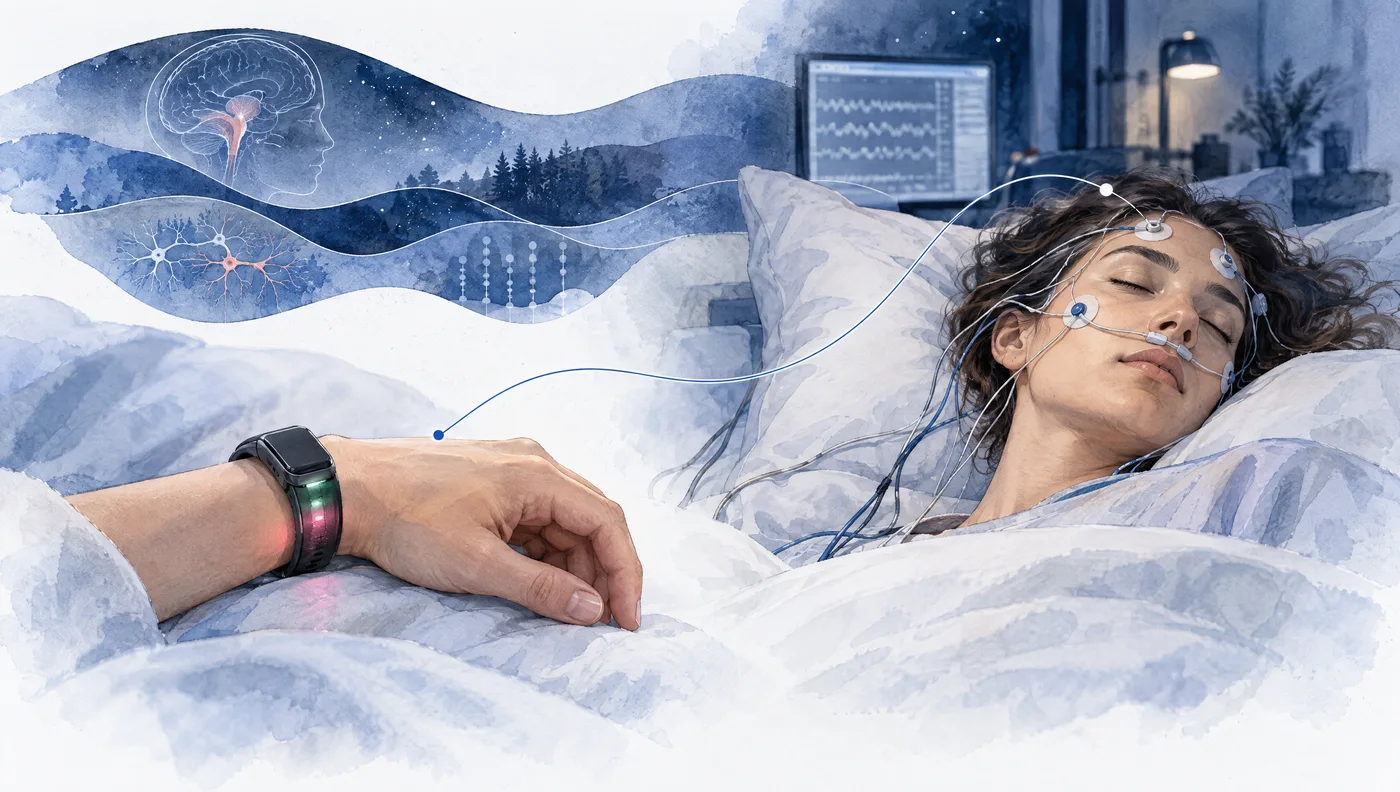
Open random-forest sleep/wake (and non-wear) classifier from raw wrist accelerometer, with GGIR integration. Outperforms the van Hees heuristic baseline on the authors’ clinic PSG test set; open weights on Zenodo.
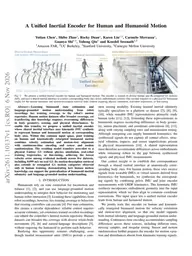
SynHAR creates synthetic IMU data from personalized biomechanical models and human body surface models to improve activity recognition. It was used both mixed with real data and for pretraining before transfer to public benchmarks, with three HAR models. Synthetic data raised macro-F1 by 8% on average when real data was limited, and pretraining with synthetic plus real data beat real data alone by 5.2% on average.
Text2IMU generates synthetic accelerometer and gyroscope data from text descriptions of activities. A motion synthesis model turns prompts into 3D movement, which body surface models of different shapes perform while virtual IMUs record. Without measured data from the target domain, it reached 79.2% average activity recognition accuracy across three public datasets for correctly generated activities, about double the baseline synthetic data.
The Three-Process Model of Alertness (Åkerstedt and Folkard) predicts alertness and performance from sleep data using a circadian process and a homeostatic process (prior wake and prior sleep), summed to an alertness scale of 1 to 16 and to performance on monotonous tasks. It also identifies impairment-risk levels and can predict sleep latency and awakening time, and has been proposed for evaluating work/rest schedules.
The two-process model of sleep regulation (Borbély) treats a homeostatic process (Process S) as interacting with a circadian pacemaker (Process C), with time courses taken from physiological and behavioural variables, to simulate the timing and intensity of sleep across experimental protocols. The 2016 reappraisal reviews three decades of use in fatigue, performance and individual-difference research and discusses continuous S–C interaction suggested by SCN recordings.
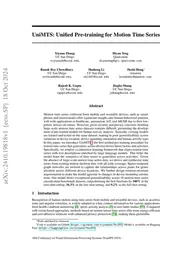
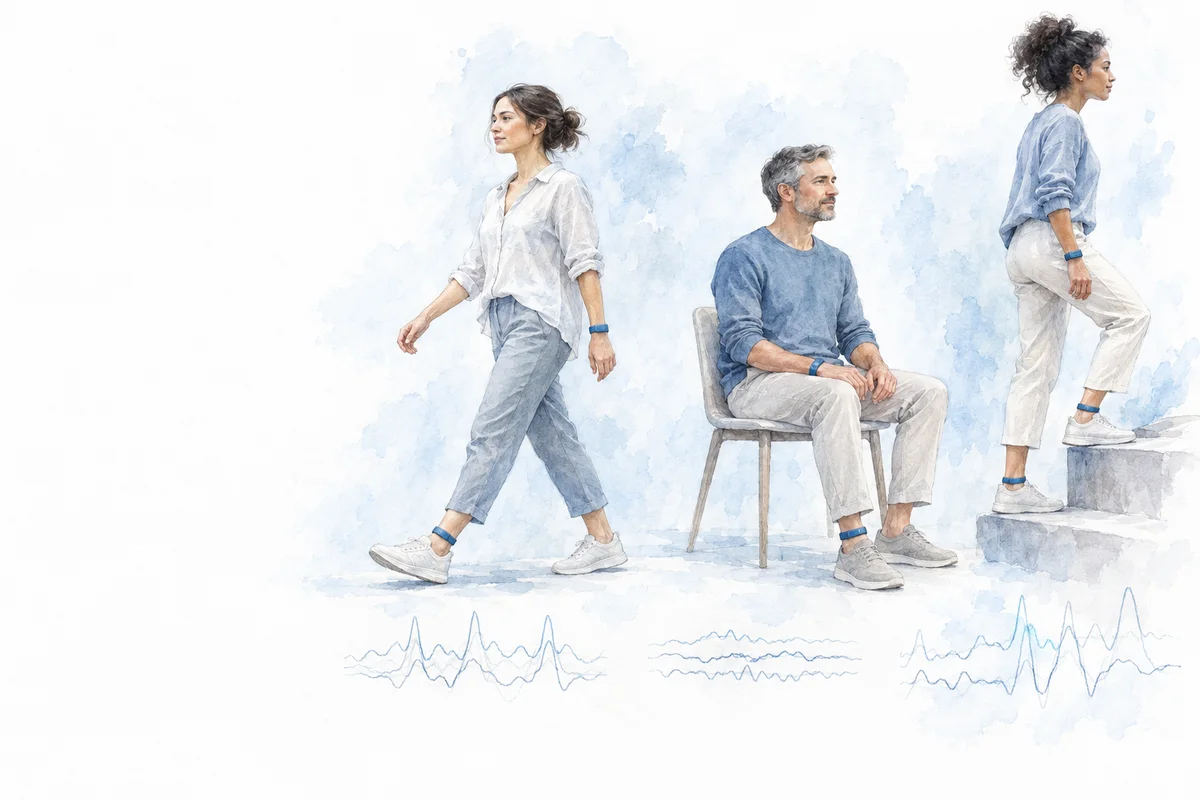
UniMTS is a pretraining method for motion time series from phones and smartwatches that generalizes across device position, orientation and activity type. Tested on 18 motion classification benchmarks, it beat the best baselines by 340% in zero-shot, 16.3% in few-shot and 9.2% in full-shot settings.
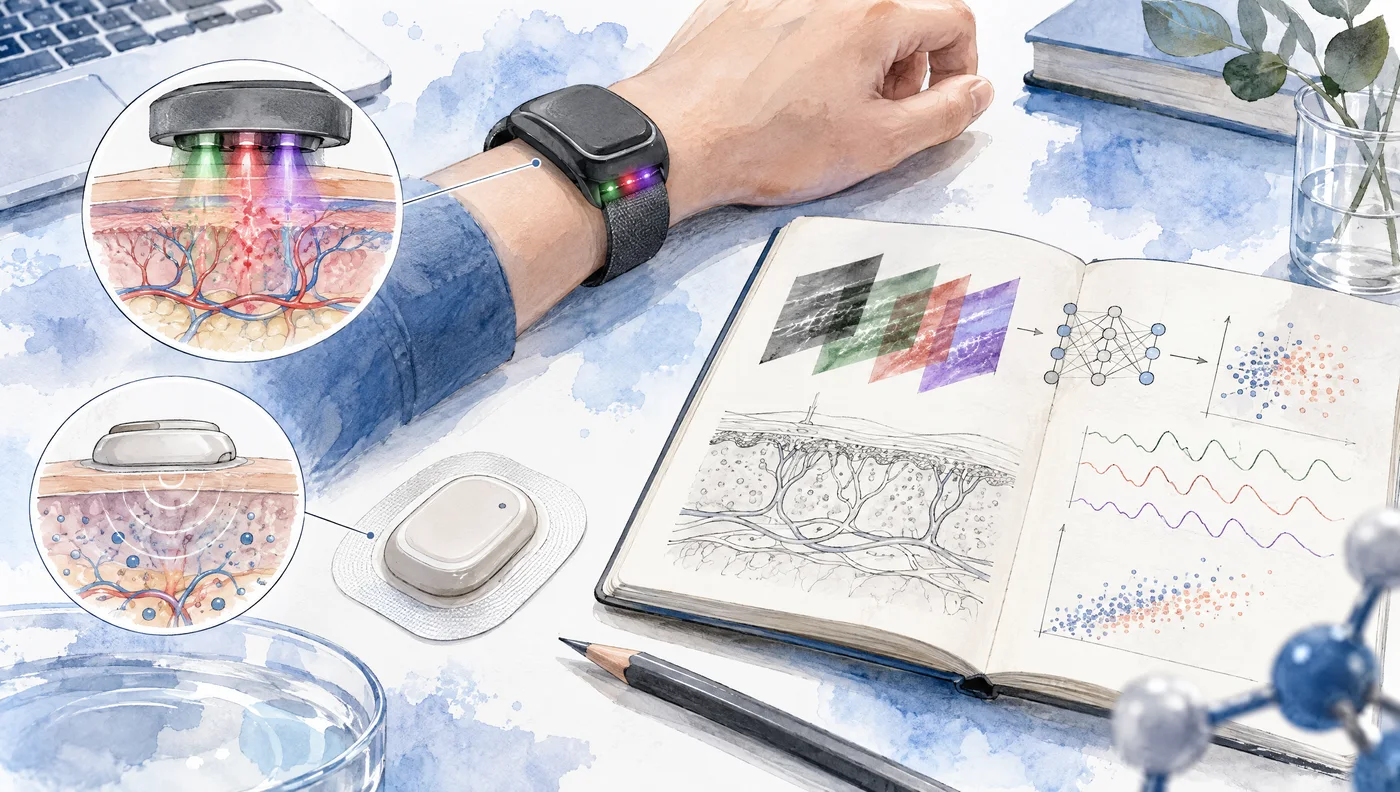
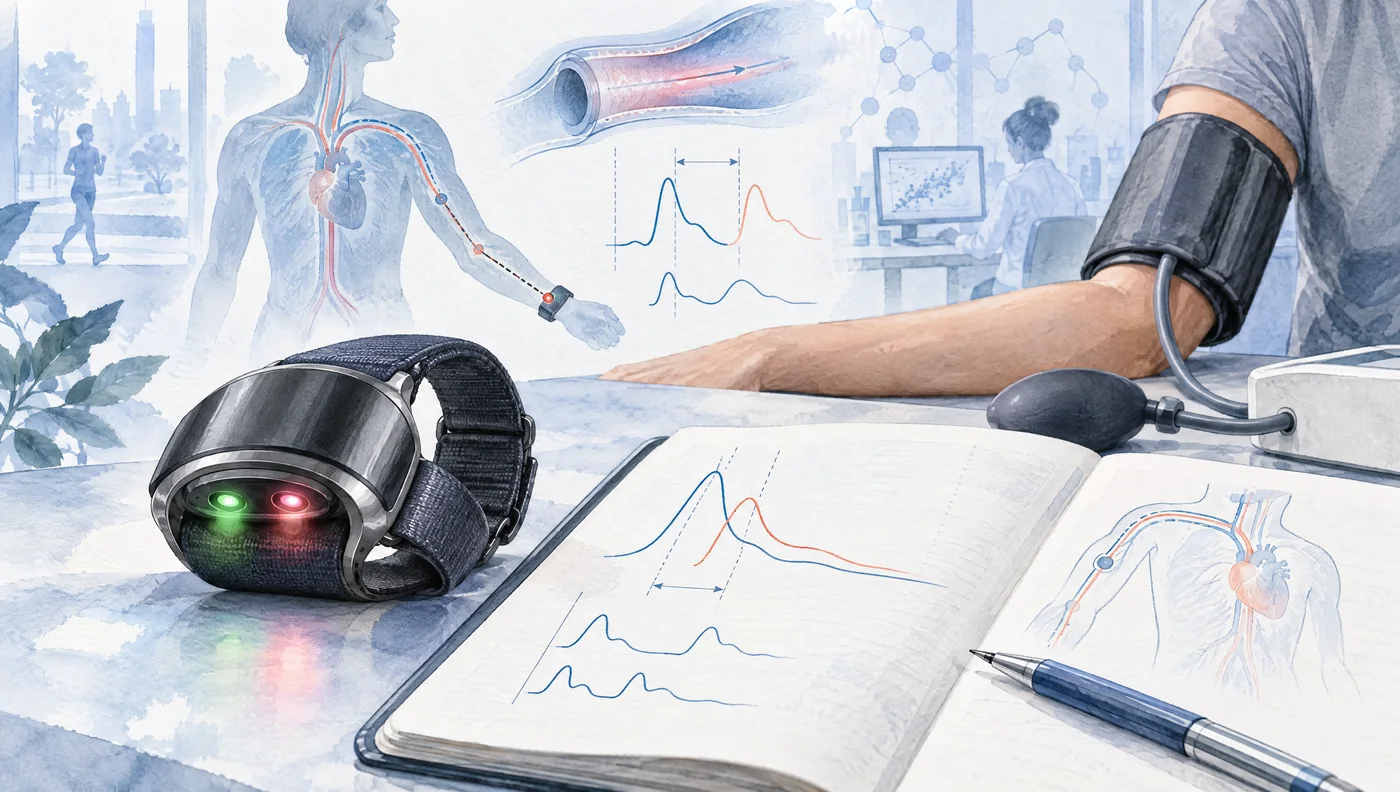
Vision4PPG turns 1D PPG into 2D images (STFT magnitude, STFT phase, and recurrence plots) and fine-tunes public vision foundation models, DINOv3 and SigLIP-2 ViT-B (86M parameters), with LoRA. It is an adaptation of vision models, not a PPG-pretrained foundation model. In the authors' Table 1, those vision models win 9 of 14 diastolic/systolic MAE comparisons against fully tuned MOMENT-385M and PPG-GPT-345M; SigLIP-2's Aurora-Oscillometric DBP/SBP MAE is 5.32/18.57 mmHg. The bed BCG set is an exception, where MOMENT and PPG-GPT report lower error than either vision model.
Wonderwall is an activity recognition foundation model trained first on physics-based simulated motion and then on curated real datasets. Tested on ten activity recognition benchmarks, it gave state-of-the-art generalization in zero-shot, few-shot and full-shot settings.
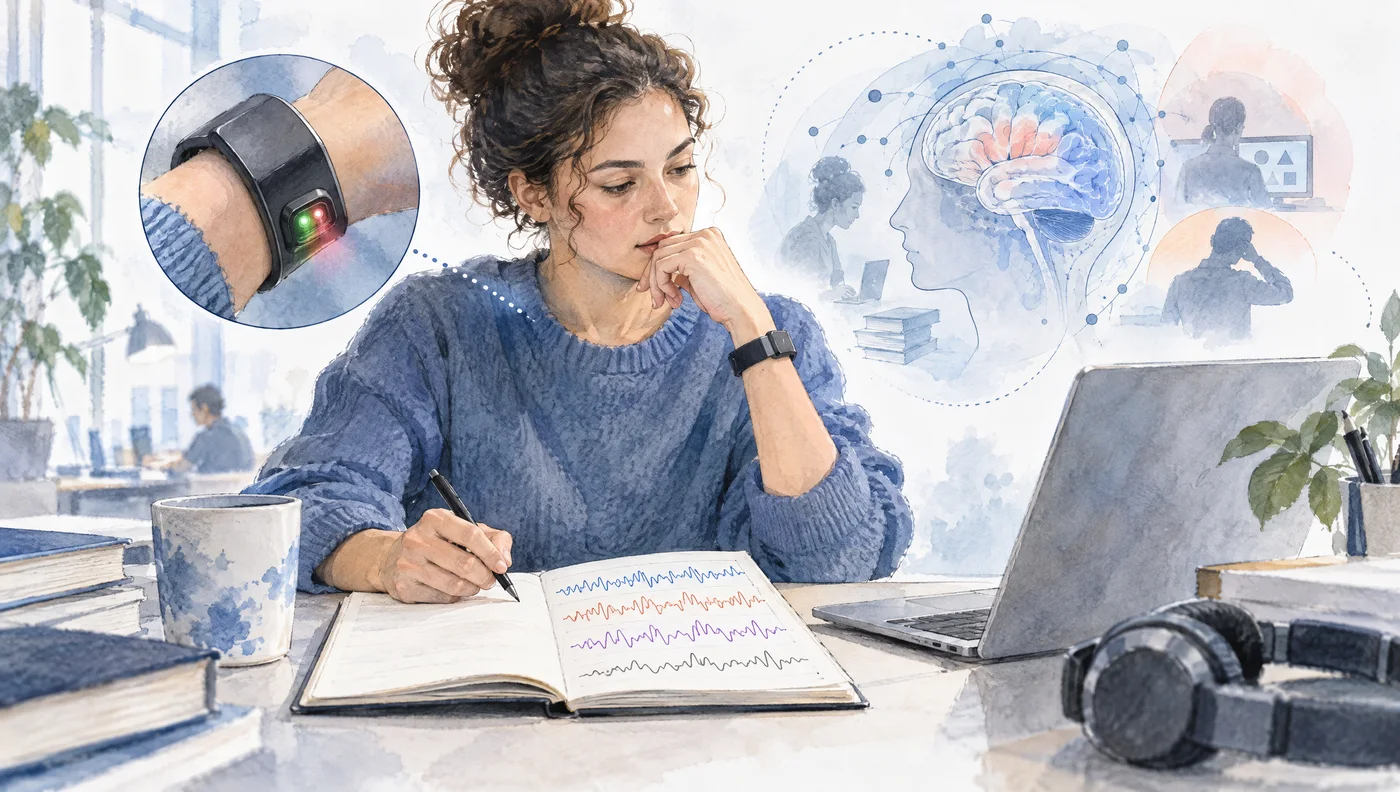
Xie and Ma score vigilance from sliding-window ECG HRV (30 s windows, 10 s step) during psychomotor vigilance tasks in 44 adults who were well-rested or sleep-deprived. An SVM reached 89% cross-validated accuracy for high versus low vigilance (fastest versus slowest 40% of each person's performance) and 72% accuracy for three-class leave-one-participant-out classification, with 84% precision on low-vigilance epochs (Sleep 2024; 10.1093/sleep/zsae199).
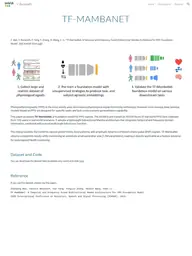
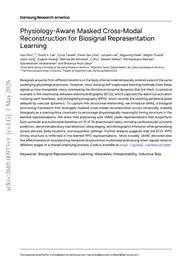
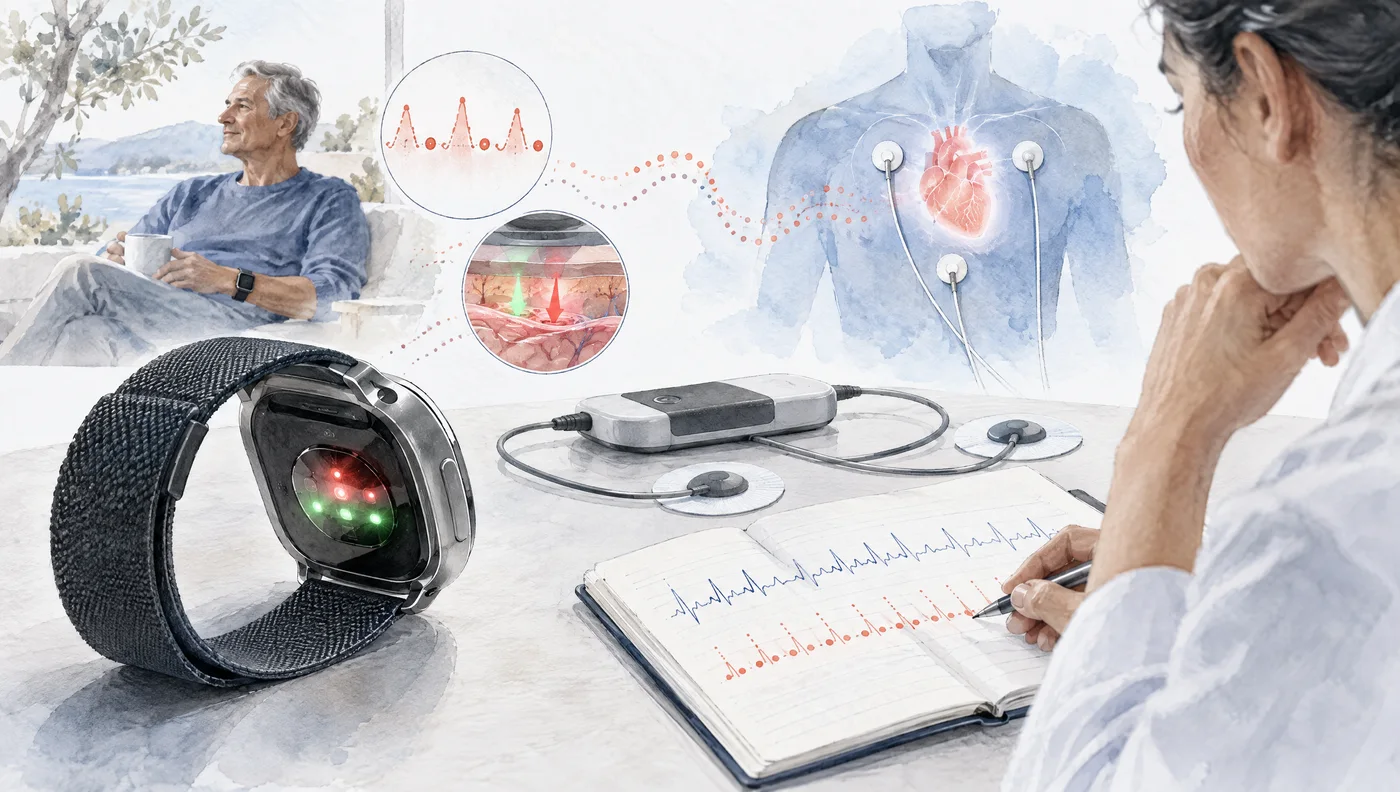
xMAE is a biosignal pretraining method that reconstructs one signal from another, for example ECG and the delayed PPG pulse it produces, so the model learns physiological timing. Its representations beat unimodal and multimodal baselines on 15 of 19 tasks, including cardiovascular outcomes, abnormal lab tests, sleep staging and demographics, across different devices and body locations.
Families describe the main role reported in each record. Signals may describe training data, rather than required inference inputs. Dates use the first arXiv posting when known, otherwise the catalog paper date. Missing information stays unconfirmed. Saves stay in this browser.
Complete source records (JSON and CSV) are free for members. Sign in to download. Every record is readable on this site, and llms.txt describes the hub for AI tools.
For a citable version that never changes, use the 2026-10 snapshot.
Cite or reuse this
CC BY 4.0ChatPPG compiled this data. You can copy, adapt and republish it, including in articles, slides, papers and AI tools, as long as you credit ChatPPG and link to this page. Please also cite the original studies for any number you use.
Attribution
Source: ChatPPG, ChatPPG Research Hub: wearable and PPG benchmark leaderboards, datasets and models, https://chatppg.com/research (CC BY 4.0)
HTML link
Source: <a href="https://chatppg.com/research">ChatPPG, ChatPPG Research Hub: wearable and PPG benchmark leaderboards, datasets and models</a> (<a href="https://creativecommons.org/licenses/by/4.0/" rel="license">CC BY 4.0</a>)
Cite the dated snapshot 2026-10 for a fixed, reproducible version. Please also cite the original publications listed above.
APA
ChatPPG. (2026). ChatPPG Research Hub: wearable and PPG benchmark leaderboards, datasets and models (Version 2026-10) [Data set]. ChatPPG Research Hub. https://chatppg.com/research
BibTeX
@misc{chatppg_research_hub,
  author       = {{ChatPPG}},
  title        = {{ChatPPG Research Hub: wearable and PPG benchmark leaderboards, datasets and models}},
  year         = {2026},
  month        = oct,
  version      = {2026-10},
  howpublished = {\url{https://chatppg.com/research}},
  note         = {ChatPPG Research Hub, Snapshot 2026-10, https://chatppg.com/research/snapshots/2026-10}
}
CITATION.cff
cff-version: 1.2.0
message: "If you use this resource, please cite it as below."
type: dataset
title: "ChatPPG Research Hub: wearable and PPG benchmark leaderboards, datasets and models"
authors:
  - name: "ChatPPG"
url: "https://chatppg.com/research"
repository-artifact: "https://chatppg.com/research/snapshots/2026-10"
version: "2026-10"
date-released: "2026-10-17"
Newsletter
Get new PPG datasets, papers and models
The ChatPPG newsletter covers what's new in the research atlas, plus practical guides. Unsubscribe anytime.
New datasets, papers and models
Practical guides from the hub
Unsubscribe anytime
The waveform is an illustration of a PPG pulse, not a recording.