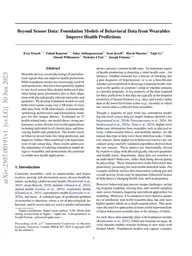
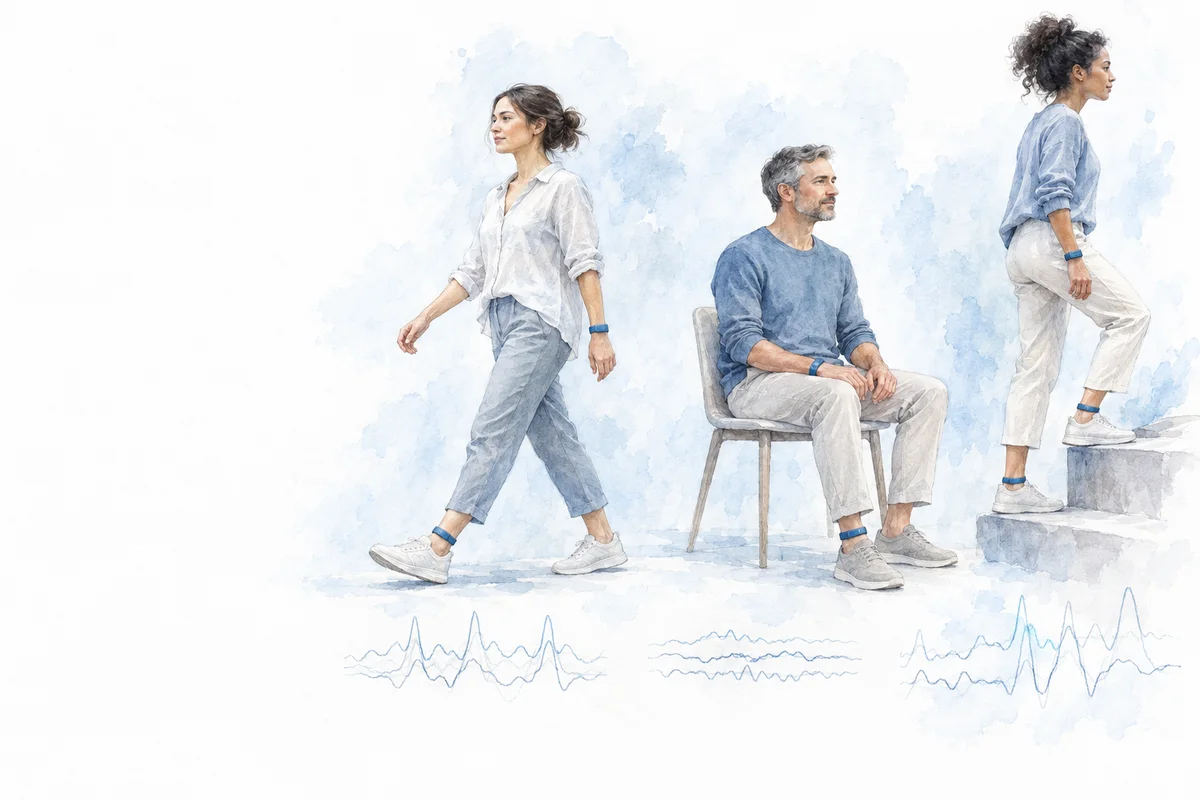
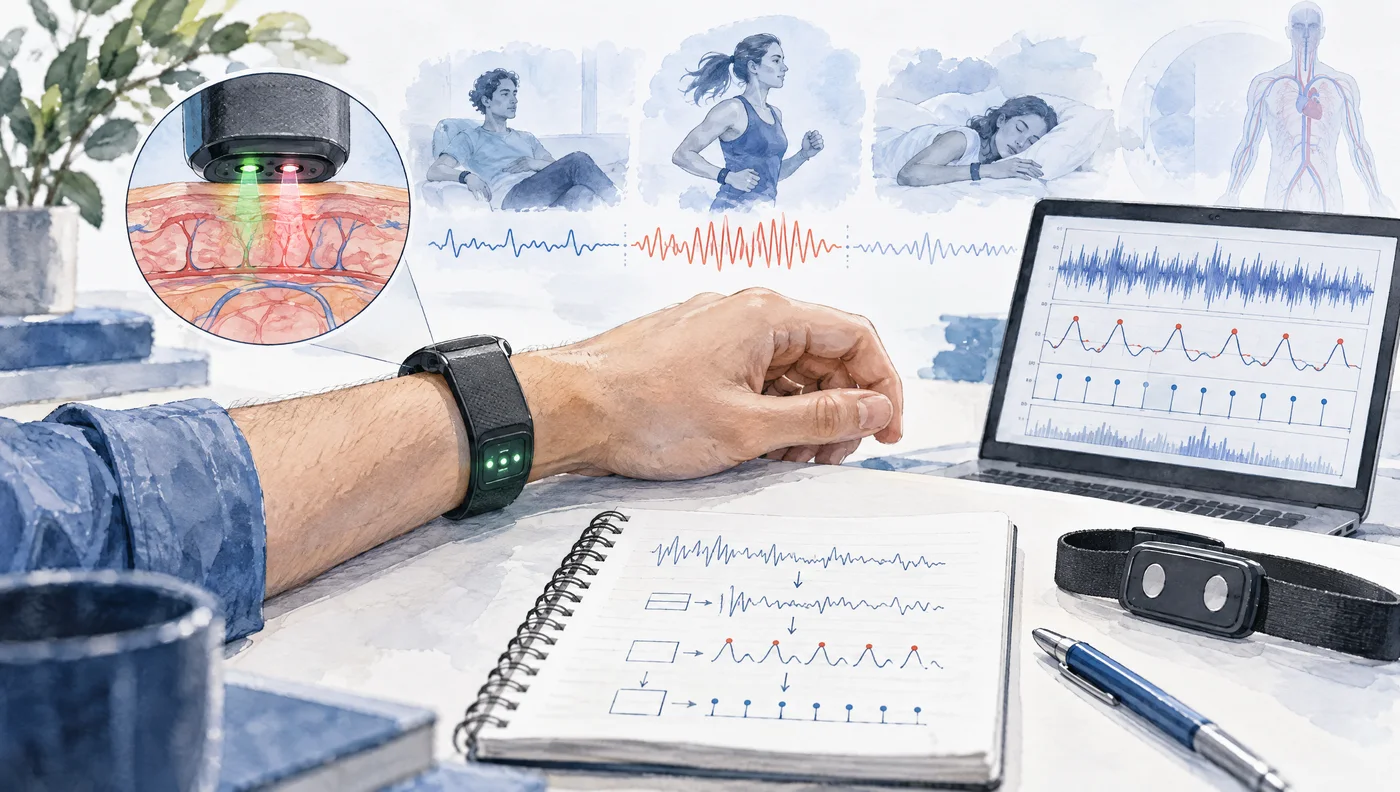
Released activity-intensity classifier from OxWearables: the self-supervised HARNet wrist-accelerometer encoder (harnet-ukb, base model) fine-tuned on CAPTURE-24, followed by an HMM and post-hoc sleep correction (per the ActiNet paper). Shipped as the actinet Python package; two classifiers are published (walmsley 4-class intensity, willetts).
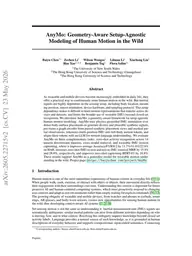
AnyMo models human motion from IMUs placed anywhere on the body. It simulates IMU signals over dense body-surface positions, pretrains a graph encoder on them, turns multi-position IMU data into full-body motion tokens and aligns those tokens with an LLM. Across 14 unseen datasets it improved zero-shot activity recognition accuracy by 11.7%, and it also improved IMU-text retrieval and motion captioning.
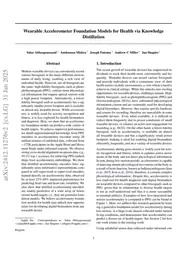
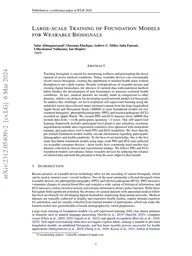
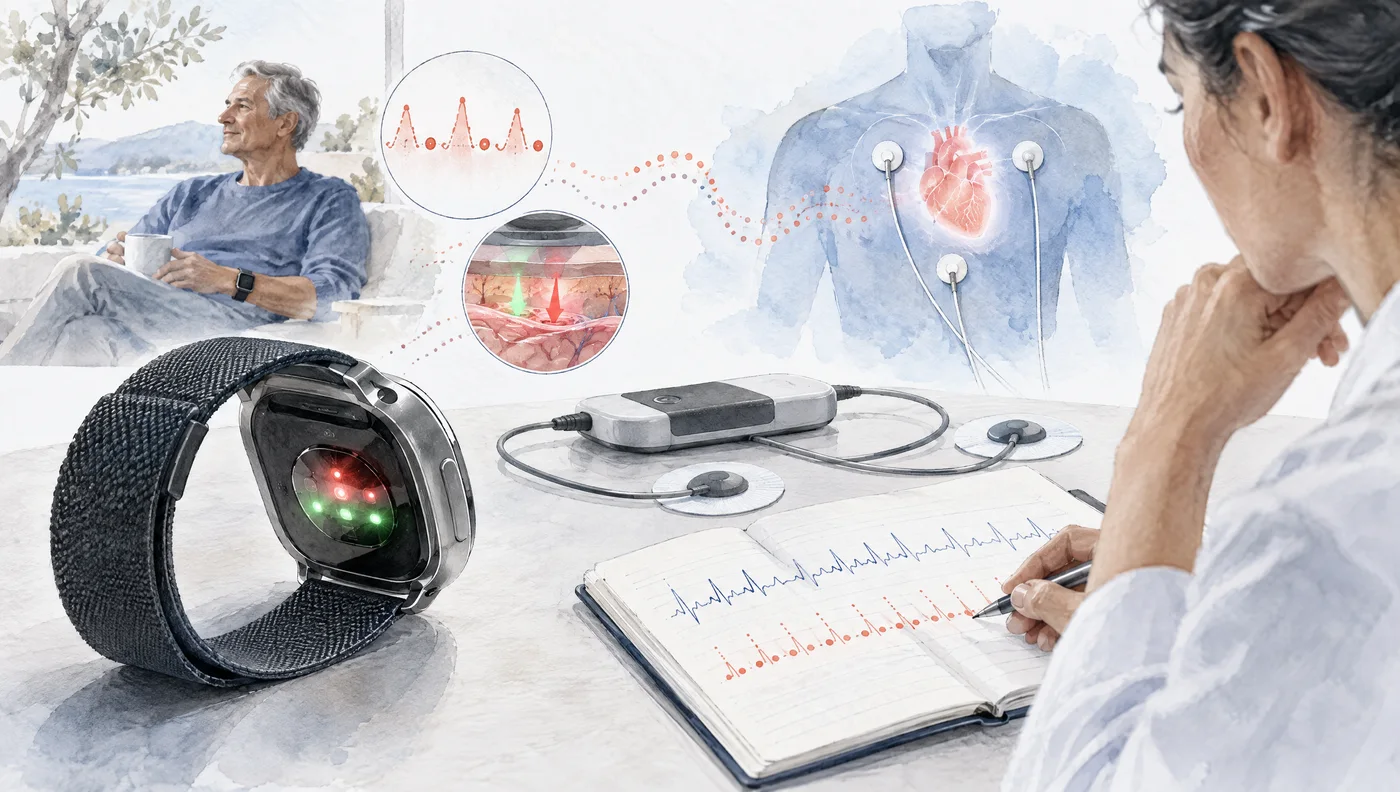
This Apple model is an accelerometer foundation model trained by distilling knowledge from a PPG encoder. It used 20 million minutes of unlabelled data from about 172K participants in the Apple Heart and Movement Study. Accelerometer embeddings could retrieve the matching PPG embedding with 99.2% top-1 accuracy, and the distilled encoders beat accelerometer-only encoders by 23% to 49% on health targets.
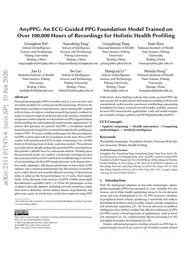
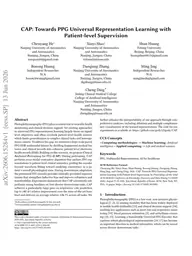
Apple ICLR 2024 large-scale PPG/ECG FMs with participant-level contrastive pairs on ~141k AHMS participants — no downloadable checkpoint on official page.
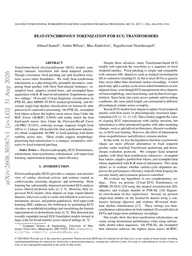
Transformer encoders that tokenize ECG at cardiac-cycle (beat) boundaries instead of fixed time patches, from the Beat-Synchronous Tokenization for ECG Transformers paper (arXiv 2608.30367, IEEE MLSP 2026). The GitHub v1.0 release ships pretrained SSL encoders and fine-tuned classifiers for the three beat-synchronous tokenizers (tok1/tok2/tok3) and the fixed-patch baselines (fixed50/100/250/500) on PTB-XL, plus Icentia11k encoders (icentiabeatsync, icentiabeatsynchr, icentiafixed, icentiacontrastive). The README does not map tok1–tok3 to the paper's three designs; check before use.
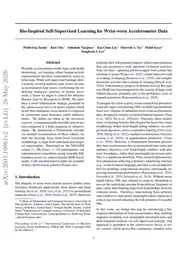
Bio-PM is a self-supervised model for wrist accelerometer data that splits motion into movement segments based on the submovement theory of motor control. A Transformer encoder is pretrained to reconstruct masked segments, which focuses it on how movements are organized rather than on raw waveform shape. Pretrained on about 28,000 hours from 11,000 NHANES participants, it beat strong wearable SSL baselines on six subject-disjoint activity recognition benchmarks.
BioCodec is an EnCodec-style neural codec that tokenizes single-channel biosignals with residual vector quantization. It was pretrained on large-scale EEG and evaluated on clinical diagnosis, sleep, speech, and motor-imagery decoding, with secondary EMG tests. MIT-licensed code and an in-repo checkpoint are available (arXiv 2510.09095).
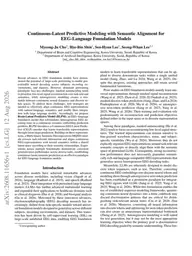
BLPM (Brain Latent Predictive Model) is an EEG-language foundation model that treats EEG decoding tasks as predicting continuous semantic embeddings. Its CELP encoder learns by predicting latent targets, and a multi-query module aligns EEG representations with text in a shared space. It generalized consistently across several benchmarks.
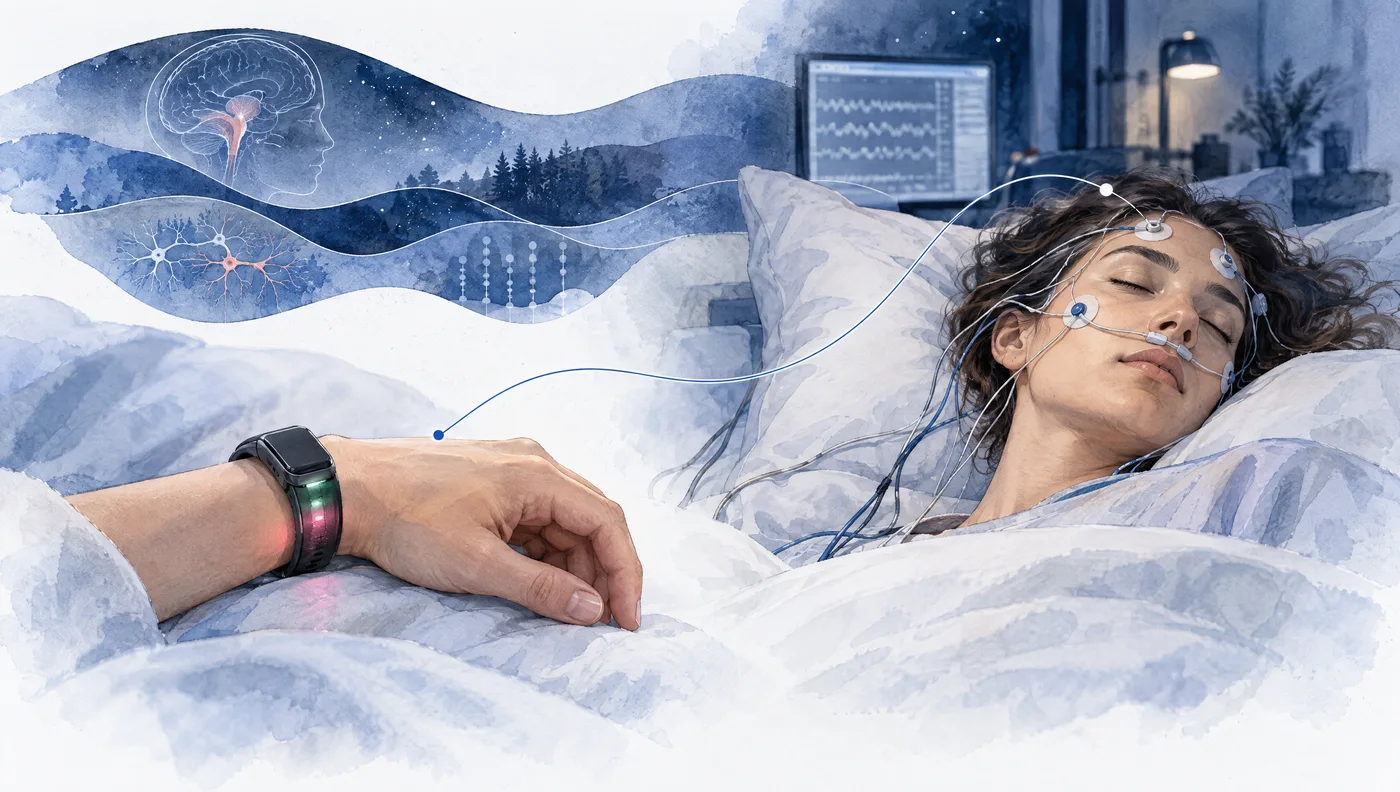
BrainCodes is a 1.9-million-parameter EEG foundation model that runs a factorized spatiotemporal transformer over frozen BioCodec discrete tokens. It is pretrained with masked code prediction on about 820 hours of HBN-EEG and reports strong results on standard EEG benchmarks and consumer headband setups. No public code or weights were released with the 2026 arXiv preprint.
Best on every reported metric for 5 of the 6 datasets in Table 1 under one shared fine-tuning protocol (e.g. FACED balanced acc 0.594 vs CodeBrain 0.580; MentalArithmetic AUROC 0.851 vs CBraMod 0.765). On ATTEN it is best on balanced accuracy (0.722) but below EEGPT on AUC-PR (0.798 vs 0.802) and AUROC (0.806 vs 0.810).
Patient-level PPG↔EHR contrastive foundation-style encoder (KDD 2026). Anchors long PPG windows to LLM-distilled clinical semantics from MC-MED ED data; reports strong AF/HR/RR/BP transfer vs SiamQuality / GPT-PPG / PaPaGei.
Hugging Face release (no paper, no GitHub) pairing a small Conformer PPG rhythm classifier (90 s single-channel PPG at 25 Hz, five rhythm classes) with a Qwen2.5-0.5B-Instruct language model the uploader says was distilled from MedGemma 1.5.
CardioFM is a self-supervised foundation model that encodes ECG lead II and PPG together, using cross-modal attention and residual vector quantization. It reached an F1 of 0.86 for cardiovascular disease classification on PTB-XL and estimated QT interval with a mean error of 20.2 ms and pulse arrival time with 22.7 ms. Its embeddings also predict age, sex and BMI without diagnostic labels.
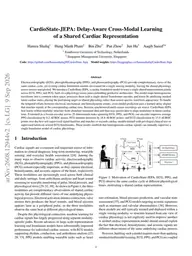
CardioState-JEPA is a cardiac foundation model that learns one shared representation across ECG, PPG and heart sounds (PCG). Each signal is mapped into a common token space and fed to a single Transformer that learns by predicting masked latent cardiac states. As a frozen encoder across 25 tasks, it improved PPG classification by 8.2 AUROC points, murmur detection by 18.8 and ECG classification by 15.5 over the best baselines.
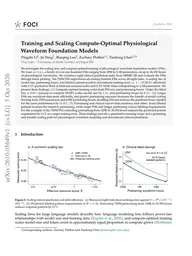
CEReBrO is a compact EEG foundation model (3.58M, 39.95M, and 85.15M parameters) pretrained on the public TUEG scalp-EEG corpus, more than 20,000 hours from more than 10,000 subjects. It is not a PPG-native foundation model. Tóth et al. fine-tune it on 10-second ECG+PPG windows from PulseDB, which is built from MIMIC-III and VitalDB, for cuffless blood pressure. The large unfrozen model at 200 epochs reports DBP/SBP MAE of 1.57/2.72 mmHg on the PulseDB MIMIC-III split and 1.92/3.14 mmHg on VitalDB (Table II).
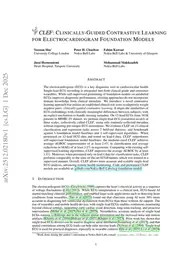
CLEF is a foundation model for single-lead ECG trained with contrastive learning guided by patient risk scores derived from clinical metadata. It was pretrained on 12-lead ECGs from 161K patients in MIMIC-IV-ECG and tested on 18 classification and regression tasks across 7 held-out datasets. It improved average AUROC by at least 2.6% and cut regression error by at least 3.2% compared with self-supervised baselines, and weights are released in small, base and large sizes.
CM-SSL trains single-signal ECG or PPG encoders against a shared token vocabulary learned from synchronized ECG and PPG pairs. A joint tokenizer is pretrained first, then the unimodal encoder, then the model is fine-tuned. Pretraining uses PulseDB, and fine-tuning covers UCI BP, BIDMC and PPG-DaLiA for PPG and CSN, PhysioNet 2017 and PTB-XL for ECG.
CM-TCC learns shared representations from wearable ECG and three-axis accelerometer signals with temporal and contextual contrasting. It uses TS-TCC style one-dimensional convolutional encoders. Code and trained weights from Emognition are on GitHub. Published in Information Fusion 2026 (DOI 10.1016/j.inffus.2026.104439).
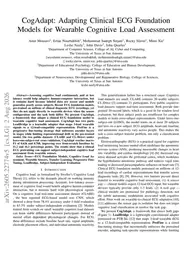
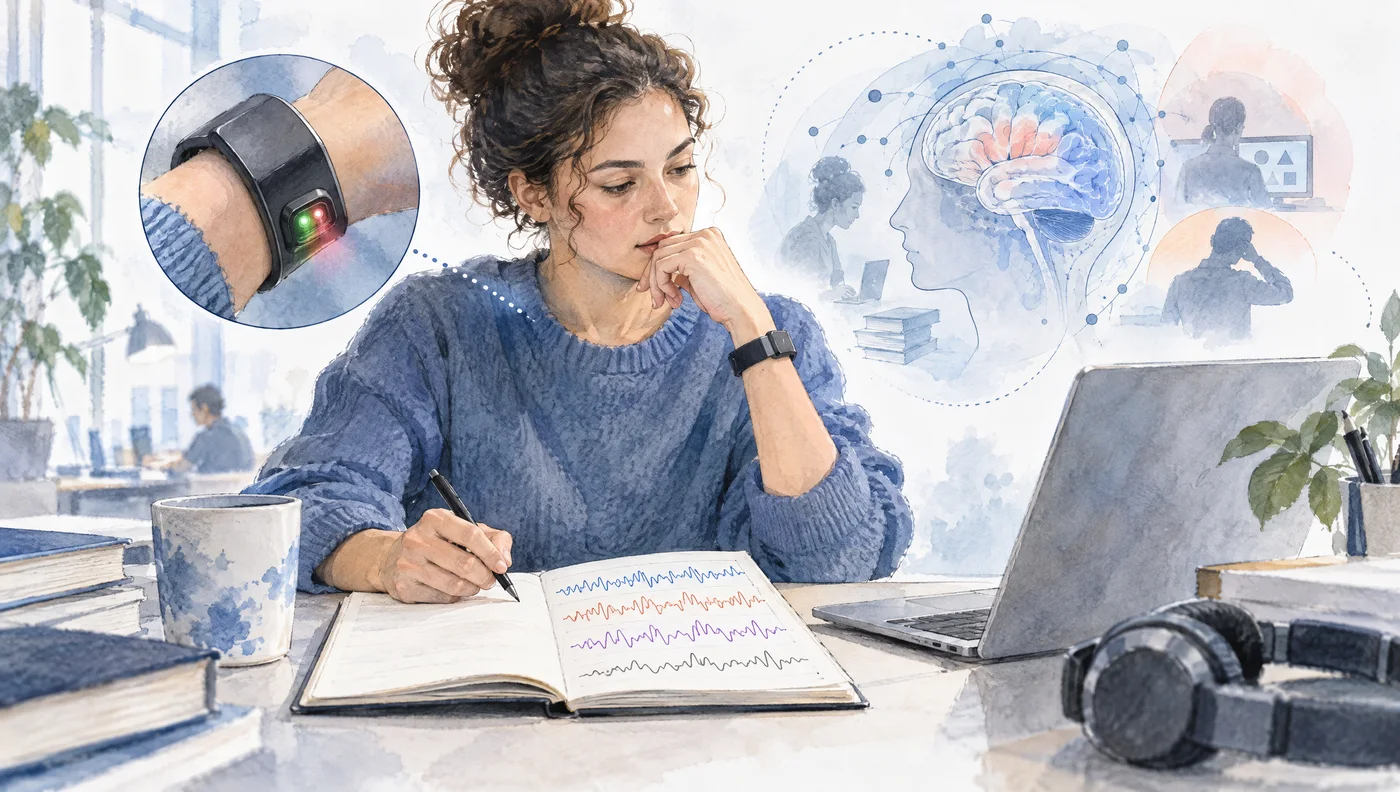
CogAdapt adapts a clinical ECG foundation model to estimate cognitive load from wearable ECG. Its ProFine strategy unfreezes encoder layers in stages to limit drift from the pretrained model. On the CLARE and CL-Drive datasets with leave-one-subject-out testing it reached macro-F1 of 0.626 and 0.768, 11.2 and 16.1 points above models trained from scratch.
CrossHAR is an activity recognition model built to work on new datasets without seeing them during training. It augments sensor data and then uses hierarchical self-supervised pretraining to learn general representations. Across several real-world datasets it beat previous methods by 10.83% in accuracy on unseen targets.
DNA-PPG is a PPG foundation model pretrained with a method the authors call Dual Neighborhood Alignment, which avoids pushing apart samples that look alike and keeps physiological states continuous. It was pretrained on 10.7 million PPG segments from more than 8,400 subjects. On six benchmarks it cut regression error by 18% and improved classification by 11.5% over prior models.
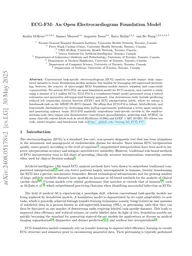
ECG-JEPA is a 12-lead ECG foundation model that adapts joint-embedding predictive architecture training with cross-pattern attention for multi-lead structure. Code and weights are released; the work appears in Neural Networks 2026 (arXiv 2410.08559; DOI 10.1016/j.neunet.2026.109334).
This KDD 2026 model is a multimodal joint-embedding predictive architecture (JEPA) for PPG and ECG, built on LeJEPA, that makes its predictions in a shared latent space instead of reconstructing raw signals. Separate encoders for each signal are pushed toward an isotropic Gaussian embedding, and random modality dropout lets the model run on PPG alone after pretraining on paired data. It improved on baselines for heart rate, atrial fibrillation and blood pressure tasks and stayed robust on lower-quality signals.
ECGFM-U-Lite is a compact 1D-MobileViT student model distilled from a unified ECG foundation model, for use where compute and memory are limited. It was built with a three-stage compression procedure. It reached an overall AUC of 0.862 versus 0.918 for the teacher, keeping about 94% of the teacher's performance on both rhythm and structure tasks.
ECGTFormer is a compact causal ECG foundation model that operates over physiology-aware tokens for P, QRS, T, PR, ST, and TP regions per lead, with continuous-time rotary position encoding and V-JEPA-style pretraining. It supports single- or multi-lead streaming inference. Presented at the NeurIPS 2026 GenAI4Health workshop.
EdgeHAR is a compact sensor foundation model for activity recognition designed to run on wearable devices rather than in the cloud. Lightweight adaptation modules help it handle new users, devices, sampling rates and sensor placements within edge limits on compute, memory and latency.
Joint QA + caption training: Macro-BA 88.81% on signal-level QA, caption factual consistency 83.46% (vs 82.06% caption-only), ROUGE-L 0.4865, BLEU-4 0.3302. The encoder beats LaBraM and CBraMod on QA (89.87 vs 76.06 / 50.45 at the classifier stage). The paper's QA checkpoint was selected on a val+test diagnostic set, so treat the numbers as optimistic.
Families describe the main role reported in each record. Signals may describe training data, rather than required inference inputs. Dates use the first arXiv posting when known, otherwise the catalog paper date. Missing information stays unconfirmed. Saves stay in this browser.
Complete source records (JSON and CSV) are free for members. Sign in to download. Every record is readable on this site, and llms.txt describes the hub for AI tools.
For a citable version that never changes, use the 2026-10 snapshot.
Cite or reuse this
CC BY 4.0ChatPPG compiled this data. You can copy, adapt and republish it, including in articles, slides, papers and AI tools, as long as you credit ChatPPG and link to this page. Please also cite the original studies for any number you use.
Attribution
Source: ChatPPG, ChatPPG Research Hub: wearable and PPG benchmark leaderboards, datasets and models, https://chatppg.com/research (CC BY 4.0)
HTML link
Source: <a href="https://chatppg.com/research">ChatPPG, ChatPPG Research Hub: wearable and PPG benchmark leaderboards, datasets and models</a> (<a href="https://creativecommons.org/licenses/by/4.0/" rel="license">CC BY 4.0</a>)
Cite the dated snapshot 2026-10 for a fixed, reproducible version. Please also cite the original publications listed above.
APA
ChatPPG. (2026). ChatPPG Research Hub: wearable and PPG benchmark leaderboards, datasets and models (Version 2026-10) [Data set]. ChatPPG Research Hub. https://chatppg.com/research
BibTeX
@misc{chatppg_research_hub,
  author       = {{ChatPPG}},
  title        = {{ChatPPG Research Hub: wearable and PPG benchmark leaderboards, datasets and models}},
  year         = {2026},
  month        = oct,
  version      = {2026-10},
  howpublished = {\url{https://chatppg.com/research}},
  note         = {ChatPPG Research Hub, Snapshot 2026-10, https://chatppg.com/research/snapshots/2026-10}
}
CITATION.cff
cff-version: 1.2.0
message: "If you use this resource, please cite it as below."
type: dataset
title: "ChatPPG Research Hub: wearable and PPG benchmark leaderboards, datasets and models"
authors:
  - name: "ChatPPG"
url: "https://chatppg.com/research"
repository-artifact: "https://chatppg.com/research/snapshots/2026-10"
version: "2026-10"
date-released: "2026-10-17"
Stay in the loop
Get new PPG datasets, papers and models
The ChatPPG newsletter covers what's new in the research atlas, plus practical guides. Unsubscribe anytime.