CM-TCC (Cross-Modal Temporal and Contextual Contrasting; ECG + ACC encoders, Emognition)
- Datasets
- WESAD, MHEALTH
- Year
- 2026

Activity counts measure attention, not model quality. Missing counts are unknown. Publication status follows the linked source; a listed venue alone does not confirm peer review.
CM-TCC learns shared representations from wearable ECG and three-axis accelerometer signals with temporal and contextual contrasting. It uses TS-TCC style one-dimensional convolutional encoders. Code and trained weights from Emognition are on GitHub. Published in Information Fusion 2026 (DOI 10.1016/j.inffus.2026.104439).
- Signals
- ECG, IMU
- Pretraining data
- LarField (Emognition real-life wearable ECG + ACC)
- Year
- 2026
- Architecture
TS-TCC-style 1-D conv encoders per modality (kernel 8, 128 output channels; ECG feature length 34, ACC 18 per LarField config) with temporal-contrasting transformer (TC) and contextual contrasting; cross-modal objective; projection 128-d
- License
MIT (LICENSE file); the repository usage terms limit code and models to non-commercial research
- Type
- Foundation model
- Form factor
- Not reported
- Parameters
- Not reported
- Architecture
- TS-TCC-style 1-D conv encoders per modality (kernel 8, 128 output channels; ECG feature length 34, ACC 18 per LarField config) with temporal-contrasting transformer (TC) and contextual contrasting; cross-modal objective; projection 128-d
- Venue
- Not reported
- Year
- 2026
- arXiv
- Not reported
- Weights
- Open
- Licence
- MIT (LICENSE file); the repository usage terms limit code and models to non-commercial research
- Caveats
- Not reported
- Added
- Oct 21, 2026
- Updated
- Oct 26, 2026
Abstract
The growing use of wearable devices capturing multimodal signals, such as electrocardiogram (ECG) and accelerometer (ACC) data, offers opportunities for creating large, real-life datasets that can power self-supervised learning (SSL) models that can support a variety of applications. Using ECG and ACC wearables data, we train SSL models with both unimodal and cross-modal pretraining objectives and evaluate their performance on downstream tasks such as physical activity recognition and affect classification. In each of our downstream experiments, we identify dominant and secondary modalities and demonstrate that cross-modal pretraining can enhance downstream performance even when only a single modality is available. Additionally, we find that modalities can complement or contradict each other in certain cases, highlighting the importance of incorporating domain knowledge when designing multimodal systems. We publicly release encoders pretrained via Cross-Modal Temporal and Contextual Contrasting (CM-TCC) for ECG and ACC signals to support further research on the complementarity of cross-modal representation learning.
Verbatim fromOpenAlex· Abstract via OpenAlex (publisher-deposited); © the authors/publisher
How it works
Datasets linked in the hub; pretraining vs evaluation roles follow the paper.
- Pretraining data
- LarField (Emognition real-life wearable ECG + ACC)
- Architecture
- TS-TCC-style 1-D conv encoders per modality (kernel 8, 128 output channels; ECG feature length 34, ACC 18 per LarField config) with temporal-contrasting transformer (TC) and contextual contrasting; cross-modal objective; projection 128-d
- Inputs
- ECG, IMU
- Approach
- foundation model · self supervised · cross modal · TS TCC · ECG · accelerometer
Devices· 3
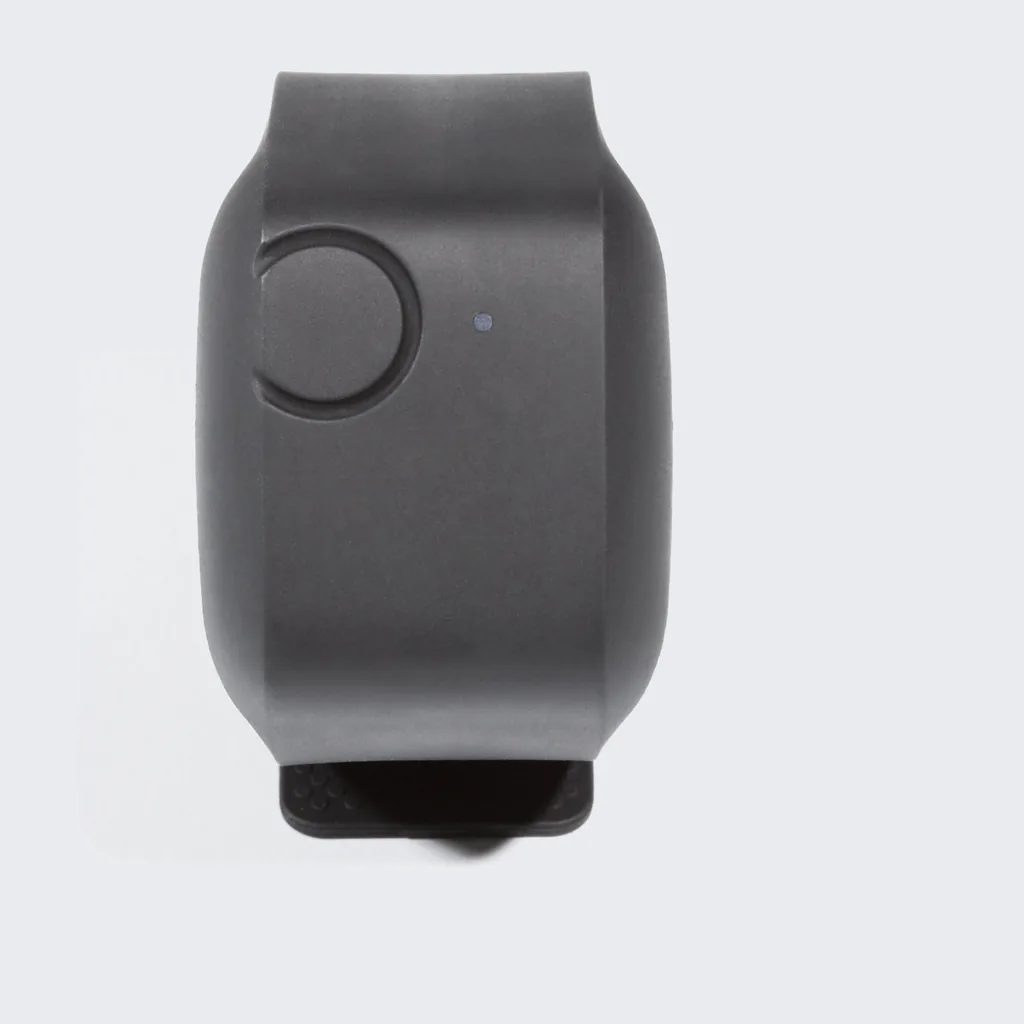
Full photo credits and licences are on each device page. An icon means we have no openly licensed or manufacturer-cleared photo of that exact device yet.
Datasets· 2

Cite
APA
Kunc, D., Komoszyńska, J., Kazienko, P., Saganowski, S., Avramidis, K., Feng, T., & Narayanan, S. (2026). Dominance and complementarity in cross-modal representation learning for wearable time series (CM-TCC). Information Fusion. https://doi.org/10.1016/j.inffus.2026.104439
BibTeX
@article{kunc2026dominance,
  title         = {{Dominance and complementarity in cross-modal representation learning for wearable time series (CM-TCC)}},
  author        = {Kunc, Dominika and Komoszyńska, Joanna and Kazienko, Przemysław and Saganowski, Stanisław and Avramidis, Kleanthis and Feng, Tiantian and Narayanan, Shrikanth},
  year          = {2026},
  journal       = {Information Fusion},
  doi           = {10.1016/j.inffus.2026.104439}
}
Built from the hub record. Check it against the publisher before submitting.
History
Record updated
Added to the ChatPPG research hub
Connections
Open in the graph explorerPapers
 Bridging ECG and PPG: Latent-Space Prediction for Robust Physiological AnalysisAlso uses WESADKDD '26 · 2026
 Cross-Modal Correlation Fusion for End-to-End ECG–PPG Stress ClassificationAlso uses WESADFrontiers in Artificial Intelligence and A · 2026
- BeatFlow-ECG: Rectified Flow for ECG Reconstruction from Indirect Wearable SignalsAlso uses WESADICLR 2027 submission · 2026