Foundation model

DNA-PPG

From “DNA-PPG: A Foundation Model for Photoplethysmography via Dual Neighborhood Alignment”
Parameters
4.99M
Year
2026
Form factor
Clinical fingertip pretrain wrist eval
Published articlePublication date: Sep 2026Added to atlas: Sep 26, 2026Source

Activity counts measure attention, not model quality. Missing counts are unknown. Publication status follows the linked source; a listed venue alone does not confirm peer review.

DNA-PPG is a PPG foundation model pretrained with a method the authors call Dual Neighborhood Alignment, which avoids pushing apart samples that look alike and keeps physiological states continuous. It was pretrained on 10.7 million PPG segments from more than 8,400 subjects. On six benchmarks it cut regression error by 18% and improved classification by 11.5% over prior models.

Published
IJCAI 2026
Signals
PPG
Pretraining
10.7 million PPG segments from 8,400+ subjects
Method
Dual Neighborhood Alignment
Evaluation
6 downstream benchmarks
Result
18% lower regression error, 11.5% better classification
Year
2026
At a glance
Type
Foundation model
Modalities
PPG
Parameters
4.99M
Architecture
ResNet-1D encoder
Venue
Proceedings of the Thirty-Fifth International Joint Conference on Artificial Intelligence
Year
2026
arXiv
Not reported
Weights
Open
Licence
Not reported
Caveats
Not reported
Added
Sep 26, 2026
Updated
Oct 17, 2026

Abstract

Existing physiological foundation models face two limitations: rigid hard-negative sampling indiscriminately repels morphologically similar samples, distorting the natural manifold; and coarse discretization strategies sever the intrinsic continuity of physiological states, inducing precision loss. To address these challenges, we propose DNA-PPG, a novel pre-training framework anchored in Dual Neighborhood Alignment. DNA-PPG integrates the Morphology-Aware Self-Supervised Branch using Time-Frequency Soft Weighting to capture universal signal dynamics shared among diverse subjects, with the Physiological Semantic Alignment Branch that projects physiological indicators into continuous semantic space to explicitly embed precise physiological priors into the representation space. We scale the pre-training to 10.7 million PPG segments from over 8,400 subjects to ensure robust generalization. Extensive evaluations on six downstream benchmarks demonstrate that DNA-PPG significantly outperforms state-of-the-art baselines, achieving an 18% reduction in regression error and an 11.5% improvement in classification performance. These results validate DNA-PPG as a robust, universal feature extractor for diverse photoplethysmography applications.

Verbatim fromthe publisher's DOI record· Abstract as deposited by the publisher with Crossref; © the authors/publisher

Key results

How it works

How DNA-PPG works: Input signals → Foundation model → Downstream tasksInput signals: PPG (Photoplethysmogram). Datasets: PPG-DaLiA, WESAD, MESA Sleep, VitalDB. Foundation model: DNA-PPG, 4.99M parameters (Convolutional network · Contrastive learning). Downstream tasks: Stress; Sleep apnea.Input signalsPPG: PhotoplethysmogramPPGPhotoplethysmogramDatasets: PPG-DaLiA, WESAD, MESA Sleep, VitalDBDatasetsPPG-DaLiA, WESAD +2 moreFoundation modelDNA-PPG4.99M parametersConvolutional network · Contrastive…Downstream tasksStressStressSleep apneaSleep apnea

Datasets linked in the hub; pretraining vs evaluation roles follow the paper.

Architecture
ResNet-1D encoder
Inputs
PPG
Approach
PPG · contrastive · IJCAI · Xiaomi · Peking University

Devices· 2

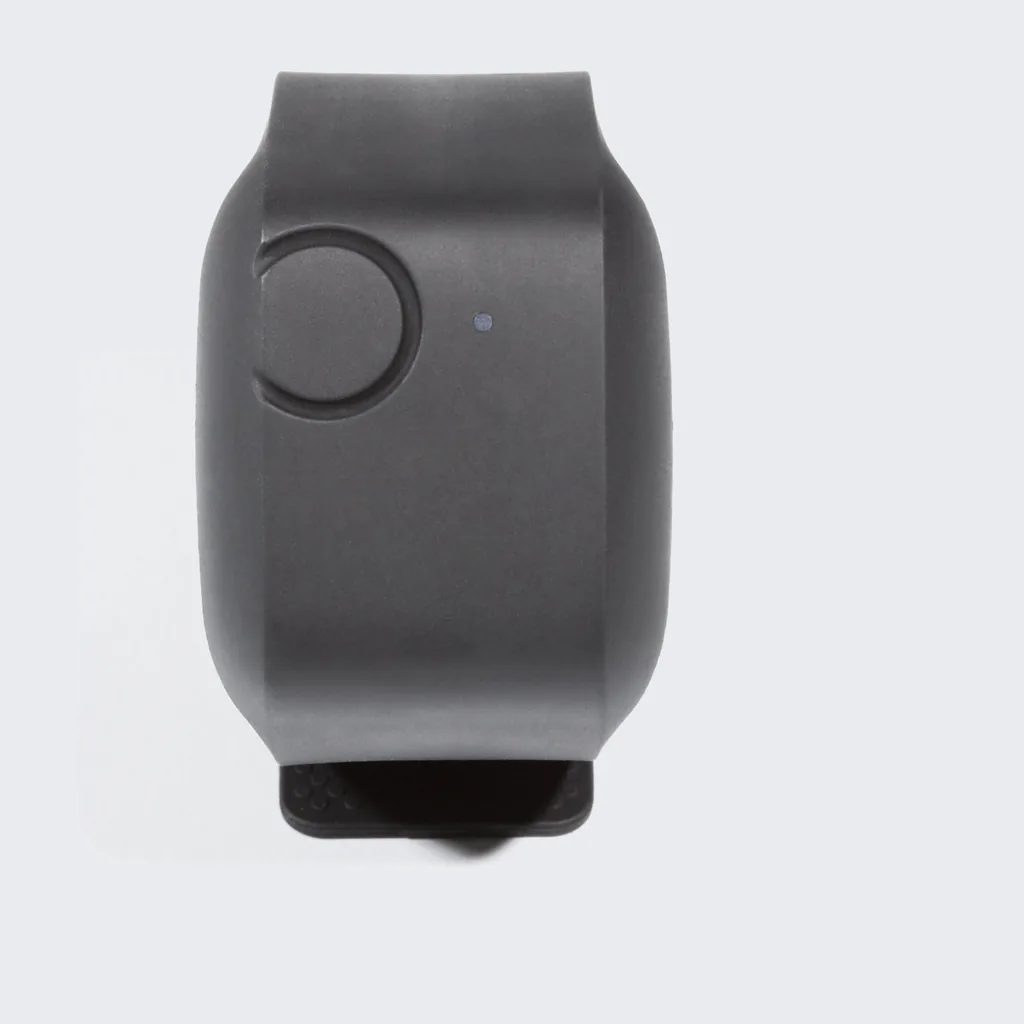
Full photo credits and licences are on each device page. An icon means we have no openly licensed or manufacturer-cleared photo of that exact device yet.

Leaderboard rows· 8

All leaderboards
TaskDatasetMetricValueRank
Emotion recognition (valence/arousal)ECSMPAUROC ↑0.665#1 / 2
Emotion recognition (valence/arousal)ECSMPAUROC ↑0.631#2 / 2
Emotion recognition (valence/arousal)WESADAUROC ↑0.737#1 / 3
Emotion recognition (valence/arousal)WESADAUROC ↑0.616#2 / 3
Emotion recognition (valence/arousal)WESADAUROC ↑0.596#3 / 3
Emotion recognition (valence/arousal)WESADAUROC ↑0.602#1 / 2
Emotion recognition (valence/arousal)WESADAUROC ↑0.598#2 / 2
Sleep apnea (OSA) screeningPediatric SDB setAUROC ↑0.665#null / 1

Datasets used· 4

Papers· 1

Authors· 8

Cite this model

Cite the publication recorded for this model. Check it against the publisher before submitting.

DNA-PPG: A Foundation Model for Photoplethysmography via Dual Neighborhood Alignment. (2026). Proceedings of the Thirty-Fifth International Joint Conference on Artificial Intelligence. https://doi.org/10.24963/ijcai.2026/777
@inproceedings{dnappg2026dnappg,
  title         = {{DNA-PPG: A Foundation Model for Photoplethysmography via Dual Neighborhood Alignment}},
  year          = {2026},
  booktitle     = {Proceedings of the Thirty-Fifth International Joint Conference on Artificial Intelligence},
  doi           = {10.24963/ijcai.2026/777}
}

History

  1. Record updated

  2. Added to the ChatPPG research hub