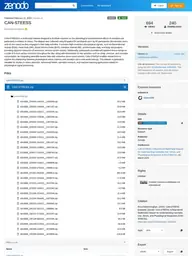
UBFC-Phys is a public multimodal dataset for studying the physiological response to social stress, recorded both with contact sensors and with video. It was introduced by R. Meziati Sabour, Y. Benezeth, P. De Oliveira, J. Chappé and F. Yang in "UBFC-Phys: A Multimodal Database For Psychophysiological Studies of Social Stress", IEEE Transactions on Affective Computing (2021).
Everyday social stress, such as giving a speech or sitting a job interview, affects both psychological and physiological states, and the authors argue that the public datasets for studying this were limited. In UBFC-Phys, 56 participants went through an experiment with a protocol inspired by the Trier Social Stress Test, run in three stages: rest, a speech task, and arithmetic tasks at different levels of difficulty.
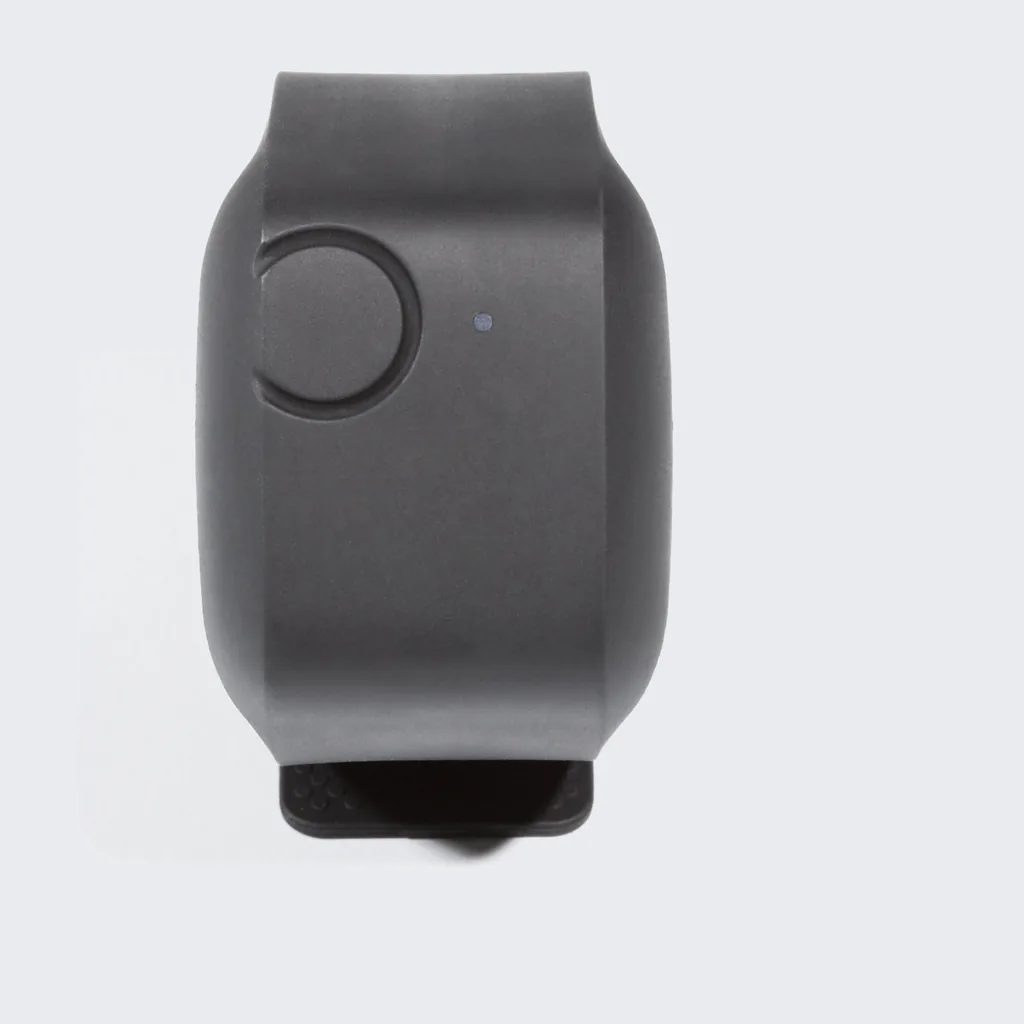
During the session, each participant was filmed and wore a wristband that measured blood volume pulse (BVP, a contact PPG signal) and electrodermal activity (EDA). Participants filled in a form before and after the experiment so that self-reported anxiety scores could be calculated. The dataset contains the video recordings, the BVP and EDA signals for all three tasks, and the anxiety scores.
The video is what sets UBFC-Phys apart from WESAD and similar stress datasets. From the recordings, the authors computed remote pulse signals using remote photoplethysmography (rPPG) and facial expression features, and they extracted pulse rate variability from both the contact BVP and the rPPG signals. That lets researchers compare camera-based physiological measures with the wristband directly, in the same people and the same stressful moments.
The paper reports results for contact versus non-contact comparison and for stress recognition, with the best stress state recognition accuracy of 85.48 percent achieved using remote pulse rate variability features. For PPG researchers, that makes UBFC-Phys a standard test set for rPPG methods under stress and talking motion, as well as a stress benchmark with wrist BVP.
The dataset can be downloaded from the IEEE DataPort open access page or from the dat@UBFC server. If you use it, the authors ask you to cite the IEEE Transactions on Affective Computing paper. The project page does not state a license, so check the terms on the download site before redistributing.
Participants
56
Protocol
TSST-inspired rest, speech and arithmetic tasks
Paper
Meziati Sabour, Benezeth, De Oliveira, Chappé, Yang, IEEE Transactions on Affective Computing (2021), doi 10.1109/TAFFC.2021.3056960
Best stress recognition
85.48 percent accuracy using remote pulse rate variability
UBFC-Phys is a public multimodal dataset for studying social stress (Meziati Sabour et al., IEEE Transactions on Affective Computing). 56 participants went through a protocol inspired by the Trier Social Stress Test in three stages: rest, a speech task and arithmetic tasks of varying difficulty. They were filmed and wore a wristband measuring blood volume pulse (BVP) and electrodermal activity (EDA), and filled in anxiety questionnaires before and after.
What's inside
Participants
56
Stages
Rest, speech, arithmetic (three per participant)
Signals
Wristband BVP and EDA
Video
Face video of each task (usable for remote PPG)
Labels
Task stage; self-reported anxiety scores before and after
Face video, wristband BVP and EDA from 56 participants during rest, speech and arithmetic tasks, plus anxiety scores from before and after.
Where can I download UBFC-Phys?
From IEEE DataPort or the dat@UBFC server, both linked on the authors' dataset page.
Is UBFC-Phys based on the TSST?
Its protocol is inspired by the Trier Social Stress Test, according to the authors.
How do I download the UBFC-Phys dataset?
Request access via the authors’ page (https://sites.google.com/view/ybenezeth/ubfc-phys) or IEEE DataPort. Cite Meziati Sabour et al., IEEE Transactions on Affective Computing.
What is UBFC-Phys?
A multimodal social-stress dataset with 56 participants, face video, wrist BVP and EDA, recorded in a Trier Social Stress Test–inspired protocol.
How do I download UBFC-Phys?
Download it from IEEE DataPort at https://ieee-dataport.org/open-access/ubfc-phys-2 or from the dat@UBFC server.
UBFC-Phys vs WESAD?
Both study stress with wrist BVP. UBFC-Phys adds face video for remote PPG and uses a TSST-inspired protocol with 56 participants; WESAD has 15 subjects with chest ECG and more physiological channels but no video.
What are UBFC-Phys benchmark results?
The original paper reached 85.48 percent stress state recognition accuracy using pulse rate variability features from remote PPG.
Cite this dataset
This citation is the paper recorded with this dataset. Check it against the publisher before submitting.
Sabour, R. M., Benezeth, Y., De Oliveira, P., Chappé, J., & Yang, F. (2023). UBFC-Phys: A Multimodal Database For Psychophysiological Studies of Social Stress. IEEE Transactions on Affective Computing, 14(1), 622–636. https://doi.org/10.1109/taffc.2021.3056960
Sabour, Rita Meziati, Yannick Benezeth, Pierre De Oliveira, Julien Chappé, and Fan Yang. 2023. "UBFC-Phys: A Multimodal Database For Psychophysiological Studies of Social Stress." IEEE Transactions on Affective Computing 14 (1): 622–636. https://doi.org/10.1109/taffc.2021.3056960.
Sabour, R. M., Benezeth, Y., De Oliveira, P., Chappé, J. and Yang, F. (2023) 'UBFC-Phys: A Multimodal Database For Psychophysiological Studies of Social Stress', IEEE Transactions on Affective Computing, 14(1), pp. 622–636. doi: 10.1109/taffc.2021.3056960.
Sabour, Rita Meziati, et al. "UBFC-Phys: A Multimodal Database For Psychophysiological Studies of Social Stress." IEEE Transactions on Affective Computing, vol. 14, no. 1, 2023, pp. 622–636. https://doi.org/10.1109/taffc.2021.3056960.
R. M. Sabour, Y. Benezeth, P. De Oliveira, J. Chappé, and F. Yang, "UBFC-Phys: A Multimodal Database For Psychophysiological Studies of Social Stress," IEEE Transactions on Affective Computing, vol. 14, no. 1, pp. 622–636, 2023, doi: 10.1109/taffc.2021.3056960.
@article{sabour2023ubfcphys,
  title         = {{UBFC-Phys: A Multimodal Database For Psychophysiological Studies of Social Stress}},
  author        = {Sabour, Rita Meziati and Benezeth, Yannick and De Oliveira, Pierre and Chappé, Julien and Yang, Fan},
  year          = {2023},
  journal       = {IEEE Transactions on Affective Computing},
  volume        = {14},
  number        = {1},
  pages         = {622--636},
  publisher     = {Institute of Electrical and Electronics Engineers (IEEE)},
  doi           = {10.1109/taffc.2021.3056960}
}
Cite the ChatPPG record
Cite the dated snapshot 2026-10 for a fixed, reproducible version. Please also cite the original publications listed above.
APA
ChatPPG. (2026). UBFC-Phys: dataset record (Version 2026-10) [Data set]. ChatPPG Research Hub. https://chatppg.com/research/datasets/ubfc-phys
BibTeX
@misc{chatppg_dataset_ubfc_phys,
  author       = {{ChatPPG}},
  title        = {{UBFC-Phys: dataset record}},
  year         = {2026},
  month        = nov,
  version      = {2026-10},
  howpublished = {\url{https://chatppg.com/research/datasets/ubfc-phys}},
  note         = {ChatPPG Research Hub, Snapshot 2026-10, https://chatppg.com/research/snapshots/2026-10}
}
CITATION.cff
cff-version: 1.2.0
message: "If you use this resource, please cite it as below."
type: dataset
title: "UBFC-Phys: dataset record"
authors:
  - name: "ChatPPG"
url: "https://chatppg.com/research/datasets/ubfc-phys"
repository-artifact: "https://chatppg.com/research/snapshots/2026-10"
version: "2026-10"
date-released: "2026-11-13"
History
Record updated
Newsletter
Get new PPG datasets, papers and models
Get alerts when new models are benchmarked on UBFC-Phys, plus the weekly digest.
New datasets, papers and models
Practical guides from the hub
Unsubscribe anytime
The waveform is an illustration of a PPG pulse, not a recording.