Activity counts measure attention, not model quality. Missing counts are unknown. Publication status follows the linked source; a listed venue alone does not confirm peer review.
RAE-PPG trains one Transformer PPG encoder in stages on 10 s, 30 s and 240 s inputs, adding targets for features that need longer recordings at each step. Features learned early stay recoverable from the longer-input representations, and learning earlier stages first made later features easier to learn.
Published
arXiv preprint, 2026
Signals
PPG
Training
staged 10 s, 30 s, 240 s inputs (retain-and-extend)
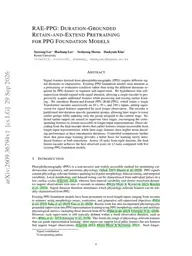
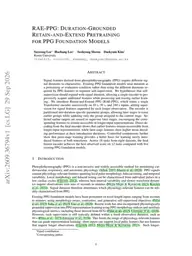
Signal features derived from photoplethysmography (PPG) require different signal durations to characterize. Existing PPG foundation models treat duration as a pretraining or evaluation condition rather than using the different durations required by PPG features to organize self-supervision. We hypothesize that self-supervision should expand with signal duration, allowing a single encoder to progressively acquire additional features while preserving and reusing earlier learning. We introduce Retain-and-Extend PPG (RAE-PPG), which trains a single Transformer encoder successively on 10 s, 30 s, and 240 s inputs, adding supervision for signal features supported by each longer observation. The encoder is partitioned into duration-specific parameter groups, allowing later stages to reuse earlier groups while updating only the group assigned to the current stage. Selected earlier targets are reused to supervise later stages, encouraging the corresponding features to remain accessible in longer-input representations. Direct decoding from the final encoder shows that earlier features remain recoverable from longer-input representations, while later-stage features show higher mean decoding performance at their introduction durations. Controlled comparisons further show that prior-stage learning provides a better basis for learning newly introduced features at both transitions. Across 18 tasks from eight datasets, the final frozen encoder achieves the best observed score on 12 tasks compared with five existing PPG foundation models.
Verbatim fromarXiv· arXiv metadata (abstracts are released under CC0)
How it works
Datasets linked in the hub; pretraining vs evaluation roles follow the paper.
Architecture
Single Transformer encoder with duration-specific attention/FFN groups (10 s -> 30 s -> 240 s), d=384
Inputs
PPG
Approach
PPG · foundation model · duration grounded · morphology · PRV
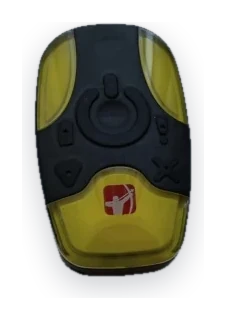
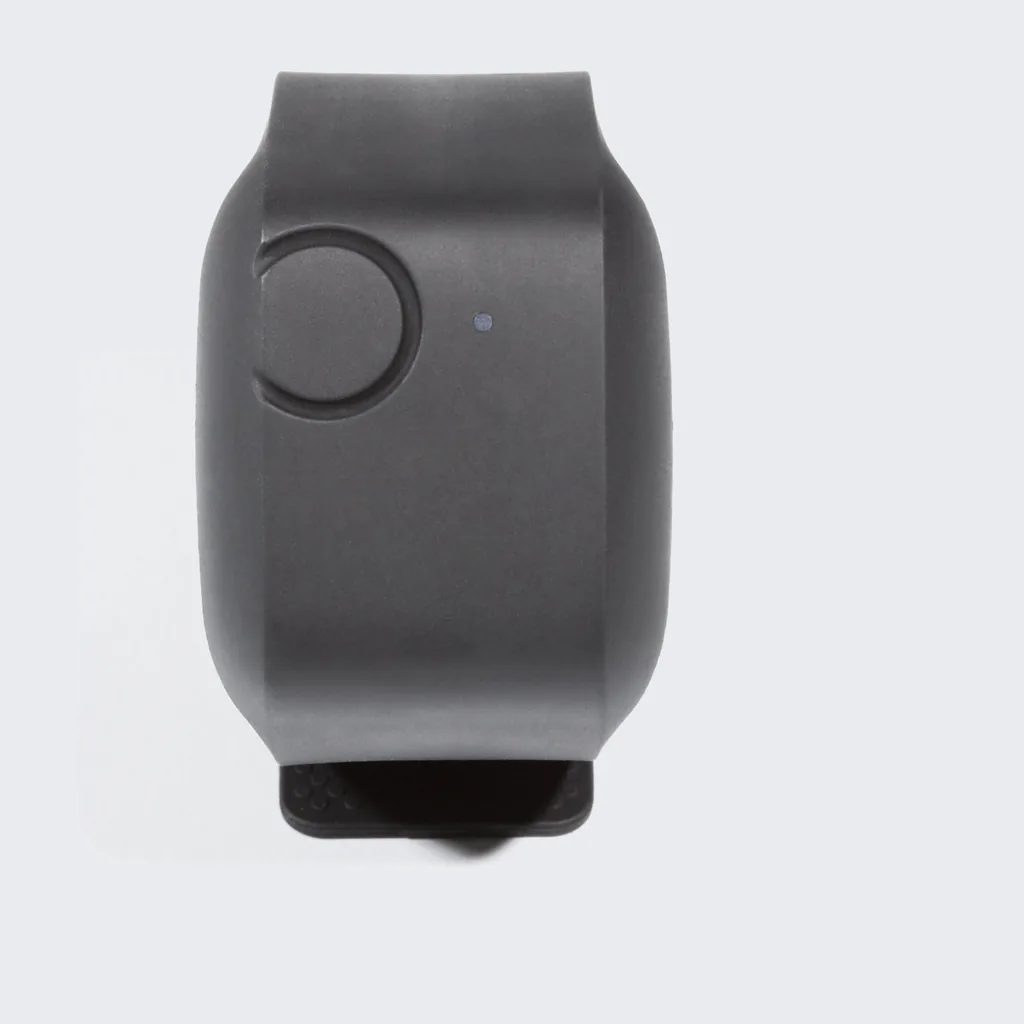
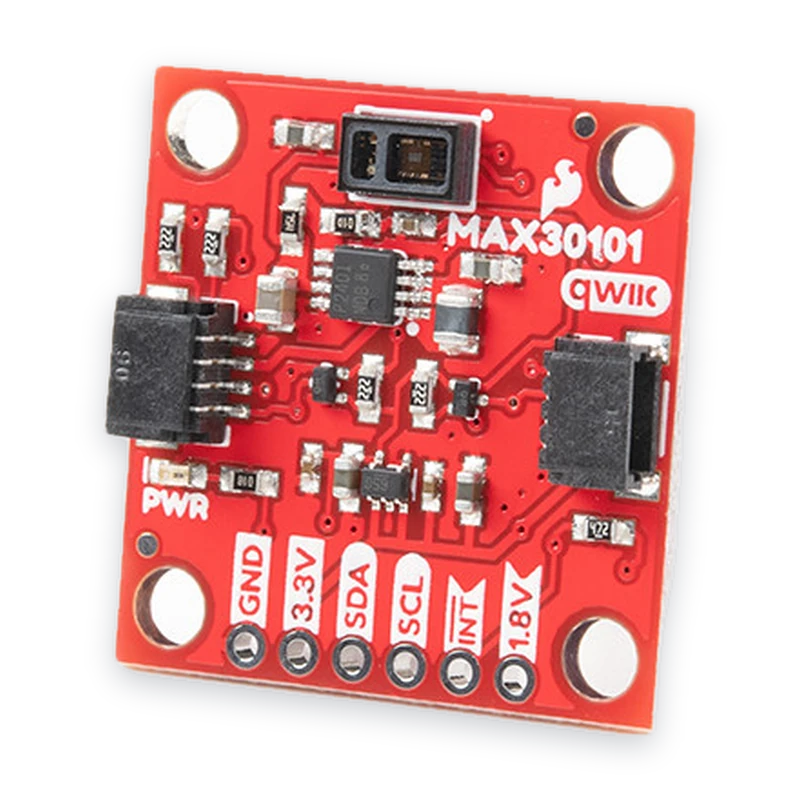
Full photo credits and licences are on each device page. An icon means we have no openly licensed or manufacturer-cleared photo of that exact device yet.
Cite the publication recorded for this model. Check it against the publisher before submitting.
Lee, S., Lee, H., Sheem, S., & Kim, D. (2026). RAE-PPG: Duration-Grounded Retain-and-Extend Pretraining for PPG Foundation Models. arXiv preprint. https://arxiv.org/abs/2609.36794
Lee, Suyeong, Hochang Lee, Seokyong Sheem, and Daekyum Kim. 2026. "RAE-PPG: Duration-Grounded Retain-and-Extend Pretraining for PPG Foundation Models." arXiv preprint. https://arxiv.org/abs/2609.36794.
Lee, S., Lee, H., Sheem, S. and Kim, D. (2026) 'RAE-PPG: Duration-Grounded Retain-and-Extend Pretraining for PPG Foundation Models', arXiv preprint. Available at: https://arxiv.org/abs/2609.36794
Lee, Suyeong, et al. "RAE-PPG: Duration-Grounded Retain-and-Extend Pretraining for PPG Foundation Models." arXiv preprint, 2026. https://arxiv.org/abs/2609.36794.
S. Lee, H. Lee, S. Sheem, and D. Kim, "RAE-PPG: Duration-Grounded Retain-and-Extend Pretraining for PPG Foundation Models," arXiv preprint, 2026, [Online]. Available: https://arxiv.org/abs/2609.36794.
@misc{lee2026raeppg,
  title         = {{RAE-PPG: Duration-Grounded Retain-and-Extend Pretraining for PPG Foundation Models}},
  author        = {Lee, Suyeong and Lee, Hochang and Sheem, Seokyong and Kim, Daekyum},
  year          = {2026},
  howpublished  = {arXiv preprint},
  eprint        = {2609.36794},
  archivePrefix = {arXiv}
}
History
Added to the ChatPPG research hub
Newsletter
Get new PPG datasets, papers and models
Get alerts when RAE-PPG is benchmarked on new datasets, plus the weekly digest.
New datasets, papers and models
Practical guides from the hub
Unsubscribe anytime
The waveform is an illustration of a PPG pulse, not a recording.