The Pulse Transit Time PPG Dataset is an open, high-resolution PhysioNet dataset of time-synchronized PPG, inertial, pressure and ECG signals built for short-distance pulse transit time research. Version 1.1.0 was published on March 18, 2022 by Philip Mehrgardt, Matloob Khushi, Simon Poon and Anusha Withana.
Pulse transit time (PTT) is the time a pulse wave takes to travel between two points in the blood vessels, and recent work has looked at it for continuous blood pressure monitoring. Measuring it precisely is hard for three reasons: PPG is noisy, sites close together (for example on the same finger) need millisecond-level accuracy in detecting the wave phase, and few datasets offer closely spaced PPG at high enough sample rates. This dataset targets all three.
The data comes from 22 healthy subjects at The University of Sydney, 6 of them female, aged 20 to 53 with a mean of 28.52 years. Each performed three activities in random order: sitting, stationary walking and running. Signals were recorded with a device similar to a commercial pulse oximeter, with sensors in a 3D-printed finger clip, plus a 3-lead ECG.
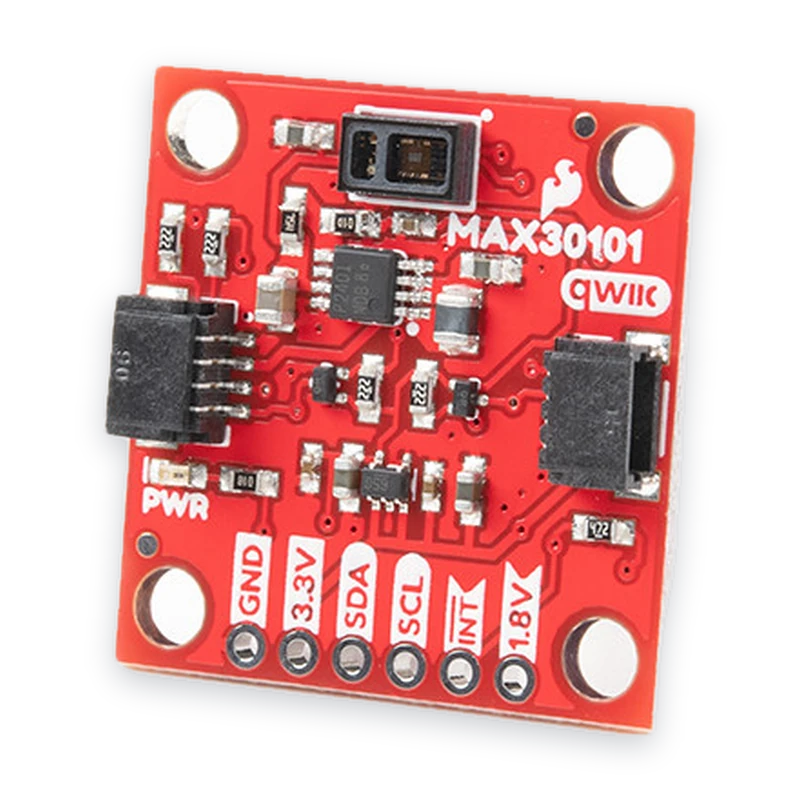
There are 66 records with 19 channels covering more than 40000 heartbeats. Two Maxim MAX30101 PPG sensors each record infrared, red and green light at 1000Hz, giving 2x3 unfiltered raw PPG signals at two sites a defined distance apart. Two load cells measure sensor attachment pressure at 80Hz, an MPU-9250 IMU records acceleration and gyroscope data at 500Hz, and an AD8232 amplifier records ECG at 500Hz. Sensor temperatures are included too. Systolic and diastolic blood pressure from an OMRON HEM-7322 monitor and SpO2 from an iHealth pulse oximeter were taken at the start and end of each activity, along with gender, age group and weight group.
The data is in WFDB and CSV formats, 2.9 GB uncompressed, and open access under the Open Data Commons Open Database License v1.0.
For PPG research, this is one of the few public datasets with raw multi-wavelength PPG at 1000Hz from two nearby sites, with contact pressure recorded. That makes it useful for PTT and cuffless blood pressure work and for studying how wavelength and attachment pressure change the PPG waveform.
Activities
sitting, stationary walking, running
Records
66 with 19 channels, more than 40000 heartbeats
Size
2.9 GB; ODbL 1.0
PhysioNet version 1.1.0 (March 18, 2022), DOI 10.13026/jpan-6n92
PPG
2 MAX30101 sensors, infrared, red and green at 1000Hz; ECG and IMU at 500Hz; attachment pressure at 80Hz
We provide an open access, high resolution and time synchronised dataset from multiple sensors worn at different body locations including Photoplethysmogram (PPG), Inertial, Pressure and ECG. The recordings are from 22 healthy subjects performing 3 physical activities. This dataset contains 66 waveform records from multi-site and multi-wavelength PPGs, sensors’ attachment pressures, sensors’ temperatures, inertial data from accelerometer and gyroscope, along with annotated ECG data for a total of 19 channels. Additionally, systolic and diastolic blood pressures, as well as blood oxygenation saturation levels (SpO2) numerics are provided.
Verbatim fromPhysioNet· Licence: Open Data Commons Open Database License v1.0
Pulse Transit Time PPG: overview
The Pulse Transit Time PPG Dataset (University of Sydney) provides time-synchronised, unfiltered PPG at two sites on the left index finger, each in red, infrared and green, plus 3-lead ECG, IMU, sensor attachment pressure and temperature. 22 healthy subjects (6 female, age 20 to 53) performed sitting, stationary walking and running, giving 66 records and more than 40,000 heartbeats. Blood pressure and SpO2 were measured at the start and end of each activity.
What's inside
Subjects
22 healthy (6 female), age 20–53, mean 28.5
Records
66 (sit, walk, run per subject), 19 channels
PPG
6 × MAX30101: red, IR, green at distal and proximal phalanx; channels at 500 Hz (sensor run at 1000 Hz multi-LED)
ECG
3-lead, 500 Hz, with R peaks detected automatically and checked by hand
Six finger PPG channels (red, infrared and green at two sites), 3-lead ECG with R peaks, IMU, contact pressure, temperatures, and BP and SpO2 at the start and end of each activity, from 22 subjects.
What activities are in the dataset?
Sitting, stationary walking and running, in random order.
Can I use it for cuffless blood pressure?
Only with care: BP was measured with a cuff at the start and end of each activity, not continuously.
What licence does it use?
ODbL v1.0 on PhysioNet.
What is the Pulse Transit Time PPG Dataset?
It is a PhysioNet dataset of 66 records from 22 healthy subjects with multi-wavelength PPG at two finger sites at 1000Hz, plus ECG, IMU, attachment pressure, blood pressure and SpO2.
How do I download the Pulse Transit Time PPG Dataset?
It is open access at https://physionet.org/content/pulse-transit-time-ppg/1.1.0/ (2.9 GB) under ODbL 1.0.
Pulse Transit Time PPG vs PPG-BP?
PPG-BP has 219 subjects with short single-wavelength fingertip PPG and cuff blood pressure. The PTT dataset has fewer subjects but raw infrared, red and green PPG at two sites at 1000Hz during activity.
What tasks does this dataset support?
It was built for short-distance pulse transit time recognition, cuffless blood pressure sensing and other cardiovascular modelling.
Cite this dataset
Cite this dataset with the fields recorded here. Check it against the publisher before submitting.
Mehrgardt, P., Khushi, M., Poon, S., & Withana, A. (2022). Pulse Transit Time PPG Dataset [Data set]. physionet. https://doi.org/10.13026/JPAN-6N92
Mehrgardt, Philip, Matloob Khushi, Simon Poon, and Anusha Withana. 2022. "Pulse Transit Time PPG Dataset." physionet. https://doi.org/10.13026/JPAN-6N92.
Mehrgardt, P., Khushi, M., Poon, S. and Withana, A. (2022) 'Pulse Transit Time PPG Dataset', physionet. doi: 10.13026/JPAN-6N92.
Mehrgardt, Philip, et al. "Pulse Transit Time PPG Dataset." physionet, 2022. https://doi.org/10.13026/JPAN-6N92.
P. Mehrgardt, M. Khushi, S. Poon, and A. Withana, "Pulse Transit Time PPG Dataset," physionet, 2022, doi: 10.13026/JPAN-6N92.
@misc{mehrgardt2022pulse,
  title         = {{Pulse Transit Time PPG Dataset}},
  author        = {Mehrgardt, Philip and Khushi, Matloob and Poon, Simon and Withana, Anusha},
  year          = {2022},
  howpublished  = {physionet},
  publisher     = {PhysioNet},
  doi           = {10.13026/JPAN-6N92}
}
Cite the ChatPPG record
Cite the dated snapshot 2026-10 for a fixed, reproducible version. Please also cite the original publications listed above.
APA
ChatPPG. (2026). Pulse Transit Time PPG: dataset record (Version 2026-10) [Data set]. ChatPPG Research Hub. https://chatppg.com/research/datasets/pulse-transit-time-ppg
BibTeX
@misc{chatppg_dataset_pulse_transit_time_ppg,
  author       = {{ChatPPG}},
  title        = {{Pulse Transit Time PPG: dataset record}},
  year         = {2026},
  month        = nov,
  version      = {2026-10},
  howpublished = {\url{https://chatppg.com/research/datasets/pulse-transit-time-ppg}},
  note         = {ChatPPG Research Hub, Snapshot 2026-10, https://chatppg.com/research/snapshots/2026-10}
}
CITATION.cff
cff-version: 1.2.0
message: "If you use this resource, please cite it as below."
type: dataset
title: "Pulse Transit Time PPG: dataset record"
authors:
  - name: "ChatPPG"
url: "https://chatppg.com/research/datasets/pulse-transit-time-ppg"
repository-artifact: "https://chatppg.com/research/snapshots/2026-10"
version: "2026-10"
date-released: "2026-11-16"
History
Record updated
Newsletter
Get new PPG datasets, papers and models
Get alerts when new models are benchmarked on Pulse Transit Time PPG, plus the weekly digest.
New datasets, papers and models
Practical guides from the hub
Unsubscribe anytime
The waveform is an illustration of a PPG pulse, not a recording.