PaperarXiv:2603.10961
Bio-PM: Bio-Inspired Self-Supervised Learning for Wrist-worn Accelerometer Data
arXiv preprint (ICML tag in keywords; venue not otherwise stated)
 (opens in a new tab)
Tarale, Prithviraj et al., "Bio-Inspired Self-Supervised Learning for Wrist-worn Accelerometer Data", arXiv:2603.10961, CC BY 4.0
TL;DR
UMass Amherst / Google Health / UMD team argues that wearable accelerometer SSL has been leaving performance on the table by treating motion as an unstructured time series and windowing it arbitrarily. They ground a new tokenization in the submovement theory of motor control: continuous wrist motion decomposes into bell-shaped kinematic primitives ("submovements"), and the practically extractable unit — the "movement segment" bounded by acceleration zero-crossings — functions like a word made of phoneme-like submovements. They pretrain a Transformer via masked reconstruction over these movement-segment tokens (not raw time windows) on NHANES (~28k hours, ~11k participants, public US accelerometer corpus) and call the result Bio-PM.
- Subjects: 11000
Abstract
Wearable accelerometers enable large-scale health monitoring, yet learning robust human-activity representations has been constrained by scarce labeled data. While self-supervised learning offers a remedy, existing methods treat sensor streams as unstructured time series, overlooking the underlying biological structure of human movement, a factor we argue is critical for effective Human Activity Recognition (HAR). We introduce a novel tokenization strategy grounded in the submovement theory of motor control, which posits that continuous wrist motion is composed of elementary basis functions called submovements. We define our token as the movement segment, a computationally tractable unit of motion composed of a finite sequence of submovements. By pretraining a Transformer encoder via masked reconstruction of these tokens, we shift the learning focus from local waveform morphology to high-level structural and temporal organization. Pretrained on the NHANES corpus (approximately 28k hours; 11k participants), our representations outperform strong wearable SSL baselines across six subject-disjoint HAR benchmarks. Code and pretrained weights are available at https://prithvitarale.github.io/biopm-site/.
Verbatim from arXiv (opens in a new tab) · arXiv metadata (abstracts are released under CC0)
Results on ChatPPG leaderboards · 1
All leaderboards| Leaderboard | Method | Result | Rank |
|---|---|---|---|
| har-6bench-avg macro-F1Human activity recognition | Bio-PMvia model Bio-PM | 0.65macro-F1, higher is better | #1 of 1 |
No row is credited to the paper itself; 1 more belong to models it introduces or evaluates. Ranks apply within each leaderboard only, as reported by the source.
Tasks & signals
Tasks
Signals
Devices
Keywords
Datasets used

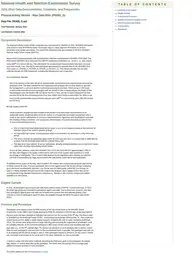
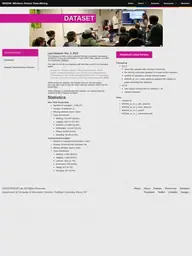
Models
How it works
Cite this paper
Bio-PM: Bio-Inspired Self-Supervised Learning for Wrist-worn Accelerometer Data. (2026). arXiv preprint. https://doi.org/10.48550/arXiv.2603.10961
@misc{biopmmovementseg2026biopm,
  title         = {{Bio-PM: Bio-Inspired Self-Supervised Learning for Wrist-worn Accelerometer Data}},
  year          = {2026},
  howpublished  = {arXiv preprint},
  doi           = {10.48550/arXiv.2603.10961},
  eprint        = {2603.10961},
  archivePrefix = {arXiv}
}Record updated