Cite this dataset
WARM-VR [Data set]. (n.d.). IEEE DataPort. https://doi.org/10.21227/rwrm-n531
@misc{warmvrwarmvr,
  title         = {{WARM-VR}},
  howpublished  = {IEEE DataPort},
  doi           = {10.21227/rwrm-n531}
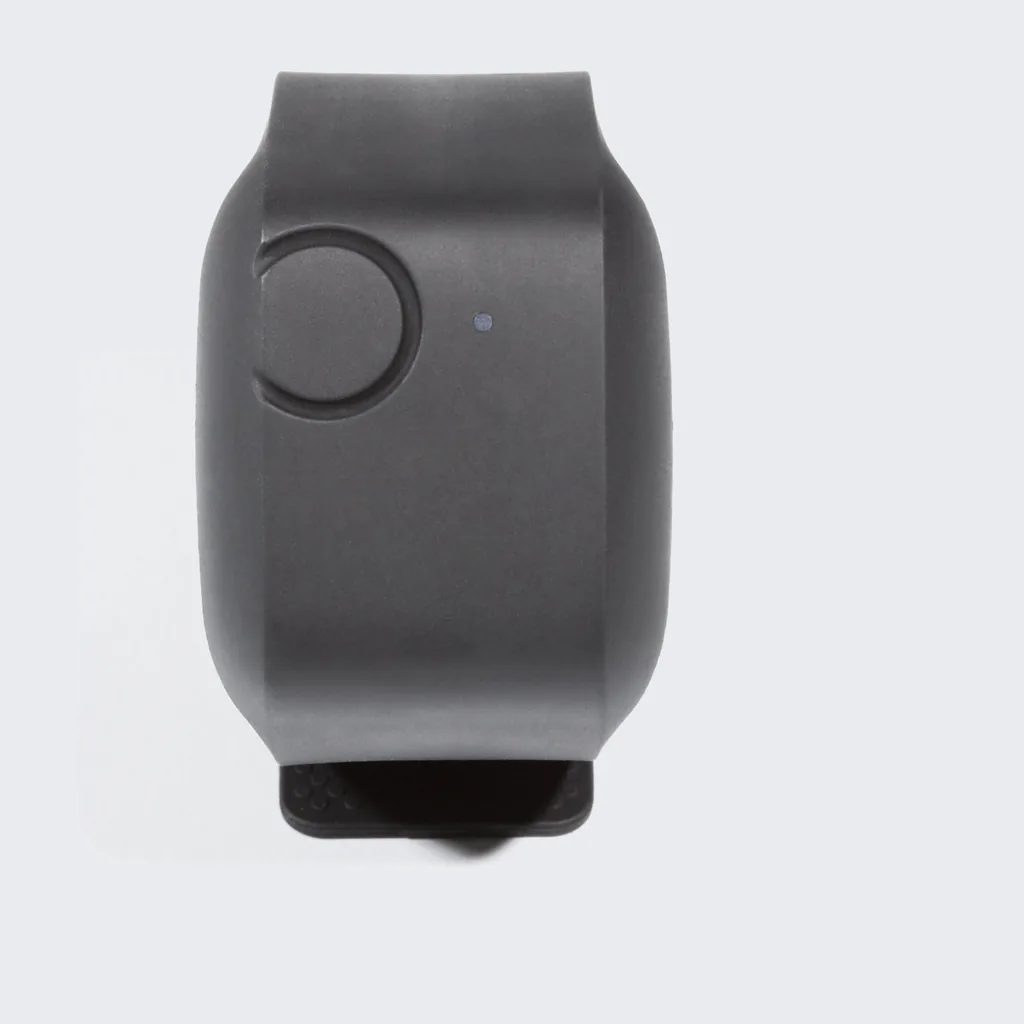
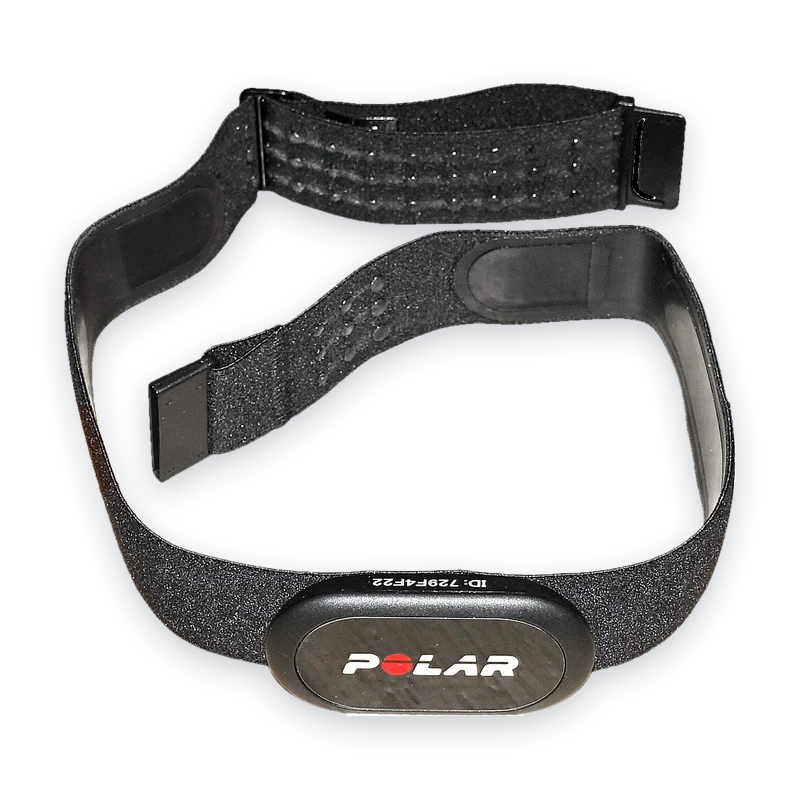
}Empatica E4 BVP/EDA/TEMP/ACC + Polar H10 ECG during VR stress and multisensory relaxation (n=28)
Alghoul, Mohd (Faisal), Laamarti, Al Osman, El Saddik (University of Ottawa). ACM TOMM 2026, DOI 10.1145/3836767; arXiv 2605.00184. Dataset DOI 10.21227/rwrm-n531.
"With the growing integration of human-computer interaction into everyday life, advances in machine learning have enabled systems to better perceive and respond to users2019 emotional states. Affective computing, in particular, has emerged as a key area of research, leveraging continuous physiological signals from wearable sensors to detect and measure human affect. However, most existing affect recognition datasets focus on static environments, limiting their applicability to immersive contexts such as virtual reality (VR). In this paper, we introduce WARM-VR (Wearable Affect Recognition from Multisensory stimuli in Virtual Reality), a novel publicly available dataset designed to support affect recognition in multisensory environments with wearable sensing instrumentation. Data were collected from 31 participants aged 19201337 using wearable sensors: a wristband measuring blood volume pulse (BVP), electrodermal activity (EDA), skin temperature (TEMP), and motion (ACC), and a chest strap recording electrocardiogram (ECG) signals. Participants engaged in VR experiences designed to elicit relaxation through a calming beach environment following stress induction via an arithmetic task. These sessions incorporated synchronized visual, auditory, and olfactory stimuli. Affective states were assessed subjectively through validated self-report questionnaires and objectively through the analysis of physiological measurements. Statistical analysis of the questionnaires confirmed that VR relaxation significantly reduced negative affect, particularly with olfactory enhancement. Furthermore, we established a benchmark on the dataset using widely recognized machine learning algorithms. The best performance for binary classification from BVP data of valence state was achieved using a CNN architecture (F1 score: 0.64, AUC: 0.72). For arousal, a CNN combined with bidirectional LSTM yielded the best results (F1 score: 0.62, AUC: 0.66). Notably, GRU-based models consistently outperformed others in the relaxation classification task."
Verbatim fromDataCite· Licence: https://creativecommons.org/licenses/by/4.0/legalcode
No model in the hub reports results on this dataset yet.
Full photo credits, sources and licences are on each device page.
| Task | Dataset | Metric | Value | Rank |
|---|---|---|---|---|
| Emotion recognition (valence/arousal) | WARM-VR | AUROC ↑ | 0.69 | #null / 1 |
| Emotion recognition (valence/arousal) | WARM-VR | AUROC ↑ | 0.68 | #null / 1 |
| Emotion recognition (valence/arousal) | WARM-VR | Macro-F1 ↑ | 0.63 | #null / 2 |
| Emotion recognition (valence/arousal) | WARM-VR | Macro-F1 ↑ | 0.63 | #null / 2 |
| Emotion recognition (valence/arousal) | WARM-VR | Macro-F1 ↑ | 0.59 | #1 / 2 |
| Emotion recognition (valence/arousal) | WARM-VR | Macro-F1 ↑ | 0.58 | #2 / 2 |
| Emotion recognition (valence/arousal) | WARM-VR | Macro-F1 ↑ | 0.64 | #null / 2 |
| Emotion recognition (valence/arousal) | WARM-VR | Macro-F1 ↑ | 0.64 | #null / 2 |
WARM-VR has data from 28 subjects, as listed in its research record.
WARM-VR includes PPG, EDA, skin temperature, accelerometer and ECG data. Sampling rate as recorded: E4 BVP 64 Hz, EDA 4 Hz, TEMP 4 Hz, ACC 32 Hz; Polar H10 ECG 1000 Hz (R-R). Raw waveforms are included.
Research tasks it supports: mental workload assessment and stress detection. Reference labels: stress, valence, arousal and relaxation.
It is available from https://doi.org/10.21227/rwrm-n531. No licence is recorded for it here, so check the terms on the source page before you use it.
Yes. Its record lists wrist-worn recording.
WARM-VR [Data set]. (n.d.). IEEE DataPort. https://doi.org/10.21227/rwrm-n531
@misc{warmvrwarmvr,
title = {{WARM-VR}},
howpublished = {IEEE DataPort},
doi = {10.21227/rwrm-n531}
}Cite the dated snapshot 2026-10 for a fixed, reproducible version. Please also cite the original publications listed above.
ChatPPG. (2026). WARM-VR: dataset record (Version 2026-10) [Data set]. ChatPPG Research Hub. https://chatppg.com/research/datasets/warm-vr
@misc{chatppg_dataset_warm_vr,
  author       = {{ChatPPG}},
  title        = {{WARM-VR: dataset record}},
  year         = {2026},
  month        = nov,
  version      = {2026-10},
  howpublished = {\url{https://chatppg.com/research/datasets/warm-vr}},
  note         = {ChatPPG Research Hub, Snapshot 2026-10, https://chatppg.com/research/snapshots/2026-10}
}cff-version: 1.2.0 message: "If you use this resource, please cite it as below." type: dataset title: "WARM-VR: dataset record" authors: - name: "ChatPPG" url: "https://chatppg.com/research/datasets/warm-vr" repository-artifact: "https://chatppg.com/research/snapshots/2026-10" version: "2026-10" date-released: "2026-11-13"
Record updated
 Cross-Modal Correlation Fusion for End-to-End ECG–PPG Stress ClassificationSame task: StressFrontiers in Artificial Intelligence and A · 2026
 FIRMED: A Peak-Centered Multimodal Dataset with Fine-Grained Annotation for Emotion Recognition (Tang et al., ACM MM 2026)Same task: StressACM Multimedia 2026 · 2026
 BIOSTRESS (psychologist induction + exam)Same task: Stress20 subjects · PPG · IMU · EDA