
Cite this dataset
PPG-Sport [Data set]. (n.d.). github. https://doi.org/10.1145/3810216
@misc{ppgsportppgsport,
  title         = {{PPG-Sport}},
  howpublished  = {github},
  doi           = {10.1145/3810216}
}PPG-Sport (Hu / Pham / … / Ma), Proc. ACM IMWUT 2026, DOI 10.1145/3810216. First large public wrist-PPG sports set targeting non-periodic, high-intensity, bilaterally asymmetric motion.
Photoplethysmography (PPG) has become a cornerstone of physiological sensing in wearable devices, enabling non-invasive monitoring of heart rate and related biomarkers. However, its reliability deteriorates sharply under dynamic, high-intensity, or non-periodic motions such as those in sports, where existing datasets fail to capture realistic wrist dynamics. To address this gap, we introduce PPG-Sport, the first large-scale dataset designed for heart rate monitoring from wrist-worn PPG under real sports conditions. The PPG-Sport dataset includes synchronized PPG, inertial measurement unit (IMU), and electrocardiography (ECG) recordings from both wrists of 30 participants across six representative activities: stationary, walking, running, badminton, table tennis, and basketball, amounting to 48 hours of multimodal data. PPG-Sport uniquely captures three critical properties absent in prior datasets: (1) non-periodicity, reflecting irregular and broadband motion patterns; (2) high intensity, with frequent, large-magnitude accelerations; and (3) bilateral asymmetry, caused by distinct functional roles of the dominant and non-dominant hands during sports. We further establish a deep-learning-based benchmark that combines both temporal and spectral representations of PPG and IMU signals to evaluate heart rate estimation performance. Experimental results show that models trained only on conventional periodic activities fail drastically in sports scenarios. Although incorporating sports data mitigates the degradation, significant errors remain. These findings highlight PPG-Sport as an essential and challenging benchmark for developing motion-robust physiological sensing algorithms during sports activities. Dataset and benchmark code are available at: https://github.com/LaserHu/PPG-Sport.
Verbatim fromthe publisher's DOI record· Publisher licence: https://creativecommons.org/licenses/by/4.0/legalcode
No model in the hub reports results on this dataset yet.
Full photo credits, sources and licences are on each device page.
PPG-Sport has data from 30 subjects, as listed in its research record.
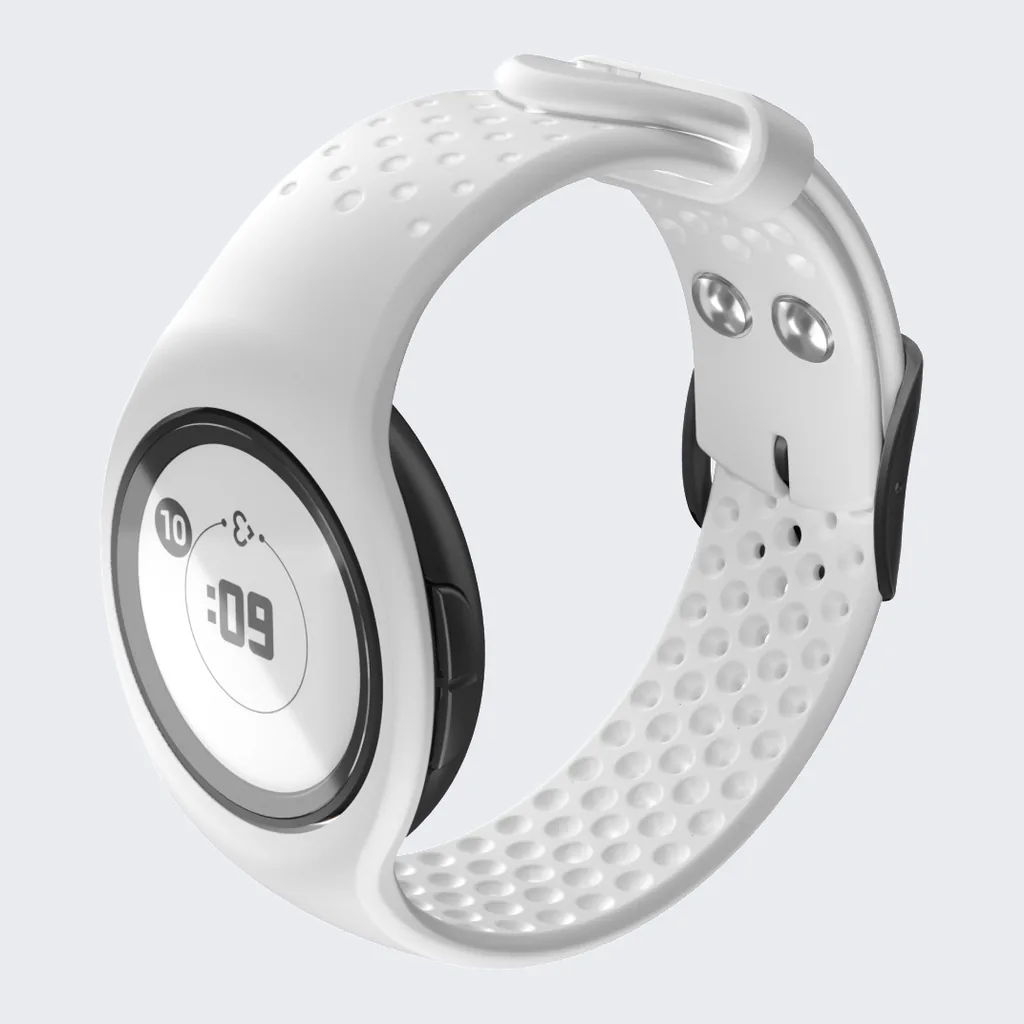
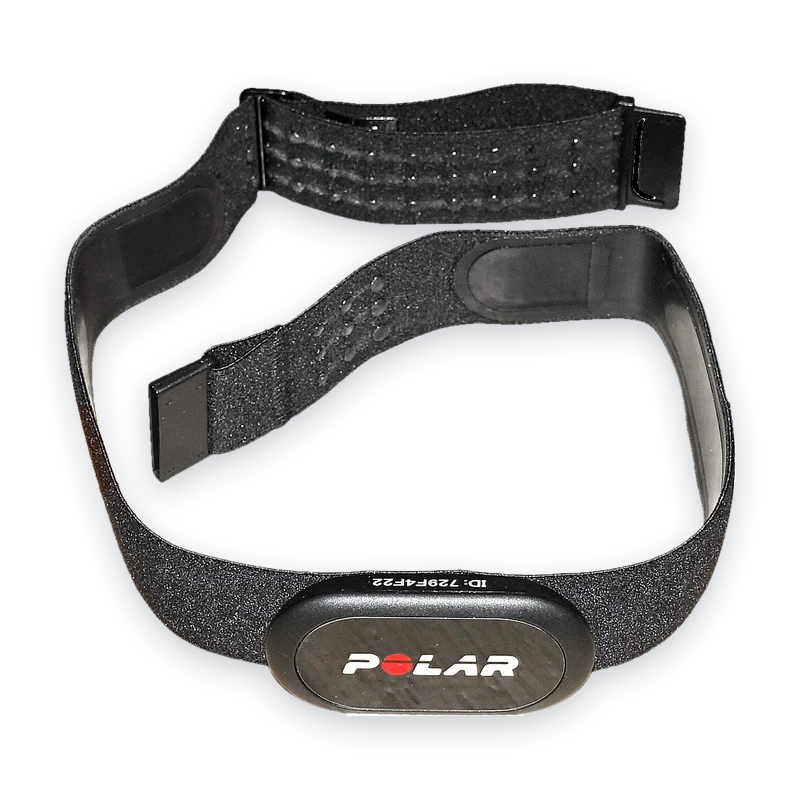
PPG-Sport includes PPG, ECG, accelerometer and gyroscope data. Sampling rate as recorded: EmbracePlus PPG+IMU 64 Hz; Polar H10 ECG 130 Hz (released resampled to 64 Hz). Raw waveforms are included.
Research tasks it supports: motion and signal quality. Reference labels: heart rate, activity and signal quality.
It is hosted on GitHub at https://github.com/LaserHu/PPG-Sport. No licence is recorded for it here, so check the terms on the source page before you use it.
Yes. Its record lists wrist-worn recording.
PPG-Sport [Data set]. (n.d.). github. https://doi.org/10.1145/3810216
@misc{ppgsportppgsport,
title = {{PPG-Sport}},
howpublished = {github},
doi = {10.1145/3810216}
}Cite the dated snapshot 2026-10 for a fixed, reproducible version. Please also cite the original publications listed above.
ChatPPG. (2026). PPG-Sport: dataset record (Version 2026-10) [Data set]. ChatPPG Research Hub. https://chatppg.com/research/datasets/ppg-sport
@misc{chatppg_dataset_ppg_sport,
  author       = {{ChatPPG}},
  title        = {{PPG-Sport: dataset record}},
  year         = {2026},
  month        = nov,
  version      = {2026-10},
  howpublished = {\url{https://chatppg.com/research/datasets/ppg-sport}},
  note         = {ChatPPG Research Hub, Snapshot 2026-10, https://chatppg.com/research/snapshots/2026-10}
}cff-version: 1.2.0 message: "If you use this resource, please cite it as below." type: dataset title: "PPG-Sport: dataset record" authors: - name: "ChatPPG" url: "https://chatppg.com/research/datasets/ppg-sport" repository-artifact: "https://chatppg.com/research/snapshots/2026-10" version: "2026-10" date-released: "2026-11-16"
Record updated
 Adding accelerometry raises task-conditioned recoverability in wearable photoplethysmographySame task: Signal qualityResearch Square preprint · 2026
 MoWaveQFormer: A Motion-Conditioned Quality-Gated Transformer for Smartphone-Based PPG Heart Rate EstimationSame task: Signal qualityarXiv preprint · 2026
 GalaxyPPGSame task: Signal quality24 subjects · PPG · ECG · IMU
 Wrist PPG During Exercise (PhysioNet wrist)Same task: Signal quality8 subjects · PPG · ECG · IMU