Paperdoi:10.1109/JBHI.2026.3740802
TPF-BP: A Three-Stage Physiology-Guided Self-Supervised Transfer Learning Framework for Personalized Blood Pressure Measurement
IEEE Journal of Biomedical and Health Informatics
TL;DR
TPF-BP is a three-stage transfer learning method for personalized cuffless blood pressure from PPG. It pretrains with a physiology-guided masked autoencoder, then does supervised pretraining and personal fine-tuning with a three-branch model. Applied to four base models, it cut systolic and diastolic errors by 7.66% and 5.78% on average in few-shot tests across four datasets.
- Result: Extensive experiments demonstrate that four base models trained with TPF-BP reduce the mean absolute errors of systolic and diastolic BP estimation by an average of 7.66% and 5.78%, respectively, in few-shot transfer scenarios across three public datasets…
Abstract
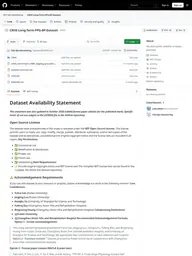
Personalized and continuous cuffless blood pressure (BP) monitoring using photoplethysmography (PPG) is a critical requirement for next-generation wearable healthcare systems. Despite recent progress, existing PPG-based learning models exhibit limited generalization and personalization across individuals, hindering robust real-world deployment. To overcome these limitations, we propose TPF-BP, a novel self-supervised transfer learning framework that integrates physiological priors into representation learning. Specifically, a physiology-guided masked autoencoder is employed for self-supervised pre-training to enhance latent feature extraction from PPG signals and their derivatives, followed by a homologous triple-branch model for sequential supervised pre-training and personalized fine-tuning. Extensive experiments demonstrate that four base models trained with TPF-BP reduce the mean absolute errors of systolic and diastolic BP estimation by an average of 7.66% and 5.78%, respectively, in few-shot transfer scenarios across three public datasets and one self-collected dataset. Additionally, we publicly release CRHE, our self-collected multi-wavelength, dual-24h PPG-BP dataset, along with its benchmark results. The dataset features circadian rhythm annotations and was collected using wearable devices and ambulatory BP monitors. Together, TPF-BP and CRHE provide essential methodological and data resources to advance intelligent physiological modeling and personalized health monitoring. The dataset is publicly available at https://github.com/FDU-Bio-Monitoring/CRHE-Long-Term-PPG-BP-Dataset.
Verbatim from Semantic Scholar (opens in a new tab) · Abstract via Semantic Scholar; © the authors/publisher
Results on ChatPPG leaderboards
All leaderboardsNo results from this paper on ChatPPG leaderboards yet. Browse the leaderboards.
Tasks & signals
Tasks
Signals
Keywords
Datasets used
How it works
Cite this paper
Cen, Y., Chen, R., Zhu, X., Wang, H., & Luo, J. (2026). TPF-BP: A Three-Stage Physiology-Guided Self-Supervised Transfer Learning Framework for Personalized Blood Pressure Measurement. IEEE Journal of Biomedical and Health Informatics. https://doi.org/10.1109/JBHI.2026.3740802
Cen, Yuhui, Renqi Chen, Xing Zhu, Hongbo Wang, and Jingjing Luo. 2026. "TPF-BP: A Three-Stage Physiology-Guided Self-Supervised Transfer Learning Framework for Personalized Blood Pressure Measurement." IEEE Journal of Biomedical and Health Informatics. https://doi.org/10.1109/JBHI.2026.3740802.
Cen, Y., Chen, R., Zhu, X., Wang, H. and Luo, J. (2026) 'TPF-BP: A Three-Stage Physiology-Guided Self-Supervised Transfer Learning Framework for Personalized Blood Pressure Measurement', IEEE Journal of Biomedical and Health Informatics. doi: 10.1109/JBHI.2026.3740802.
Cen, Yuhui, et al. "TPF-BP: A Three-Stage Physiology-Guided Self-Supervised Transfer Learning Framework for Personalized Blood Pressure Measurement." IEEE Journal of Biomedical and Health Informatics, 2026. https://doi.org/10.1109/JBHI.2026.3740802.
Y. Cen, R. Chen, X. Zhu, H. Wang, and J. Luo, "TPF-BP: A Three-Stage Physiology-Guided Self-Supervised Transfer Learning Framework for Personalized Blood Pressure Measurement," IEEE Journal of Biomedical and Health Informatics, 2026, doi: 10.1109/JBHI.2026.3740802.
@article{cen2026tpfbp,
  title         = {{TPF-BP: A Three-Stage Physiology-Guided Self-Supervised Transfer Learning Framework for Personalized Blood Pressure Measurement}},
  author        = {Cen, Yuhui and Chen, Renqi and Zhu, Xing and Wang, Hongbo and Luo, Jingjing},
  year          = {2026},
  journal       = {IEEE Journal of Biomedical and Health Informatics},
  doi           = {10.1109/JBHI.2026.3740802}
}Added to the ChatPPG research hub