Paper
Passive Heart-Rate Monitoring During Smartphone Use in Everyday Life

Nature 2026
TL;DR
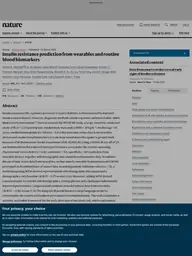
This Nature paper presents passive heart-rate monitoring (PHRM), a deep learning system that measures heart rate from the front camera's face video while people use their smartphones. It was developed on 192,353 videos from 485 participants and validated on 162,546 videos from 211 participants in the lab and in daily life. Against ECG, heart-rate error stayed below 10% (MAPE) for light, medium and dark skin tones, and daily resting heart rate was within 5 bpm of a wearable tracker.
- Development: 192,353 videos, 485 participants
- Validation: 162,546 videos, 211 participants
- Result: HR MAPE <10% across 3 skin-tone groups
- Result: resting HR MAE <5 bpm vs wearable
- Release: annotated video dataset + pretrained HR model
Abstract
Resting heart rate (RHR) is a key biomarker of cardiovascular health and mortality1, 2–3, but passively tracking it longitudinally generally requires a wearable device, limiting its availability. Here we present passive heart-rate monitoring (PHRM), a deep-learning system that uses facial video-based photoplethysmography for passive measurements of heart rate (HR) and RHR during everyday smartphone interactions. Our system was developed using 192,353 videos from 485 participants and validated on 162,546 videos from 211 participants in laboratory and free-living conditions, representing, to our knowledge, the largest validation study of its kind. PHRM outperformed state-of-the-art methods on our benchmarks. Compared with reference electrocardiograms, PHRM achieved a mean absolute percentage error (MAPE) lower than 10% for HR measurements across three skin-tone groups of light, medium and dark pigmentation, meeting industry accuracy standards; MAPE for each skin-tone group was non-inferior versus the others. Daily RHR measured by PHRM had a mean absolute error of less than five beats per minute, compared with a wearable HR tracker, and was associated with known risk factors for cardiovascular disease. These results highlight the potential of smartphones for enabling passive and equitable monitoring of heart health. To facilitate further research, we publicly release a large, annotated smartphone video dataset along with a pre-trained HR model. A machine-learning model that uses smartphone cameras to measure heart rate in the background during normal daily phone use and subsequently estimate resting heart rate could make it easier for people to monitor heart health.
Verbatim from Semantic Scholar (opens in a new tab) · Abstract via Semantic Scholar; © the authors/publisher
Results on ChatPPG leaderboards
All leaderboardsNo results from this paper on ChatPPG leaderboards yet. Browse the leaderboards.
Tasks & signals
Tasks
Signals
Keywords
How it works
Cite this paper
Passive Heart-Rate Monitoring During Smartphone Use in Everyday Life. (2026). Nature 2026. https://www.nature.com/articles/s41586-026-10507-6
@article{passiveheartrate2026passive,
  title         = {{Passive Heart-Rate Monitoring During Smartphone Use in Everyday Life}},
  year          = {2026},
  journal       = {Nature 2026},
  url           = {https://www.nature.com/articles/s41586-026-10507-6}
}Record updated