Cite this dataset
Walker posture E4 [Data set]. (n.d.). zenodo. https://doi.org/10.5281/zenodo.22734705
@misc{walkerposturee4walker,
  title         = {{Walker posture E4}},
  howpublished  = {zenodo},
  doi           = {10.5281/zenodo.22734705}
}“Evaluating the validity of walker sensors for posture monitoring” (Fernández-Carmona / Urdiales / Gómez-de-Gabriel; Universidad de Málaga / TaISLab). ROS2 bags converted to per-trial CSV zips (202404test.zip, 202406test.zip). Code: https://github.com/TaISLab/WalKit.
This dataset allows to study potential correlations between the different sensors, as well as to learn to what extent it is possible to have an estimate of most parameters using just those sensors embedded on a walker.
System architecture System description
The data adquisition system is comprised by three main subsystems:
Walk-it rollator: a low cost smart rollator developed by authors.
MoCap system: a 10 Optitrack Prime x13 camera setup connected to ROS using MOCAP4ROS2 framework and configured to track both the rollator and user using a 13 marker configuration based on COCO18.
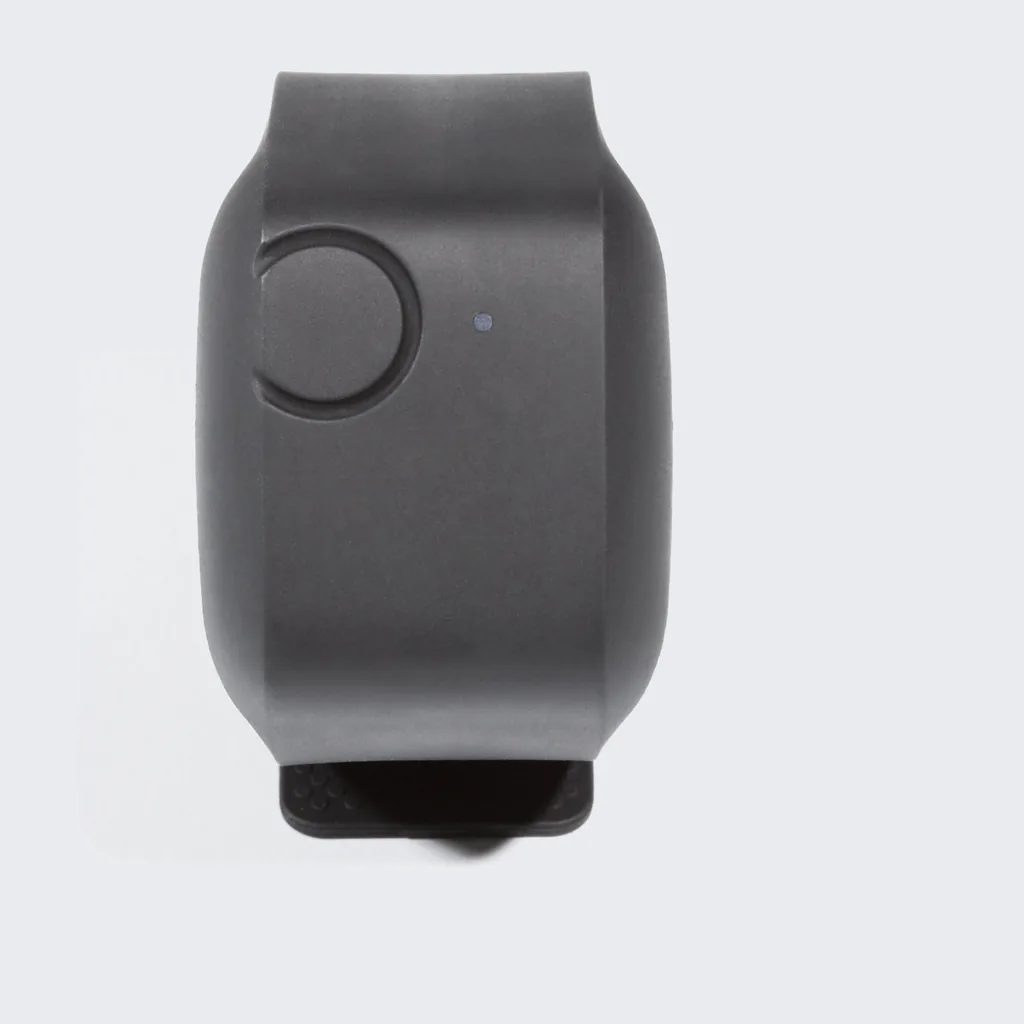
Empatica E4 wristband: a bluetooth-enabled wearable with four sensors: an electrode for Electrodermal activity (EDA), a 3-axis accelerometer, a temperature sensor, and a photoplethysmography (PPG) to measure blood volume pulse (BVP) from which it derives HR and the inter beat interval (IBI).
All four subsystems publish data on real time using ROS2, and rely on its recording capabilities to obtain a sinchronized dataset. ROS2 transport is done using an ethernet network, with a WiFi extender to connect the rollator. Empatica E4 requires the use of an android device as gateway to reach the network, as EmpaLink Software is not available in other platforms.
Sensors layout In order to perform the tests, users have to equip with an E4 wristband and 13 reflective markers for the MoCap system. For the MoCap system, COCOA markers related with head posture have been removed, focusing on those relevant for motion. Fig. 1 depicts a volunteer with all sensors attached.
Experiment description Experiments were performed at IMECH Institute in Málaga. Volunteer was asked to walk using the rollator along different trajectories. These trajectories were also performed both freely and mimmicking some pathological deviations.
Dataset structure Original ROS2 bags have been processed in order to make datasets independant from the robotic framework. Each experiment dataset has been split into 19 comma separated (csv) files and compressed as an independant zip file. These are the filenames inside each zip, related to one specific parameter:
Subsystem Files
e4_accel[NN].csv
Empatica E4 e4_bvp[NN].csv
(4 files) e4_gsr[NN].csv
e4_temp[NN].csv
mocap_data[NN].csv
mocap_time_data[NN].csv
mocap_data_labelled[NN].csv
MoCap cameras mocap_data_angles[NN].csv
(6 files) mocap_walker_pose[NN].csv
mocap_walker_rel_pose[NN].csv
walker_constants[NN].csv
walker_centroid[NN].csv
Walk-it rollator walker_odom[NN].csv
(9 files) walker_[left/right]_handle[NN].csv
walker_[left/right]_loads[NN].csv
walker_[left/right]_step[NN].csv
Future work This comprehensive dataset offers simultaneous information on MoCap data, physiological metrics, gait and support data. It provides a unique opportunity for in-depth analysis of the interactions between physiological responses and gait mechanics from multiple sensors. By integrating these diverse data sources, potential correlations between the different sensors can be explored and analyze to what extent it is possible to have an estimate of most parameters using just those sensors embedded on a walker. Future work will focus on extending this dataset to more users and configurations and leveraging this dataset to validate the use of simplified sensor systems for real-world applications.
Acknowledgements The authors would like to thank to IBIMA and IMECH Institutes for letting us to use their MoCap systems.
Verbatim fromZenodo· Licence: cc-by-4.0
No model in the hub reports results on this dataset yet.
Full photo credits, sources and licences are on each device page.
Walker posture E4 includes PPG, accelerometer, skin temperature and EDA data. Sampling rate as recorded: E4 BVP/ACC/GSR/TEMP per Empatica defaults (rates in per-trial CSVs); MoCap Optitrack; rollator odometry/loads. Raw waveforms are included.
Research tasks it supports: motion and signal quality and human activity recognition. Reference labels: activity and signal quality.
It is hosted on Zenodo at https://zenodo.org/records/22734705. No licence is recorded for it here, so check the terms on the source page before you use it.
Yes. Its record lists wrist-worn recording.
Walker posture E4 [Data set]. (n.d.). zenodo. https://doi.org/10.5281/zenodo.22734705
@misc{walkerposturee4walker,
title = {{Walker posture E4}},
howpublished = {zenodo},
doi = {10.5281/zenodo.22734705}
}Cite the dated snapshot 2026-10 for a fixed, reproducible version. Please also cite the original publications listed above.
ChatPPG. (2026). Walker posture E4: dataset record (Version 2026-10) [Data set]. ChatPPG Research Hub. https://chatppg.com/research/datasets/walker-posture-e4
@misc{chatppg_dataset_walker_posture_e4,
  author       = {{ChatPPG}},
  title        = {{Walker posture E4: dataset record}},
  year         = {2026},
  month        = nov,
  version      = {2026-10},
  howpublished = {\url{https://chatppg.com/research/datasets/walker-posture-e4}},
  note         = {ChatPPG Research Hub, Snapshot 2026-10, https://chatppg.com/research/snapshots/2026-10}
}cff-version: 1.2.0 message: "If you use this resource, please cite it as below." type: dataset title: "Walker posture E4: dataset record" authors: - name: "ChatPPG" url: "https://chatppg.com/research/datasets/walker-posture-e4" repository-artifact: "https://chatppg.com/research/snapshots/2026-10" version: "2026-10" date-released: "2026-11-16"
Record updated
 Joint Attention Mechanism Learning to Facilitate Opto-physiological Monitoring during Physical ActivitySame task: Activity recognitionarXiv preprint · 2025
 GAITEXSame task: Activity recognitionimpaired gait + rehab exercises, 9 Xsens IMUs + Qualisys MoCap (n=19, Sci Data 2025)19 subjects · IMU
 CAPTURE-24Same task: Activity recognition151 subjects · IMU
 IMU50Same task: Signal quality50-subject 5-day ActiGraph Leap wrist PPG+IMU50 subjects · PPG · IMU · Temp