
Cite this dataset
Auricle [Data set]. (n.d.). physionet. https://doi.org/10.13026/swme-vp69
@misc{auricleauricle,
  title         = {{Auricle}},
  howpublished  = {physionet},
  doi           = {10.13026/swme-vp69}
}Benchmark built to compare wearable cardiovascular monitors on one common, high-rate dataset. All sensors run on one BIOPAC MP160 at 10 kHz, then downsampled to 1 kHz. Stressors change hemodynamics: breath-hold ×4, light exercise ×2, cold pressor ×1 (healthy only), Valsalva ×4, in a Latin-square order.
Wearable cardiovascular monitoring aims to transition cardiovascular care from episodic clinical visits to continuous, free-living assessment. Many proposed systems use smartwatches and smart rings to capture varying combinations of photoplethysmography (PPG), electrocardiography (ECG), and seismocardiography (SCG) signals. More recently, earable devices like wireless earbuds have been leveraged for similar sensing applications; beyond being equipped with PPG, they can also detect in-ear cardiac audio using the embedded microphones required for active noise cancellation. Regardless of form factor or signal modality, wearable cardiovascular monitors are typically evaluated on bespoke, narrowly scoped datasets, leaving open questions about their accuracy, generalizability, and trade-offs.
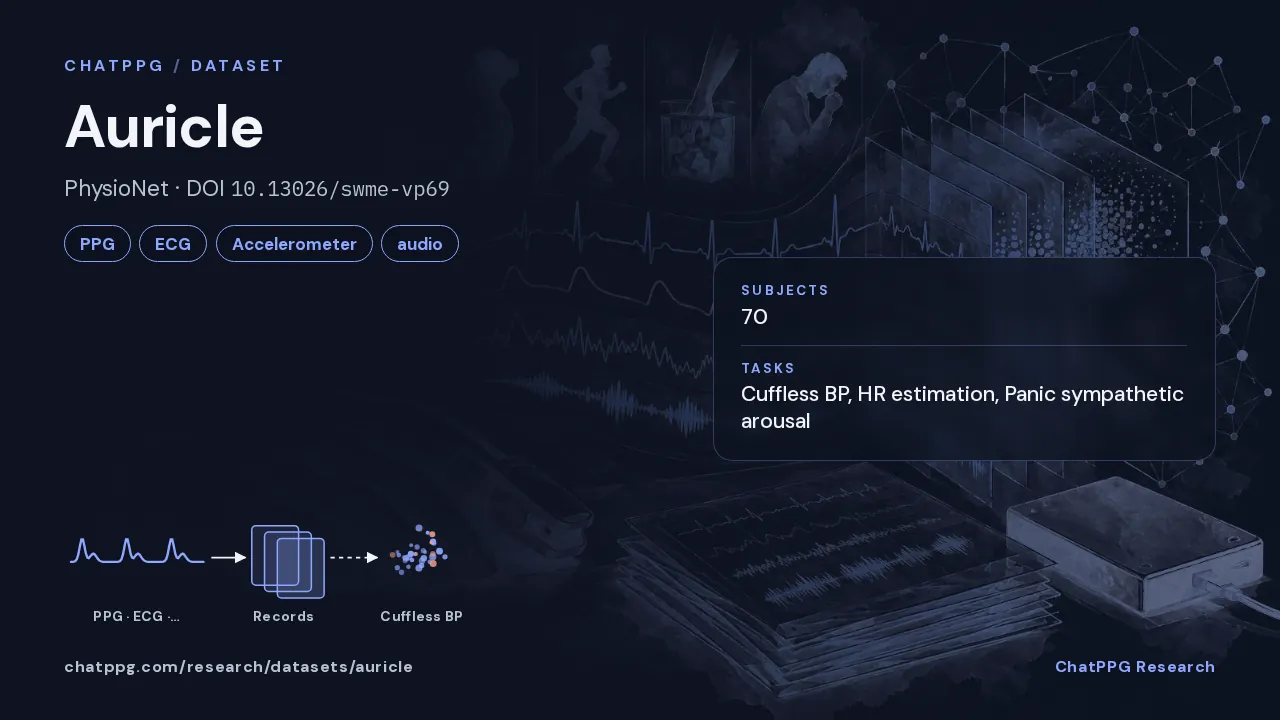
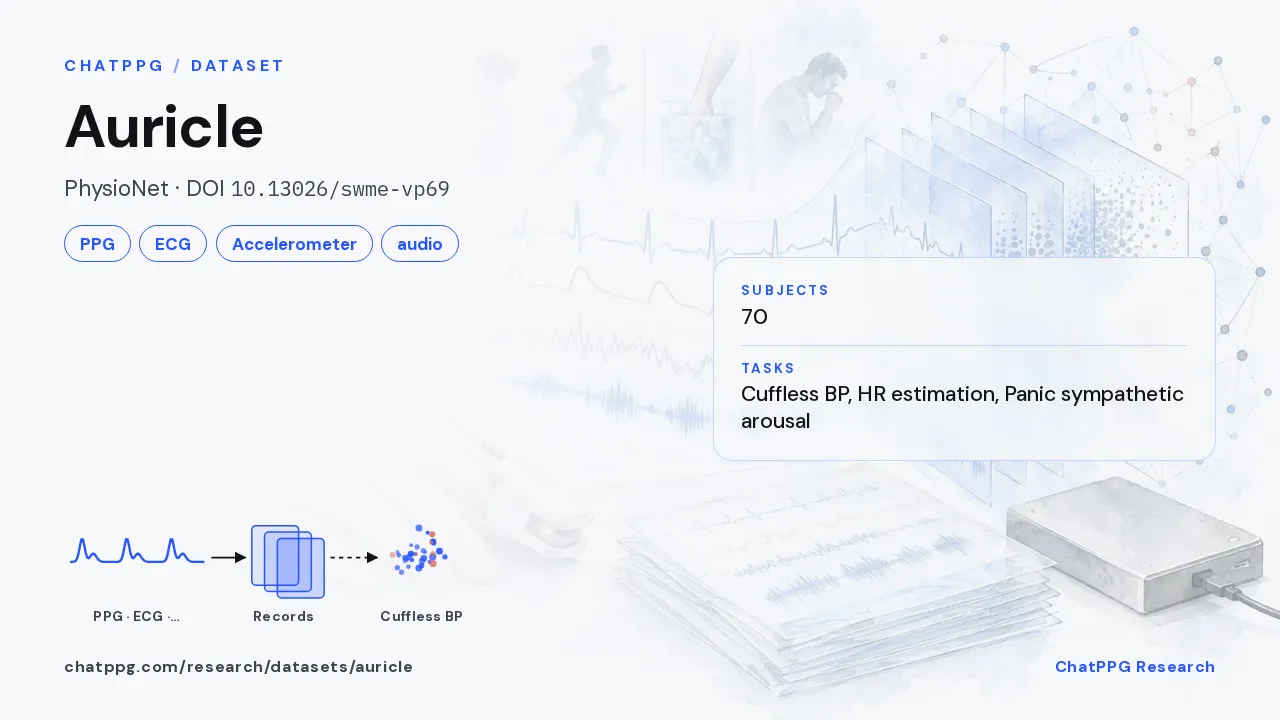
Auricle is a dataset comprising synchronous noninvasive cardiovascular signals collected from 42 healthy subjects and 28 people with lived experience of heart failure. The dataset includes ECG, dual-site PPG, accelerometer-based SCG, digital stethoscope audio, binaural in-ear cardiac audio, continuous blood pressure, and respiratory effort. Most participants in the healthy cohort completed two 30-minute sessions on different days, while heart failure cohort participants completed one session. During each session, participants performed at least three types of activities intended to alter their cardiovascular function. Auricle enables researchers to evaluate new wearable cardiovascular monitoring methods using a standardized benchmark with significant intra- and inter-subject variability. Starter code for exploring and processing this dataset is available on GitHub [26, 27].
Verbatim fromPhysioNet· Licence: Open Data Commons Attribution License v1.0
No model in the hub reports results on this dataset yet.
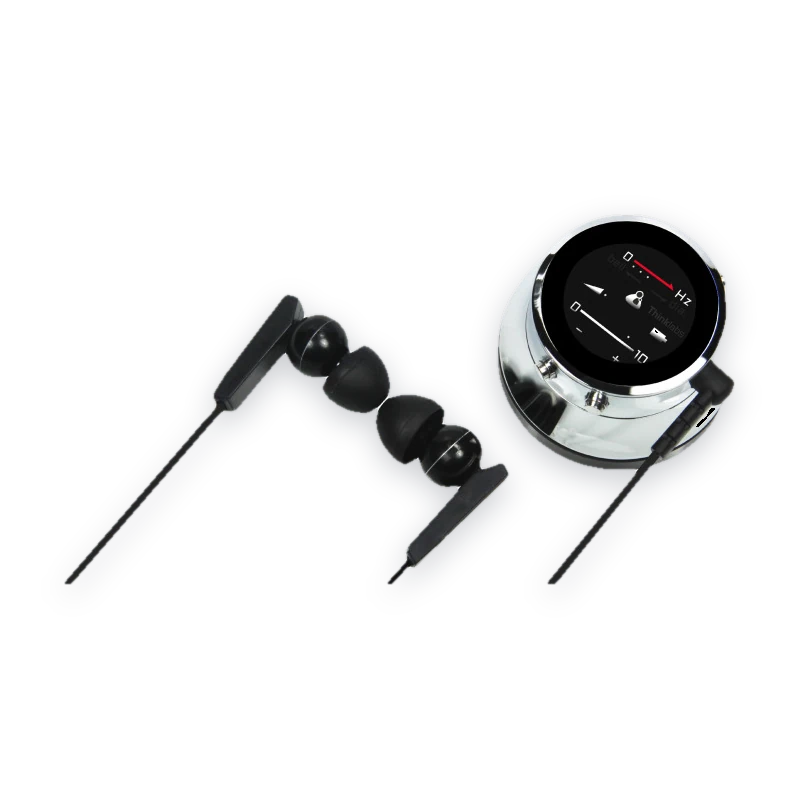
Full photo credits and licences are on each device page. An icon means we have no openly licensed or manufacturer-cleared photo of that exact device yet.
Auricle has data from 70 subjects, as listed in its research record.
Auricle includes PPG, ECG, accelerometer, audio, continuous blood pressure and respiration data. Sampling rate as recorded: acquired at 10 kHz (BIOPAC MP160); all continuous signals released at 1 kHz. Raw waveforms are included.
Research tasks it supports: cuffless blood pressure estimation and heart rate estimation. Reference labels: blood pressure, cuff blood pressure, cardiac output, stroke volume, svr, lvef and nyha class.
It is hosted on PhysioNet at https://physionet.org/content/auricle/1.0.0/. No licence is recorded for it here, so check the terms on the source page before you use it.
Auricle [Data set]. (n.d.). physionet. https://doi.org/10.13026/swme-vp69
@misc{auricleauricle,
title = {{Auricle}},
howpublished = {physionet},
doi = {10.13026/swme-vp69}
}Cite the dated snapshot 2026-10 for a fixed, reproducible version. Please also cite the original publications listed above.
ChatPPG. (2026). Auricle: dataset record (Version 2026-10) [Data set]. ChatPPG Research Hub. https://chatppg.com/research/datasets/auricle
@misc{chatppg_dataset_auricle,
  author       = {{ChatPPG}},
  title        = {{Auricle: dataset record}},
  year         = {2026},
  month        = nov,
  version      = {2026-10},
  howpublished = {\url{https://chatppg.com/research/datasets/auricle}},
  note         = {ChatPPG Research Hub, Snapshot 2026-10, https://chatppg.com/research/snapshots/2026-10}
}cff-version: 1.2.0 message: "If you use this resource, please cite it as below." type: dataset title: "Auricle: dataset record" authors: - name: "ChatPPG" url: "https://chatppg.com/research/datasets/auricle" repository-artifact: "https://chatppg.com/research/snapshots/2026-10" version: "2026-10" date-released: "2026-11-26"
Record updated
 HEART-WatchSame task: Blood pressurePixel Watch wrist ECG+PPG+accel, chest-ECG reference, intermittent cuff BP (n=40)40 subjects · PPG · ECG · IMU
 Simultaneous physiological measurements with five devices at different cognitive and physical loadsSame task: Blood pressurePPG · ECG · IMU