
Cite this dataset
AAUWSS [Data set]. (n.d.). zenodo. https://doi.org/10.5281/zenodo.16919071
@misc{aauwssaauwss,
  title         = {{AAUWSS}},
  howpublished  = {zenodo},
  doi           = {10.5281/zenodo.16919071}
}AAUWSS (Djanian / Nielsen / Nielsen / Bruun, Aalborg University + Aarhus University Hospital Respiration Center West). Collected Mar 24–Apr 4 2023. Release includes raw Empatica CSVs, PSG EDFs, AASM annotations, and alignedsleepdataset pickles (30 s epochs: ECG 30×200 Hz, PPG 30×64 Hz + labels).
This repository contains the Aalborg University Wearable Sleep Study (AAUWSS) dataset. This reprises of an overnight stay of 13 subjects wearing PSG and the wearable Empatica E4. The subject's sleep was scored by a manual rater according to the AASM guidelines. This repository accompanies the publication Djanian S, Nielsen TD, Nielsen SH, Bruun A. Towards real-time sleep stage classification: A deep learning approach leveraging PPG and ECG. Physiol Meas. Published online March 18, 2026. doi:10.1088/1361-6579/ae5458. Both should be cited if used. Code to process these files is available on the accompanying GitHub for the publication.
Background There is a lack of consumer sleep technology datasets that are gathered alongside a PSG and sleep-staged according to the AASM guidelines. The focus of this dataset was to use ECG and PPG data, but for completeness’s sake, the rest of the data gathered is also added, as the other sensors might aid further research into sleep stage classification. The data in this study were used to classify sleep using deep learning.
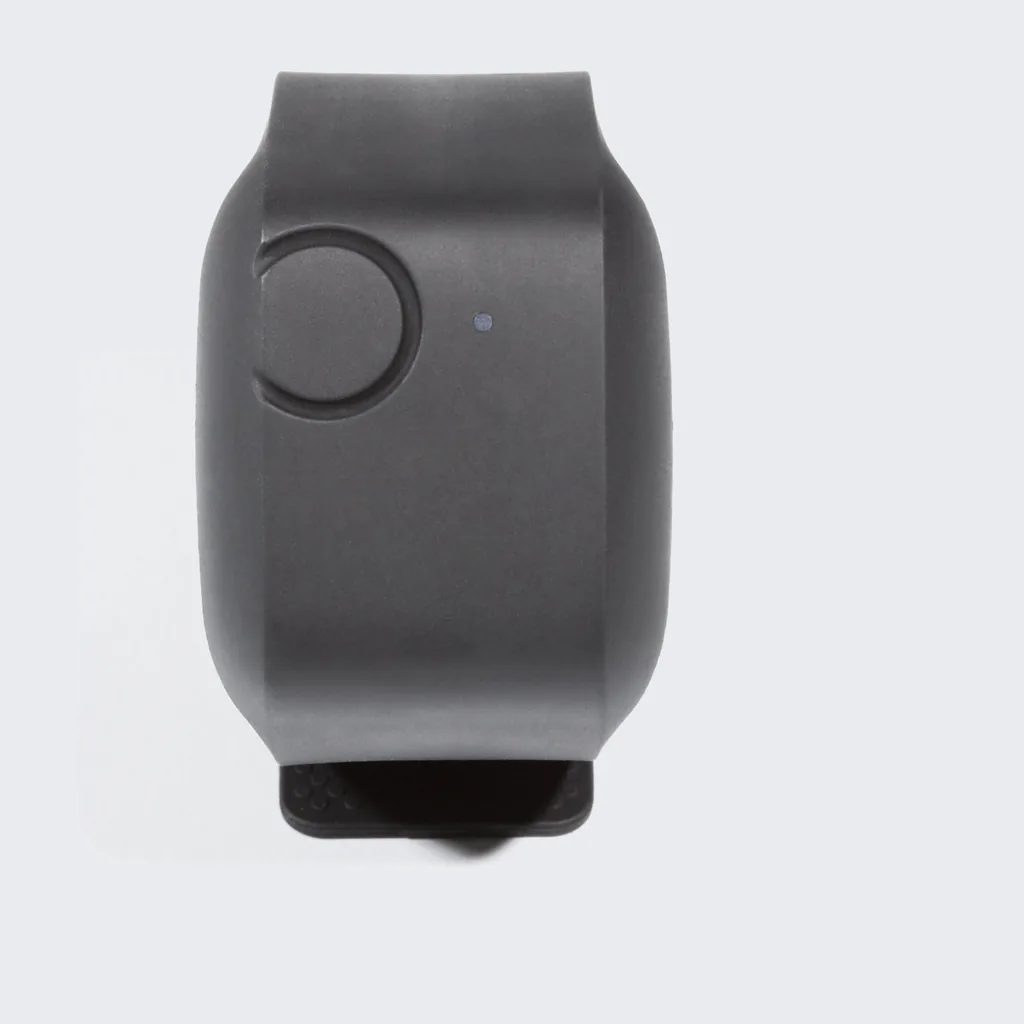
Methods We gathered 13 subjects with no prior diagnosed sleep issues and had them stay overnight sleeping with a PSG, which included EEG, ECG, EMG, and EOG. They simultaneously wore the Empatica E4 wearable sensor which includes a PPG, accelerometer, EDA, and temperature sensors. The PSG recordings were sleep staged according to the AASM guidelines by a single rater. A more detailed description of the subjects can be found in Djanian S, Nielsen TD, Nielsen SH, Bruun A. Towards real-time sleep stage classification: A deep learning approach leveraging PPG and ECG. Physiol Meas. Published online March 18, 2026. doi:10.1088/1361-6579/ae5458. Subject 12 and 13 had their PSG reboot during their overnight stay, so part of their data is missing, which is why they have multiple PSG recordings. The files used to train and test the sleep stage classification model can be found in the “aligned_sleep_data_set”. The data was gathered at Respiration Center West at Aarhus University Hospital between the 24th of March and the 4th of April 2023.
Data Description The data is structured in the following way:
Sleep_Study_Participant_info.csv contains anonymized data of the subjects which, includes age, gender, Epworth Sleepiness Scale, date of participation, and subject ID.
Annotations: Contains the sleep stage annotation for each sleep epoch. The data is stored in an .xslx file where each row is a sleep epoch. It contains the columns [Event Start Time, Sleep Stage, Epoch Number, Subject]. Sleep is classified as Wake, N1, N2, N3, REM and Missing for when sleep staging was not possible.
Empatica: TEMP.csv
Data from temperature sensor expressed degrees on the Celsius (°C) scale.
EDA.csv
Data from the electrodermal activity sensor expressed as microsiemens (μS).
BVP.csv
Data from photoplethysmograph.
ACC.csv
Data from 3-axis accelerometer sensor. The accelerometer is configured to measure acceleration in the range [-2g, 2g]. Therefore the unit in this file is 1/64g.
Data from x, y, and z axis are respectively in first, second, and third column.
IBI.csv
Time between individuals heart beats extracted from the BVP signal.
No sample rate is needed for this file.
The first column is the time (respect to the initial time) of the detected inter-beat interval expressed in seconds (s).
The second column is the duration in seconds (s) of the detected inter-beat interval (i.e., the distance in seconds from the previous beat).
HR.csv
Average heart rate extracted from the BVP signal.The first row is the initial time of the session expressed as unix timestamp in UTC.
The second row is the sample rate expressed in Hz.
tags.csv
Event mark times.
Each row corresponds to a physical button press on the device; the same time as the status LED is first illuminated.
The time is expressed as a unix timestamp in UTC and it is synchronized with initial time of the session indicated in the related data files from the corresponding session.
Edfs: Contains the PSG recordings stored in the .edf format. These contains EEG, EOG, ECG, and EMG recorded at 200 Hz. An accompanying file “edf_channel_types.json” specify which channels correspond to which sensor.
aligned_sleep_data_set Contains the ECG and PPG recordings synchronized and aligned with their respective sleep stage labels. Subject 12 and 13 had their PSGs reboots during their overnight stay, which is why they have multiple .edf files. In the aligned dataset these have been stitched together into one continuous file denoting the missing segments. The files are stored as a pickle file where each row is a 30 second sleep epoch. The columns correspond to the samples, so for the ECG files there are 30*200Hz (6000) columns and for the PPG there are 30*64 Hz (1920) columns. Further there are three additional columns appended for the labels, epoch number and the actual time stamps for each sample for ease of reconstructing the signals. The folder “alignment_figures” contains figures showing how long each recording is and at what point they were aligned.
Usage The software used to process the AAUWSS dataset can be found at the accompanying GitHub for the paper github.com/sdjanian/sf_sleep . Specifically the file “aauwss_sleep_dataset_alignment.py” was used to process and align the ECG and PPG recordings.
Acknowledgements This study was funded by SoundFocus ApS and Innovation Fund Denmark under grant number 1044-00079B. The sleep study was conducted in collaboration with Dr. Pia Dreyer, Aarhus University, and Respiration Center West at Aarhus University Hospital.
Verbatim fromZenodo· Licence: cc-by-4.0
No model in the hub reports results on this dataset yet.
Full photo credits, sources and licences are on each device page.
AAUWSS has data from 13 subjects, as listed in its research record.
AAUWSS includes PPG, ECG, accelerometer, skin temperature, EDA, EEG, EOG and polysomnography (PSG) data. Sampling rate as recorded: E4 BVP 64 Hz (aligned pickle); PSG ECG/EEG/EOG/EMG 200 Hz; E4 ACC/EDA/TEMP at Empatica native rates (ACC/EDA/TEMP files present). Raw waveforms are included.
Research tasks it supports: sleep staging. Reference labels: sleep staging.
It is hosted on Zenodo at https://zenodo.org/records/16919071. No licence is recorded for it here, so check the terms on the source page before you use it.
Yes. Its record lists wrist-worn recording.
AAUWSS [Data set]. (n.d.). zenodo. https://doi.org/10.5281/zenodo.16919071
@misc{aauwssaauwss,
title = {{AAUWSS}},
howpublished = {zenodo},
doi = {10.5281/zenodo.16919071}
}Cite the dated snapshot 2026-10 for a fixed, reproducible version. Please also cite the original publications listed above.
ChatPPG. (2026). AAUWSS: dataset record (Version 2026-10) [Data set]. ChatPPG Research Hub. https://chatppg.com/research/datasets/aauwss
@misc{chatppg_dataset_aauwss,
  author       = {{ChatPPG}},
  title        = {{AAUWSS: dataset record}},
  year         = {2026},
  month        = nov,
  version      = {2026-10},
  howpublished = {\url{https://chatppg.com/research/datasets/aauwss}},
  note         = {ChatPPG Research Hub, Snapshot 2026-10, https://chatppg.com/research/snapshots/2026-10}
}cff-version: 1.2.0 message: "If you use this resource, please cite it as below." type: dataset title: "AAUWSS: dataset record" authors: - name: "ChatPPG" url: "https://chatppg.com/research/datasets/aauwss" repository-artifact: "https://chatppg.com/research/snapshots/2026-10" version: "2026-10" date-released: "2026-11-13"
Record updated
 From real to synthetic: PSG-GAN learns sleep apnea signal dynamics for AI trainingSame task: Sleep stagingarXiv:2611.24436 · 2026
 DREAMTSame task: Sleep stagingDataset for Real-time sleep stage EstimAtion using Multisensor wearable Technology100 subjects · PPG · IMU · EDA