Paperdoi:10.20944/preprints202611.1348.v1
Wear-Time Detection for Lower-Back Wearable Devices: A Validation Study from Signal Processing to Foundation Models
Preprints.org (posted 2026-11-13), not peer reviewed
TL;DR
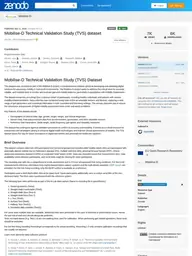
Megaritis, Del Din et al. benchmarked 28 lower-back wear-time methods on three datasets: labelled wear/non-wear in 14 younger adults, 12 non-wear recordings with artificial movement, and Mobilise-D TVS (n=101, 100% wear). The best existing algorithm scored 0.866, a new gyroscope method 0.889, and ML, deep learning and foundation models (including SIGMA and ATLAS) 0.871–0.961, cutting daily wear-time error to as little as 4–5 minutes. Implementations are in the Mobilise-D Mobgap pipeline.
Abstract
Cross-country sentiment analysis faces three fundamental challenges: language-specific biases distort comparisons, compositional data constraints invalidate standard statistics and temporal dynamics lack rigorous testing frameworks. We introduce sentiment sensing, a framework that addresses these gaps through integrated statistical methods. By combining compositional data analysis, functional data methods, and non-parametric inference, sentiment sensing enables valid multilingual comparisons and statistically defensible detection of sentiment shifts. Our framework has been tested in two case studies, analyzing news articles from the 27 countries of the European Union on the topics of energy and artificial intelligence. Sentiment sensing focuses on multilingual sentiment analysis enabling rigorous comparative science.
Verbatim from arXiv (opens in a new tab) · arXiv metadata (abstracts are released under CC0)
Results on ChatPPG leaderboards
All leaderboardsNo results from this paper on ChatPPG leaderboards yet. Browse the leaderboards.
Tasks & signals
Signals
Keywords
Datasets used
How it works
Cite this paper
Megaritis, D., Tasca, P., Kirk, C., Bicer, M., Caulfield, B., Rooks, D., Cereatti, A., Vogiatzis, I., & Del Din, S. (2026). Wear-Time Detection for Lower-Back Wearable Devices: A Validation Study from Signal Processing to Foundation Models. Preprints.org , not peer reviewed. https://doi.org/10.20944/preprints202611.1348.v1
Megaritis, Dimitrios, Paolo Tasca, Cameron Kirk, Metin Bicer, Brian Caulfield, Daniel Rooks, Andrea Cereatti, Ioannis Vogiatzis, and Silvia Del Din. 2026. "Wear-Time Detection for Lower-Back Wearable Devices: A Validation Study from Signal Processing to Foundation Models." Preprints.org , not peer reviewed. https://doi.org/10.20944/preprints202611.1348.v1.
Megaritis, D., Tasca, P., Kirk, C., Bicer, M., Caulfield, B., Rooks, D., Cereatti, A., Vogiatzis, I. and Del Din, S. (2026) 'Wear-Time Detection for Lower-Back Wearable Devices: A Validation Study from Signal Processing to Foundation Models', Preprints.org , not peer reviewed. doi: 10.20944/preprints202611.1348.v1.
Megaritis, Dimitrios, et al. "Wear-Time Detection for Lower-Back Wearable Devices: A Validation Study from Signal Processing to Foundation Models." Preprints.org , not peer reviewed, 2026. https://doi.org/10.20944/preprints202611.1348.v1.
D. Megaritis et al., "Wear-Time Detection for Lower-Back Wearable Devices: A Validation Study from Signal Processing to Foundation Models," Preprints.org , not peer reviewed, 2026, doi: 10.20944/preprints202611.1348.v1.
@article{megaritis2026weartime,
  title         = {{Wear-Time Detection for Lower-Back Wearable Devices: A Validation Study from Signal Processing to Foundation Models}},
  author        = {Megaritis, Dimitrios and Tasca, Paolo and Kirk, Cameron and Bicer, Metin and Caulfield, Brian and Rooks, Daniel and Cereatti, Andrea and Vogiatzis, Ioannis and Del Din, Silvia},
  year          = {2026},
  journal       = {Preprints.org , not peer reviewed},
  doi           = {10.20944/preprints202611.1348.v1}
}Added to the ChatPPG research hub