Wearable Signal Tools · Data access & tools
Data Access & Tools: Getting Raw Data Out of Wearables
43 verified ways to get data out of consumer and research wearables: 17 device data extractors and SDKs, 9 unified health-data APIs, 5 research collection platforms and 12 analysis toolkits. Filter by type, devices supported, open source, signal, language, licence and maintenance.


Four kinds of data access tools
- Device data extractor / SDK 17
- Libraries, SDKs and apps that pull data from one brand's device, app or cloud account, or read the files a device writes. For example: actipy, empatica-e4-local, fitdecode, Gadgetbridge.
- Unified health-data API 9
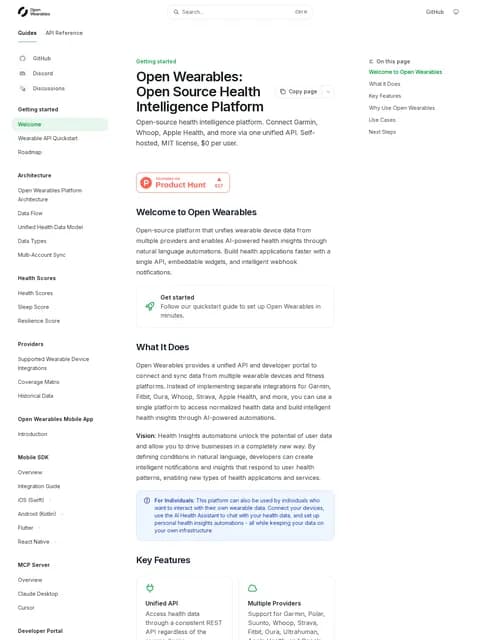
- One API or schema that normalises data from many wearable brands, so an app integrates once instead of once per vendor. For example: Junction (formerly Vital), Open mHealth schemas, Open Wearables, ROOK.
- Research collection platform 5
- Study platforms that enrol participants, collect wearable and phone data, track adherence and export it for analysis. For example: AWARE Framework (Android client), Beiwe, Fitabase, Labfront.
- Analysis toolkit 12
- Open-source packages that turn exported wearable signals into features, sleep, activity or HRV results. For example: FLIRT, GGIR, HeartPy, impSQI.
Which tool gets data off my device?
Pick your device under “Devices supported”, then check the type: an extractor or SDK for one brand, a unified API for many, a study platform for research cohorts, or an analysis toolkit once you have the data.
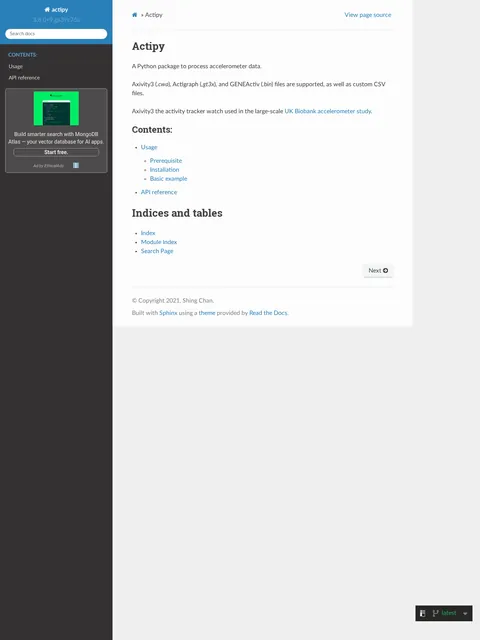
- actipyPython preprocessing library for accelerometer/IMU signalsIMUDevice data extractor / SDKSource availableDevices: ActiGraph, Axivity, GENEActivPythonLicence: Not statedCommercial use: noLast commit Oct 6, 2026
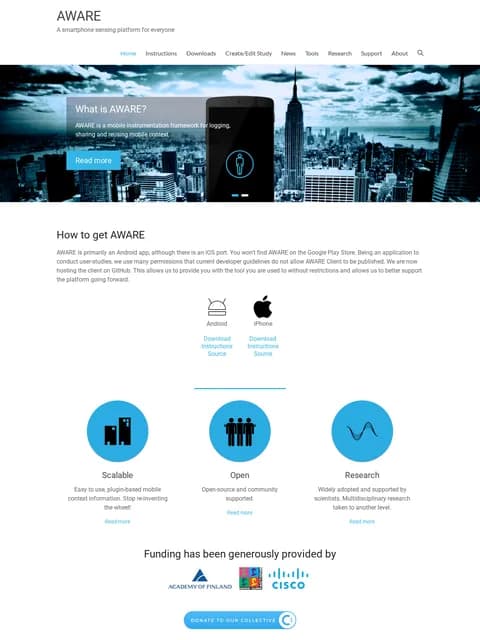
- AWARE Framework (Android client) Archived upstreamJava data collection platform for accelerometer/IMU signalsIMUResearch collection platformOpen sourceJavaLicence: Not statedCommercial use: Not statedLast commit Jun 18, 2023
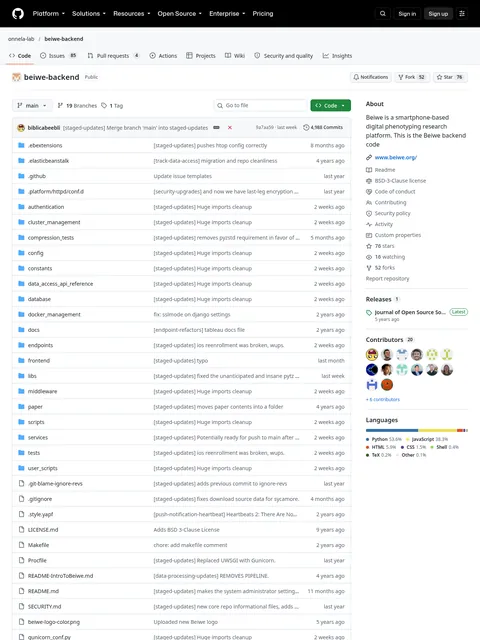
- BeiwePython data collection platform for accelerometer/IMU signalsIMUResearch collection platformOpen sourcePythonLicence: BSD-3-ClauseCommercial use: yesLast commit Nov 6, 2026
- empatica-e4-localPython data collection platform for PPG, EDA, accelerometer/IMU and skin temperature signalsPPGEDAIMUTemperatureDevice data extractor / SDKOpen sourceDevices: EmpaticaPythonLicence: MITCommercial use: yesLast commit May 17, 2026
- Fitabaseresearch data collection platform for wearablesMulti-signalResearch collection platformClosed / commercialDevices: Fitbit, GarminLanguage not statedLicence: Proprietary (commercial service)Commercial use: yesLast commit Not stated
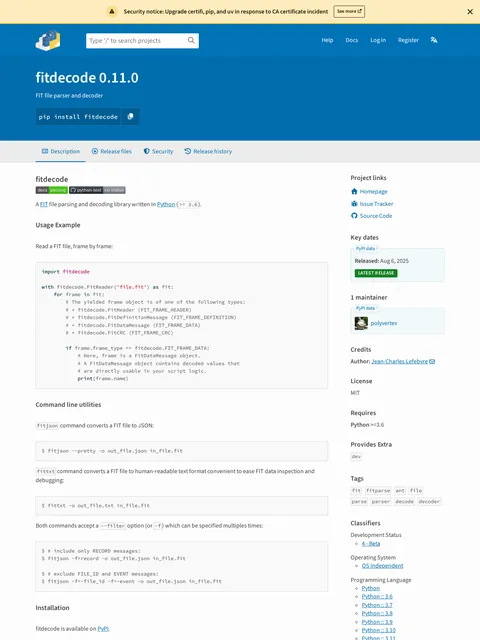
- fitdecodePython data reader and loader for physiological and wearable dataMulti-signalDevice data extractor / SDKOpen sourceDevices: GarminPythonLicence: MITCommercial use: yesLast commit Aug 6, 2025
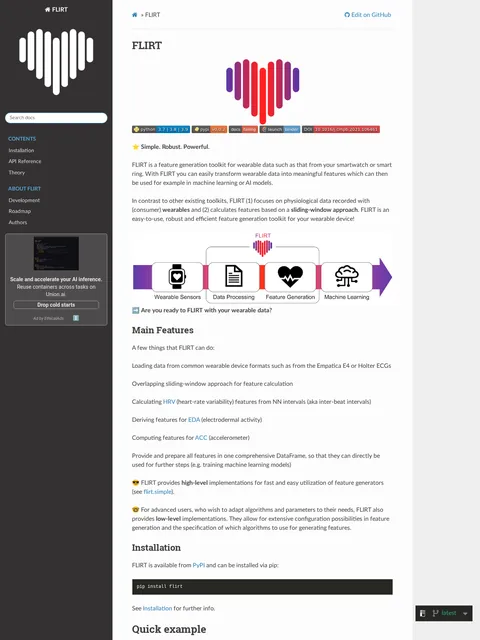
- FLIRTPython signal processing toolbox for EDA signalsEDAAnalysis toolkitOpen sourceDevices: EmpaticaPythonLicence: MITCommercial use: yesLast commit Nov 6, 2023
- GadgetbridgeJava wearable data extractorMulti-signalDevice data extractor / SDKOpen sourceDevices: Amazfit, Garmin, Huawei, XiaomiJavaLicence: AGPL-3.0Commercial use: Not statedLast commit Nov 8, 2026
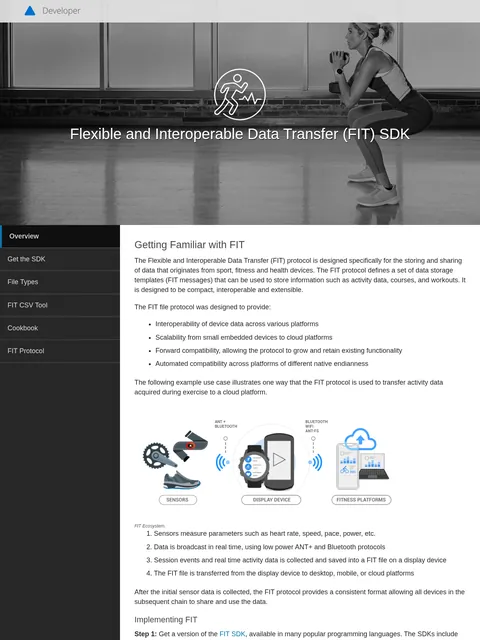
- Garmin FIT Python SDKPython data reader and loader for physiological and wearable dataMulti-signalDevice data extractor / SDKOpen sourceDevices: GarminPythonLicence: Not statedCommercial use: Not statedLast commit Nov 3, 2026
- GGIRR signal processing toolbox for accelerometer/IMU signalsIMUAnalysis toolkitOpen sourceDevices: ActiGraph, Axivity, GENEActivRLicence: Apache-2.0Commercial use: yesLast commit Nov 8, 2026
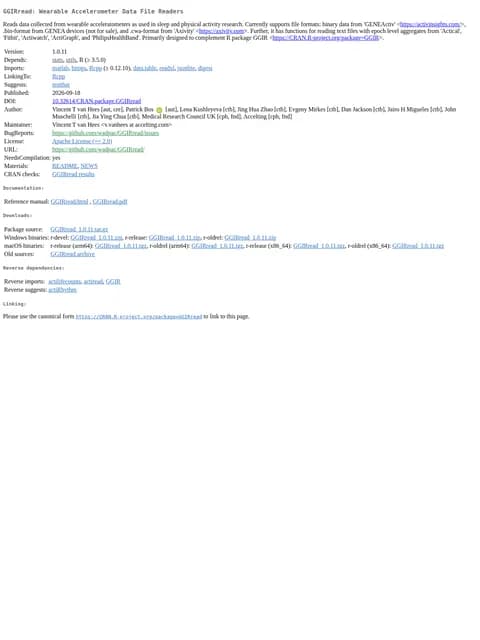
- GGIRreadR data reader and loader for accelerometer/IMU signalsIMUDevice data extractor / SDKOpen sourceDevices: ActiGraph, Axivity, Fitbit, GENEActivRLicence: Apache-2.0Commercial use: yesLast commit Oct 28, 2026
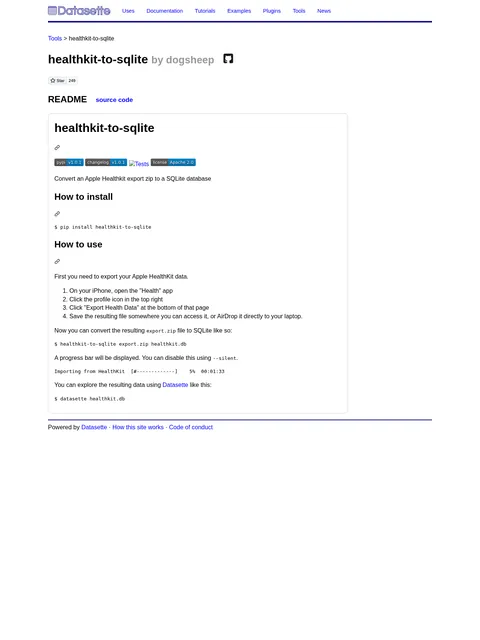
- healthkit-to-sqlitePython data reader and loader for physiological and wearable dataMulti-signalDevice data extractor / SDKOpen sourceDevices: Apple Watch / Apple HealthPythonLicence: Apache-2.0Commercial use: yesLast commit Aug 20, 2021
- HeartPyPython signal processing toolbox for PPG and ECG signalsPPGECGAnalysis toolkitOpen sourcePythonLicence: MITCommercial use: yesLast commit Dec 30, 2025
- impSQIMATLAB wearable data analysis toolkitRespirationAnalysis toolkitOpen sourceMATLABLicence: GPL-3.0Commercial use: yesLast commit Oct 24, 2024
- Junction (formerly Vital)unified health-data API for wearablesMulti-signalUnified health-data APIClosed / commercialDevices: Apple Watch / Apple Health, Oura, Fitbit, Garmin +2Language not statedLicence: Proprietary (commercial service)Commercial use: yesLast commit Not stated
- Labfrontresearch data collection platform for wearablesPPGECGIMUResearch collection platformClosed / commercialDevices: GarminLanguage not statedLicence: Proprietary (commercial service)Commercial use: yesLast commit Not stated
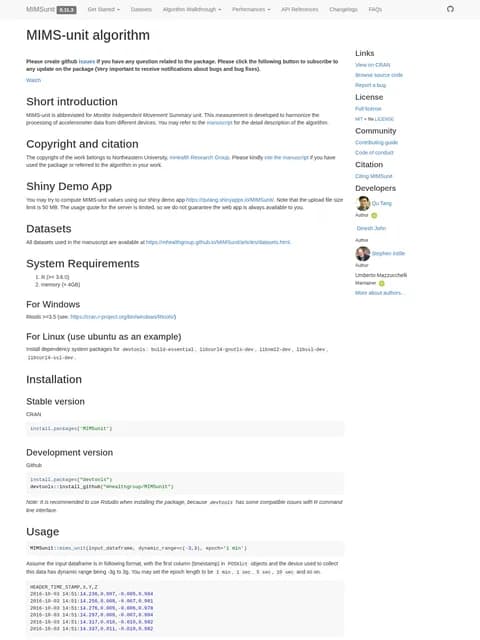
- MIMS-unitR signal processing toolbox for accelerometer/IMU signalsIMUAnalysis toolkitOpen sourceRLicence: MITCommercial use: yesLast commit May 13, 2026
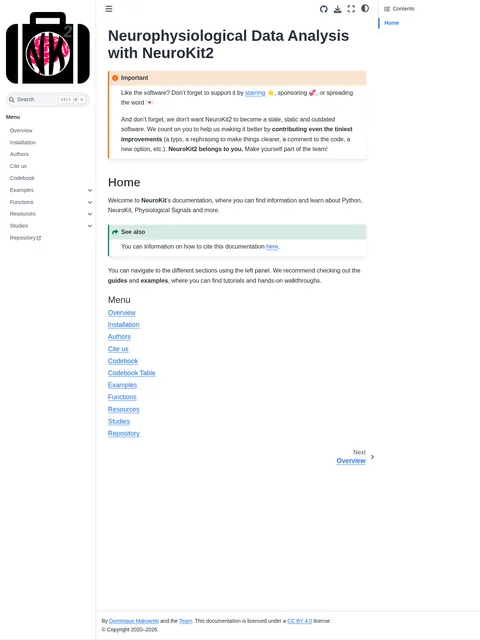
- NeuroKit2Python signal processing toolbox for PPG, ECG, EDA, EEG and respiration signalsPPGECGEDAEEGRespirationAnalysis toolkitOpen sourcePythonLicence: MITCommercial use: yesLast commit Nov 1, 2026
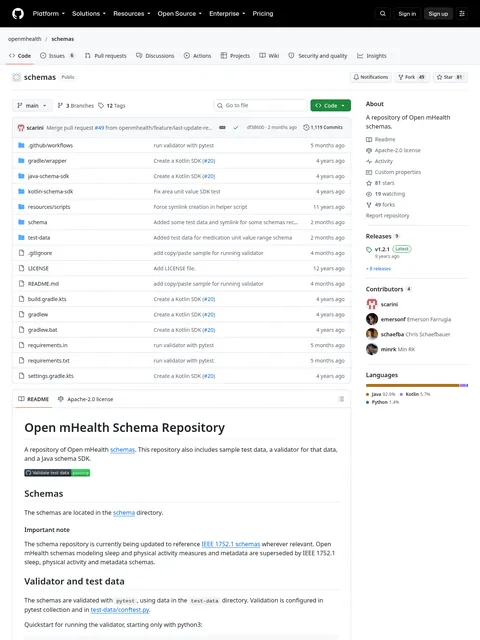
- Open mHealth schemasJava resource for physiological and wearable dataMulti-signalUnified health-data APIOpen sourceJavaLicence: Apache-2.0Commercial use: yesLast commit Aug 26, 2026
- Open WearablesPython data collection platform for physiological and wearable dataMulti-signalUnified health-data APIOpen sourceDevices: Apple Watch / Apple Health, Fitbit, Garmin, Oura +6PythonLicence: MITCommercial use: yesLast commit Nov 6, 2026
- OpenHRVPython data collection platform for ECG signalsECGDevice data extractor / SDKOpen sourceDevices: PolarPythonLicence: LGPL-2.1Commercial use: yesLast commit Jun 27, 2026
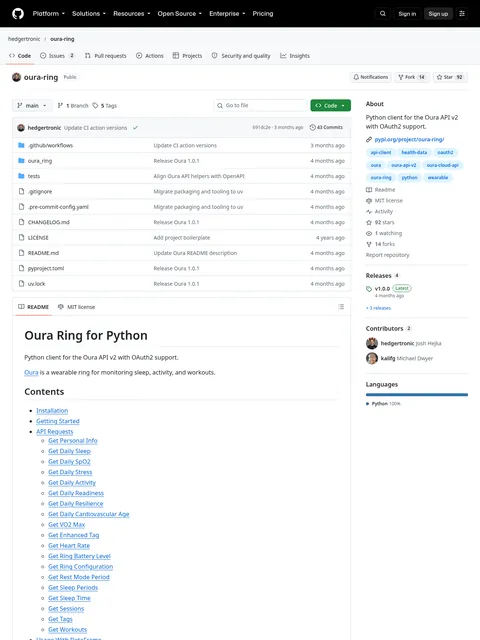
- oura-ring (Python client)Python data collection platform for physiological and wearable dataMulti-signalDevice data extractor / SDKOpen sourceDevices: OuraPythonLicence: MITCommercial use: yesLast commit Nov 9, 2026
- Polar BLE SDKSwift device and mobile SDK for ECG, PPG and accelerometer/IMU signalsECGPPGIMUDevice data extractor / SDKOpen sourceDevices: PolarSwiftLicence: Not statedCommercial use: Not statedLast commit Oct 28, 2026
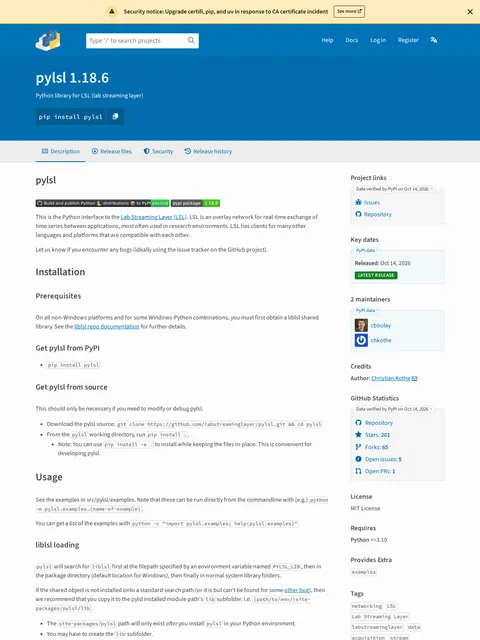
- PolarBand2lslPython data collection platform for ECG signalsECGDevice data extractor / SDKOpen sourceDevices: PolarPythonLicence: GPL-3.0Commercial use: yesLast commit Nov 7, 2023
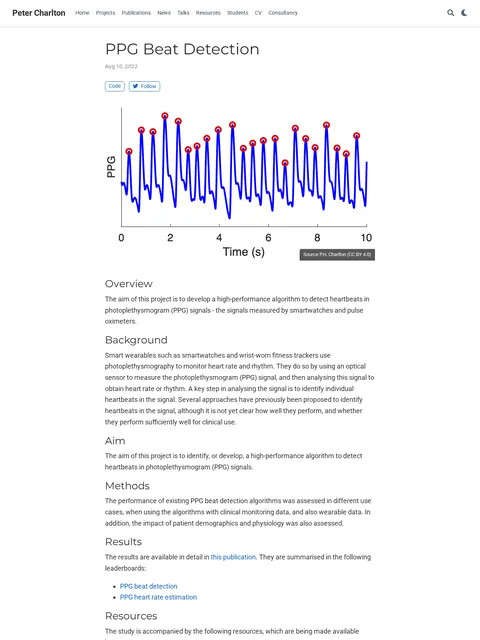
- PPG-beatsMATLAB signal processing toolbox for PPG signalsPPGAnalysis toolkitOpen sourceMATLABLicence: Not statedCommercial use: yesLast commit Apr 14, 2025
- ppg-sqiMATLAB wearable data analysis toolkitPPGAnalysis toolkitOpen sourceMATLABLicence: GPL-3.0Commercial use: yesLast commit Jun 9, 2025
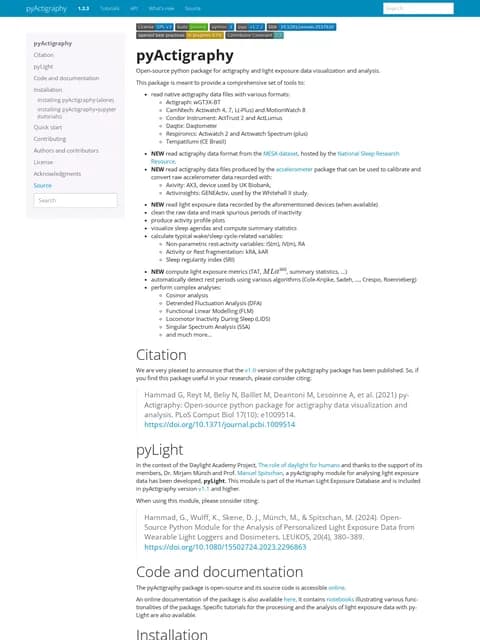
- pyActigraphyPython signal processing toolbox for accelerometer/IMU signalsIMUAnalysis toolkitOpen sourceDevices: ActiGraphPythonLicence: GPL-3.0Commercial use: yesLast commit Oct 27, 2026
- python-fitbitPython wearable data extractorMulti-signalDevice data extractor / SDKOpen sourceDevices: FitbitPythonLicence: Apache-2.0Commercial use: yesLast commit Aug 12, 2019
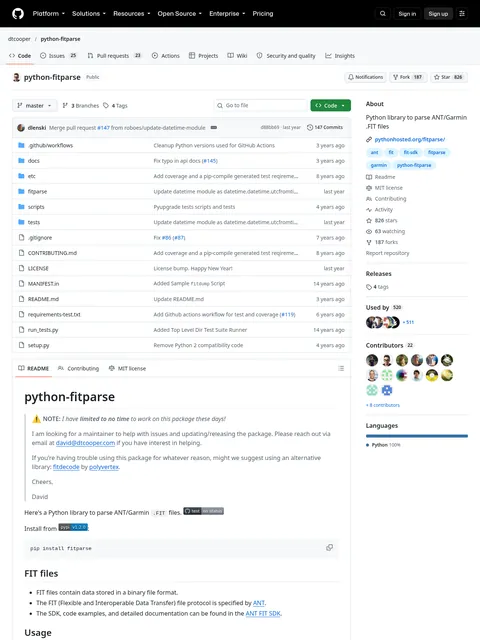
- python-fitparsePython data reader and loader for physiological and wearable dataMulti-signalDevice data extractor / SDKOpen sourceDevices: GarminPythonLicence: MITCommercial use: yesLast commit Jan 28, 2025
- python-garminconnectPython wearable data extractorMulti-signalDevice data extractor / SDKOpen sourceDevices: GarminPythonLicence: MITCommercial use: yesLast commit Oct 31, 2026
- RADAR pRMT (Android)Kotlin data collection platform for physiological and wearable dataMulti-signalResearch collection platformOpen sourceDevices: Empatica, Garmin, PolarKotlinLicence: Apache-2.0Commercial use: yesLast commit Jun 19, 2026
- RapidHRVPython wearable data analysis toolkitPPGECGAnalysis toolkitOpen sourcePythonLicence: MITCommercial use: yesLast commit Sep 4, 2025
- ROOKunified health-data API for wearablesMulti-signalUnified health-data APIClosed / commercialDevices: Garmin, WithingsLanguage not statedLicence: Proprietary (commercial service)Commercial use: yesLast commit Not stated
- RRestMATLAB signal processing toolbox for PPG and ECG signalsPPGECGAnalysis toolkitOpen sourceMATLABLicence: GPL-3.0Commercial use: yesLast commit Mar 29, 2022
- Sahhaunified health-data API for wearablesMulti-signalUnified health-data APIClosed / commercialDevices: Apple Watch / Apple Health, Fitbit, Garmin, Oura +2Language not statedLicence: Proprietary (commercial service)Commercial use: yesLast commit Not stated
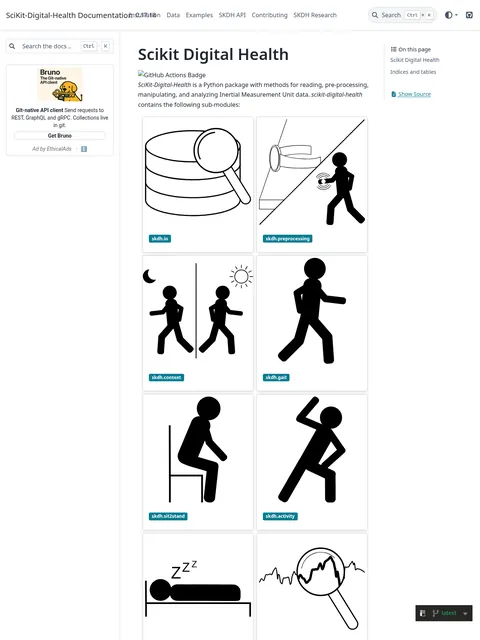
- Scikit Digital Health (SKDH)Python signal processing toolbox for accelerometer/IMU signalsIMUAnalysis toolkitOpen sourcePythonLicence: MITCommercial use: yesLast commit Sep 3, 2026
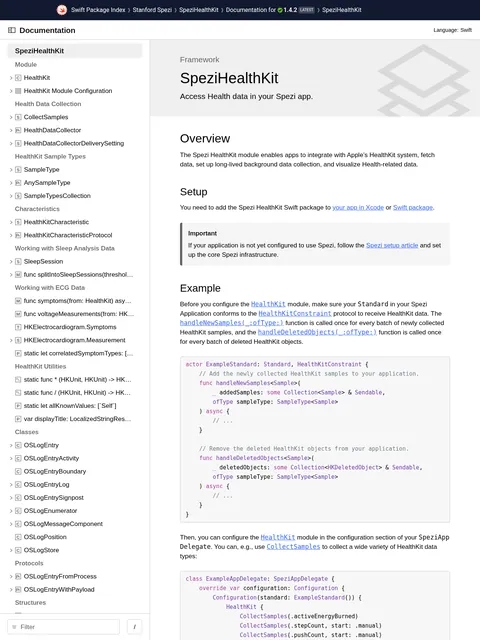
- SpeziHealthKitSwift device and mobile SDK for physiological and wearable dataMulti-signalDevice data extractor / SDKOpen sourceDevices: Apple Watch / Apple HealthSwiftLicence: MITCommercial use: yesLast commit Apr 9, 2026
- Spike APIunified health-data API for wearablesMulti-signalUnified health-data APIClosed / commercialLanguage not statedLicence: Proprietary (commercial service)Commercial use: yesLast commit Not stated
- Terra APIunified health-data API for wearablesMulti-signalUnified health-data APIClosed / commercialDevices: Apple Watch / Apple Health, Fitbit, Garmin, Oura +1Language not statedLicence: Proprietary (commercial service)Commercial use: yesLast commit Not stated
- Thryveunified health-data API for wearablesMulti-signalUnified health-data APIClosed / commercialLanguage not statedLicence: Proprietary (commercial service)Commercial use: yesLast commit Not stated
- Validicunified health-data API for wearablesMulti-signalUnified health-data APIClosed / commercialLanguage not statedLicence: Proprietary (commercial service)Commercial use: yesLast commit Not stated
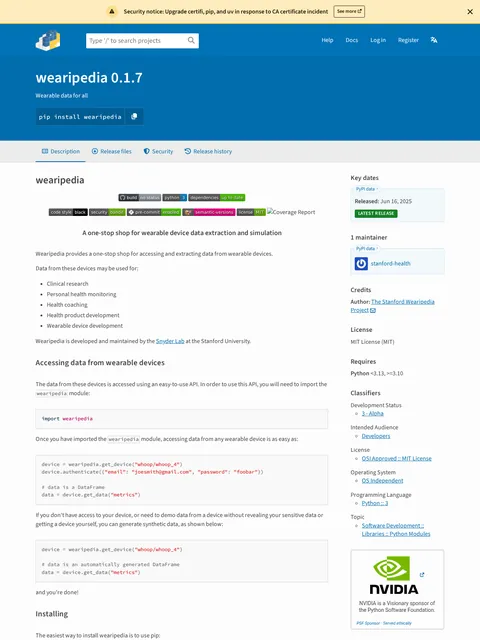
- WearipediaPython data reader and loader for physiological and wearable dataMulti-signalDevice data extractor / SDKOpen sourceDevices: Apple Watch / Apple Health, Biostrap, COROS, Dexcom +8PythonLicence: MITCommercial use: yesLast commit Jul 22, 2025
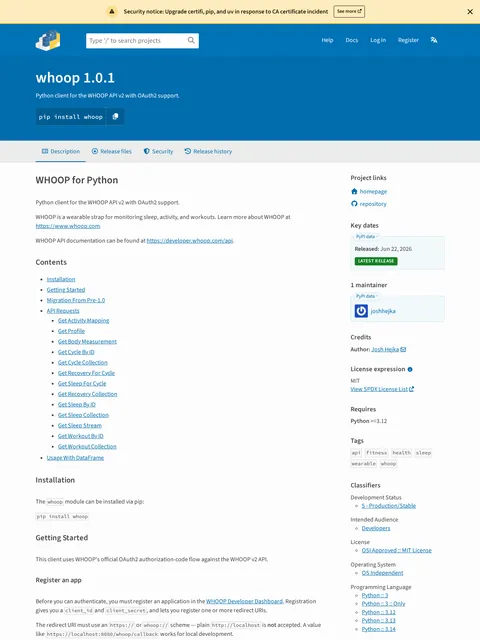
- whoop (Python client)Python data collection platform for physiological and wearable dataMulti-signalDevice data extractor / SDKOpen sourceDevices: WHOOPPythonLicence: MITCommercial use: yesLast commit Nov 9, 2026
Questions about Data access & tools
How do I get raw data off my wearable?
There are three routes. Some devices write files you can copy or export (Garmin FIT files, the Apple Health export.zip, ActiGraph or Axivity files). Most consumer brands offer a cloud API you reach with OAuth, through an official SDK or a community wrapper. Research devices and study platforms export CSV or raw sensor files. Consumer cloud APIs usually return summaries such as daily heart rate or sleep stages rather than the raw PPG waveform; raw waveforms generally need a device SDK that streams them, such as the Polar BLE SDK, or a research device.
What is the difference between a device SDK and a unified health-data API?
A device SDK or extractor talks to one brand. A unified API such as Open Wearables or Terra connects many brands and returns one schema, so you integrate once. Data access & tools lists 17 device extractors and SDKs and 9 unified APIs or schemas.
Which devices have the most tools?
Counting tools that name a brand: Garmin (14), Fitbit (8), Apple Watch / Apple Health (7), Oura (6) and Polar (6). Tools that work on exported signals without naming a device, such as NeuroKit2 or HeartPy, are not counted here.
Are these tools open source?
33 tools of 43 are open source. The rest are commercial services or source-available under an academic licence; each listing shows its licence as stated by the project.
How is this list kept up to date?
Every entry was checked against the tool's own repository, package page or website. Last-commit dates and archived status are refreshed weekly from each repository (last refresh 2026-11-09).
Listings, summaries, licences and commercial-use fields are shown as recorded for each project and checked against each tool’s own site or repository, as of Oct 21, 2026. Maintenance is computed from the date of the last commit; “Archived upstream” means the project’s repository is marked archived. Check the licence in each project’s repository before you use it.