Paperdoi:10.1038/s41746-026-02620-7
Wearable ECG and PPG for anxiety detection: a translational digital medicine perspective (Elgendi … Ward; npj Digit Med 2026)
npj Digital Medicine 9 (2026)
 (opens in a new tab)
Mohamed Elgendi et al., "Wearable ECG and PPG for anxiety detection: a translational digital medicine perspective", doi:10.1038/s41746-026-02620-7, CC BY-NC-ND 4.0
TL;DR
PRISMA review of 38 studies (2015-2025) on wearable ECG- and PPG-based anxiety detection. Autonomic markers track anxiety consistently, but study design is heterogeneous, populations narrow and validation laboratory-centric; most studies lack real-world evaluation or clinical-utility evidence. Proposes a translational roadmap.
- Form factor: review
Abstract
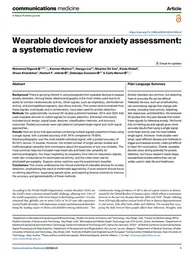
Anxiety disorders affect hundreds of millions of people worldwide, yet objective and continuous assessment remains limited in clinical practice. To our knowledge, this is the first modality-specific, translational synthesis focusing on wearable ECG and PPG for anxiety detection. Wearable electrocardiography (ECG) and photoplethysmography (PPG), combined with data-driven analytics, have emerged as promising tools for anxiety monitoring, but translation into routine care has been slow. Here, we present a PRISMA-guided systematic review of 38 studies (2015-2025) investigating wearable ECG- and PPG-based anxiety detection. We analyze anxiety induction paradigms, sensor configurations, signal acquisition strategies, and analytical approaches, including statistical, machine learning, and hybrid methods. While autonomic markers derived from ECG and PPG consistently reflect anxiety-related physiological changes, substantial heterogeneity in study design, limited population diversity, and laboratory-centric validation constrain clinical generalizability. Critically, most studies lack evaluation in real-world settings and do not demonstrate clinical utility or impact on patient outcomes. We identify key translational barriers and propose a digital medicine roadmap emphasizing standardized protocols, robust validation across diverse populations, workflow integration, and outcome-driven evaluation to enable clinically actionable, real-world anxiety monitoring.
Verbatim from Europe PMC (opens in a new tab) · Licence: cc by-nc-nd
Results on ChatPPG leaderboards
All leaderboardsNo results from this paper on ChatPPG leaderboards yet. Browse the leaderboards.
Tasks & signals
Signals
Keywords
How it works
Cite this paper
Wearable ECG and PPG for anxiety detection: a translational digital medicine perspective (Elgendi … Ward; npj Digit Med 2026). (2026). npj Digital Medicine 9. https://doi.org/10.1038/s41746-026-02620-7
@article{elgendiwearablee2026wearable,
  title         = {{Wearable ECG and PPG for anxiety detection: a translational digital medicine perspective (Elgendi … Ward; npj Digit Med 2026)}},
  year          = {2026},
  journal       = {npj Digital Medicine 9},
  doi           = {10.1038/s41746-026-02620-7}
}Added to the ChatPPG research hub