Pant et al., IEEE Access 2023 (10.1109/ACCESS.2023.3320053). 23 stimulus videos; self-annotation tool. Also used in KERC2021 challenge.
- Type
- Dataset
- Licence
- Not reported
- Access
- Not reported
- Subjects
- 30
- Devices
- PPG sites
- Wrist
- Setting
- Not reported
- Wrist
- Yes
- Raw waveforms
- Yes
- Tasks
- Emotion
- Updated
- Oct 27, 2026
Original description
Physiological signals are widely used in the recognition of affective status. Recording of such physiological signals involves elicitation of emotions through different stimuli including video-based stimulus. Considering that the same stimulus videos often induce different emotions in different individuals, emotion recognition in such a scenario requires consideration of the individual differences in the consumption of the stimulus content. With this as our goal, we present a Physiological dataset for Multimodal Emotion Recognition (PhyMER) for studying emotion through physiological response with personality as a context. The PhyMER dataset consists of electroencephalogram (EEG), electrodermal activity (EDA), blood volume pulse (BVP), and skin temperature along with the personality traits of 30 participants. We collected the video-based stimulus dataset for emotion elicitation and developed a web-based annotation tool for labeling felt emotions. We compared the stimulus labels and the self-annotation of felt emotions labeled during physiological data recording. Correlation among personalities was analyzed to study the impact of personality on the intensity of emotions in arousal and valence dimensions. Finally, we proposed a baseline model for the classification of emotions using physiological signals. The dataset is publicly available to the academic community for analysis of affective states and the development of emotion recognition models.
Verbatim fromSemantic Scholar· Abstract via Semantic Scholar; © the authors/publisher
Key numbers
How it works
No model in the hub reports results on this dataset yet.
- Sampling
- E4 BVP/EDA/TEMP (standard rates); Emotiv Epoc X EEG
- Reference labels
- emotion
Devices· 1
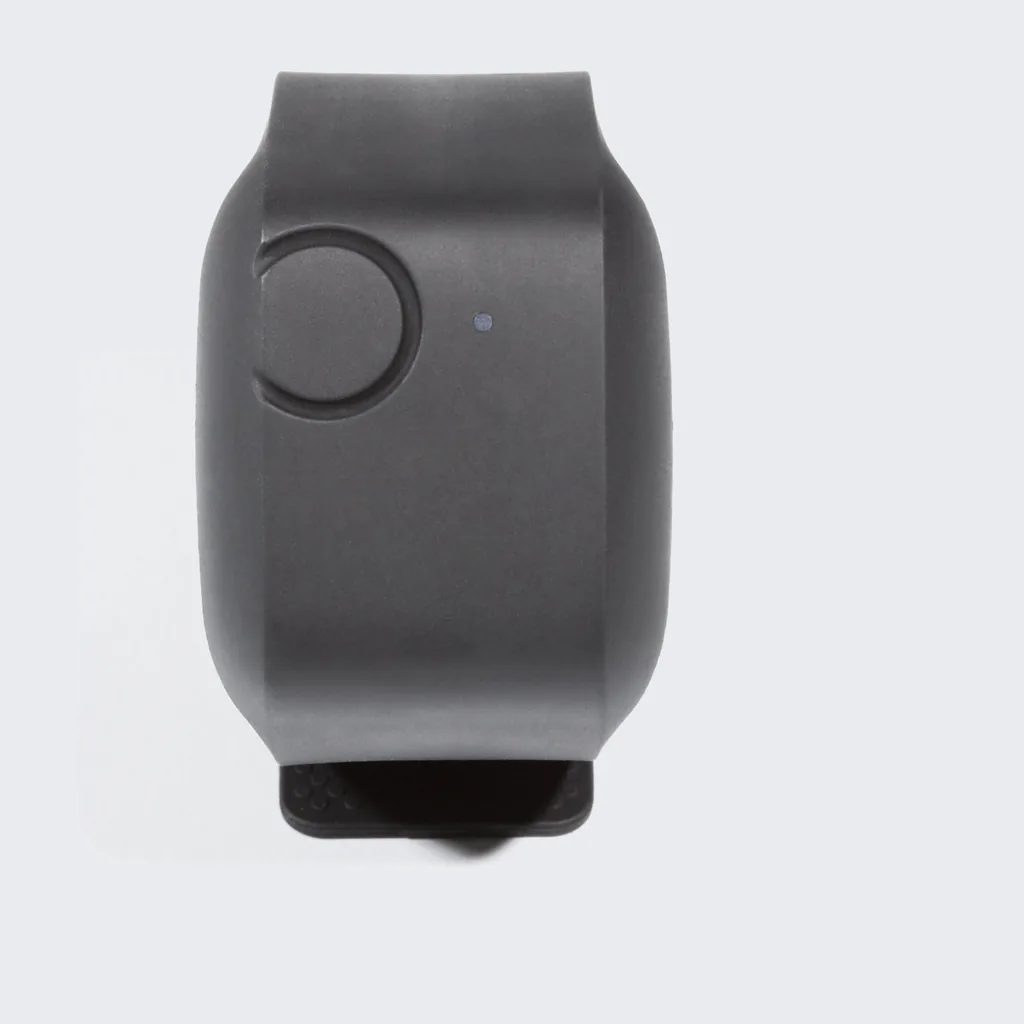
Full photo credits, sources and licences are on each device page.
Models trained or evaluated on it
Papers using it· 1
FAQ
How many subjects are in PhyMER?
PhyMER has data from 30 subjects, as listed in its research record.
What signals does PhyMER include?
PhyMER includes PPG, EDA, skin temperature and EEG data. Sampling rate as recorded: E4 BVP/EDA/TEMP (standard rates); Emotiv Epoc X EEG. Raw waveforms are included.
What can PhyMER be used for?
Research tasks it supports: emotion recognition. Reference labels: emotion.
How do I get PhyMER, and what is its licence?
It is available from https://sites.google.com/view/phymer-dataset. No licence is recorded for it here, so check the terms on the source page before you use it.
Was PhyMER recorded with a wrist-worn device?
Yes. Its record lists wrist-worn recording.
Cite
APA
PhyMER [Data set]. (n.d.). request. https://doi.org/10.1109/ACCESS.2023.3320053
BibTeX
@misc{phymerphymer,
  title         = {{PhyMER}},
  howpublished  = {request},
  doi           = {10.1109/ACCESS.2023.3320053}
}
Built from the hub record. Check it against the publisher before submitting.
Cite the ChatPPG record
Cite the dated snapshot 2026-10 for a fixed, reproducible version. Please also cite the original publications listed above.
APA
ChatPPG. (2026). PhyMER: dataset record (Version 2026-10) [Data set]. ChatPPG Research Hub. https://chatppg.com/research/datasets/phymer
BibTeX
@misc{chatppg_dataset_phymer,
  author       = {{ChatPPG}},
  title        = {{PhyMER: dataset record}},
  year         = {2026},
  month        = oct,
  version      = {2026-10},
  howpublished = {\url{https://chatppg.com/research/datasets/phymer}},
  note         = {ChatPPG Research Hub, Snapshot 2026-10, https://chatppg.com/research/snapshots/2026-10}
}
CITATION.cff
cff-version: 1.2.0
message: "If you use this resource, please cite it as below."
type: dataset
title: "PhyMER: dataset record"
authors:
  - name: "ChatPPG"
url: "https://chatppg.com/research/datasets/phymer"
repository-artifact: "https://chatppg.com/research/snapshots/2026-10"
version: "2026-10"
date-released: "2026-10-27"
History
Record updated
Papers
- Driving-Context Classification from Wearable Physiological and Motion Signals During Real-World DrivingSame task: StressSensors 2026, 26 · 2026
 ReliaGate: Reliability Routing for Low-Stakes Wearable Stress PredictionSame task: StressUbiComp Companion 2026 · 2026
 Retrieval-Augmented Personalization with Foundation Models for Wearable Stress DetectionSame task: Stress2026
Datasets
 DAPPERSame task: Stressdaily ambulatory physiological + ecological momentary emotion (E4)90 subjects · PPG · IMU · EDA
 EmognitionSame task: Stresswearable emotion film-clip dataset (E4 + Galaxy Watch + Muse 2)43 subjects · PPG · IMU · EDA
 LAUREATESame task: Stresslongitudinal university student wellbeing (E4)54 subjects · PPG · IMU · EDA