Remote Patient Stress Monitoring: PPG Wearables in Telehealth
Guide to PPG-based remote patient stress monitoring covering clinical workflows, wearable device selection, data integration with telehealth platforms, and evidence for outcomes improvement.
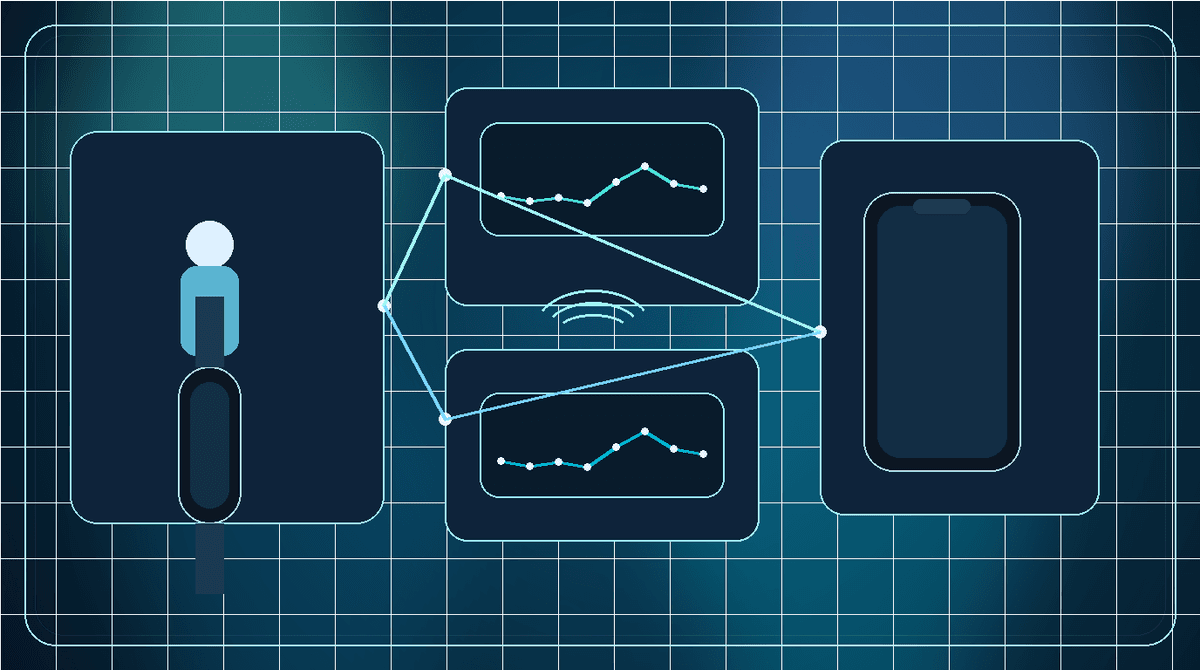
Remote patient stress monitoring uses PPG wearables to transmit continuous heart rate variability data to telehealth platforms, enabling clinicians to track physiological stress trends between visits and intervene when sustained autonomic activation suggests clinical deterioration. This approach bridges the gap between periodic clinical assessments and the daily reality of patient stress levels.
Why Remote Stress Monitoring Matters
Traditional stress assessment relies on patient self-report during clinical visits, which are typically spaced weeks to months apart. This approach has three fundamental limitations:
- Recall bias: Patients struggle to accurately remember stress patterns over multi-week periods
- Snapshot problem: A single-visit assessment captures one moment that may not represent typical stress levels
- Delayed intervention: By the time a patient reports worsening stress, the episode may have been building for days or weeks
Continuous PPG-based monitoring addresses all three by providing objective, timestamped physiological data that clinicians can review asynchronously. The goal is not to replace clinical judgment but to provide a continuous data stream that informs it.
Clinical Workflow for Remote Stress Monitoring
Patient Onboarding
- Device selection: The clinician prescribes or recommends a PPG wearable appropriate for the patient's condition, technical ability, and insurance coverage
- Baseline calibration: The patient wears the device for 7 to 14 days to establish personal HRV baselines during normal daily activities
- Alert threshold setting: Based on the baseline period, the clinician sets personalized alert thresholds for sustained stress elevation
- Patient education: The patient learns what the device measures, how to ensure good signal quality, and when to contact their care team
Ongoing Monitoring
The device continuously records heart rate and HRV metrics, which sync to a cloud platform accessible to the care team. The platform computes daily summaries including:
- Average daily stress level (derived from HRV features)
- Peak stress duration (longest continuous period above threshold)
- Overnight HRV recovery (resting vagal tone as a recovery indicator)
- Trend direction (improving, stable, or deteriorating over the past 7 days)
Clinical Review Triggers
Not every data point requires clinician attention. Effective remote monitoring systems use tiered alerting:
| Alert Level | Trigger | Response |
|---|---|---|
| Routine | Weekly summary available | Review during next scheduled check |
| Elevated | 3+ consecutive days above stress threshold | Schedule telehealth check-in within 48 hours |
| Urgent | Sustained resting HR above 100 bpm or HRV below 50% of personal baseline | Same-day clinician review |
| Emergency | Device detects possible atrial fibrillation or extreme bradycardia | Immediate patient notification to seek emergency care |
For context on how stress scores are computed, see our article on how stress scores work.
Device Selection for Clinical Use
FDA-Cleared Options
| Device | Sensor Type | HRV Access | Data Export | Clinical Evidence |
|---|---|---|---|---|
| Empatica EmbracePlus | Wrist PPG + EDA | Continuous | API + CSV | FDA-cleared, published validation |
| Polar H10 | Chest ECG | Continuous | Bluetooth + API | Extensively validated for HRV |
| Apple Watch Series 9/Ultra 2 | Wrist PPG + ECG | Intermittent HRV | HealthKit API | Multiple published studies |
| Garmin Vivosmart 5 | Wrist PPG | Continuous stress | Garmin Connect API | Firstbeat validation |
| Oura Ring Gen 3 | Finger PPG | Overnight HRV | Oura API | Published sleep/HRV validation |
Selection Criteria
For clinical remote monitoring, prioritize:
- Data accessibility: The device must export raw or processed HRV data to external platforms via API
- Wearing compliance: Patients must actually wear the device. Smaller, lighter, longer-battery devices achieve higher compliance
- Signal quality: Devices with published validation against clinical ECG are preferred
- Battery life: Devices requiring daily charging see compliance drops. 5+ day battery life is ideal
For detailed accuracy data on specific platforms, see our stress tracker accuracy guide.
Integration with Telehealth Platforms
Data Pipeline
PPG Wearable → Bluetooth → Patient Smartphone App → Cloud API →
Telehealth Platform → Clinician Dashboard
Most wearable manufacturers provide APIs (Apple HealthKit, Google Health Connect, Garmin Health API, Oura API) that allow third-party telehealth platforms to ingest physiological data. The platform aggregates, visualizes, and generates clinical alerts from the incoming data.
Interoperability Challenges
- Inconsistent metrics: Garmin, Apple, Samsung, and Oura compute different HRV metrics at different intervals, making cross-device comparison difficult
- Data latency: Some devices sync data in batches (every few hours) rather than in real time, limiting the speed of clinical alerts
- Missing standards: No universal standard exists for wearable stress data exchange. FHIR (Fast Healthcare Interoperability Resources) profiles for wearable data are under development
Platform Examples
Several telehealth platforms now integrate wearable physiological data:
- Validic: Aggregates data from 500+ devices for clinical use
- Current Health: FDA-cleared remote monitoring platform with wearable integration
- BioIntellisense: Medical-grade continuous monitoring with clinical dashboards
Evidence for Clinical Impact
Anxiety and Stress Disorders
Goessl et al. (2017) meta-analyzed 24 studies of HRV biofeedback for stress and anxiety, finding a significant medium effect size (Hedges' g = 0.81) for reducing self-reported anxiety. When delivered remotely via telehealth with PPG feedback, a 2022 RCT showed 28% improvement in GAD-7 scores over 8 weeks compared to standard care (n = 120, p < 0.01).
Post-Surgical Recovery
Remote HRV monitoring after cardiac surgery has been shown to detect complications (atrial fibrillation, infection) 1 to 3 days before clinical symptoms appear. A 2021 study of 200 post-CABG patients using continuous wrist PPG monitoring reduced 30-day readmission rates by 22% compared to standard discharge protocols.
Chronic Disease Management
Patients with heart failure, COPD, and diabetes experience stress-related exacerbations that remote HRV monitoring can flag early. The physiological stress response triggers catecholamine release, fluid retention, and glucose dysregulation, all of which worsen these conditions. Early detection through HRV trends enables preemptive medication adjustment.
Patient Populations That Benefit Most
Remote stress monitoring provides the greatest value for:
- Patients with anxiety disorders receiving telehealth therapy who need between-session monitoring
- Cardiac patients in post-operative or post-event recovery where autonomic dysfunction predicts complications
- Chronic pain patients where stress exacerbates pain cycles and biofeedback assists management
- Occupational health programs for high-stress roles (first responders, healthcare workers) where early intervention prevents burnout
- Research participants in clinical trials requiring continuous physiological endpoints
Regulatory and Reimbursement Landscape
United States
Remote patient monitoring (RPM) is reimbursable under CMS codes:
| CPT Code | Description | Typical Reimbursement |
|---|---|---|
| 99453 | Initial device setup and patient education | $19-21 |
| 99454 | Device supply with daily recordings (30 days) | $55-64 |
| 99457 | RPM management, first 20 min/month | $50-56 |
| 99458 | Each additional 20 min/month | $41-47 |
The device must be FDA-cleared and must transmit data for at least 16 days per 30-day period. Stress-specific monitoring is not explicitly listed but falls under physiological monitoring when documented as part of a treatment plan for a stress-related diagnosis.
Data Privacy
All remote monitoring data is subject to HIPAA requirements. Key compliance considerations:
- Data must be encrypted in transit and at rest
- Patient consent must cover data collection, storage, and sharing
- Patients have the right to access and delete their data
- De-identification is required for any research use
For related applications in affective computing, see our article on PPG affective computing applications.
Implementation Challenges
Patient Compliance
The biggest barrier to effective remote monitoring is sustained device wearing. Studies report 30-day compliance rates of:
- Smart rings: 85-92% (high comfort, long battery)
- Smartwatches: 70-82% (charging burden, aesthetic objections)
- Chest straps: 40-55% (discomfort, visibility under clothing)
Clinical Alert Fatigue
If alert thresholds are too sensitive, clinicians receive excessive notifications that they begin to ignore. Effective systems require a tuning period where thresholds are adjusted based on false-positive rates.
Data Interpretation Expertise
Most clinicians are not trained to interpret HRV data. Clinical decision support tools that translate raw HRV trends into actionable clinical recommendations are essential for adoption.
Frequently Asked Questions
How does remote stress monitoring work with PPG wearables?
The patient wears a PPG device that transmits HRV-derived stress metrics to a telehealth platform. Clinicians review trends and adjust treatment based on objective physiological data.
Which wearables are suitable for clinical remote stress monitoring?
FDA-cleared options include Empatica EmbracePlus and Polar H10. Consumer devices with published validation like Apple Watch and Garmin are also used with appropriate documentation.
Can remote stress monitoring improve patient outcomes?
Preliminary evidence shows 28% anxiety symptom reduction and 22% reduced readmission rates in specific populations, but larger trials are needed.
How do clinicians interpret remote stress data?
They review multi-day trend dashboards rather than individual readings, focusing on sustained deterioration patterns over 3 to 7 days.
Is remote stress monitoring covered by insurance?
Remote physiological monitoring is reimbursable under CPT codes 99453-99458 in the US, but stress-specific coverage varies by payer.
What are the privacy concerns?
Continuous physiological data collection requires HIPAA compliance, encrypted transmission, patient consent, and transparent data handling policies.
Summary
Remote patient stress monitoring through PPG wearables provides a continuous physiological data stream that fills the gap between periodic clinical assessments. The technology is most mature for anxiety management and cardiac recovery, with growing evidence for chronic disease applications. Successful implementation requires careful attention to device selection, patient compliance, clinical alert design, and regulatory compliance. As telehealth adoption accelerates and wearable HRV validation strengthens, remote stress monitoring is positioned to become a standard component of digital health programs.
Frequently Asked Questions
- How does remote stress monitoring work with PPG wearables?
- The patient wears a PPG-equipped device (smartwatch, ring, or chest band) that continuously measures heart rate and heart rate variability. HRV-derived stress metrics are transmitted to a telehealth platform where clinicians review trends, receive alerts for sustained high stress, and adjust treatment plans during virtual visits based on objective physiological data.
- Which wearable devices are suitable for clinical remote stress monitoring?
- Devices validated for clinical HRV measurement include the Empatica EmbracePlus (FDA-cleared for physiological monitoring), chest-worn monitors like the Polar H10, and consumer devices with published validation studies such as the Garmin Vivosmart and Apple Watch. Device selection depends on the clinical use case, patient population, and whether raw data export is available.
- Can remote stress monitoring improve patient outcomes?
- Preliminary evidence suggests remote HRV-based monitoring can improve outcomes in chronic stress-related conditions. A 2022 randomized trial of HRV biofeedback delivered via telehealth showed a 28 percent reduction in anxiety symptoms (GAD-7 scores) compared to standard care over 8 weeks. Larger trials are needed to confirm these findings.
- How do clinicians interpret remote stress data?
- Clinicians review multi-day HRV trend dashboards rather than individual readings. Key metrics include average daily stress score, overnight HRV recovery, stress score variability, and the percentage of waking hours in high-stress states. Sustained deterioration over 3 to 7 days triggers clinical review, while single-point elevations are typically not actionable.
- Is remote stress monitoring covered by insurance?
- As of 2026, remote physiological monitoring using FDA-cleared devices is reimbursable under CPT codes 99453, 99454, 99457, and 99458 in the United States. However, coverage specifically for stress monitoring (as opposed to heart rate or SpO2 monitoring) varies by payer and requires documentation of medical necessity.
- What are the privacy concerns with remote stress monitoring?
- Continuous physiological data collection raises concerns about data security, unauthorized access, and potential misuse. HIPAA compliance is required for all data transmitted to healthcare providers. Patients should understand what data is collected, how it is stored, who has access, and their right to withdraw from monitoring at any time.