PPG in Affective Computing: Applications from Gaming to Therapy
Survey of PPG-based affective computing applications covering emotion-adaptive gaming, mental health monitoring, human-robot interaction, and biofeedback therapy with accuracy benchmarks.
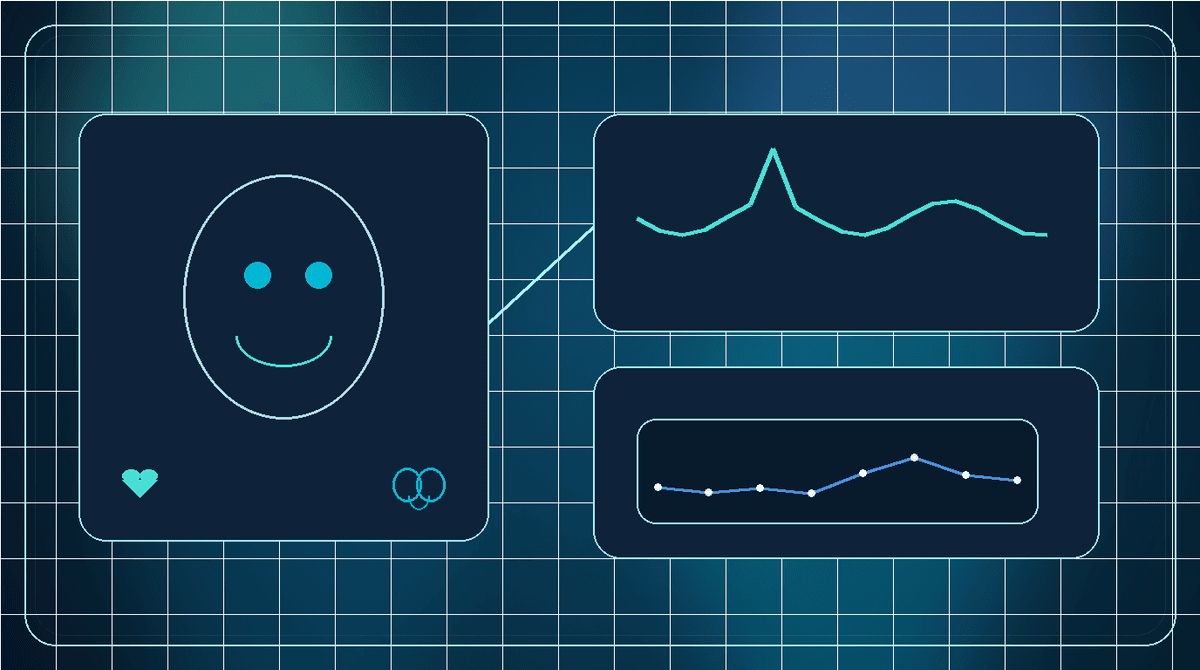
PPG-based affective computing transforms the optical pulse signal from a simple heart rate monitor into an emotional awareness channel that enables systems to adapt in real time to the user's physiological state. From games that modulate difficulty based on player arousal to therapy tools that teach anxiety regulation through biofeedback, these applications represent the practical deployment of PPG emotion recognition research.
What Affective Computing Is
Rosalind Picard coined the term "affective computing" in 1997 to describe computing systems that recognize, express, and influence human emotions. The field spans input (sensing emotions), processing (classifying emotional states), and output (responding appropriately).
PPG serves as an input channel. The autonomic nervous system modulates cardiovascular parameters in response to emotional stimuli, and PPG sensors capture these modulations through pulse rate, pulse rate variability, pulse wave amplitude, and waveform morphology. Unlike facial expression cameras or voice analysis, PPG provides a continuous physiological signal that is difficult to consciously suppress or fake.
Application 1: Emotion-Adaptive Gaming
How It Works
Game engines integrate PPG input from controllers with embedded sensors, VR headset forehead sensors, or connected wearables. The system monitors heart rate and HRV in real time and classifies the player's arousal state. Based on this classification, the game dynamically adjusts:
- Difficulty level: Increasing challenge when arousal is low (boredom) and reducing it when arousal is excessive (frustration)
- Narrative pacing: Slowing story progression during high-tension moments to avoid overwhelming the player
- Environmental atmosphere: Adjusting lighting, music tempo, and sound effects to match or counterbalance the player's emotional state
- Jump scare timing: Horror games use low-arousal windows to maximize the startle response
Evidence
A 2019 study using PPG-driven difficulty adjustment in a rhythm game showed 23% longer play sessions and 18% higher self-reported enjoyment compared to static difficulty (p < 0.01, n = 48). Players in the adaptive condition spent 40% more time in the "flow" zone where challenge matched skill level.
Current Products
The HP Reverb G2 Omnicept VR headset integrates a forehead PPG sensor alongside eye tracking for developer access to physiological data. Several indie games and research prototypes use Empatica E4 or Garmin SDK data streams for biofeedback-driven gameplay.
Application 2: Biofeedback Therapy
Clinical Use Cases
PPG-based biofeedback is used in clinical settings for:
- Anxiety disorders: Patients learn to increase HRV through slow breathing while watching real-time PPG feedback
- PTSD: Exposure therapy combined with physiological monitoring helps patients and therapists track arousal during difficult sessions
- Chronic pain: HRV biofeedback has been shown to modulate pain perception through autonomic regulation
- ADHD: Heart rate variability training improves self-regulation in some pediatric and adult ADHD populations
Mechanism
The patient wears a PPG sensor (typically fingertip or earlobe for clinical accuracy) connected to a display showing their heart rate, HRV, or a derivative metric like coherence (the degree of synchronization between heart rate oscillations and breathing). The therapist guides the patient through relaxation techniques while both observe the physiological response.
Over multiple sessions (typically 6 to 12), patients develop improved interoceptive awareness and the ability to self-regulate autonomic arousal without external feedback. A meta-analysis of 24 studies found that HRV biofeedback produced a medium effect size (d = 0.59) for reducing anxiety symptoms (Goessl et al., 2017).
For background on how stress is measured through wearables, see our article on how stress scores work.
Consumer Biofeedback Apps
Several consumer apps use smartwatch PPG for biofeedback:
- Apple Watch Breathe/Mindfulness: Guided breathing with heart rate visualization
- Garmin Relax: Guided breathing with stress score feedback
- Welltory: HRV-based stress and energy tracking with breathing exercises
- Lief Therapeutics: Chest-worn PPG device with real-time HRV biofeedback and coaching
Application 3: Mental Health Monitoring
Passive Mood Tracking
Longitudinal PPG data from wearables can detect patterns associated with mood disorders. Research has identified the following associations:
| Metric | Depression Association | Anxiety Association |
|---|---|---|
| Resting HR | Often elevated | Elevated |
| RMSSD | Reduced | Reduced |
| Sleep HR pattern | Flattened circadian variation | Elevated nocturnal HR |
| HRV trend | Declining over weeks | Highly variable day-to-day |
A 2020 study using 4 weeks of continuous wrist PPG data correctly identified participants with moderate-to-severe depression (PHQ-9 score above 10) with 78% accuracy using a random forest classifier on daily HRV features.
Early Warning Systems
The goal is to detect mood episode onset before the individual is fully aware of it. PPG-derived biomarkers that shift 3 to 7 days before self-reported mood changes include declining overnight RMSSD, increasing resting heart rate, and disrupted sleep-wake HRV patterns. These systems are in the research prototype stage and are not yet validated for clinical deployment.
Application 4: Human-Robot Interaction
Social robots and virtual agents that adapt to the user's emotional state use PPG as one of their input channels. Applications include:
- Companion robots for elderly care: Detecting frustration or sadness and adjusting interaction style
- Educational tutoring systems: Sensing confusion or disengagement and offering additional explanations
- Customer service avatars: Detecting customer frustration and escalating to human agents
The challenge is real-time classification speed. Social robots need to respond within 1 to 2 seconds, but reliable HRV features require 30 to 60 seconds of data. Current approaches use ultra-short-term HRV features (10-30 seconds) combined with raw PPG waveform analysis to achieve faster response times with acceptable accuracy degradation.
Application 5: Workplace Wellbeing
Occupational Stress Monitoring
PPG-based stress monitoring in high-stakes occupations provides objective data for managing worker fatigue and cognitive load:
- Air traffic controllers: Continuous PPG monitoring flags sustained high stress for break scheduling
- Surgeons: Intraoperative stress monitoring correlates with surgical error rates
- Call center workers: Stress tracking identifies consistently high-stress periods for workflow adjustment
Ethical Boundaries
Workplace affective monitoring raises significant concerns about surveillance, consent, and power dynamics. Data should be aggregated and anonymized, individual monitoring should require opt-in consent, and workers should have access to their own data. For a broader discussion of PPG-based monitoring applications, see our article on remote patient stress monitoring.
Application 6: Automotive Affective Computing
Beyond drowsiness detection, automotive affective computing uses PPG to detect driver road rage, frustration, and anxiety. A frustrated driver may receive calming music suggestions, adjusted climate control, or a recommendation to take a break. These features are in development at several major automotive OEMs.
Technical Challenges Across Applications
Personalization
Baseline autonomic tone varies dramatically between individuals. A one-size-fits-all model achieves 65 to 75 percent accuracy across subjects, while personalized models trained on 30 or more minutes of individual data reach 80 to 90 percent. Transfer learning approaches that fine-tune a general model with minimal personal data show promise.
Real-Time Processing
Affective computing applications need low-latency emotion classification. Processing raw PPG, extracting features, and running inference must complete in under 2 seconds for interactive applications. Edge computing on the wearable device itself (rather than cloud processing) is essential for privacy and responsiveness.
Multimodal Fusion
The highest-performing affective computing systems combine PPG with other modalities: facial expression (camera), voice prosody (microphone), skin conductance (EDA), and behavioral signals (typing patterns, mouse movements). PPG alone is insufficient for fine-grained emotion classification but provides a reliable arousal dimension that complements other inputs.
Frequently Asked Questions
What is affective computing and how does PPG fit in?
Affective computing builds systems that recognize and respond to emotions. PPG provides autonomic nervous system data that reflects emotional arousal through heart rate, HRV, and pulse wave changes.
Can a game change difficulty based on my heart rate?
Yes. Emotion-adaptive games use real-time PPG to adjust difficulty, pacing, and atmosphere based on player arousal, increasing engagement and flow.
How is PPG used in mental health therapy?
PPG biofeedback therapy displays real-time heart rate and HRV data to teach patients self-regulation. It is clinically used for anxiety, PTSD, chronic pain, and ADHD.
What accuracy does PPG achieve for emotion recognition?
Binary arousal classification reaches 75 to 85 percent. Valence classification reaches 60 to 75 percent. Multi-class emotion recognition drops to 55 to 70 percent.
Is affective computing with PPG ethical?
It raises concerns around consent, privacy, and misuse. Voluntary therapeutic use is generally acceptable. Continuous workplace or public monitoring without consent is widely considered unethical.
Summary
PPG-based affective computing extends pulse oximetry and heart rate monitoring into the domain of emotional awareness, enabling systems that adapt to the user's physiological state in real time. Applications span gaming, therapy, mental health monitoring, robotics, workplace wellbeing, and automotive safety. The technology is most mature for biofeedback therapy and stress monitoring, while fine-grained emotion-adaptive systems remain an active research frontier requiring advances in personalization, real-time processing, and ethical frameworks.
Frequently Asked Questions
- What is affective computing and how does PPG fit in?
- Affective computing is the field of building systems that can recognize, interpret, and respond to human emotional states. PPG fits in as one of the primary physiological sensing modalities because the optical pulse signal reflects autonomic nervous system changes associated with emotions, including heart rate, heart rate variability, and peripheral blood flow patterns that shift with arousal and valence.
- Can a game change difficulty based on my heart rate?
- Yes. Emotion-adaptive games use real-time PPG data from controllers, VR headsets, or wearables to adjust game difficulty, narrative intensity, and environmental effects based on the player's physiological arousal. Studies show this approach increases engagement and flow state compared to static difficulty scaling.
- How is PPG used in mental health therapy?
- PPG-based biofeedback therapy teaches patients to observe and regulate their physiological arousal by displaying real-time heart rate and HRV data. It is used clinically for anxiety disorders, PTSD, and stress management. The patient practices relaxation techniques while watching their PPG-derived metrics respond, building interoceptive awareness and self-regulation skills.
- What accuracy does PPG achieve for emotion recognition?
- PPG-based emotion recognition achieves 75 to 85 percent accuracy for binary arousal classification (calm vs. excited) and 60 to 75 percent for valence classification (positive vs. negative) on standard benchmarks. Multi-class emotion recognition (4+ categories) drops to 55 to 70 percent accuracy.
- Is affective computing with PPG ethical?
- Affective computing raises significant ethical concerns around consent, privacy, and potential misuse. Continuous emotion monitoring in workplaces or public spaces without informed consent is widely considered unethical. Therapeutic and voluntary wellness applications with transparent data handling are generally viewed as acceptable. The field needs stronger regulatory frameworks.