Stress Tracker Accuracy Guide: What Wearables Actually Measure
Independent review of wearable stress tracker accuracy covering HRV methods, sensor limitations, and how to interpret stress scores from Garmin, Fitbit, and Apple Watch.
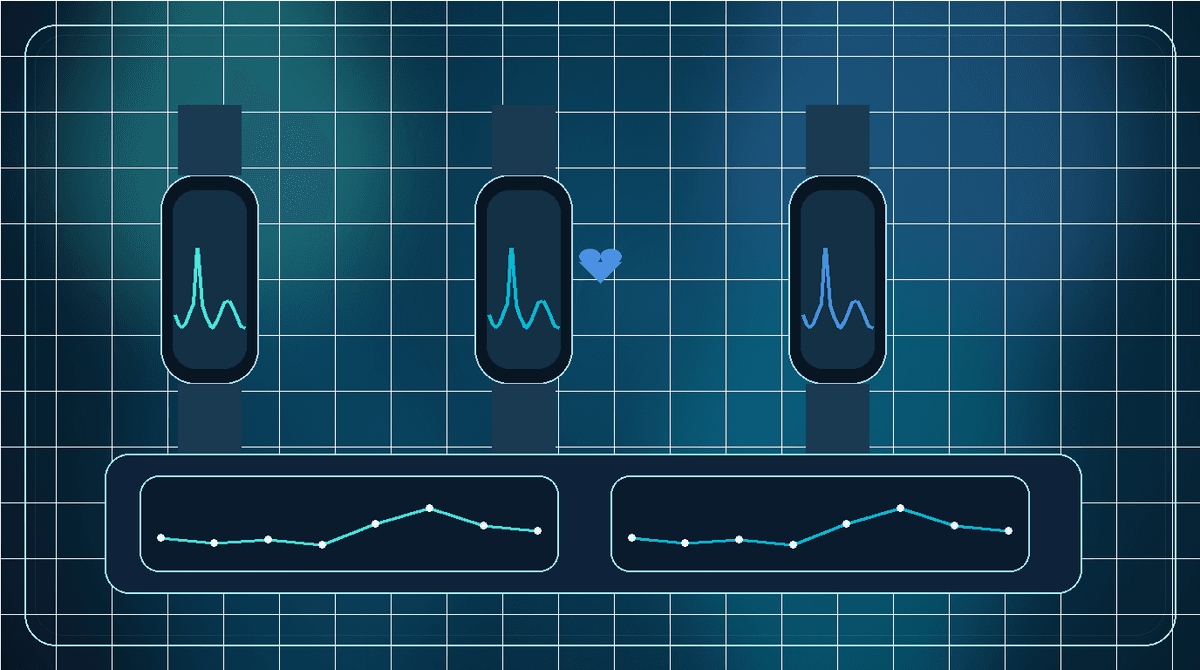
Wearable stress trackers use heart rate variability (HRV) measured through PPG sensors to estimate your body's stress response, but their accuracy varies widely depending on sensor placement, algorithm design, and what you are actually doing when a reading is taken. This guide breaks down what these devices measure, how reliable the numbers are, and how to get the most useful data from your tracker.
How Wearable Stress Trackers Work
Every stress tracker on the market relies on a shared physiological principle: when you are stressed, your sympathetic nervous system activates, your heart rate increases, and the beat-to-beat intervals become more regular. This reduction in heart rate variability is measurable through the PPG signal captured by the optical sensor on your wrist or finger.
The device extracts inter-beat intervals from the PPG waveform, calculates time-domain and frequency-domain HRV features, and feeds them into a proprietary algorithm that outputs a stress score. Garmin uses Firstbeat Analytics, Fitbit uses a proprietary model trained on electrodermal activity and HRV, and Samsung uses a combination of HRV and SpO2 trends.
What the Research Says About Accuracy
Laboratory validation studies show that PPG-derived HRV correlates with ECG-derived HRV at r = 0.85 to 0.95 under controlled, stationary conditions (Schafer and Vagedes, 2013). The problem is that real-world conditions rarely match laboratory settings.
A 2019 meta-analysis found that HRV-based stress classification achieves 75 to 90 percent accuracy in binary stress/no-stress tasks when subjects sit still during measurement (Kim et al., 2018). Accuracy drops to 60 to 75 percent during ambulatory monitoring because motion artifacts contaminate the PPG signal.
| Condition | Typical Accuracy | Key Limitation |
|---|---|---|
| Seated, stationary | 80-90% | Limited ecological validity |
| Walking | 65-75% | Motion artifact interference |
| Exercise | Not applicable | Algorithms exclude active periods |
| Sleep | 85-92% | Minimal artifact, best baseline |
Garmin Stress Score: How It Works
Garmin calculates stress using Firstbeat Analytics, which analyzes 3-minute HRV windows throughout the day. The algorithm computes the ratio of low-frequency to high-frequency HRV power and combines it with RMSSD (root mean square of successive differences) to classify autonomic balance.
The output is a 0 to 100 score updated every few minutes. Garmin explicitly states the score reflects physiological load, not psychological state. Physical exertion, dehydration, alcohol, and illness all elevate the score.
For context on how HRV metrics relate to autonomic function, see our article on PPG autonomic function testing.
Fitbit Stress Management Score
Fitbit takes a different approach by computing a daily Stress Management Score from 1 to 100, where higher numbers indicate better stress resilience. The score combines three components: exertion balance (how hard you pushed during exercise), responsiveness (HRV patterns during sleep), and sleep patterns.
Because Fitbit aggregates over 24 hours rather than providing momentary readings, the score tends to be more stable and reproducible. However, it sacrifices the ability to detect acute stress events.
Apple Watch and Stress Detection
Apple Watch does not offer a dedicated stress score as of watchOS 11. Instead, it provides raw HRV data through the Health app and uses the Mindfulness app to prompt breathing exercises when elevated heart rate is detected at rest. Third-party apps like Welltory and Elite HRV use Apple Watch HRV data to calculate stress metrics.
The Apple Watch Series 9 and Ultra 2 capture HRV with sufficient precision for trend tracking, though the sampling is intermittent rather than continuous.
Common Sources of False Readings
Several everyday factors trigger stress-like HRV changes without involving psychological stress:
- Caffeine: Stimulates sympathetic activation for 2 to 4 hours after consumption
- Alcohol: Suppresses HRV for 12 to 24 hours after moderate drinking
- Dehydration: Reduces blood volume, increasing heart rate and lowering HRV
- Tight watch band: Restricts blood flow and distorts the PPG waveform
- Postural changes: Standing up shifts autonomic balance toward sympathetic dominance
- Digestion: The postprandial state redirects blood flow and modestly reduces HRV
Understanding these confounders is essential for interpreting your stress data accurately.
How to Maximize Tracker Accuracy
Getting the most reliable stress data from your wearable requires consistent habits:
- Wear the device consistently on the same wrist, at the same tightness. Sensor contact quality directly affects PPG signal quality.
- Take spot readings while sitting still for at least 2 minutes. Ambulatory readings carry higher uncertainty.
- Focus on trends, not individual readings. A week-over-week increase in average stress is more meaningful than a single spike.
- Log context. Note caffeine, alcohol, illness, and exercise alongside your stress data to identify non-psychological drivers.
- Use overnight data as your baseline. Sleep HRV is the most artifact-free window.
For more on signal quality factors, see our guide to PPG signal quality assessment.
Comparing Wrist PPG to Clinical Stress Measurement
Clinical stress assessment uses a combination of salivary cortisol, ECG-derived HRV, galvanic skin response, and validated psychological questionnaires like the Perceived Stress Scale (PSS-10). No wearable captures all these dimensions.
Wrist PPG provides a single physiological channel, autonomic nervous system balance via HRV, which is one component of the stress response. It cannot measure cortisol, cannot assess cognitive appraisal of stress, and cannot distinguish between eustress (positive challenge) and distress (negative threat).
| Measurement | What It Captures | Available on Wearables |
|---|---|---|
| ECG HRV | Autonomic balance (gold standard) | Apple Watch, Samsung (single-lead) |
| PPG HRV | Autonomic balance (proxy) | All optical wearables |
| Cortisol | Hormonal stress response | No |
| EDA/GSR | Sympathetic skin response | Fitbit Sense, Empatica |
| PSS-10 | Perceived psychological stress | No (self-report only) |
Who Benefits Most from Stress Tracking
Stress trackers provide the most value for people who struggle with interoception, the ability to recognize their own physiological stress signals. If you consistently push through fatigue or fail to notice mounting tension, a wearable alert can serve as an external signal to pause.
Athletes and coaches use stress tracking to monitor recovery and avoid overtraining. Elevated resting stress scores on consecutive days suggest insufficient recovery between training sessions.
People managing chronic stress conditions benefit from trend visualization, which makes abstract feelings concrete and trackable over weeks and months.
Limitations to Keep in Mind
No wearable stress tracker replaces professional mental health assessment. These devices measure a physiological proxy, not the experience of stress itself. A person with high psychological distress may show normal HRV if their autonomic regulation is intact, and a person feeling calm may show elevated physiological stress from medication side effects or an underlying condition.
Use stress trackers as one data point among many, not as a diagnostic tool.
Frequently Asked Questions
How accurate are wearable stress trackers?
Most wearable stress trackers achieve 70 to 85 percent agreement with validated psychological stress questionnaires when comparing grouped stress levels. Accuracy drops for momentary readings because motion artifacts and posture changes can mimic stress-related HRV shifts.
What does a Garmin stress score of 75 mean?
A Garmin stress score of 75 indicates high perceived physiological stress based on reduced heart rate variability. The scale runs from 0 to 100, where 0 to 25 is rest, 26 to 50 is low stress, 51 to 75 is medium stress, and 76 to 100 is high stress.
Can a smartwatch tell the difference between exercise and stress?
Most modern smartwatches use accelerometer data alongside PPG to distinguish movement from sedentary stress. When the accelerometer detects sustained motion, the device attributes elevated heart rate and reduced HRV to physical activity rather than psychological stress.
Do stress trackers work during sleep?
Stress trackers generally perform best during sleep because there is minimal motion artifact and the autonomic nervous system follows predictable patterns. Nighttime HRV trends provide a more stable baseline than daytime readings.
Which wearable is most accurate for stress tracking?
No single consumer device has been independently validated as the gold standard for stress. Garmin watches using Firstbeat analytics and the Oura Ring using overnight HRV trends have shown the strongest correlations with laboratory stress protocols.
Why does my stress score spike when I drink coffee?
Caffeine stimulates the sympathetic nervous system, increasing heart rate and reducing HRV in a pattern that stress algorithms interpret as physiological stress. The device cannot distinguish the cause, only the autonomic effect.
How often should I check my stress score?
Checking once or twice daily is sufficient for most people. Trends over days and weeks are more meaningful than any single reading.
Summary
Wearable stress trackers offer a useful window into autonomic nervous system balance, but they measure physiological load rather than psychological stress. Accuracy ranges from 70 to 90 percent depending on conditions, with stationary and sleep readings being the most reliable. Focus on multi-day trends, control for confounders like caffeine and alcohol, and treat the data as one input into your overall wellbeing picture rather than a definitive stress diagnosis.
Frequently Asked Questions
- How accurate are wearable stress trackers?
- Most wearable stress trackers achieve 70 to 85 percent agreement with validated psychological stress questionnaires when comparing grouped stress levels. Accuracy drops for momentary readings because motion artifacts and posture changes can mimic stress-related HRV shifts. Devices using chest-worn ECG sensors tend to outperform wrist-based PPG trackers for single-point measurements.
- What does a Garmin stress score of 75 mean?
- A Garmin stress score of 75 indicates high perceived physiological stress based on reduced heart rate variability. The scale runs from 0 to 100, where 0 to 25 is rest, 26 to 50 is low stress, 51 to 75 is medium stress, and 76 to 100 is high stress. Context matters because exercise, caffeine, illness, and poor sleep all raise the score independent of psychological stress.
- Can a smartwatch tell the difference between exercise and stress?
- Most modern smartwatches use accelerometer data alongside PPG to distinguish movement from sedentary stress. When the accelerometer detects sustained motion, the device attributes elevated heart rate and reduced HRV to physical activity rather than psychological stress. However, brief movements like fidgeting can still trigger false stress readings.
- Do stress trackers work during sleep?
- Stress trackers generally perform best during sleep because there is minimal motion artifact and the autonomic nervous system follows predictable patterns. Nighttime HRV trends provide a more stable baseline than daytime readings, which is why many devices emphasize overnight stress recovery metrics.
- Which wearable is most accurate for stress tracking?
- No single consumer device has been independently validated as the gold standard for stress. Garmin watches using Firstbeat analytics and the Oura Ring using overnight HRV trends have shown the strongest correlations with laboratory stress protocols in published studies. The best device for any individual is one worn consistently so trends can be established.
- Why does my stress score spike when I drink coffee?
- Caffeine stimulates the sympathetic nervous system, increasing heart rate and reducing HRV in a pattern that stress algorithms interpret as physiological stress. This is technically accurate because the autonomic response to caffeine and psychological stress share overlapping HRV signatures. The device cannot distinguish the cause, only the autonomic effect.
- How often should I check my stress score?
- Checking once or twice daily is sufficient for most people. Trends over days and weeks are more meaningful than any single reading. Obsessive checking can itself become a source of anxiety, which paradoxically raises the stress score.