Driver Drowsiness Detection with PPG: How Pulse Sensors Monitor Fatigue
Technical guide to PPG-based driver drowsiness detection covering HRV fatigue markers, sensor placement options, algorithm accuracy, and integration with automotive safety systems.
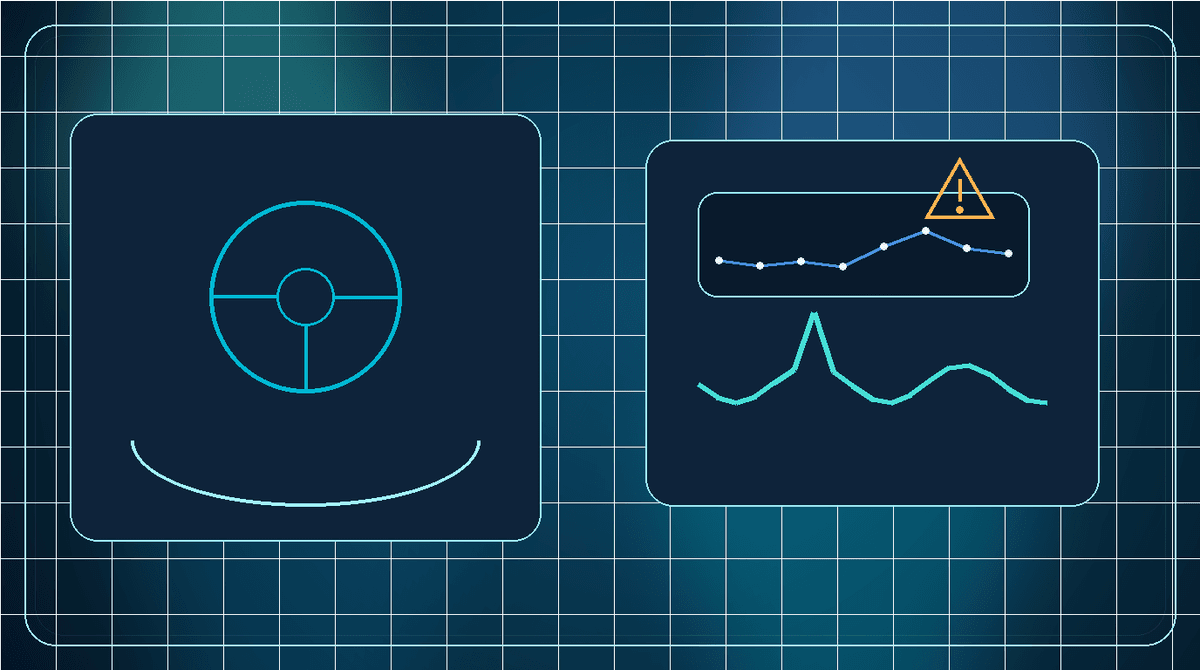
PPG-based driver drowsiness detection identifies the physiological transition from alertness to fatigue by tracking characteristic changes in heart rate variability, achieving 80 to 93 percent accuracy in published studies. By measuring the autonomic nervous system shift that precedes behavioral drowsiness signs like eyelid drooping and lane deviation, PPG sensors can provide earlier warnings than camera-only systems.
Why Drowsy Driving Detection Matters
The National Highway Traffic Safety Administration estimates that drowsy driving causes approximately 100,000 crashes annually in the United States, resulting in roughly 1,550 fatalities and 71,000 injuries. The true numbers are likely higher because drowsiness is difficult to confirm after a crash.
Unlike alcohol impairment, which is binary (above or below the legal limit), drowsiness exists on a continuum and can develop gradually without the driver's awareness. This makes objective physiological monitoring particularly valuable because drivers consistently overestimate their ability to stay awake.
The Physiology of Drowsiness
As a driver transitions from full alertness to drowsiness, the autonomic nervous system undergoes measurable changes:
- Parasympathetic activity increases as the brain begins transitioning toward sleep
- Heart rate decreases by 3 to 8 bpm from the alert baseline
- HRV spectral power shifts toward low-frequency components
- Peripheral blood flow patterns change as sympathetic vasoconstriction decreases
These autonomic changes appear in the PPG waveform as altered pulse rate, pulse rate variability, and pulse wave morphology. The changes begin 1 to 5 minutes before the driver shows visible behavioral signs of drowsiness like slow eye blinks or head nodding.
PPG Sensor Placement Options for Vehicles
Steering Wheel Integration
Embedding PPG sensors in the steering wheel grip allows fingertip or palm measurement during normal driving. Fingertip perfusion is high, providing strong signal amplitude. The main limitation is signal dropout when the driver repositions their hands or uses one-handed steering.
Modern designs use multiple sensor locations around the wheel rim to maintain contact regardless of grip position. Toyota, Hyundai, and several Tier-1 automotive suppliers have demonstrated steering wheel PPG prototypes.
Seatbelt Sensors
PPG sensors woven into the seatbelt chest strap measure thoracic pulse waves through clothing. Signal amplitude is lower than fingertip measurement, and respiratory motion adds a baseline artifact. However, the seatbelt maintains continuous body contact, avoiding the dropout issues of steering wheel sensors.
Remote PPG (Camera-Based)
A camera pointed at the driver's face can extract PPG signals from subtle skin color fluctuations caused by blood volume changes. This contactless approach, known as remote PPG, requires no physical sensor contact but is sensitive to ambient lighting changes and head movement.
Wrist Wearables
Smartwatches and fitness bands provide PPG data but suffer from significant motion artifact during driving due to arm and hand movements. Wrist-based drowsiness detection is an active research area but currently less reliable than steering wheel or seatbelt sensors for this specific application.
| Placement | Signal Quality | Continuity | Practical Challenges |
|---|---|---|---|
| Steering wheel (fingertip) | Excellent | Intermittent | Hand repositioning |
| Seatbelt (chest) | Moderate | Continuous | Clothing attenuation |
| Camera (face) | Good in steady light | Continuous | Lighting, head turns |
| Wrist wearable | Moderate | Continuous | Driving motion artifact |
Algorithm Approaches
Classical HRV Feature Analysis
Traditional drowsiness detection extracts time-domain and frequency-domain HRV features from 2 to 5 minute PPG windows and feeds them into classifiers like support vector machines (SVMs) or random forests.
Key features with demonstrated drowsiness sensitivity:
- LF/HF ratio increase: Indicates autonomic rebalancing toward sleep
- RMSSD decrease: Reflects changes in vagal modulation
- Mean HR decrease: Simple but effective fatigue indicator
- Sample entropy decrease: Lower signal complexity indicates reduced alertness
Vicente et al. (2016) reported 88 percent accuracy for binary drowsiness classification using a 5-feature SVM model with 3-minute HRV windows.
Deep Learning on Raw PPG
End-to-end deep learning models process raw PPG waveforms without manual feature engineering. 1D convolutional neural networks and LSTM recurrent networks can learn temporal patterns in the pulse wave that correlate with drowsiness onset.
Abe et al. (2016) demonstrated that convolutional analysis of PPG waveform features achieved 91 percent drowsiness detection accuracy with a 2-minute sliding window, outperforming traditional HRV-based approaches by 4 to 7 percentage points.
Multimodal Fusion
The highest-performing systems combine PPG with other sensor modalities:
- PPG + camera (PERCLOS): Fuses physiological and behavioral indicators
- PPG + steering angle: Adds vehicle dynamics information
- PPG + EEG: Research-grade systems with the highest accuracy (>95%) but impractical for consumer vehicles
Lee and Chung (2012) showed that fusing facial features with bio-signals (including PPG) improved detection accuracy from 82 percent (bio-signals only) to 94 percent (fusion).
Challenges in Automotive PPG Monitoring
Vibration and Motion
Vehicle vibration introduces a continuous low-frequency artifact into the PPG signal. Highway driving at 70 mph produces vibration frequencies of 1 to 20 Hz that overlap with the PPG pulse rate band. Adaptive filtering using accelerometer reference signals is essential.
Temperature Extremes
Cold environments cause peripheral vasoconstriction that reduces PPG signal amplitude at the fingertips by up to 80 percent. Heated steering wheel elements can partially mitigate this, but extreme cold remains a challenge for steering wheel PPG.
Individual Variability
Drowsiness HRV patterns vary between individuals. Some people show pronounced HR deceleration while others show primarily spectral shifts. Personalized models that calibrate to the individual driver's alert-state baseline perform 8 to 12 percent better than generic population models.
Extended Driving
PPG baseline drifts over multi-hour drives due to hydration changes, postural shifts, and circadian rhythms. Algorithms must adapt their drowsiness thresholds over time rather than using fixed cut-offs.
Current State of Automotive Deployment
As of 2026, most production vehicles use camera-based driver monitoring systems (DMS) that track eye gaze, blink rate, and head position. PPG-based drowsiness detection remains primarily in the research and prototype stage for automotive applications.
Euro NCAP's 2025 protocol requires driver drowsiness and attention warning systems, which has accelerated development. Several OEMs are evaluating multimodal systems that add PPG to the existing camera infrastructure.
The technology is more mature for fleet management applications, where dedicated driver monitoring devices (often steering wheel-mounted) combine PPG with other sensors for commercial truck and bus drivers.
For related applications of PPG in safety monitoring, see our article on remote patient stress monitoring.
Frequently Asked Questions
How can PPG detect driver drowsiness?
PPG detects drowsiness through HRV changes that accompany the transition from alertness to fatigue, including heart rate slowing and shifts in HRV spectral power as parasympathetic activity increases.
Where are PPG sensors placed in vehicles?
PPG sensors can be in the steering wheel grip, seatbelt chest strap, rearview mirror housing (for camera-based rPPG), or worn as a wrist device. Steering wheel placement provides the best signal quality.
How accurate is PPG-based drowsiness detection?
Published accuracy ranges from 80 to 93 percent for binary alert/drowsy classification, depending on sensor placement and whether PPG is fused with other sensors.
Does PPG work better than camera-based systems?
PPG and cameras detect different drowsiness indicators. PPG catches autonomic changes 1 to 5 minutes before visible behavioral signs. Combining both provides the best performance.
What HRV changes indicate driver fatigue?
Fatigue is associated with increased LF/HF ratio, decreased RMSSD, lower heart rate, and higher very-low-frequency power, reflecting the brain's transition toward sleep.
Can a smartwatch warn about drowsy driving?
Smartwatch-based drowsiness detection is an active research area but not production-ready due to significant motion artifact from arm movement during driving.
Summary
PPG-based driver drowsiness detection offers a physiological approach to identifying fatigue before dangerous behavioral signs appear. With accuracy of 80 to 93 percent and improving through deep learning and sensor fusion, the technology is transitioning from research prototypes toward integration with existing camera-based driver monitoring systems in production vehicles. The key advantage is early detection of the autonomic nervous system changes that precede visible drowsiness by 1 to 5 minutes.
Frequently Asked Questions
- How can PPG detect driver drowsiness?
- PPG detects drowsiness through characteristic changes in heart rate variability that accompany the transition from alert to drowsy states. As a driver becomes fatigued, parasympathetic activity increases, causing heart rate to slow and HRV to shift toward higher low-frequency power. PPG sensors in the steering wheel, seatbelt, or a wrist wearable capture these changes in real time.
- Where are PPG sensors placed in vehicles for drowsiness detection?
- PPG sensors can be integrated into the steering wheel grip, seatbelt chest strap, rearview mirror housing for contactless measurement, or worn as a wrist device. Steering wheel placement provides the best signal quality because the fingers have strong perfusion, but it loses contact when the driver adjusts their grip.
- How accurate is PPG-based drowsiness detection?
- Published studies report PPG-based drowsiness detection accuracy of 80 to 93 percent using binary alert/drowsy classification. Accuracy depends on sensor placement, driving duration, time of night, and whether the system uses PPG alone or fuses it with other sensors like cameras or steering angle monitors.
- Does PPG drowsiness detection work better than camera-based systems?
- PPG and camera systems detect different aspects of drowsiness. Cameras track eyelid closure (PERCLOS) and head nodding, which are behavioral signs that appear after drowsiness onset. PPG detects autonomic nervous system changes that may precede visible behavioral signs by 1 to 5 minutes. Combining both modalities provides the best performance.
- What HRV changes indicate driver fatigue?
- Driver fatigue is associated with increased LF/HF ratio, decreased RMSSD, increased mean R-R interval (lower heart rate), and higher very-low-frequency HRV power. These changes reflect a shift toward parasympathetic dominance as the brain transitions toward sleep, though the specific pattern varies between individuals.
- Can a smartwatch warn me about drowsy driving?
- Some smartwatch apps attempt drowsiness detection using wrist PPG, but wrist placement is suboptimal for driving because arm movement and vibration introduce significant motion artifact. Steering wheel or fingertip sensors provide more reliable signals. Smartwatch-based drowsiness detection is an active research area but not yet production-ready.