rPPG for Preoperative Telehealth Screening
Can camera-based vital signs help before surgery? A practical guide to where rPPG fits in preoperative telehealth screening, what it can catch, and what still requires in-person assessment.
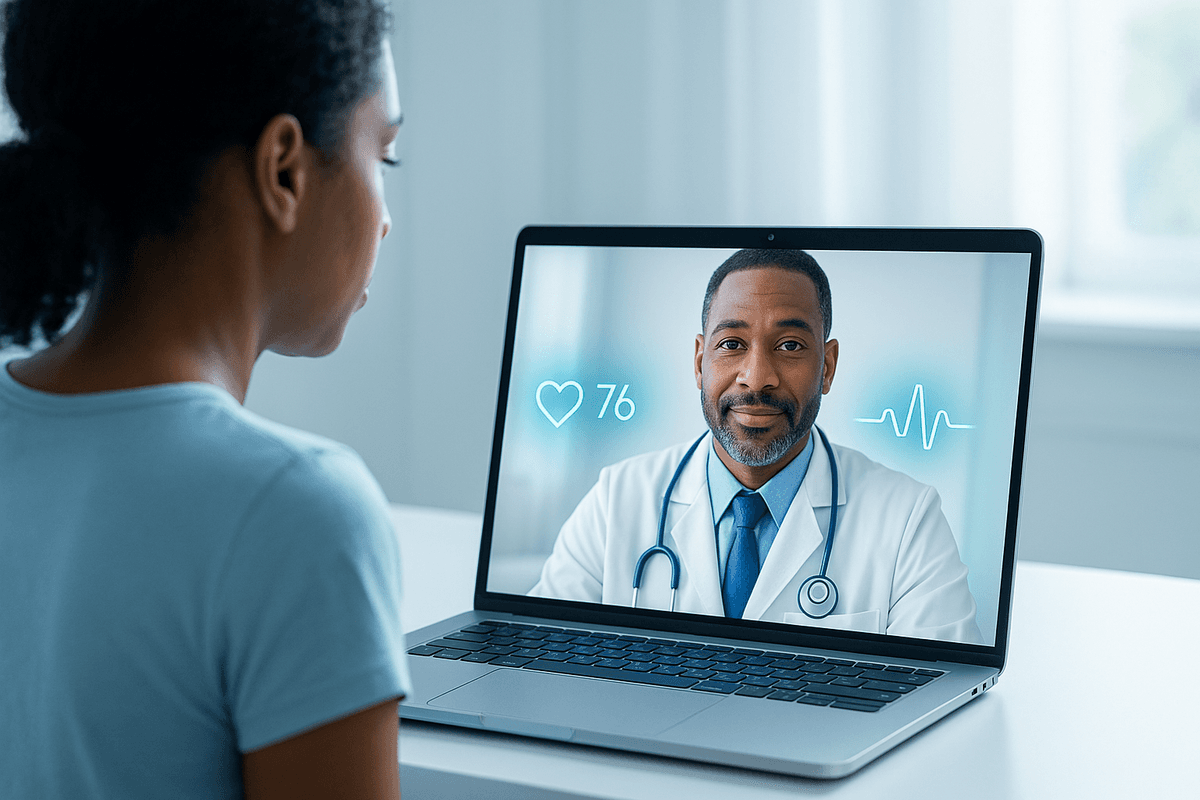
Yes, rPPG can help with preoperative telehealth screening, but only as a screening layer, not as a substitute for formal pre-op assessment. It is useful for low-friction collection of resting pulse and possibly breathing-related signals before a surgical visit, especially when the real goal is deciding who needs more workup.
The mistake would be treating a face-camera reading like a complete anesthetic evaluation. Pre-op care is still about risk stratification, medication review, airway concerns, cardiopulmonary history, and procedure-specific planning. A camera can support that workflow. It cannot finish it.
Why Preoperative Telehealth Needs Better Intake
Pre-op clinics are full of preventable friction.
Patients forget home vitals. Forms are incomplete. A telehealth visit starts with ten minutes of "Can you find a recent blood-pressure reading?" or "Do you know your resting heart rate?" Then, if anything looks off, the patient gets routed to in-person testing anyway.
That is why camera-based screening is interesting here. It can add an immediate physiological snapshot before the clinician starts the remote visit. Not a definitive one. A useful one.
This fits especially well for lower-risk patients having ambulatory procedures, medication reviews, or follow-up screening after an initial surgical plan has already been outlined.
For background on the measurement approach, see camera heart-rate clinical validation, contactless vital signs in telehealth, and PPG perioperative monitoring.
What rPPG Can Contribute Before Surgery
Resting heart rate
This is the cleanest use case. A structured 30-60 second face-camera capture can provide a resting pulse estimate before the telehealth conversation begins. If the patient is unexpectedly tachycardic, visibly uncomfortable, or unable to complete the capture while sitting still, that alone may justify closer review.
Blackford and Ng showed that non-contact heart-rate measurement during telehealth visits is feasible, which supports this exact kind of workflow support role (DOI: 10.1007/s10439-021-02762-9).
Respiratory context
Some camera systems can estimate breathing-related features or respiratory rate. In a pre-op setting, that is not a replacement for pulse oximetry, lung exam, or functional assessment, but it can surface obvious problems such as labored breathing, inability to sit still, or physiologic instability.
Perfusion and capture quality cues
A weak, unstable optical signal can reflect poor lighting, poor setup, or poor peripheral perfusion. It is not diagnostic on its own, but it can be a useful warning that remote screening may not be enough.
Remote triage efficiency
A decent camera-based pre-capture can help sort patients into buckets:
- okay for remote completion
- needs device-based vitals
- needs in-person pre-op review sooner
That is where the real value is. Not fancy waveform interpretation. Better triage.
What It Cannot Replace
This is the part that needs to be stated bluntly.
Blood pressure
If blood pressure matters to the surgical plan, use a cuff. Camera-derived blood-pressure claims are nowhere near solid enough to anchor preoperative decisions in routine care.
Oxygen saturation
If there is respiratory disease, sleep-disordered breathing concern, post-COVID pulmonary symptoms, or any reason saturation could affect the plan, use a proper pulse oximeter. A webcam is not a substitute. Our camera oxygen saturation guide covers why.
Rhythm diagnosis
If the patient reports palpitations, syncope, known arrhythmia, or concerning cardiac symptoms, ECG-based follow-up still rules.
Functional capacity and exam findings
No camera pulse estimate replaces a proper history, medication reconciliation, airway screening, or decision about whether labs, ECG, or further cardiac evaluation are needed.
Where rPPG Fits Best in the Pre-op Workflow
The best spot is before or at the start of the telehealth encounter.
A patient receives a secure link, sits in decent light, and completes a 45-second measurement. The clinician sees the result alongside symptom questions and medication review.
That can help answer practical questions:
- Is the patient calm at rest or clearly physiologically stressed?
- Did they complete the workflow successfully, suggesting they are a good candidate for remote completion?
- Is there enough concern to request same-day cuff or oximeter readings?
- Does this visit still make sense remotely, or should it be converted to in-person?
This is a much better framing than asking whether rPPG can "do pre-op vitals." It can contribute to pre-op intake. That is more believable and more useful.
What a safe camera-first protocol looks like
The safest rollout is a short, scripted intake step, not a vague "turn on your camera" feature. Patients should be asked to sit for a minute, rest the phone or laptop at eye level, face steady front lighting, stop talking, and keep the full face in frame. If they just climbed stairs or are rushing between tasks, the number is less useful because you are no longer looking at a resting state.
A sensible workflow has four parts:
- a guided 30-60 second capture before the clinician joins
- automatic rejection if motion, lighting, framing, or frame rate is poor
- a staff view that shows signal confidence and failure reason, not just a heart-rate number
- a fallback path to cuff, pulse oximeter, or in-person vitals when capture fails
That fallback path matters. In pre-op screening, failure is data too. If a patient cannot complete a stable capture after clear instructions, the right response is usually escalation, not averaging noisy readings until something looks normal.
Lessons From Perioperative PPG Literature
The perioperative PPG literature is rich, but most of it is about monitored clinical settings, not consumer telehealth. That distinction matters.
Cannesson and colleagues showed that pleth variability metrics can predict fluid responsiveness under controlled perioperative conditions (DOI: 10.1097/ALN.0b013e31820e2ab7). De Graaff et al. found that perfusion-related PPG metrics can add clinical value in vulnerable populations when the sensor environment is controlled and interpretation is careful (DOI: 10.1097/ALN.0000000000002838).
Those findings are important, but you should not over-translate them into webcam pre-op medicine. OR-grade or hospital-grade PPG insights do not automatically port into an unstable home lighting environment with a patient balancing a phone on a kitchen counter.
What they do support is the broader idea that optical physiology can surface relevant cardiovascular and perfusion information. Pre-op telehealth should use that insight carefully, not magically.
The Operational Advantage
Preoperative programs care about efficiency.
If rPPG can help clear straightforward patients faster while identifying who needs more review, it can reduce wasted clinician time. That matters in high-volume ambulatory surgery centers and hospital pre-admission testing programs.
It may also improve patient experience. Instead of asking patients to supply vague self-reported vitals, you can collect a simple guided measurement in the same flow as medication review and history intake.
That is commercially useful because it supports two goals at once:
- better pre-visit data
- lower operational drag
The Main Failure Modes
False reassurance
A single acceptable camera pulse reading does not make a patient low risk.
Poor setup
Bad lighting, motion, bad framing, and camera compression can all degrade signal quality. Pre-op workflows should reject weak signals rather than storing misleading numbers.
Overbroad deployment
Not every surgical population should start here. Frail patients, higher-acuity cardiopulmonary patients, and patients with active symptoms may need direct device-based or in-person assessment from the start.
Bad clinical messaging
If staff are told the camera system has "done the vitals," they may unconsciously underweight missing information. That is dangerous. It is better to label rPPG output as screening data or remote intake physiology.
Signal-quality realities in home pre-op intake
Home captures fail for boring reasons. Overhead lighting adds facial shadows. Autofocus hunts when the patient moves. Video calls may downsample or compress the stream. Some patients answer intake questions while the capture is running, which defeats the idea of a resting measurement. Anxiety matters too. A nervous patient waiting for surgery may have a fast pulse that reflects stress in the moment rather than baseline physiology.
Irregular rhythm can also make simple pulse averaging less trustworthy. The point is not that every noisy capture hides a medical problem. The point is that pre-op programs should read camera output with context attached: Was the patient seated? Was the signal stable? Did they look short of breath? Did the workflow require three retries? Those details are often more useful than pretending the number came from a clinic monitor.
Who should bypass camera-first screening
Some patients should skip this step entirely. Active chest pain, severe shortness of breath, syncope, recent decompensated heart failure, home oxygen use, uncontrolled arrhythmia symptoms, or a procedure that already requires formal testing are all reasons to use a higher-touch path from the start. The same applies when the patient cannot follow capture instructions reliably because of cognitive, language, or functional barriers.
A camera-first step is best when the question is whether a lower-risk patient can stay on a remote intake track. It is a poor fit when the patient already has obvious reasons for direct device-based assessment.
Who Should Use It First
The best early adopters are probably:
- ambulatory surgery centers with strong telehealth intake
- lower-risk elective procedure programs
- health systems trying to reduce unnecessary pre-op clinic traffic
- digital perioperative platforms that already do remote education and symptom collection
These environments can benefit from better triage without pretending the camera has replaced pre-op medicine.
My Recommendation
Use rPPG in preoperative telehealth if your goal is smarter screening, not definitive clearance.
That means:
- collect resting pulse and related remote physiology early
- interpret it alongside symptoms and history
- treat weak signals as a reason to escalate, not guess
- keep cuffs, oximeters, ECG, and in-person review in the workflow when risk justifies them
This is a good example of where camera-based vitals can add value without overpromising. Pre-op telehealth does not need another shiny feature. It needs a cleaner way to identify who can stay remote and who cannot.
rPPG can help with that. Just do not ask it to be an anesthesiologist.
References
- Blackford EB, Ng JS. "Non-contact measurement of heart rate in telehealth visits." Annals of Biomedical Engineering (2021). DOI: 10.1007/s10439-021-02762-9
- Amelard R, et al. "Feasibility of camera-based vital signs measurement in clinical populations." npj Digital Medicine (2022). DOI: 10.1038/s41746-022-00606-z
- Cannesson M, et al. "Pleth variability index in perioperative hemodynamic assessment." Anesthesiology (2011). DOI: 10.1097/ALN.0b013e31820e2ab7
- de Graaff JC, et al. "Perfusion-related plethysmography markers in perioperative assessment." Anesthesiology (2019). DOI: 10.1097/ALN.0000000000002838
- McDuff D, et al. "Advancing non-contact vital sign measurement using a camera." Science Advances (2022). DOI: 10.1126/sciadv.abn6498
Frequently Asked Questions
- Can rPPG be used in preoperative telehealth screening?
- Yes, as a lightweight screening tool. It can support remote collection of pulse and some breathing-related signals before surgery, but it does not replace formal preoperative vitals or anesthesia assessment.
- What can camera-based screening catch before surgery?
- It may identify elevated resting heart rate, visible distress, poor signal quality, or the need for further in-person evaluation.
- Can rPPG replace pulse oximetry or blood pressure before surgery?
- No. If oxygen saturation or blood pressure will affect surgical planning, use validated devices.
- Is preop rPPG useful for every patient?
- No. It is best for lower-acuity remote intake and triage, not for unstable or high-risk patients.
- Does preop telehealth benefit from camera vitals even if they are imperfect?
- Yes, if the workflow uses them as screening inputs rather than pretending they are definitive measurements.
- What is the main risk of using rPPG before surgery?
- The main risk is false confidence. Camera measurements should trigger decisions about who needs more evaluation, not erase the need for it.