PPG and Virtual Reality Biofeedback: Real-Time Physiological Adaptation in Immersive Environments
PPG sensors integrated with virtual reality systems enable real-time physiological biofeedback loops where the virtual environment adapts to the user'...
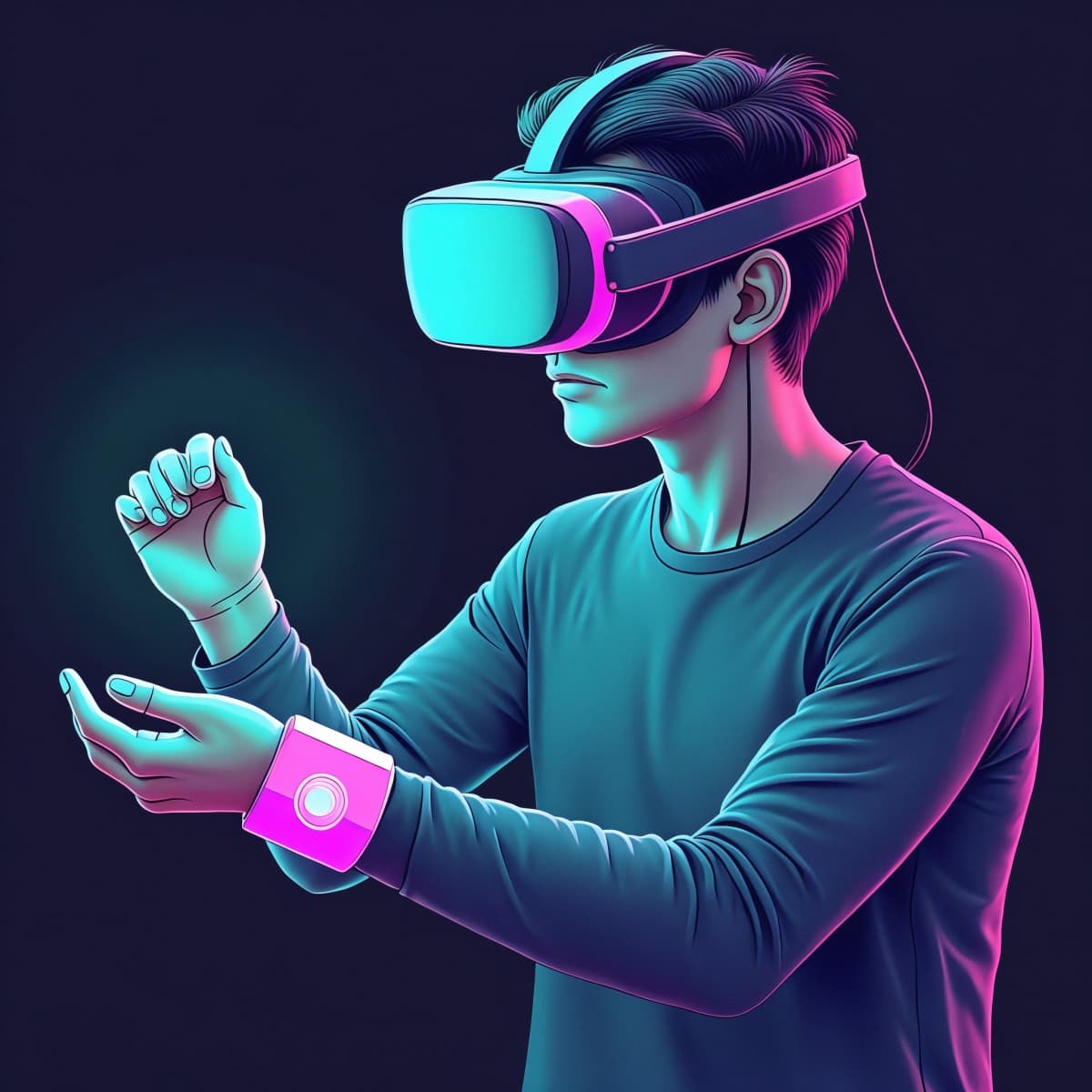
PPG sensors integrated with virtual reality systems enable real-time physiological biofeedback loops where the virtual environment adapts to the user's autonomic state. Heart rate, heart rate variability, and stress markers from PPG drive scene modifications, difficulty adjustments, and therapeutic interventions — creating personalized immersive experiences that conventional monitor-based biofeedback cannot achieve.
The Convergence of PPG and VR
Virtual reality increases physiological presence — the sense of "being there" — compared to 2D screens. This heightened presence amplifies the physiological response to virtual stimuli: heart rate increases in response to virtual threats, HRV changes with virtual emotional content, and skin conductance responds to virtual social interactions.
This amplified physiological engagement makes VR an ideal biofeedback platform. Subtle environmental manipulations in VR produce robust, measurable physiological responses, creating tight coupling between the virtual stimulus and the measured PPG signal.
PPG Acquisition in VR Environments
Headset-Integrated Sensors
Modern VR headsets increasingly incorporate PPG sensors:
- Meta Quest 3: Infrared illumination sensors on the facial interface used for face and eye tracking can derive photoplethysmographic signals from facial vessels, though PPG is not currently exposed as a dedicated health API
- Apple Vision Pro: Eye tracking cameras capture infrared images from which facial PPG can potentially be extracted
- Valve Index: No embedded PPG, but wrist-worn sensor integration via companion apps is common in research deployments
Dedicated research VR headsets (like the HTC Vive Pro Eye with biometric accessories) offer explicit PPG API access. Earpiece-integrated PPG sensors in over-ear VR audio headphones represent a commercially practical sensor location.
Wireless Wrist and Finger Sensors
For current commercial VR deployments, pairing a BLE-connected wrist PPG sensor (Garmin, Polar H10, or research-grade Empatica E4) with the VR system via a companion app is the standard approach. Latency for BLE PPG data transmission is typically 100-500 ms, acceptable for most biofeedback applications but high for applications requiring sub-100ms response.
Facial rPPG in VR
Camera-based rPPG from the facial cameras in VR headsets presents an intriguing sensor-free option. Inside-out tracking cameras in Quest and Vive Pro capture partial facial images with sufficient frame rate (60+ fps) for rPPG extraction. Research by Casado et al. (2023) demonstrated heart rate estimation within ±5 bpm accuracy from Quest 2 tracking cameras, opening the possibility of biometric monitoring without attached sensors.
Clinical Applications
Anxiety and Phobia Treatment
VR exposure therapy for specific phobias is well-validated. PPG biofeedback enhances exposure therapy by:
Session pacing: Virtual exposure advances to more challenging stimuli only when the patient's HRV indicates sufficient physiological regulation. A patient with spider phobia gradually approaches the virtual spider only after their SDNN returns within 15% of baseline — enforcing mastery at each step before escalation.
Autonomic coaching: Real-time heart rate display in the VR visual field teaches patients to observe their physiological arousal during exposure. This interoceptive awareness facilitates extinction learning by reducing the element of surprise in physiological response.
Session optimization: Therapists reviewing post-session PPG data identify specific virtual scenes that produced disproportionate physiological reactions, enabling targeted discussion in CBT sessions following VR exposure.
A 2022 randomized controlled trial by Lindner et al. (doi:10.1016/j.brat.2021.103992) compared VR exposure therapy with and without HRV biofeedback for social anxiety disorder. The biofeedback group showed 22% greater reduction in Social Phobia Scale scores at 3-month follow-up.
Chronic Pain Management
VR-based pain distraction and relaxation reduces pain intensity by 33-50% compared to standard care in studies of burn dressing changes, chemotherapy, and chronic pain rehabilitation. PPG integration adds two enhancements:
Autonomic pain assessment: The PPG pain index (combining HRV and pulse amplitude changes) provides objective pain measurement beyond subjective VAS scores. This is particularly valuable in patients with limited communication ability (children, dementia patients, post-operative).
Adaptive distraction intensity: Virtual scenery richness and interactivity scale with PPG-estimated pain/stress level. Higher physiological stress triggers more immersive, distracting virtual content — cooler ocean environments with responsive interactive elements that require cognitive engagement.
PTSD Treatment
PTSD involves pathological hyper-reactivity to trauma reminders. PPG-guided VR exposure therapy for PTSD (used in combat veteran treatment at multiple VA centers) uses real-time HRV monitoring to:
- Prevent re-traumatization by halting exposure when physiological arousal exceeds safe limits
- Track autonomic habituation across sessions (reducing reactivity with repeated controlled exposure)
- Provide objective treatment response metrics beyond self-report, supporting clinical decision-making
Cardiac Rehabilitation
PPG-monitored VR exercise programs for cardiac rehabilitation patients track heart rate, exertion level, and autonomic response during virtual cycling or walking programs. The gamified VR environment improves adherence to prescribed exercise intensity ranges compared to conventional cycle ergometry. Patients spend more time within target heart rate zones when engaging with responsive VR environments than on static equipment.
Sports Performance and Mental Training
Cognitive Load Management in Training
Elite athletes training under cognitive load can use PPG-VR systems to optimize training intensity. High sympathetic activation (reduced HRV, elevated HR) during a simulated pre-competition scenario provides objective measurement of psychological arousal — helping coaches distinguish healthy competitive preparation from pre-competition anxiety that impairs performance.
Focus State Training
Neurofeedback-style HRV coherence training in VR environments uses real-time visualization of HRV coherence (cardiac coherence in the 0.1 Hz band) to teach resonance frequency breathing. VR nature environments display visual elements (wind movement, light intensity, wave height) synchronized to breathing phase, facilitating the slow 6 breaths/minute pattern that maximizes HRV coherence and reduces sympathetic-parasympathetic imbalance.
HeartMath Institute's resonance breathing protocols adapted for VR have demonstrated 28% improvement in pre-competition performance anxiety scores and objective HRV improvements sustained 4 weeks after training.
Extreme Environment Preparation
Military, firefighting, and emergency medical training uses VR stress scenarios where PPG-derived physiological arousal metrics guide training load. Trainees operate under increasing physiological stress (simulated emergency scenarios that elevate HR and reduce HRV) while performing procedure sequences, building stress inoculation. PPG monitoring ensures training stress remains in the productive zone while preventing overwhelming experiences that impair skill acquisition.
Adaptive Gaming and Entertainment
Physiologically Responsive Game Design
Horror games and action titles can adapt content difficulty and scare timing to physiological state:
Arousal-based pacing: When heart rate exceeds baseline by 30%, reduce enemy encounter frequency to prevent overwhelming fight-or-flight responses that reduce enjoyment. When heart rate is below baseline (boredom), increase encounter intensity.
Optimal arousal targeting: Csikszentmihalyi's flow theory posits that engagement is maximized when challenge matches skill. PPG-measured arousal provides a proxy for experienced challenge. Game difficulty that maintains HRV within a medium-arousal zone keeps players in the flow channel longer.
Post-game recovery assessment: PPG heart rate recovery rate after intense play sessions characterizes the physiological cost of different game experiences — potentially relevant to rating systems for physiologically intense content.
Meditation and Mindfulness Applications
VR mindfulness applications like Tripp and Healium integrate PPG biofeedback. Visualizations showing heart-brain coherence, real-time HRV display, and environment responses to physiological state (rising sun triggered by increasing HRV coherence) provide motivating feedback that improves mindfulness session quality.
Technical Challenges
Cybersickness and Autonomic Artifact
Cybersickness (VR-induced nausea and disorientation) is associated with marked autonomic changes: reduced HRV, increased LF/HF ratio, elevated heart rate — essentially a nausea-vasovagal response. These changes confound physiological monitoring for any application that requires sustained engagement. Algorithms must classify and exclude or flag cybersickness episodes.
Interestingly, PPG monitoring of cybersickness predictors (early HRV changes before overt symptoms) could enable adaptive VR systems that reduce provocative content before users become symptomatic.
Latency Requirements
For biofeedback applications where the VR environment responds to physiological state, total system latency from PPG signal to visual response must be below 200-500 ms for perceptible real-time feedback. End-to-end latency including BLE transmission, PPG processing, feature extraction, and rendering must all be optimized. Direct USB PPG connections (<20 ms latency) are preferred for latency-critical applications.
Motion Artifact During Active VR
VR applications involving physical movement (beat saber, tennis, boxing simulations) generate substantial motion artifact in wrist PPG. Ear-canal PPG or facial PPG provides more motion-robust measurement during active VR use, though both have their own artifact profiles from head movements.
FAQ
Which VR headsets currently support PPG biofeedback? No major consumer VR headset includes a dedicated validated PPG sensor as of 2026. Research deployments pair VR headsets with wrist or ear-canal PPG sensors via BLE. The Apple Vision Pro and Meta Quest 3 contain cameras that enable research-level facial rPPG, but dedicated health biometric APIs are not yet publicly available.
How does HRV biofeedback in VR differ from traditional HRV biofeedback? Traditional HRV biofeedback uses 2D computer displays showing heart rate graphs or simple animations. VR biofeedback embeds physiological feedback in rich immersive environments where the entire scene responds to physiological state, achieving stronger physiological engagement and potentially faster learning of autonomic self-regulation skills.
Is PPG-guided VR therapy approved for clinical use? Several VR therapy systems are FDA-cleared as medical devices (AppliedVR's RelieVRx for chronic lower back pain, Limbix VR for adolescent depression), but PPG-guided adaptive VR therapy is not yet independently FDA-cleared. PPG biofeedback components function as wellness monitoring rather than diagnostic devices in most current deployments.
What latency is acceptable for VR biofeedback? For event-response biofeedback (the environment reacts to detected physiological changes), latency below 500 ms is generally imperceptible to users. For rhythm-synchronous biofeedback (visual elements pulsing with heartbeat), latency below 100 ms is needed. For trending adaptation (difficulty adjusting based on arousal state), latency of several seconds is acceptable.
Can PPG-VR systems diagnose anxiety disorders? No. PPG in VR provides physiological measures correlated with anxiety but cannot diagnose anxiety disorders, which require clinical assessment of symptoms, functional impairment, and duration per DSM-5 criteria. PPG measures can inform treatment response monitoring but are not diagnostic instruments.
References
-
Lindner, P., Hamilton, W., Miloff, A., & Carlbring, P. (2022). How to treat depression with low-intensity virtual reality interventions. Behaviour Research and Therapy, 149, 103992. doi:10.1016/j.brat.2021.103992
-
Hoffman, H.G., Chambers, G.T., Meyer, W.J., Arceneaux, L.L., Russell, W.J., Seibel, E.J., & Patterson, D.R. (2011). Virtual reality as an adjunctive non-pharmacologic analgesic for acute burn pain during medical procedures. Annals of Behavioral Medicine, 41(2), 183-191. doi:10.1007/s12160-010-9248-7
-
Lutz, J., Herwig, U., Opialla, S., Hittmeyer, A., Jäncke, L., Rufer, M., & Brühl, A.B. (2014). Mindfulness and emotion regulation — An fMRI study. Social Cognitive and Affective Neuroscience, 9(6), 776-785. doi:10.1093/scan/nst043
-
McCraty, R., Atkinson, M., Tomasino, D., & Bradley, R.T. (2009). The coherent heart: heart-brain interactions, psychophysiological coherence, and the emergence of system-wide order. Integral Review, 5(2), 10-115.