PPG Federated Learning
Federated learning trains a shared PPG model across hundreds of hospitals or millions of wearable devices without any raw patient data leaving those d...
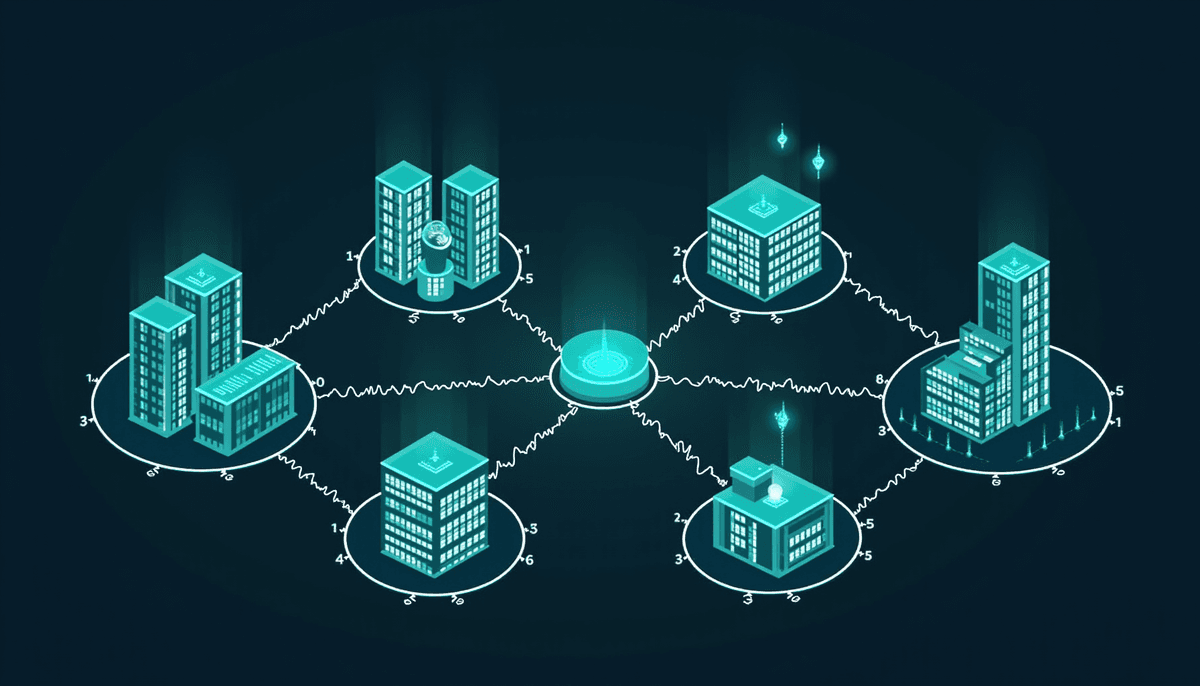
Federated learning trains a shared PPG model across hundreds of hospitals or millions of wearable devices without any raw patient data leaving those devices. Each participant computes model updates locally; only gradient information is shared. The result is a model that has learned from far more diverse data than any single institution could collect — while HIPAA compliance is maintained by design. This article explains how federated learning works for PPG applications, where it outperforms centralized approaches, and the practical challenges that still limit deployment.
The Core Problem Federated Learning Solves
Traditional deep learning for PPG requires assembling a large centralized dataset. For clinical applications, this means collecting waveforms from multiple hospitals, obtaining data sharing agreements, de-identifying records, and managing data transfer pipelines. Each of these steps takes months, involves legal risk, and may be impossible across international boundaries (GDPR in Europe, PIPEDA in Canada, and similar frameworks prohibit many cross-border health data transfers).
Federated learning sidesteps this entirely. The model travels to the data, not the other way around.
For consumer wearables, the stakes are even higher. A company training heart rate or SpO2 models on raw wrist PPG from 50 million Apple Watch users would face catastrophic privacy backlash — and Apple's privacy guarantees explicitly prohibit this. Federated learning is the mechanism that allows Apple, Google, and Samsung to improve on-device models using real user data without ever seeing that data.
How Federated Learning Works
The standard algorithm, Federated Averaging (FedAvg), was introduced by McMahan et al. (2017, AISTATS, DOI: 10.48550/arXiv.1602.05629):
- Global model distribution: A central server distributes the current model weights to a subset of participating clients (hospitals, devices)
- Local training: Each client trains the model on their local PPG data for several gradient steps
- Gradient aggregation: Clients send model updates (weight deltas or gradients) back to the server
- Weighted averaging: The server averages the updates, weighted by each client's dataset size
- Repeat: The updated global model is redistributed for the next round
After 50–200 communication rounds, the global model converges. The server never receives any raw PPG samples.
Differential Privacy Integration
Gradient sharing still leaks information. Membership inference attacks can determine whether a specific patient's record was used in training by querying the model. To prevent this, federated systems add differential privacy (DP): Gaussian noise is added to each client's gradients before sharing. The privacy budget (ε) quantifies the maximum information leakage.
The tension is fundamental: more noise = stronger privacy = lower model accuracy. For PPG applications requiring clinical precision, finding the right ε is non-trivial. Google's DP-SGD framework and Apple's DP mechanisms in iOS are production implementations of this tradeoff.
PPG-Specific Federated Learning Challenges
Non-IID Data Distribution
The most serious challenge for federated PPG models is that data is not independently and identically distributed (non-IID) across clients. A hospital specializing in cardiac care will have high AF prevalence; a general practice clinic will have mostly sinus rhythm. A fitness app's users are predominantly young and healthy; a medical device company's patients are predominantly elderly with comorbidities.
Standard FedAvg converges poorly when distributions diverge significantly. Solutions include:
- FedProx (Li et al., 2020): adds a proximal term to local objectives, preventing client models from drifting too far from the global model
- SCAFFOLD: uses control variates to correct for client drift
- Personalized federated learning: maintains a global backbone with client-specific heads, allowing each site to specialize
PPG Waveform Heterogeneity
Different wearable devices produce measurably different PPG signals. Sampling rates range from 25 Hz (basic fitness trackers) to 512 Hz (clinical monitors). Green wavelength sensors (standard in wrist wearables) produce different morphology than red/IR sensors (pulse oximeters). Placement — wrist vs. finger vs. earlobe — changes the vascular bed being measured.
A federated model that learns from all these device types implicitly handles domain shift, but only if each device type is represented in training. If the model is later deployed to a new sensor type absent from federated training, performance may degrade significantly.
Communication Efficiency
For hospital-scale deployments, communication bandwidth is not a limiting factor. For wearable devices on cellular networks, sending model gradients with millions of parameters per round is prohibitive. Solutions include gradient compression (Top-K sparsification, quantization) and local training for more steps before communication, reducing the number of rounds needed.
Real-World Applications
Hospital Network PPG Models
Dang and colleagues (2022, IEEE Journal of Biomedical and Health Informatics, DOI: 10.1109/JBHI.2022.3163740) demonstrated federated learning across 4 hospital networks for PPG-based SpO2 estimation. The federated model matched the performance of a centrally trained model using pooled data, while satisfying each hospital's data governance requirements. Crucially, the federated model generalized better to new patient populations than any single-site model.
Wearable Heart Rate Models
A federated approach allows continuous improvement of wrist PPG heart rate algorithms using real-world data. Unlike lab validation studies (which use controlled conditions), federated learning from actual users captures the full distribution of motion artifacts, skin tones, and wearing positions. Apple's on-device learning for Watch health features uses federated mechanisms, though implementation details are proprietary.
Sleep Staging from Overnight PPG
Sleep stage classification requires learning from long, continuous overnight recordings. Centralizing overnight PPG from clinical sleep labs involves significant data volume and patient privacy concerns. Federated learning across sleep centers allows a model to learn from varied sleep disorder populations — insomnia, sleep apnea, narcolepsy — without pooling sensitive overnight records.
Internal Links
For the CNN architectures typically used as the base model in federated PPG systems, see PPG Convolutional Neural Networks. For understanding the signal quality variation that makes federated PPG challenging, the PPG Wrist Accuracy Limitations article is essential context. Privacy considerations for PPG data also apply to rPPG — see rPPG Privacy and Data Ethics.
Privacy Guarantees and Regulatory Status
Federated learning is not inherently HIPAA-compliant. HIPAA applies to covered entities and business associates regardless of whether data is centralized. A federated system operator who provides the aggregation server is likely a business associate and must sign a BAA. The privacy advantage is practical, not legal: the attack surface is reduced because raw PHI never leaves the facility.
For EU-regulated contexts, federated learning substantially simplifies GDPR compliance. Processing patient data at the source (the hospital) under the data controller's jurisdiction avoids cross-border transfer concerns. The model updates shared are not themselves personal data under GDPR guidance, though this interpretation is not universally agreed upon.
FDA has not yet issued specific guidance on federated learning for Software as a Medical Device (SaMD). The 2021 AI/ML action plan acknowledges federated approaches as promising for iterative model improvement but does not establish a regulatory framework.
Comparison with Centralized Training
| Aspect | Centralized | Federated |
|---|---|---|
| Data privacy | Raw data centralized | Data stays local |
| Dataset diversity | Limited by collection agreements | Can span millions of devices |
| Communication overhead | High (initial data transfer) | Ongoing (each training round) |
| Convergence speed | Faster | 2–10x more rounds needed |
| Regulatory complexity | High (data sharing agreements) | Lower (no PHI transfer) |
| Model personalization | Standard fine-tuning | Personalized FL methods |
Frequently Asked Questions
What is federated learning and how does it apply to PPG? Federated learning is a machine learning approach where model training happens locally on devices or at data-holding institutions, with only model updates (not raw data) shared with a central server. For PPG, this means training heart rate, arrhythmia, or SpO2 models using real patient waveforms without ever centralizing those waveforms.
Does federated learning guarantee patient privacy? Federated learning reduces privacy risk but does not guarantee it. Gradient inversion attacks can reconstruct training data from shared gradients. Combining federated learning with differential privacy (adding calibrated noise to gradients) provides formal privacy guarantees, at the cost of some model accuracy.
How many communication rounds does federated PPG training require? Typical federated learning converges in 50–300 rounds. Each round involves distributing the global model, local training, and gradient aggregation. For PPG arrhythmia classification, benchmarks suggest 100–150 rounds achieves performance comparable to centralized training with 30+ client institutions.
Can federated learning handle different PPG device types? Yes, but it requires careful handling of data heterogeneity. Models trained federally across device types learn more robust features than single-device models. Domain adaptation layers or device-type embeddings in the model architecture improve cross-device generalization.
Is federated learning suitable for small hospital networks? FedAvg and its variants work best with 10+ clients. For 2–3 hospital networks, secure multi-party computation (SMPC) may be more appropriate — it achieves the same privacy benefits with fewer communication rounds but higher per-computation cost.
What open-source frameworks support federated learning for PPG? PySyft (OpenMined), Flower (flwr), TensorFlow Federated, and FATE are the most active frameworks. Flower has the most flexible support for custom aggregation strategies and non-IID handling, making it well-suited for PPG research with heterogeneous device types.
How does federated learning compare to training on synthetic PPG data? Synthetic data generated by GANs or diffusion models avoids privacy concerns but may not capture the full distribution of real pathologies. Federated learning on real data generally outperforms synthetic-only approaches for clinical classification tasks, though synthetic augmentation can complement federated training for rare conditions.